



If you are seriously evaluating private aviation this year, the real decision is not just what an aircraft costs to acquire. The more useful question is the buy vs charter private jet cost equation in 2026 and whether ownership genuinely makes financial sense for the way you travel. For many affluent flyers, the answer is more straightforward than expected. If you are flying fewer than roughly 200 to 300 hours per year, charter is usually the more efficient option once the full cost of ownership is included.
Amalfi Jets approaches this conversation with a clear perspective. As a charter broker, we source aircraft from a global network based on your specific mission rather than steering you toward a single owned asset.
That distinction matters, but the underlying financial reality matters more. In most cases, a direct comparison favors access over ownership until your annual flying becomes substantial and highly predictable. If you want a route-specific view of trip pricing alongside this ownership analysis, our private jet charter cost guide for 2026 serves as a useful companion.
The real question: access or asset?
Many first-time buyers begin with a reasonable assumption regarding aviation access. If they fly often enough, owning a jet must eventually be cheaper than chartering one. Sometimes that assumption proves true, but quite often, it does not.
Ownership gives you complete control over a dedicated aircraft, but it also creates an unrelenting year-round financial obligation. Charter gives you access only when you truly need to fly, and that distinction is exactly what drives the core economics. An owned aircraft generates meaningful baseline costs whether it flies 25 hours in a quiet year or 325 hours in a remarkably busy one. A serious comparison between buying and chartering must start with an honest look at this stark financial reality.
The most credible way to evaluate private jet ownership vs charter is to strictly examine annual flight hours. From there, you layer in fixed costs, trip expenses, initial capital commitment, and the tangible value of flexibility. Once that framework is securely in place, the final answer becomes much less emotional and much more practical.
Buy vs charter private jet cost in 2026
For 2026, a midsize aircraft serves as a highly useful benchmark because it sits squarely in the category many prospective buyers consider first. Recent industry estimates commonly place purchase pricing around $8 million to $12 million for a capable midsize jet. That massive eight-figure sum gets immediate attention, but it certainly does not tell the full story.
The better question is what it actually costs to keep that aircraft operational every single month of the calendar year. In realistic scenarios, annual ownership expenses land somewhere around $1.2 million to $1.8 million or more before depreciation, financing effects, or resale timing are even debated. By contrast, chartering a similar aircraft often falls around $4,000 to $6,000 per flight hour for many typical missions, with premium pricing occasionally possible depending on market conditions, precise routing, and overall aircraft availability.
That massive pricing gap perfectly explains why the buy vs charter private jet cost conversation carries so much weight. Discerning buyers are not just comparing a straightforward hourly rate directly to a high purchase price. They are strategically deciding whether they want to manage an aviation asset or seamlessly secure private aviation access in the most rational way possible.
What it really costs to buy a private jet in 2026
The aircraft purchase itself is merely the opening financial commitment for any buyer. After acquisition, the ownership structure begins producing heavy recurring expenses immediately, regardless of how often the aircraft successfully leaves the hangar. A realistic annual budget includes crew salaries and benefits, recurrent pilot training, comprehensive insurance, and dedicated hangar or parking fees. Additional line items include mandatory maintenance and scheduled inspections, engine program enrollment, aircraft management fees, navigation subscriptions, cabin upkeep, and operating expenses such as fuel.
This is exactly where a private jet ownership cost honest analysis becomes especially important for prospective buyers. Travelers frequently underestimate how much of the annual financial burden remains totally fixed rather than variable. Crew members still need to be employed, expensive insurance policies still renew, and rigorous scheduled maintenance still arrives whether the aircraft flies heavily or lightly. Even an unusually low-use year does not eliminate the carrying cost of holding the asset.
Ownership can absolutely make solid financial sense for a highly specific type of traveler. Someone with highly consistent usage, a narrow mission profile, and a remarkably strong preference for dedicated control may justify the expense over time. Even so, the true ownership calculation must always be approached with strict financial discipline. The initial sticker price may feel like the headline number, but the ongoing carrying cost is what fundamentally changes the economics over the long term.
What it really costs to charter a similar aircraft
Charter pricing is generally easier to understand, but it still requires a clear and precise explanation. A midsize jet may appropriately quote in the $4,000 to $6,000 per hour range for many 2026 trips, but the actual invoice should always be viewed as a complete mission budget rather than a single hourly number.
A transparent charter quote automatically includes federal excise tax where applicable, required segment fees, necessary fuel surcharges, and landing or airport charges. It accounts for crew overnight expenses, repositioning costs, premium catering, and comprehensive ground coordination. That pricing structure is exactly why sophisticated travelers should view trip costs holistically rather than relying on assumed hourly rates. Route specifics, departure timing, immediate airport demand, and physical aircraft positioning can all change the final number.
For flyers actively comparing aircraft ownership with charter access, understanding this nuance creates a much more accurate financial benchmark. It clearly explains why two seemingly similar trips may not price identically even when the aircraft category appears exactly the same. For a deeper explanation of the variables driving these figures, our private jet charter cost guide for 2026 provides a comprehensive breakdown.
Private jet ownership vs charter: the breakeven math
The break-even calculation sits at the center of the final ownership decision. Using a simplified midsize example, assume a purchase price of $8 million to $12 million, annual ownership costs of roughly $1.2 million to $1.8 million, and charter pricing of around $4,000 to $6,000 per flight hour for a comparable aircraft.
At 100 flight hours per year, chartering implies approximately $400,000 to $600,000 in direct flight spend before trip-specific extras apply. That amount remains materially below a typical annual ownership burden. At 200 hours per year, total charter spend may reach roughly $800,000 to $1.2 million before additional line items. Even at that elevated level, charter often remains highly competitive, particularly if the ownership side trends toward the upper end of annual cost assumptions.
At 300 hours per year, the baseline financial models become much more balanced. Chartering may total roughly $1.2 million to $1.8 million before route-level variability, which explains why some buyers notice a plausible crossover point. By 400 hours per year, direct ownership often starts to look more economically defensible for the ideal aircraft and operating profile.
This financial trajectory clearly explains why many serious analyses cluster the true break-even point around 250 to 400 annual hours rather than at the reduced usage thresholds first-time buyers might imagine. The exact crossover still depends on the specific aircraft category, maintenance profile, management approach, and how consistently those target hours are flown over time. Even so, the broad baseline conclusion remains stable across the modern industry. For the vast majority of affluent travelers operating below that range, charter remains the smarter financial model.
Is it cheaper to own or charter a private jet in 2026?
For most premium travelers, yes, chartering is ultimately far cheaper than operating an owned aircraft. That financial reality becomes clear when usage is uneven or when divergent trips routinely call for entirely different cabin sizes. It holds equally true when the traveler simply does not want the administrative burden attached to operating an aircraft as a dedicated asset.
A client flying selectively throughout the year typically values mission flexibility more than permanent physical control. One month may require a shorter regional flight, while the next may dictate a larger cabin, expansive luggage capacity, or extended global range capabilities. In those scenarios, charter allows you to pay for the specific mission rather than maintaining one single aircraft year-round regardless of whether it actually fits every trip.
Asset ownership can still make sense under the right operational conditions. Travelers with high utilization, predictable flight routes, and a need for full-time availability may reasonably conclude that dedicated access is worth the premium. However, if you are debating whether it is cheaper to own or charter private jet 2026 arrangements, there is a strong chance your profile aligns with chartering as the more efficient answer.
Why fixed costs matter more than most buyers expect
The most overlooked factor in the private jet ownership vs charter decision is frequently the least glamorous reality of aviation finance. Fixed costs simply do not care how little you fly during a given calendar year. Aviation insurance renews, trained crew members need to be retained, and hangar or parking obligations continue uninterrupted. Scheduled inspections and required maintenance intervals do not disappear simply because your personal travel schedule was lighter than expected.
That dynamic explains why an honest private jet ownership cost comparison frequently favors charter access until annual use reaches a significant usage threshold. Ownership is not a decision about how you fly, but rather a decision to take on an ongoing operating commitment. Chartering, by contrast, ensures your flying costs remain more closely aligned with actual usage.
Flexibility matters even more in years when business or personal travel patterns change. You might expect to fly 250 hours in a given year, only to fly half that amount because of shifting schedules or evolving family priorities. An ownership structure does not become lighter just because annual utilization fell short of early projections. Charter remains far more forgiving because the baseline cost structure remains variable rather than fixed.
Why flexibility has financial value
A financial spreadsheet tells a major part of the story, but experienced travelers know that flexibility carries real economic value. Charter consistently lets you select the specific aircraft needed for the mission at hand. This avoids forcing every trip into the performance capabilities and payload constraints of one owned private jet.
That flexibility matters in practical day-to-day terms. A lighter jet cabin may be efficient for a quick regional business sector, while a midsize aircraft provides the right answer for a long domestic transit route. A larger heavy jet becomes preferable when your itinerary involves extensive international travel, a higher passenger count, or a demanding baggage profile. When you own just one aircraft, every trip is shaped around that single asset, even when it creates an operational compromise.
This reality highlights why charter should never be viewed as a compromise. In many cases, it serves as a more refined and flexible operating model. You preserve capital, avoid unnecessary fixed overhead, and match the proper aircraft to the specific mission. For travelers who value optionality and financial efficiency in equal measure, chartering frequently provides the superior arrangement.
How airport choice affects costs at VNY, TEB, and OPF
Airport choice can materially impact the buy vs charter private jet cost calculation, especially in major private aviation markets across the country. Premium airports offer convenience for affluent travelers, but that convenience carries significant recurring operational cost implications for aircraft owners. Conversely, it creates distinct pricing implications for charter users paying solely for access.
At Van Nuys Airport (VNY), the regional appeal is undeniable. It stands as one of the most important private aviation hubs in the United States and serves as a logical home base for Los Angeles travel. For charter clients, VNY offers direct access to the market without the operational friction found in navigating large commercial terminals. For owners, however, basing a jet at a premium airport introduces additional operational complexity around hangar parking strategy, specialized support services, and the daily realities of operating in a high-demand environment.
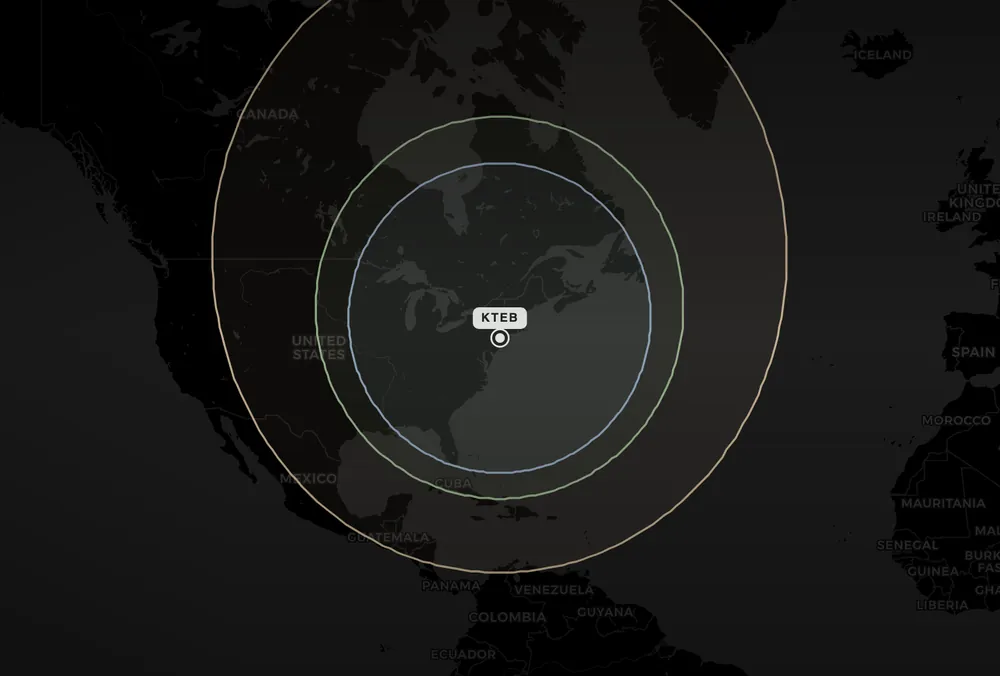
Teterboro Airport (TEB) plays an equally vital regional role for the greater New York market. Its location convenience is what makes it useful in an ownership versus charter comparison. In ownership scenarios, premium Northeast infrastructure contributes to annual baseline carrying costs through premium parking, specialized support services, and broader operating complexity. In charter scenarios, you benefit from that same ecosystem when needed without absorbing the permanent overhead.
Miami-Opa Locka Executive Airport (OPF) offers another strong example of infrastructure impact. For South Florida flyers, the airport serves as a premium gateway into Miami and its surrounding affluent enclaves. As with VNY and TEB, OPF illustrates a clear point about aviation economics: accessing a premium airport via charter means paying for its convenience only on the trips that require it.
Who should charter, who should own, and who should consider a hybrid
For the vast majority of premium travelers, charter is the better financial fit when annual use remains below roughly 200 to 300 hours. It works well when flight patterns vary across the calendar year and when route flexibility matters more than asset control. Charter also attracts buyers who prefer to avoid managing crew administration, scheduled maintenance planning, and the concentration of capital within a single aircraft.
Ownership tends to make sense for travelers consistently flying well above the 300 to 400 hour range with predictable mission profiles. A hybrid approach, blending limited ownership with charter access for off-profile missions, can also be effective for those who want dedicated availability without committing every trip to a single airframe. The right answer ultimately depends on annual hours, mission variability, and the tolerance for fixed operating commitments.
If you are weighing the buy vs charter private jet cost decision for 2026, Amalfi Jets can help you model a realistic baseline. Request a tailored quote to see how charter access compares to ownership for your specific travel profile.