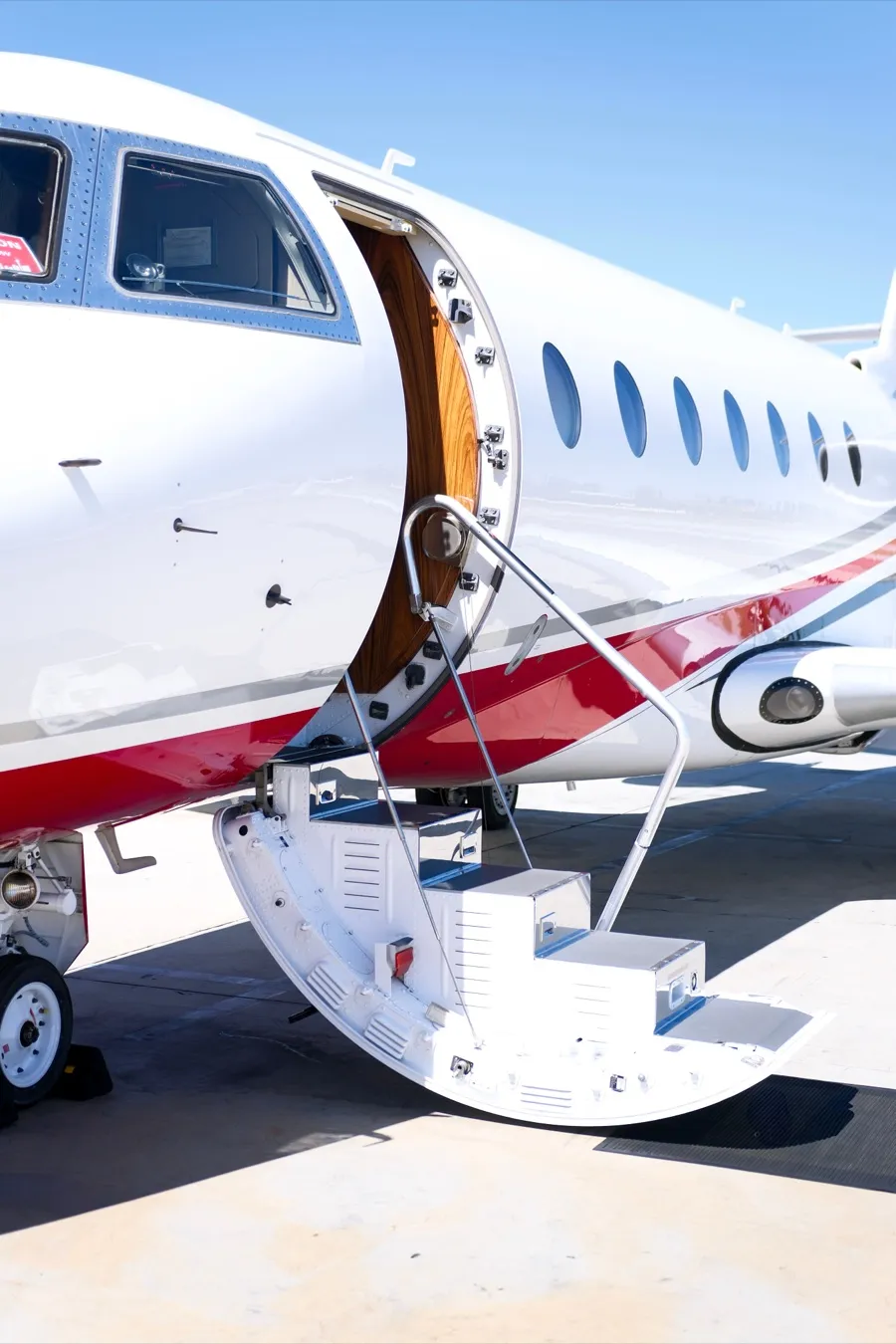





If you are comparing charter options in 2026, understanding the types of private aircraft is the fastest way to narrow the field. Not every mission calls for the same cabin size, range, runway performance, or onboard layout, which is why aircraft selection always starts with the trip itself. In this private jet aircraft guide, we break down the six core private jet categories most relevant in today’s charter market and explain how each one fits specific routes, passenger counts, and comfort expectations.
Amalfi Jets organizes its private aircraft category overview in much the same way, making it a practical framework for travelers who want a clearer picture of which aircraft type fits which mission. Because our team operates as a premium charter broker, the objective is never to push an assigned fixed fleet onto your itinerary. We meticulously source the right aircraft through a broad, vetted global network based on route distance, passenger count, luggage demands, and your specific cabin expectations.
The Main Types of Private Aircraft in 2026
The six primary private aircraft types in the charter market are turboprops, light jets, midsize jets, super midsize jets, heavy jets, and ultra long-haul jets. Each of these types of private jets solves a highly specific travel profile. A short regional flight into a smaller airport may call for an efficient turboprop, while a nonstop coast-to-coast itinerary often requires the elevated performance of a super midsize jet. Intercontinental missions with multiple travelers, extended fuel endurance needs, and separate work and rest areas typically necessitate a heavy or ultra long-haul aircraft.
A practical way to compare these private jet categories is by looking at passenger limits, flight range, and mission profile together. Turboprops generally accommodate up to eight passengers and reach approximately 1,800 nautical miles, making them well suited to regional sectors and smaller airfields. Light jets also seat up to eight passengers, but they introduce jet speeds and extend the range up to around 2,040 nautical miles. Midsize jets typically retain an eight-passenger profile while pushing range to approximately 2,540 nautical miles and offering significantly more cabin room for extended flights.
Super midsize jets usually carry up to nine passengers and stretch to about 3,200 nautical miles, making them a heavily favored choice for premium transcontinental routes. Heavy jets move into true large-cabin territory, holding up to 14 passengers with roughly 4,220 nautical miles of range. Sitting at the very top of the category structure, ultra long-haul jets carry up to 19 passengers and reach approximately 7,000 nautical miles for impressive global nonstop missions. For readers wanting a side-by-side view of the broad fleet structure, our aircraft charter category guide serves as a strong focal point.
Turboprops: Regional Access for Short Runways
Among all types of private aircraft, turboprops are distinctive because they prioritize geographic access and operational efficiency over maximum cruise speed. That characteristic makes them especially effective for regional flying where getting closer to the final destination matters more than shaving a few minutes off the total flight time. Our turboprop charter aircraft portfolio highlights esteemed models such as the Pilatus PC-12 NG and King Air 350i, both respected platforms for this precise mission profile.
In broad terms, turboprops typically seat up to eight passengers and offer around 1,000 to 1,800 nautical miles of range depending on standard payload and operating conditions. They are routinely chosen for shorter routes across the Northeast, Florida, Texas, or the central Midwest. This dynamic is particularly true when your itinerary involves tighter runways or regional airfields located well outside major metropolitan hubs.
This unique category stands as one of the clearest examples of why the best private aircraft types are selected by mission parameters rather than perceived status. A turboprop frequently proves to be the most sensible choice for a brief trip near Chicago or New York. The direct access to a smaller community airport often reduces ground transfer time significantly enough to far outweigh any cruise speed advantage provided by a light jet.
Light Jets: Compact Private Jet Categories With Jet Speed
Light jets are commonly the first aircraft people picture when imagining the most familiar types of private jets. They deliver the notable speed and altitude advantages of a traditional jet while keeping the overall cabin footprint relatively compact. This winning combination of speed and efficiency makes the light jet category a natural fit for many routine domestic charter missions.
On our light jets charter page, the Cessna Citation CJ3 serves as an excellent representative example. Aircraft in this segment generally accommodate up to eight passengers and confidently cover roughly 1,800 to 2,100 nautical miles per trip. This distinct range profile makes light jets highly practical for popular city pairs such as New York to Miami, New York to Dallas, or Chicago to various East Coast destinations.
Light jets provide the perfect technical answer when travelers desire true jet performance and reduced travel times compared with a turboprop, yet do not require the extended operating profile of a larger cabin class. The primary tradeoff to consider is always total cabin volume and available baggage capacity. For clients carrying substantial luggage, flying with a full passenger count, or wanting ample room to move during flight, looking ahead to a larger size category becomes the logical step.
Midsize Jets: Private Aircraft Types With More Cabin Comfort
Midsize jets occupy a functional middle ground in the present private charter market. They successfully preserve strong domestic flight range while adding a significantly more comfortable cabin environment than a standard light jet. For many frequent flyers, this segment is exactly where the onboard experience begins to feel materially different and distinctly spacious.
Our midsize jets overview uses the Hawker 800XP as a reliable anchor point for understanding the category's overall footprint. In general, midsize jets comfortably seat around six to nine passengers and can continuously fly approximately 2,500 nautical miles. This provides more than enough cabin space and range to vastly improve daily comfort on longer domestic routes across the country.
These aircraft consistently perform well for regular missions such as New York to Dallas, Miami to Chicago, or Dallas to Los Angeles with careful mission-dependent route planning. In practical terms, clients often select a midsize jet not because a lighter aircraft cannot technically complete the route, but because the journey will simply be more relaxing and productive in a larger space. This clear preference perfectly highlights why aircraft selection is not purely decided by technical range limitations alone.
Super Midsize Jets: The Sweet Spot in Private Jet Categories
If one particular size category consistently stands out in modern charter planning, it is undeniably the super midsize segment. These aircraft are widely recognized as the ultimate sweet spot in private jet categories because they balance transcontinental range, refined cabin comfort, and operating efficiency exceedingly well. Our comprehensive super midsize jets guide features respected luxury aircraft such as the Bombardier Challenger 350.
This model serves as a notably well-established option for reliable nonstop transcontinental flying across the United States. super midsize jets comfortably seat eight to 10 passengers and offer an impressive range bridging roughly 3,000 to 4,000 nautical miles depending on final payloads. That robust operational capability allows them to tackle most major coast-to-coast flights completely nonstop.
They simultaneously present a highly efficient alternative to stepping up into a heavy jet when true intercontinental range remains unnecessary for your trip. For demanding routes safely connecting the opposite coasts, this category frequently emerges as the absolute most practical solution. It perfectly combines the substantial reach needed for cross-country service with a cabin environment distinctly tailored to serve a full travel day in the air.
Heavy Jets: Large Cabin Private Aircraft for Long Range Missions
Heavy jets transition the conversation from capable domestic flying directly into authentic large-cabin territory. This premium category is meticulously engineered for longer stage lengths, larger corporate or family groups, and a considerably more structured onboard environment. Our heavy jets charter guide presents the sleek Gulfstream G-IV SP as an exemplary core model for this sophisticated class.
Aircraft designated as heavy jets typically seat around 10 to 14 passengers and confidently offer more than 4,000 nautical miles of functional flight range. The final capabilities always depend on the exact aircraft model and specific cabin configuration chosen prior to booking your flight. This stage is additionally the exact point where discerning travelers typically begin to enjoy noticeable physical separation between dedicated spaces for focused work, formal dining, and restful sleep.
That distinct spatial difference becomes incredibly meaningful on extended international flights or longer domestic hauls across North America. It proves especially vital for executives flying across the country and continuing directly into demanding corporate meetings immediately upon arrival. A heavy jet may also stand as the correct choice when a super midsize aircraft can technically manage the route, but complex baggage requirements or strict cabin expectations sharply dictate a larger platform.
Ultra Long-Haul Jets: Global Types of Private Jets
Sitting firmly at the apex of the aviation market are ultra long-haul jets, masterfully crafted for the absolute longest and most demanding international missions imaginable. These remarkable aircraft effortlessly combine high operational cruise speeds, extended global range, and expansive large-cabin layouts that support genuine worldwide intercontinental travel. Our curated ultra long-haul jets guide prominently highlights flagship aircraft such as the Gulfstream G650.
These larger-format options routinely include select Airbus ACJ and Boeing BBJ variants properly classified within this broader ultra long-haul category. Operating successfully within this tier, the global aircraft can effortlessly reach roughly 6,000 to 7,000 nautical miles or more on a single tank. They are generally commanded for prestigious missions safely connecting distant global financial capitals, reliably conducting multi-continent business itineraries without hesitation.
It remains deeply important to remember that these aircraft are not simply extended heavy jets, as their underlying mission architecture differs entirely. Ultra long-haul aircraft are meticulously designed around longer nonstop range, vastly increased fuel endurance, and notably higher operational cruise ceilings on several select models. For sophisticated travelers actively comparing types of private jets today, this is the definitive category where uncompromised global nonstop capability swiftly becomes the key deciding factor.
How to Choose Between Private Aircraft Types
The most appropriate private aircraft types are never determined by aircraft size alone, but rather by how seamlessly they align with your precise mission. Primary flight distance naturally serves as the very first evaluative filter during our detailed booking process. A brief regional route opens the field to highly efficient turboprops, light jets, and flexible midsize jets, actively maximizing your available options. Conversely, a demanding cross-country route instantly shifts the strategic conversation toward super midsize cabins and larger aircraft to guarantee a comfortable nonstop service.
Total passenger count acts as the defining second major factor when thoughtfully consulting with our expert aviation team. An aircraft that easily feels optimally spacious for four or five travelers may rapidly feel constrained with eight or nine individuals seated onboard. Furthermore, that final passenger count directly affects available luggage volume, general spatial usability, and overall comfort ratings throughout the course of your flight.
The specific airport footprint and runway profile rounding out your itinerary dictate equally significant parameters for your final aircraft selection. A trip involving a smaller regional airfield deeply tucked into a remote community may heavily favor a nimble turboprop or a lighter jet. Meanwhile, substantial metropolitan aviation hubs can easily accommodate a brilliantly broad range of capable and imposing charter aircraft.
Finally, specific passenger cabin expectations inevitably sway the final outcome between closely neighboring aircraft categories on a daily basis. A swift one-hour flight rarely necessitates a fully stand-up cabin, a flight attendant, or multiple distinct seating zones. However, a lengthy five- or six-hour transcontinental expedition entirely changes that basic technical comfort calculation. The ultimate choice between midsize, super midsize, and heavy jets heavily depends on exactly how you wish to spend your valuable time onboard.
Route Examples From Key United States Aviation Hubs
Applying real-world flight paths makes visually organizing these private jet categories much straightforward and inherently more intuitive. The provided flight time estimates serve strictly as helpful planning references rather than guaranteed operational figures, effectively illustrating how necessary category choices dynamically shift based on your exact mission. Connecting the immense New York and Los Angeles markets requires flying from Teterboro (TEB) to Van Nuys (VNY). This highly popular cross-country route covers roughly 2,150 to 2,200 nautical miles and typically lasts approximately five to six hours depending on seasonal wind variations.
For this demanding daily transcontinental corridor, powerful super midsize jets consistently rank among the absolute most practical and enduringly popular fits. Additionally, specialized heavy and ultra long-haul aircraft serve the exact same mission beautifully whenever complex passenger sizes mandate elevated cabin volume. Should a prospective client prefer utilizing smaller aircraft for this long route, they must reasonably anticipate incorporating a fuel stop depending heavily on varying internal payloads and daily weather.
Connecting Teterboro (TEB) straight down to Opa-locka Executive (OPF) in energetic Miami covers roughly 950 to 1,050 nautical miles and generally commands approximately 2.5 to 3 hours of swift airtime. Versatile light jets, spacious midsize jets, and remarkably comfortable super midsize jets all simultaneously present highly practical and widely appealing options for this sunny corridor. Under these flexible planning circumstances, the ultimate final decision thoughtfully relies significantly less on raw technical range and far more on total passenger count and personal cabin space preferences.
A flight bridging Teterboro (TEB) across the country to Dallas Love Field (DAL) smoothly measures approximately 1,200 to 1,300 nautical miles with an estimated direct flight duration of roughly three to 3.5 hours. While capable light jets absolutely possess the proven range to execute the route safely, midsize and super midsize aircraft routinely become much more appealing targets. This distinct cabin upgrade preference remains especially prevalent for business-focused daily itineraries where uninterrupted inflight professional productivity and deep passenger comfort matter immensely.
Flying a brief, efficient sector out from Teterboro (TEB) to Chicago Midway (MDW) safely spans only 600 to 700 nautical miles and briefly consumes approximately 1.5 to 2 hours of direct flight time. For this considerably shorter technical stage length, economical turboprops, speedy light jets, and versatile midsize jets all readily generate perfectly sensible economic and operational cases independently. The prevailing and ultimate choice ultimately fluctuates heavily based squarely upon your exact local airport access needs, specific travel budget constraints, and distinctive cabin layout preferences.
Costs by Category in 2026
Anyone dedicating time toward researching different types of private aircraft will eventually seek concrete clarity regarding expected flight costs across varying categories. Our updated 2026 private jet charter cost guide provides an exceptionally useful category-level financial benchmark to carefully orient your personal budgeting processes. In general operating terms, dependable turboprops and very light jets frequently range tightly between $1,500 and $3,000 per billable flight hour. Light jets commonly command broader standard pricing averaging roughly $2,500 to $4,000 per hour depending securely on the precise models selected.
Progressing systematically upward in overall size and cabin capability naturally scales the total anticipated hourly expense. Standardly equipped midsize jets routinely range from approximately $4,000 to $8,000 per standard logged hour. Meanwhile, powerful super midsize jets frequently land comfortably anywhere between $5,000 and $10,500 hourly. Heavy and highly refined ultra long-haul aircraft strictly begin standard pricing around roughly $8,500 per hour and steadily rise substantially higher for reliably accessing globally renowned corporate flagship models.
It deeply remains important to openly acknowledge that the basic baseline hourly rate inherently represents only one single distinct portion of your comprehensive financial booking picture. A fully transparent total trip invoice formally reflects any necessary empty-leg positioning fees, crew mandatory overnight charges, required airport taxes, premium operational handler duties, and dynamically variable fuel-related expenses. The absolute best comprehensive travel value never aligns with strictly booking the smallest or explicitly grandest aircraft available, but rather sourcing the precise technical category matching your route perfectly.
Why Amalfi Jets Matches Aircraft to the Mission
A sharply structured category guide proves highly insightful thoroughly on its own, but it undeniably becomes profoundly more useful when thoughtfully paired directly with expert broker-led flight sourcing. Because Amalfi Jets strictly and proudly operates as a premium global charter broker, esteemed booking clients are never uncomfortably limited or constrained solely to a single operator’s highly specific limited inventory. Instead, your distinctly bespoke trip thoughtfully matches precisely with the most thoroughly suitable aircraft category based entirely on objective actual mission requirements. This ensures whether your trip strictly requires a turboprop for tight regional perimeter access or a sweeping heavy jet for grand international travel, your unique needs completely dictate the formal outcome.
This sophisticated global broker approach beautifully and practically highlights exactly where deep industry structural confidence and steadfast formal pricing transparency uniquely matter most to flyers. Discerning travelers actively and routinely comparing formal industry quotes rightfully desire to carefully understand exactly why one professional flight option features a compact light jet while another thoroughly suggests a spacious midsize cabin instead. Once you comfortably and securely grasp the broad basic private aircraft types, these explicitly tailored aviation recommendations immediately become significantly easier to thoughtfully evaluate and decisively act upon.
If you are entirely prepared to seriously compare exceptional flight options for a highly specific and approaching itinerary, you can conveniently request a private jet charter quote directly through our elite team today. Travelers enthusiastically wanting to fully understand our remarkably meticulous professional approach and elevated daily service standards first should carefully explore why clients choose Amalfi Jets for their complex aviation needs. Furthermore, for highly engaged flyers seeking continually additional rich market trend insights and complex formal aircraft comparisons, you remain warmly invited to carefully explore our broader online private aviation news archive independently.
Navigating Private Jet Categories in the Year Ahead
The absolute most intellectually useful strategy to carefully interpret changing private jet categories in 2026 mandates formally viewing them strictly as highly specialized mission tools rather than simply a rigid ladder of escalating aircraft sizes. Sturdy turboprops beautifully and functionally excel at boldly maximizing critical regional access and brilliantly tackling dramatically shorter, tighter community runways. Elegant light jets reliably deliver incredibly efficient high-altitude jet performance specifically structurally optimized for much swifter, shorter domestic national flight routes. Upgraded midsize jets generously add highly notable internal cabin comfort enhancements heavily designed to drastically improve the passenger journey experience during longer national cross-country flights.
Super midsize jets undeniably successfully serve as the undisputed transcontinental standout vehicle specifically structured for reliably navigating non-stop national travel profiles. Expansive heavy jets functionally introduce highly impressive comprehensive large-cabin flight range capabilities alongside exceptionally functional and spacious multi-zone interior living layouts. For reaching the ultimate upper tier, highly sophisticated global ultra long-haul jets intentionally exist strictly to seamlessly facilitate utterly uncompromised and luxurious worldwide global nonstop luxury travel.
If you sincerely and eagerly desire to properly compare the absolute full functional spectrum of modern luxury private aviation completely inside one single convenient online place, simply begin by systematically reviewing our private aircraft category overview today. From that solid foundational introductory starting point, enthusiastically and meticulously explore each uniquely distinct operational segment individually directly through our dedicated pages profiling turboprop charter aircraft, light jets, midsize jets, super midsize jets, heavy jets, and ultra long-haul jets. For any highly sophisticated luxury traveler carefully and prudently planning a highly specific upcoming personal itinerary, the genuinely and functionally right size category will perpetually act as the exact single one fitting your perfectly unique trip mission flawlessly, and our expert Amalfi Jets team constantly stands formally ready to assist you safely and intelligently.


