



Planning Your Tournament Strategy
Planning your private jet travel for the 2026 World Cup will quickly become one of the defining logistical stories of next summer. From June 11 through July 19, 2026, the tournament will stretch across the United States in a way that rewards speed, flexibility, and precise routing. For supporters hoping to attend more than one match, or for groups building a full hospitality calendar around the group stage and knockout rounds, the challenge is not simply reaching one stadium. The true test is moving efficiently between host markets such as New York, Dallas, Miami, Los Angeles, Atlanta, and Seattle without losing valuable time to connections, terminal congestion, or rigid airline schedules.
This is exactly where private aviation transitions from a simple luxury into a highly practical answer for a compressed match calendar. Our team structures custom charter missions around your passenger count, routing, preferred airports, and timing priorities. As a premier charter broker, we source from a broad network of aircraft rather than steering clients toward a fixed fleet. This flexibility matters deeply for tournament travel, as one group may want a two-city West Coast plan, while another requires a weeklong multi-leg itinerary.
Why Private Aviation Fits World Cup 2026 Fan Travel
The tournament schedule creates two distinct travel patterns for attending supporters. During the group stage, fans may want to move every few days between cities to follow one team or attend a cluster of marquee matches. Once the knockout rounds begin, travel often becomes even tighter, with supporters repositioning quickly toward major venues before the semifinal and final window in the New York and New Jersey area. In that high-pressure environment, World Cup 2026 fan travel private jet demand is driven by one simple priority, which is reclaiming your time.
Private aviation makes swift movement possible by reducing your dependence on crowded commercial hubs. We allow travelers to depart from business aviation airports that are often much closer to central hotel districts, hospitality venues, and stadium corridors. A fan group flying from Los Angeles to Seattle, or from Miami to Dallas and onward to Atlanta, keeps total control of the day rather than building everything around airline availability. This time savings becomes especially valuable when your schedules include pre-match dining, sponsor events, executive meetings, or same-evening transfers after a fixture.
This appeal is certainly not limited to large traveling parties. Families, friends traveling together, hospitality clients, and executives extending business trips into tournament attendance all benefit from privacy, control, and direct access. A well-planned charter also supports group comfort in ways scheduled travel simply cannot, featuring tailored catering, luggage flexibility, and a seamless airport experience. For multi-city event travel, these operational details shape the quality of the entire journey.
Private Jet World Cup Host Cities 2026: Key Airports
A strong strategy for private jet World Cup host cities 2026 travel always starts with proper airport selection. In a tournament environment, the right facility simplifies ground transfers, reduces total travel time, and improves the likelihood of smoother arrival and departure windows. For our clients, several specific airports stand out as especially relevant for World Cup movement across the United States.
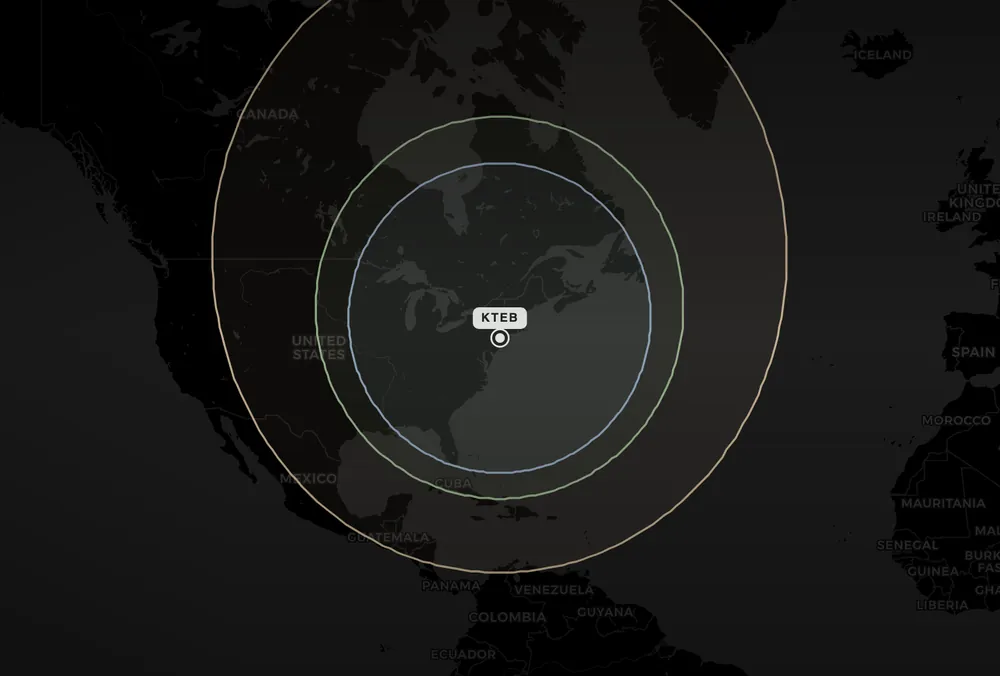
In the New York and New Jersey market, Teterboro (TEB) is the most natural business aviation gateway for travelers attending matches at MetLife Stadium or staying in Manhattan. Its proximity to northern New Jersey and direct road access into the city make it a practical anchor for semifinal and final-week planning. For groups intending to finish their tournament experience in this region, Teterboro will undoubtedly be one of the most requested airports on the calendar.
Dallas Love Field (DAL) serves an equally important role for fans heading to the South. North Texas will draw substantial traffic throughout the competition, and Love Field offers an efficient arrival point for charter clients heading to Arlington and the broader Dallas corridor. For knockout-round travel, this airport is likely to be a pivotal transfer node, especially for fans moving in from Miami, Atlanta, Los Angeles, or New York.
In South Florida, Miami-Opa Locka Executive Airport (OPF) is highly useful for match attendance and hospitality itineraries tied to the coast. It supports easier access to Miami Gardens as well as premium hotel zones across the surrounding region. For supporters combining the tournament with a broader luxury travel itinerary, this airport is often the strongest fit.
Los Angeles traffic relies heavily on Van Nuys Airport (VNY), which is one of the most prominent business aviation gateways in the country. For fans attending matches at SoFi Stadium, or beginning a West Coast run before heading north, it serves as a perfect starting point. Seattle is best served by Boeing Field (BFI), which provides highly efficient access directly to downtown and Lumen Field.
Atlanta travelers will typically look to DeKalb-Peachtree Airport (PDK), especially if they are staying in Buckhead, Midtown, or central districts. Chicago, while not a host city, remains highly relevant as a domestic feeder market. Chicago Midway International Airport (MDW) works incredibly well for Midwest-based groups heading into host cities, allowing our team to route connecting passengers smoothly through a central hub.
Typical Multi-City World Cup Charter Routes
The most compelling multi-city World Cup charter itineraries are shaped by match timing rather than geography alone. A group focused on early USA-related matches may begin in Los Angeles, then reposition to Seattle, and later pivot toward a knockout city. Another group may concentrate on the southern and eastern markets, moving from Miami to Dallas, then Atlanta, and finally the New York area.
A West Coast group-stage pattern is an excellent example of this strategic movement. Supporters arrive in Los Angeles through Van Nuys, attend an early fixture, and then continue north to Seattle through Boeing Field. That specific route falls into a block time that is comfortable for light jets, midsize jets, or super-midsize aircraft. It is a clean example of how a World Cup USA travel private aviation plan preserves momentum rather than forcing a group to spend entire days navigating airline connections.
Another highly relevant pattern runs from Miami to Dallas, onward to Atlanta, and finally into Teterboro. This specific sequence suits fans targeting late group-stage play before chasing high-profile knockout matches as the final week approaches. When structured correctly by an experienced broker, this routing helps minimize unnecessary aircraft repositioning. That matters because billable charter time encompasses not only passenger flight hours, but also how the aircraft reaches the departure airport.
Chicago-based fans may prefer a slightly different model, using Midway as a central departure point. From there, they can build two or three major host-city stops into a highly efficient, shorter program. For domestic groups splitting the cost across six to ten travelers, this approach creates a premium tournament experience without ever overcomplicating the route structure.
What World Cup 2026 Fan Travel by Private Jet Costs
Pricing is often the first question sophisticated travelers ask, and the most accurate answer is that a World Cup charter must be priced as a full mission rather than a simple hourly estimate. Our 2026 private jet charter cost guide is especially relevant for understanding these calculations. It explains how total charter pricing is built around the aircraft category, airport charges, fuel, crew logistics, taxes, and positioning rather than just airborne time.
The broad 2026 ranges remain helpful for your initial planning. Turboprops and very light jets may start around $1,500 to $3,000 per hour, while light jets often fall between $2,500 and $4,000 per hour. Midsize jets can range from roughly $4,000 to $8,000 per hour, and super-midsize aircraft generally require approximately $5,000 to $10,500 per hour. Heavy and ultra-long-range aircraft command higher premiums, often starting at $8,500 and reaching $20,000 or more per hour depending on the specific aircraft, route, and event pressure.
For fan groups, per-seat framing is often far more meaningful than the headline charter cost. A party of six to eight may find a light jet highly compelling on shorter domestic sectors. A group of eight to ten may prefer the comfort and range profile of a midsize or super-midsize cabin, especially if the itinerary includes a transcontinental segment such as Seattle to New York. The total quote will naturally reflect line items such as the Federal Excise Tax, handling, fuel surcharges, and overnight crew needs.
This is exactly where our charter broker model becomes highly beneficial for our clients. Rather than offering a single fixed fleet, our team compares aircraft options across a vast operator network to tailor recommendations to your route, match schedule, and budget target. This dynamic approach creates a superior fit for clients who want full transparency rather than a one-size-fits-all program.
How to Reduce Cost on a World Cup USA Travel Private Aviation Plan
The smartest way to improve your overall value is to design the itinerary as one coherent mission from the very beginning. Travelers exploring World Cup USA travel private aviation sometimes focus too heavily on one individual flight, when the larger savings actually come from the sequence itself. If the aircraft remains aligned with your group across several sectors, the overall quote often becomes much more efficient than a series of disconnected bookings.
Proper aircraft selection matters just as much as route efficiency. A larger cabin is not automatically the better choice if the route length and passenger count do not actually justify it. For many domestic sectors between host-city markets, a light jet or midsize jet represents the perfect balance of comfort and economics. For longer legs, or for groups carrying significant luggage and wanting additional space, moving up to a super-midsize aircraft makes far more sense.
Timing is another incredibly important lever for budget management. Major global events compress supply rapidly, especially in desirable categories and preferred departure windows. Booking early not only secures a wider array of premium aircraft choices, but it also allows more time to refine match sequencing and ground transfers. Furthermore, it creates space for solid contingency plans should your supported team advance deeper into the tournament than initially expected.
When to Book for June and July 2026
For the 2026 tournament, early planning must be treated as a core part of your strategy rather than an afterthought. June and July will bring extraordinary demand across the tournament map, and the most sought-after aircraft categories will tighten well ahead of the biggest match windows. Based on our own market guidance, a booking window of four to six weeks is often advisable around major global events, though complex multi-city itineraries deserve even earlier attention.
Single-sector travel can occasionally be arranged on shorter notice, but fans planning a multi-city World Cup charter should ideally begin once their likely match paths are clear. This is particularly true for knockout-round scenarios, where aviation demand converges rapidly around fewer cities and specific travel days. A group that knows it wants to be in Dallas, Atlanta, Miami, or the New York area during elimination rounds is vastly better served by mapping options well in advance.
Advance planning also secures the non-aviation details that deeply shape your overall experience. Ground transport, realistic stadium transfer timing, optimal hotel locations, and post-match departure windows all matter immensely. In high-traffic event environments, the true quality of your itinerary depends entirely on how seamlessly those secondary pieces are coordinated alongside the flight itself.
How Amalfi Jets Plans Multi-City Tournament Travel
Our team approaches tournament travel as a mission management exercise, rather than a simple flight booking. This distinction matters because World Cup itineraries inherently involve multiple moving parts that must operate in total harmony. A group may want to arrive for a match, attend private hospitality, reposition the next morning, and repeat that exact rhythm in another city two days later. Managing these logistics seamlessly requires matching your schedule, aircraft category, airport choice, and ground timing into one coherent plan.
As a premier charter broker with access to a vast network, we source from a large range of aircraft categories rather than limiting our clients to a narrow in-house selection. This flexibility proves immensely valuable when different sectors within your itinerary place varying demands on range, passenger count, or cabin preference. Your overall journey might call for a light jet for a short regional hop, followed by a super-midsize aircraft capable of crossing the country in superior comfort.
Pricing transparency remains a central pillar of our premium service. We provide itemized quotes so your group can clearly understand exactly how the full budget is constructed. Once travelers see the direct effects of routing, aircraft size, and positioning on their quote, they can make much smarter decisions about where to allocate their funds.
Travelers comparing providers can learn more about why travelers choose Amalfi Jets for their complex event itineraries. Those who are ready to start planning can request a World Cup charter quote through our team based on their specific match calendar and preferred airports. Readers who want a broader view of market trends can also explore more private aviation insights through our news archive at amalfijets.com.
Frequently Asked Questions About World Cup Private Jet Travel
A common question is whether one group can keep the same aircraft for several World Cup cities, and in many cases, the answer is yes. When the schedule is mapped in advance and the routing is efficient, keeping one aircraft aligned with the mission reduces friction and streamlines the overall travel experience. Whether this is the optimal approach depends entirely on your exact dates, local airport demand, and specific aircraft availability.
Another frequent question revolves around which airports are the most useful for tournament logistics. For the markets highlighted throughout this guide, Teterboro (TEB), Dallas Love Field (DAL), Miami-Opa Locka (OPF), Van Nuys (VNY), Chicago Midway (MDW), DeKalb-Peachtree (PDK), and Boeing Field (BFI) are among the most practical starting points. Each facility offers distinct advantages depending on your hotel location, stadium access, and the trajectory of the rest of your route.
Travelers also ask whether private charter is only realistic for very large groups, which is a common misconception. Smaller parties frequently charter aircraft when the value of their time, privacy, and direct access outweighs the significant inconvenience of commercial travel. For six to ten passengers sharing a mission across multiple sectors, the per-seat economics become much easier to justify than many people initially assume.
Finally, when addressing the question of timing, our advice is always that earlier is better. For knockout rounds, high-profile city pairs, and the final week in the New York and New Jersey area, securing your aircraft early is absolutely crucial. Advance planning reliably produces superior aircraft choices and a much more refined itinerary.
Finalizing Your World Cup 2026 Itinerary
The real challenge in World Cup 2026 fan travel private jet planning is not choosing an aircraft in isolation, but rather designing a holistic route that aligns perfectly with the tournament calendar. Your itinerary must flawlessly incorporate airport access, hotel logistics, group size, and precise budget expectations. Executed correctly, private aviation transforms a fragmented schedule into a smooth, multi-city experience that preserves your time and elevates your comfort.
For supporters moving between Los Angeles, Seattle, Dallas, Atlanta, Miami, and the New York market, our private charter solutions replace long connection days with direct, efficient travel. Whether your goal is attending one signature fixture or embarking on a full tournament run, our team is ready to structure the perfect itinerary. We will compare aircraft options across our network and build a tailored mission entirely around your preferred cities, airports, and travel dates.


