




Fall often returns board sessions, investor meetings, client visits, and annual planning to the center of the corporate calendar. As you review your travel policy for Fall 2026, the relevant question is not simply whether private jet business travel offers a more refined experience. It is whether a particular itinerary protects enough time, productivity, privacy, and commercial opportunity to justify the investment.
Corporate private jet charter presents a compelling case when several colleagues are traveling, your schedule includes multiple meetings, or commercial service demands connections and overnight stays. The strongest assessment is made trip by trip. The value of executive time and the purpose of the journey must be considered alongside the complete charter budget.
Private Jet Business Travel as an Operating Tool
Private aviation for business is most effective when it solves a defined operational problem. A chartered aircraft connects an itinerary that commercial schedules do not serve efficiently, preserves a tightly sequenced meeting calendar, and provides a private cabin where colleagues can continue working or speak candidly.
This distinction matters because corporate charter is not automatically the right choice for every journey. A nonstop commercial flight may remain suitable for one traveler with a flexible schedule. However, charter becomes more persuasive for a leadership team facing a connection, a distant commercial airport, or several meetings across different cities.
The cabin is only one part of the business case. Privacy allows senior leaders to review confidential material, discuss negotiations, and prepare for client conversations with greater control over their surroundings. This continuity proves particularly valuable when several decision makers who rarely share uninterrupted time travel together.
Your journey should therefore begin with a clear mission. You should ask who needs to travel, which meetings are fixed, what work must continue in transit, and what happens if the itinerary is delayed or extended by a day. Those answers establish whether charter serves a measurable business purpose.
Business Jet Travel ROI Starts With Door to Door Time
The most useful measure of travel time evaluates the complete journey from your departure address to the final appointment. A commercial itinerary often involves early airport arrival, security procedures, boarding, a connection, baggage collection, and a substantial transfer from a major airport. Private aviation reduces several of those elements and allows the travel day to reflect the actual business objective more closely.
For a senior executive, recovering several working periods within the same day has meaningful value. When your team travels together, the calculation expands because every hour preserved applies across the entire group. If the itinerary also removes an overnight stay or keeps your team available for another client engagement, the potential return extends beyond transportation.
A sound business jet travel ROI analysis assigns an internal value to traveler time. That value might reflect compensation, revenue responsibility, the cost of postponing a decision, or the operational consequence of keeping several leaders away from their usual responsibilities. The calculation does not need to imply that every hour has an exact cash value, but it should make the tradeoff visible.
Schedule control also holds value when the meeting itself carries significant consequences. An investor presentation, final negotiation, site inspection, or board discussion may justify a different travel decision than a flexible internal visit. The more closely the itinerary ties to revenue, governance, or a critical relationship, the more relevant protected time becomes.
Measuring Corporate Charter Benefits Against the Full Trip Cost
Charter should be compared with the complete commercial alternative rather than with one airline ticket. The commercial side includes business class fares for every traveler, surface transportation, hotels, meals, lost working time, and the effect of keeping important employees away from their normal responsibilities.
The charter side must also be evaluated as a complete trip budget. Aircraft category, routing, airport requirements, aircraft positioning, crew considerations, taxes, and other itinerary factors influence the final quote. The 2026 private jet charter cost guide explains why corporate buyers should review a complete itinerary rather than rely on a generalized hourly figure.
This broader comparison is where charter can approach financial equivalence with multiple business class tickets. It does not mean that a charter always matches the commercial fare total. Instead, a larger traveling party, several premium tickets, an overnight stay, indirect routing, and the value of recovered working time may narrow the difference enough to support a credible business case.
Cost per traveler is informative, but it should not stand alone in your analysis. You should also consider whether the trip enables more meetings, improves schedule resilience, protects confidential work, or returns the team home sooner. These corporate charter benefits often explain why two trips with similar routes produce very different conclusions.
The purpose of the journey belongs beside the financial analysis. A routine visit and a final client presentation do not carry the same commercial importance, even if the departure and arrival points are identical. Charter proves most persuasive when schedule control supports revenue, protects a relationship, or prevents a consequential meeting from being constrained by a published airline timetable.
Corporate Private Jet Charter for Multi City Missions
Complex itineraries often reveal the clearest return on investment. Corporate private jet charter makes it possible to sequence several locations within a more concentrated schedule, potentially reducing hotel stays, repeated airport procedures, and time away from the office. Commercial travel makes the same sequence difficult because every segment introduces another fixed departure and another potential disruption.
Your analysis should begin with the meetings rather than the airports. You can establish where each appointment will take place, how much time is required between conversations, and when the team must return. As your charter broker, our team assesses whether an aircraft and airport combination supports the desired sequence, subject to operational conditions.
A multi-city charter provides a consistent working environment between stops. Documents remain organized, conversations continue privately, and preparation for the next meeting begins once your team settles in the cabin. For board members, transaction teams, and client-facing executives, that continuity is just as valuable as the time preserved on the ground.
Not every multi-city itinerary supports a charter investment. The value depends on the number of travelers, meeting locations, commercial alternatives, surface transfers, operating conditions, and the importance of returning on a particular schedule. A careful comparison preserves the option of commercial service when it remains the more effective solution.
Fall 2026 Corporate Travel in New York, Los Angeles, Dallas, Chicago, Miami, and Houston
Fall 2026 brings a concentrated period of planning meetings, client reviews, investor conversations, and site visits. If you have activity across New York, Los Angeles, Dallas, Chicago, Miami, and Houston, examine whether several separate commercial trips could be organized into a coherent corporate charter strategy.
Your team might need to connect New York and Los Angeles for a transcontinental meeting, continue through Dallas or Houston for operational discussions, or include Chicago and Miami in a broader client itinerary. The value does not come from adding destinations for their own sake. It comes from designing the travel schedule around the meetings rather than forcing important meetings around limited or indirect service.
Geographic planning must remain precise. A city name alone does not reveal the time required to reach the meeting, and the nearest airport on a map may not produce the strongest door-to-door result. Surface transportation, meeting location, aircraft suitability, airport conditions, and schedule requirements all influence our final recommendation.
You can also use the fall calendar to identify recurring travel patterns. If several leadership teams visit the same markets within a short period, coordinating travelers and objectives improves the value of the charter. That approach requires thoughtful planning, but it reveals opportunities that are not visible when each airline ticket is reviewed in isolation.
Strategic Airport Choices: TEB, VNY, DAL, MDW, OPF, and HOU
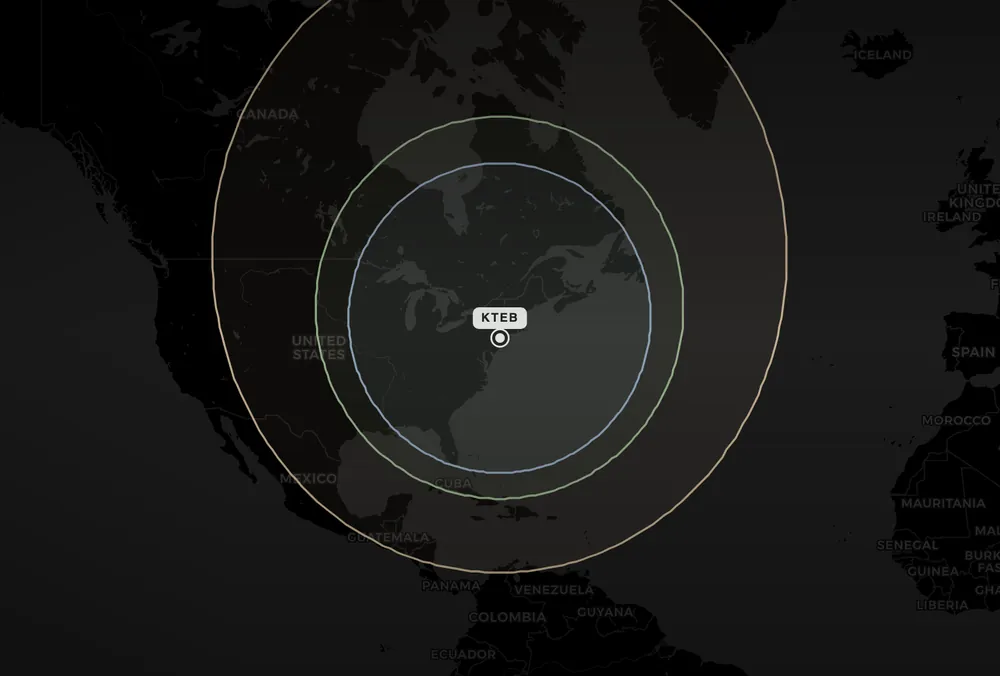
Airport selection materially affects the usefulness of a private charter itinerary. For New York travel, Teterboro (TEB) is evaluated according to your final destination, departure address, aircraft requirements, and conditions on the intended date. The airport code serves as a starting point, not a complete assessment of the journey.
In Los Angeles, Van Nuys (VNY) supports certain corporate itineraries depending on meeting location and operational considerations. A corporate mission involving TEB and VNY places schedule control at the center of a coast-to-coast journey, but aircraft options and timing should always be assessed for your specific trip.
Dallas Love Field (DAL), Chicago Midway International Airport (MDW), Miami Opa Locka Executive Airport (OPF), and William P. Hobby Airport (HOU) are also considered for travel involving Dallas, Chicago, Miami, and Houston. The appropriate airport depends on more than the city name, as surface travel, local conditions, aircraft suitability, and the next stage of the itinerary all contribute to the actual return.
A route that looks efficient on a map may be less attractive if the selected airport creates a lengthy transfer to the appointment. Conversely, a carefully selected airport preserves a meaningful part of the working day. Our team considers the complete movement from the departure address to the final meeting when presenting charter options.
Choosing a Charter Broker and Aircraft Around the Mission
Aircraft selection has a direct effect on both cost and utility. Passenger count, baggage, route, cabin preferences, airport requirements, and expected conditions all influence which aircraft category is appropriate. These factors should be assessed together rather than allowing one preference to determine the entire decision.
A larger aircraft is not automatically the stronger business choice. If another category completes the mission while meeting your company requirements, it supports a more disciplined ROI case. For a longer or more demanding itinerary, additional cabin space or capability helps preserve productivity, subject to the specific aircraft and operating conditions.
Amalfi Jets operates exclusively as a charter broker, not an aircraft operator or ownership provider. Our team sources options from vetted operators and curates aircraft around the journey, allowing you to consider different categories as your travel requirements change. The overview of aircraft categories for private charter provides a useful starting point for understanding how mission requirements shape selection.
This broker model proves highly relevant for companies whose travel patterns vary throughout the year. A regional site visit, a transcontinental client meeting, and a multi-city roadshow each call for a different solution. Matching the aircraft to the individual mission helps keep the decision aligned with its intended business return.
When Does Corporate Charter Make Financial Sense?
The clearest candidates often involve several travelers, senior decision makers, limited commercial service, or meetings whose timing cannot move. Charter also deserves consideration when an airline itinerary adds a connection, requires an overnight stay, or consumes most of a productive day.
Group size changes the comparison because the commercial side includes a separate premium ticket for each traveler. A charter quote covers the aircraft for the mission, subject to approved passenger capacity and operating requirements. As your group grows, evaluating cost per traveler alongside total trip value creates a more useful comparison than placing one charter quote beside one airline fare.
Confidentiality also has economic value, even when it is difficult to quantify. A private cabin gives your team greater control over sensitive conversations and working documents. For transactions, legal discussions, strategic planning, and client preparation, reducing unnecessary exposure is a legitimate part of the decision.
Client presentation and impression management should be considered with restraint. Charter communicates preparation and respect for a demanding schedule, but it should support the substance of the meeting rather than become the focus. A credible corporate policy treats presentation as one consideration beside time, productivity, privacy, and complete trip cost.
The strongest approval question asks whether charter improves the outcome of this particular journey enough to justify the difference in cost. That framing encourages disciplined decisions and gives your finance, travel, and executive teams a shared basis for evaluation.
Building Private Aviation for Business Into Travel Policy
You do not need to replace commercial travel broadly to capture the value of private aviation for business. A more disciplined approach establishes a limited set of qualifying conditions and compares outcomes across several consequential journeys. This creates a record of actual time preserved, productive hours maintained, and avoidable travel expenses removed.
Your travel policy might distinguish routine individual trips from missions involving several executives, multiple cities, confidential work, or material schedule consequences. Finance and travel leaders can then review each candidate itinerary against consistent criteria. A defined process makes approvals more transparent and prevents charter from being treated as an exception without a clear business rationale.
Fall 2026 offers a natural point for this review as your team prepares for planning sessions, board activity, client visits, and investor discussions. Rather than assuming every important trip merits private jet business travel, decision makers identify the journeys where timing and access directly affect the objective. Earlier planning also provides a broader selection of suitable operator and aircraft options.
After each charter, your company can compare the original commercial scenario with the completed journey. Useful measures include total travel time, working time preserved, overnight expenses avoided, meetings completed, and schedule changes accommodated. Over time, this evidence shows where charter produces a repeatable return and where commercial service remains sufficient.
Planning Fall 2026 Corporate Charter With Amalfi Jets
The strongest charter strategy begins with the mission rather than a preferred aircraft. We assess who is traveling, where each meeting will occur, which times are fixed, what work must continue in the cabin, and when the team needs to return. Our brokerage team then curates operator and aircraft options that reflect those priorities.
For companies connecting New York, Los Angeles, Dallas, Chicago, Miami, and Houston, this approach makes the comparison highly practical. Airport choice, aircraft category, itinerary structure, group requirements, and the complete quote are considered together so your travel team evaluates the decision on business terms.
Corporate charter should earn its place in a travel policy through measurable results. If Fall 2026 includes a critical roadshow, board session, site visit, or client engagement, request a tailored corporate charter itinerary and allow our team to build the options around your schedule and objectives.