



A private jet to Singapore is more than a flight into one of Asia’s leading commercial centers. It is an intercontinental mission shaped by aircraft capability, crew planning, airport access, local scheduling, and the destinations that follow.
These decisions become especially important for travelers arriving from Los Angeles, New York, London, Dubai, or Tokyo. They require added attention during fall 2026, when the Singapore Formula 1 Grand Prix is expected to concentrate demand across aviation, accommodations, hospitality, and ground transportation.
Seletar Airport (XSP) is generally the principal hub for private aviation in Singapore, while Singapore Changi Airport (SIN) remains relevant for selected missions, connections, and contingency planning. Choosing between them requires a review of the complete itinerary rather than a default preference for the more familiar airport.
Private jet to Singapore: a Southeast Asia gateway
Singapore sits at the southern edge of the Malay Peninsula and offers convenient access to commercial centers throughout Southeast Asia. Its position makes the city a practical base for executives, family offices, technology leaders, and private travelers managing several regional commitments within a limited schedule.
A Singapore private jet itinerary can combine meetings around Marina Bay with onward travel to Indonesia, Malaysia, Thailand, Vietnam, and other destinations across the region. Depending on the trip, travelers may continue by private charter, scheduled service, chauffeured vehicle, or yacht.
This gateway role is particularly valuable when Singapore is one part of a wider Asia itinerary. Amalfi Jets can coordinate the inbound aircraft with regional flights and ground movements so that passenger preferences, baggage requirements, and connection timing are considered as one cohesive plan.
The city also lends itself to combining business and private time. Marina Bay, celebrated gardens, waterfront settings, and dining shaped by diverse international traditions can turn a corporate visit into a more complete stay.
Private aviation in Singapore: Seletar or Changi
Seletar Airport is generally the starting point for Singapore private aviation planning. Its orientation toward business and general aviation creates an environment distinct from the major commercial terminals at Changi, making XSP a natural candidate for travelers who value dedicated handling and a discreet arrival.
Using Seletar may also support planning around aircraft positioning, local handling, parking, and onward transportation. Exact operating conditions remain specific to the aircraft, date, and mission, particularly during major events, so suitability must be confirmed during the charter process.
Changi remains an important option even though it is not the automatic choice for every private arrival. SIN may be appropriate when an itinerary includes a scheduled airline connection, when ground plans favor the eastern side of Singapore, or when additional airport flexibility is valuable during a period of concentrated demand.
The right airport therefore depends on the entire trip. Arrival timing, aircraft category, parking, handling, passenger connections, operating permissions, and ground access can all influence whether XSP or SIN presents the more effective solution.
Our private jet charter guide to Singapore offers further context on Seletar, Changi, and seasonal travel patterns. Airport availability and operating arrangements should still be confirmed against the proposed aircraft and current itinerary.
Senai International Airport (JHB) in Johor Bahru and Hang Nadim Airport (BTH) in Batam may also have strategic value for certain regional plans. They can be considered when meetings, residences, yacht movements, or onward commitments are centered in Johor or Batam rather than central Singapore.
These regional airports should not be treated as interchangeable substitutes for Seletar or Changi. Their usefulness depends on the traveler’s final destination, border requirements, ground arrangements, and wider schedule.
Private jet to Singapore from Los Angeles and New York
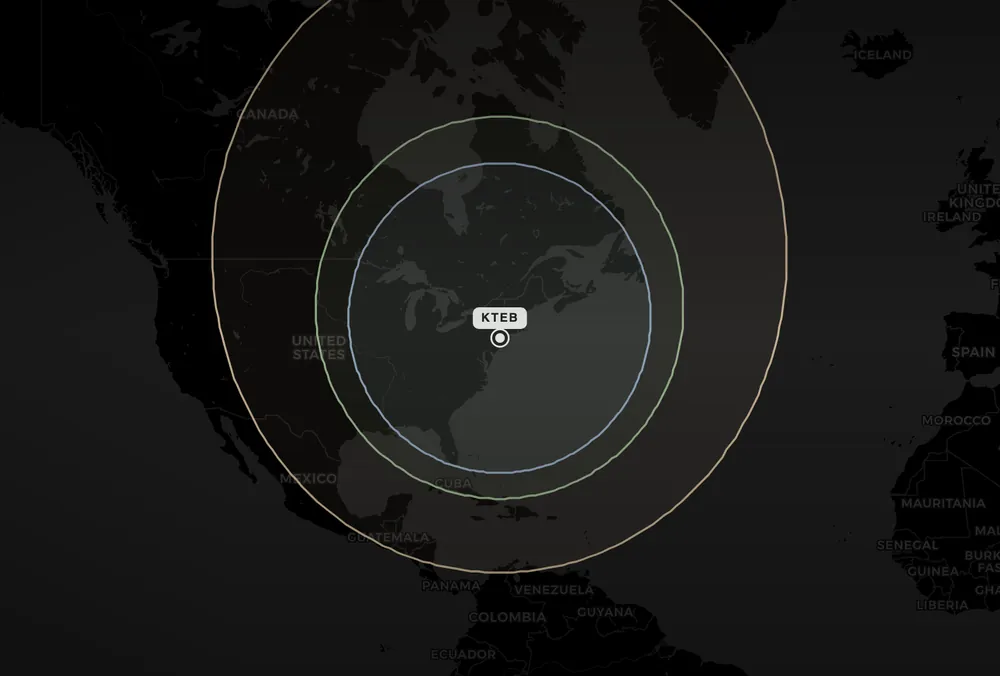
Travel from North America to Singapore represents one of the most demanding forms of private charter planning because of the exceptional distance involved. Departures from Van Nuys Airport (VNY) in Los Angeles or Teterboro Airport (TEB) in the New York area require careful review of aircraft capability, routing, fuel strategy, crew duty limitations, and potential technical stops.
Heavy and ultra-long-range aircraft are commonly evaluated for missions of this nature, but a published range figure alone cannot establish whether a particular aircraft can complete the requested itinerary. Winds, passenger count, baggage load, airport conditions, routing restrictions, crew requirements, and aircraft configuration can all affect the operating plan.
For a VNY departure, the planning process should consider the complete West Coast schedule, aircraft positioning, and the preferred arrival window in Singapore. A Los Angeles departure may also be shaped by connecting travel, meetings, or an onward regional program after arrival.
A TEB departure can require equally close coordination around business schedules and access to the New York area. Departure flexibility, crew planning, aircraft positioning, and the timing of any proposed technical stop should be examined together rather than as separate details.
Generic flight time or distance estimates should not be used as the basis for either route. Exact timing, routing, and any technical stop requirement must be established during quoting with current mission data and information from the proposed operator.
Charter flights from London, Dubai, and Tokyo
London, Dubai, and Tokyo each present a distinct planning profile for a charter flight to Singapore. Although these missions differ from North American routes, airport availability, operator permissions, crew requirements, aircraft positioning, and passenger schedules remain central to the plan.
For departures from London Heathrow Airport (LHR), airport choice may be influenced by a scheduled airline connection or a traveler’s location within London. A fully private itinerary may also warrant consideration of another London airport suited to business aviation, subject to aircraft compatibility and current availability.
From Dubai International Airport (DXB), planning should reflect the chosen departure point, aircraft positioning, and the traveler’s broader Middle East and Asia schedule. Dubai World Central may also be relevant for certain business aviation missions, but the final airport decision should follow the requirements of the specific aircraft and itinerary.
Tokyo Haneda Airport (HND) is well positioned for travelers beginning near central Tokyo and can be a logical origin for Singapore. Aircraft performance, operating permissions, airport access, crew planning, and the desired arrival window still require a mission-specific review.
Across all five origin markets, the objective is not merely to identify an aircraft with sufficient theoretical capability. Amalfi Jets sources a suitable aircraft from a vetted operator and evaluates whether the proposed itinerary can be conducted within the applicable operational limits.
Fall 2026 private jet planning for the Singapore Grand Prix
The Formula 1 Singapore Grand Prix is scheduled for October 9 through 11, 2026, at the Marina Bay Street Circuit. The event is planned as a Sprint weekend, adding activity to an already concentrated schedule and drawing attention across the full event period.
For private jet arrivals into Singapore, this concentration can place additional pressure on aircraft availability, airport movements, parking, hotels, hospitality, and chauffeured transportation. Travelers should consider securing the aviation component early rather than waiting until every other reservation has been finalized.
Airport flexibility can become particularly valuable during the event. Seletar may remain the preferred gateway for many missions, but Changi or a regional airport could become part of a contingency plan when the passenger schedule and ground arrangements make that option practical.
Departure planning deserves the same attention as the arrival. Demand may be concentrated immediately after the event, so a flexible departure window or an additional night in Singapore may preserve more options when the wider itinerary allows.
A well-structured Grand Prix itinerary should connect the aircraft, airport, hotel, hospitality schedule, and local transportation. Treating those elements as one coordinated plan can reduce avoidable pressure during a busy weekend.
Singapore Airshow planning and peak charter demand
The 2026 Singapore Airshow took place from February 3 through 8 at the Changi Exhibition Centre. Trade days ran from February 3 through 6, followed by public days on February 7 and 8, creating a sustained period of travel for exhibitors, delegations, corporate teams, and visitors.
Although the February 2026 edition has passed, its structure offers a useful model for future airshow planning. A multiday program can compress demand for appropriate aircraft while adding pressure to airport access, parking, handling, accommodations, and local transportation.
Travelers attending future editions should begin with the complete schedule rather than the opening day alone. Arrival dates for setup, private meetings, hospitality programs, and post-event departures may create demand well beyond the official public calendar.
Singapore demand is also influenced by holidays, corporate calendars, and multi-stop Asian itineraries. When travel dates coincide with a major gathering or a widely observed holiday period, confirming the aircraft and airport strategy early can preserve more routing and scheduling flexibility.
What affects charter flight Singapore pricing
There is no single responsible route price for every charter flight to Singapore. The total cost depends on origin, aircraft category, routing, airport selection, seasonal demand, trip structure, aircraft positioning, taxes, fuel conditions, crew logistics, and applicable handling or airport charges.
For an intercontinental mission, an hourly rate rarely explains the full economics of the charter. Positioning sectors, potential technical stops, crew rest, additional flights, and the difference between a one-way and round-trip structure may materially affect the proposal.
Optional environmental programs and Sustainable Aviation Fuel premiums may also affect certain itineraries. When applicable, these items should be presented clearly with the other charges so travelers can assess the complete trip rather than compare headline figures that omit important components.
Our 2026 private jet charter cost guide explains how aircraft category, fees, taxes, fuel, and positioning contribute to pricing. For a Singapore mission, those principles must be applied to the actual city pair, dates, passenger needs, and operating plan instead of an unsupported estimate.
Coordinating a Singapore arrival and regional itinerary
Airport selection is only one part of a successful arrival. Chauffeured vehicles, hotel transportation, and yacht tenders should be arranged around the confirmed airport and operating schedule, with suitable flexibility for changes in air traffic or handling.
Transfer times between XSP or SIN and Marina Bay vary with current local conditions. They should be reviewed for the relevant date and arrival window rather than treated as fixed, particularly during events that concentrate road and hotel activity.
Singapore’s compact geography and established infrastructure can support carefully coordinated itineraries, but precision remains important. A considered schedule can connect the aircraft arrival with meetings, dining, hospitality, or a harbor departure without placing unnecessary pressure on the traveler.
For regional extensions, Singapore can function as a staging point rather than the final destination. Amalfi Jets can coordinate the primary charter with onward private or scheduled flights while considering baggage, passenger preferences, connection timing, and ground transportation together.
How Amalfi Jets arranges a Singapore private jet charter
Amalfi Jets is a private charter broker and is not an aircraft operator. We source aircraft from vetted operators, allowing each mission to be evaluated according to the traveler’s dates, passenger requirements, preferred airports, and onward itinerary rather than matched to a fixed fleet.
For a private jet to Singapore, this process includes reviewing aircraft category, operator suitability, airport access, potential technical stops, crew requirements, and event-related constraints. Alternate airports and schedule flexibility can also be examined when demand around the Grand Prix, airshow activity, holidays, or corporate events narrows the available choices.
Our charter proposals are structured to explain the proposed aircraft and the principal variables affecting the complete trip. Positioning, fuel-related charges, airport costs, and other applicable items are addressed within the proposal rather than separated from the wider mission.
Travelers can learn more about our approach to private charter brokerage before beginning an itinerary. The emphasis remains on considered aircraft sourcing, clear communication, and planning shaped around the individual journey.
Singapore rewards thoughtful preparation, particularly when it anchors a complex intercontinental or Southeast Asian itinerary. To discuss your preferred dates, origin airport, event schedule, and regional plans, request a private charter, and our team will curate an aircraft and arrival strategy around your requirements.