




Destination Hub
Private Jet Charter to Singapore
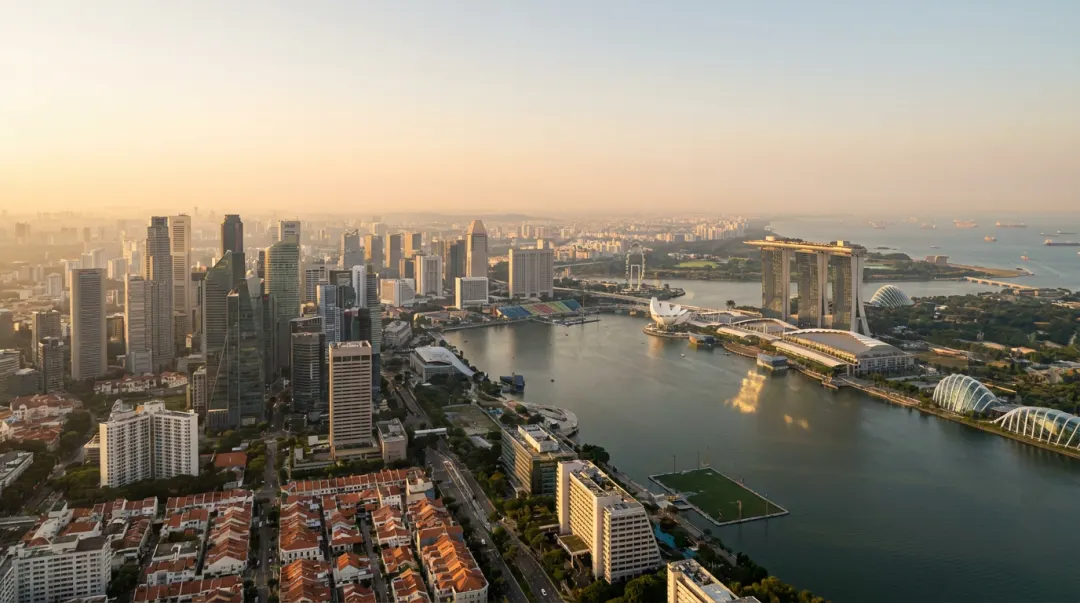
Arriving by private aircraft into Singapore is centered on Seletar Airport (XSP), with the day organized around one clear point of entry. Your schedule can move around board meetings, family plans, yacht transfers, or a late dinner, while the aircraft waits for the itinerary rather than the reverse.
Quick facts
Why charter a private jet to Singapore?
Private flying into Singapore is about control: a cleaner arrival plan, a schedule built around the traveler, and fewer compromises between the aircraft and the calendar.
Why clients choose to charter privately
Commercial routes can move people efficiently, but they rarely protect the whole day. A private itinerary lets the departure time, passenger list, baggage plan, and onward ground movement sit inside one coordinated brief.
For many travelers, the value is not only privacy in the cabin. It is the ability to arrive with a smaller circle, keep meetings confidential, adjust late when the diary changes, and avoid building an entire trip around airline frequency.
Airport planning with XSP
Seletar Airport (XSP) is the primary airport for this destination, so the charter plan begins there. That gives the desk a defined operating focus when coordinating arrival timing, ground handling, passenger details, and any onward arrangements.
Alternates can still matter. Changi International Airport (SIN), Senai International Airport (JHB), and Hang Nadim Airport (BTH) may be reviewed when the trip calls for a different regional routing, a shorter onward movement, or a more resilient plan during high-demand periods.
Time saved where it matters
The real advantage is the shape of the day. Instead of accepting fixed airline departures, a charter can be timed around a board close, a hotel check-in, a private dinner, or a same-day regional connection.
That flexibility is especially useful for short stays. When the city is one stop in a broader Asia itinerary, private aviation can reduce friction between meetings, family travel, and onward flights without turning the schedule into a sequence of public-airport compromises.
“We secure the preferred XSP arrival window first, then compare alternates if the schedule is tight. For February, September, and December, firm dates earlier in the process widen aircraft choice.”

When is the best time to fly to Singapore?
The best time to visit Singapore depends less on weather perfection and more on what is happening in the city, because demand rises sharply around signature travel periods.
Peak charter months
February is a high-demand month because the airshow and Lunar New Year period bring business aviation, corporate travel, and family movement into the same calendar window. Travelers with firm dates should plan early if arrival time, aircraft preference, and hotel coordination matter.
September draws another surge around the night race, when premium hospitality, corporate hosting, and private travel often converge. December carries a different kind of pressure, driven by year-end holidays, luxury escapes, and multi-stop regional itineraries.
Better-value windows
March, April, and May can be practical months for travelers who want more aircraft choice after the Lunar New Year rush. The weather is hotter, but the tradeoff can be easier availability and more room to shape the schedule.
How to plan
For fixed-event travel, secure aircraft and airport preferences before the rest of the itinerary becomes rigid. With flexible dates, ask the charter desk to compare nearby departures, alternates, and aircraft positioning so the final plan reflects both comfort and efficiency.
Where our clients stay and go
Singapore rewards travelers who like precision with texture: glass towers, banyan shade, harbor light, late meals, and a city rhythm that moves quickly without feeling careless.
A city on the water
Set at the southern edge of the Malay Peninsula, the island looks outward to sea lanes, regional capitals, and the wider Asia-Pacific business circuit. The approach feels urban almost immediately: water, cranes, green corridors, and a skyline that sharpens as the aircraft descends.
Marina Bay gives the city its most cinematic frame. At different hours, the same view changes character — silver in the morning, hard blue at midday, then reflective and theatrical after dark.
What draws private travelers
Executives come for finance, family offices, technology, shipping, and regional headquarters. Leisure travelers come for the restaurants, the hotels, the gardens, the shopping, and the ease of pairing a city stay with a beach or yacht itinerary elsewhere in the region.
There is also a sense of order that appeals to people moving on tight schedules. Transfers are planned, dinners run late, and meetings can be stacked across a compact geography without losing the feeling of place.
The character of the stay
A strong itinerary might begin with a quiet arrival, continue through a suite overlooking the bay, and end in a dining room where the city’s Chinese, Malay, Indian, Peranakan, and global influences meet without needing explanation.
The pleasure is in the contrast: tropical heat outside, cool interiors inside; orchids and rain trees against steel; hawker heritage near polished hotel lobbies; harbor traffic beyond a calm table set for two.
What determines the cost of a flight to Singapore?
The cost of chartering into Singapore is shaped by aircraft selection, routing, airport planning, seasonal demand, and the availability of repositioning opportunities.
Aircraft selection
Cabin size, range requirements, baggage needs, passenger count, and onboard service expectations all influence the aircraft proposed for a trip. A larger cabin, longer routing, or more complex service profile will generally change the overall charter economics.
The right aircraft is not chosen on distance alone. The desk also considers comfort, luggage, crew duty planning, airport suitability, and how the aircraft fits the rest of the itinerary.
One-way or round trip
A one-way charter is priced differently from a round trip because the aircraft may need to reposition before or after the passenger flight. If the aircraft and crew can remain efficiently positioned for the return, the structure may be more favorable than a stand-alone movement.
Round trips can also vary depending on how long the aircraft waits, where it can park, and whether another mission can be scheduled around the same aircraft.
XSP positioning and airport costs
Seletar Airport (XSP) is the primary planning point, so positioning to and from XSP is part of the quote structure. Airport fees, handling, parking, permits, crew logistics, and local operating requirements are reviewed before a final itinerary is presented.
If an alternate airport is more suitable for a particular movement, that choice can affect the overall plan. Changi International Airport (SIN), Senai International Airport (JHB), and Hang Nadim Airport (BTH) may each change the balance of ground access, aircraft availability, and operating complexity.
Seasonal demand
February, September, and December tend to require earlier planning because demand is influenced by the airshow and Lunar New Year period, the night race calendar, and year-end luxury holiday travel. During those windows, the best aircraft and timings can be claimed quickly.
March, April, and May often give clients more flexibility after the Lunar New Year rush. Hotter weather and easier aircraft availability can make those months useful for travelers with adaptable dates.
Empty-leg availability
Empty legs can reduce inefficiency when an aircraft is already moving in the right direction, but they are never the same as a fully bespoke charter. Timing, routing, passenger flexibility, and aircraft type must align closely.
For clients with firm plans, the desk treats empty legs as an opportunity rather than a foundation. A confirmed charter remains the cleaner structure when timing, privacy, and service standards cannot move.
Which airports serve Singapore?
The airports that serve Singapore for private travel are led by Seletar Airport (XSP), with Changi International Airport (SIN), Senai International Airport (JHB), and Hang Nadim Airport (BTH) considered when the itinerary calls for an alternate.
Seletar Airport (XSP)
For Singapore, Seletar Airport is the primary charter gateway and the natural first option for a private arrival plan. Choosing XSP keeps the operation focused: one preferred airport, one handling brief, and one clear starting point for coordinating passengers, luggage, crew, and ground movement.
It is best for travelers who want the aviation side of the trip kept discreet and direct. When the schedule is firm, the desk will normally begin by checking how XSP fits the requested arrival time and onward itinerary.
Changi International Airport (SIN)
Changi International Airport can make sense when the traveler’s broader plan is tied to the region’s major airline gateway, a commercial connection, or a specific ground movement on that side of the city. It is also a useful airport to keep in the discussion when resilience matters and the primary plan needs a credible secondary path.
A private traveler would not choose SIN simply because the name is better known. The question is whether the airport fits the timing, handling environment, onward movement, and any connection requirements better than XSP for that particular trip.
Senai International Airport (JHB)
Senai International Airport may be reviewed for itineraries where the traveler’s meetings, residence, yacht movement, or onward routing point toward the wider cross-border region. In those cases, the value is not the airport name itself but the possibility of shortening the ground plan or avoiding pressure at the primary arrival point.
The charter desk treats JHB as a strategic alternate rather than a default. It is most relevant when the destination after landing sits closer to that side of the region or when operational availability makes an alternate plan more practical.
Hang Nadim Airport (BTH)
Hang Nadim Airport is another regional option to consider when the trip extends beyond the city into nearby island or coastal movements. For some itineraries, arriving through BTH may align better with onward plans than landing at the primary airport and moving back out by ground or water.
That decision should be made around the whole journey. Aircraft availability, arrival timing, passenger preferences, and the final destination after landing all determine whether BTH adds convenience or complexity.
How the choice is made
The best airport is the one that protects the day. XSP is the starting point; SIN, JHB, and BTH become useful when an alternate improves timing, reduces congestion exposure, or places the traveler closer to the next commitment.
Common questions about Singapore charter
Which airport is best for arriving by private aircraft?
Singapore is typically planned through Seletar Airport (XSP), the primary airport for this destination, with alternates reviewed when timing or onward movement calls for them.
Can I use Changi instead of XSP?
For Singapore, Changi International Airport (SIN) can be considered when a commercial connection, specific ground plan, or backup airport strategy makes it more suitable.
What determines the cost of chartering into the city?
Singapore charter pricing is shaped by aircraft type, routing, one-way or round-trip structure, airport fees, positioning, seasonal demand, and any empty-leg availability.
When should I book for the busiest travel periods?
For Singapore, plan earliest for February, September, and December because the airshow and Lunar New Year period, the night race, and year-end holidays can tighten aircraft availability.
Are JHB or BTH useful alternates for private flights?
Singapore itineraries may consider Senai International Airport (JHB) or Hang Nadim Airport (BTH) when a regional meeting, onward transfer, or congestion-sensitive plan makes an alternate more practical.
Try Range Explorer
See how far you can fly nonstop
Explore aircraft range, compare options, check flight times, and better understand which aircraft fits your trip.

Ready to fly to Singapore?
Request a charter and our team will tailor an itinerary for your next journey.
*Takes only about 40 seconds to request your quote.
