



Destination Hub
Private Jet Charter to Big Sky
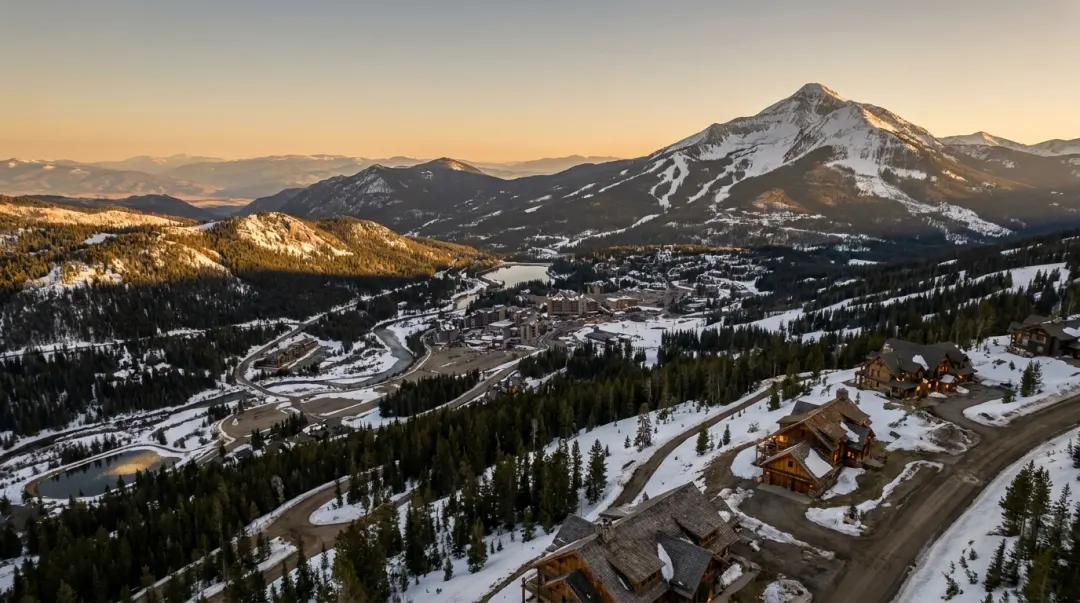
A private arrival for Big Sky turns a mountain trip into a single, coordinated movement from aircraft to chalet, lodge, or club residence. Instead of building the day around airline connections, travelers set the timing around snow conditions, family schedules, and the first evening in Montana.
Quick facts
Why charter a private jet to Big Sky?
Private charter into Big Sky is about controlling the hardest parts of a mountain itinerary: timing, routing, luggage, and the handoff from aircraft to ground transport.
A cleaner path into the mountains
Commercial flying often adds connections, fixed departure times, and crowded winter terminals to a trip that is meant to feel restorative. Chartering privately allows the schedule to be built around the traveler’s calendar, with departure times, passenger lists, baggage needs, and arrival planning handled as one itinerary.
For ski weeks and private-club stays, that difference matters. Equipment, winter clothing, family groups, household staff, and last-minute schedule changes are easier to manage when the flight plan is organized around the trip rather than the other way around.
Flexibility when the calendar is firm
The most valuable part of a private flight is often not the aircraft itself, but the ability to protect time. Departures can be planned around school breaks, board meetings, weather windows, or a same-day connection from another residence, while the charter desk coordinates aircraft availability and airport selection in advance.
That flexibility is especially useful when a stay involves multiple generations, separate arrival points, or a quick return after a holiday week. A private itinerary can be revised with more discretion than a commercial ticket, subject to aircraft, crew, airport, and weather constraints.
Time saved before and after the flight
A well-planned charter reduces the number of friction points around the travel day. The passenger experience is quieter, the departure process is more direct, and the arrival plan can be synchronized with vehicles, residence access, and luggage handling.
For travelers booking a private jet charter to Big Sky, the advantage is not simply reaching Montana; it is arriving with the day still intact.
“For December, February, and March departures, our charter desk secures the preferred arrival window and ground-transfer plan first; firm dates early in the process widen aircraft choice before holiday, Presidents’ Week, and spring-break demand tightens availability.”

When is the best time to fly to Big Sky?
The best time to visit Big Sky depends on whether the trip is built around ski-week certainty or quieter shoulder-season flexibility.
Peak winter demand
December, February, and March are the most competitive months for private aviation planning. Holiday travel, Presidents’ Week, and spring-break ski demand at the resort and Yellowstone Club all place pressure on aircraft availability, preferred departure times, and arrival-window choices.
Travelers with fixed lodging or club dates should begin planning early for these periods. The earlier the schedule is firm, the wider the aircraft selection and the easier it is to coordinate timing with ground transport and residence access.
Better-value shoulder periods
April, May, October, and November tend to be more flexible months for charter planning. Mud-season and pre-snow conditions bring lighter crowds, softer demand patterns, and often better aircraft availability.
Those periods are well suited to travelers who prioritize privacy, scenery, and space over peak ski conditions. They can also work well for property visits, quiet retreats, and flexible family travel.
Planning around the mountain calendar
Winter trips reward precision: firm dates, clear passenger counts, and early decisions on baggage and equipment. Shoulder-season trips reward flexibility, especially when travelers can shift a departure by a day or choose from several acceptable airport options.
A charter advisor should align the flight plan with the purpose of the stay first, then refine aircraft choice, routing, and arrival timing around the season.
Where our clients stay and go
Big Sky is a mountain destination defined by Lone Mountain, the Gallatin River corridor, and a rhythm that shifts from ski mornings to firelit evenings.
The setting has a strong visual identity: open meadow, dark timber, steep ridgelines, and a clean western light that changes quickly as weather moves across the Madison Range. Days often revolve around the mountain, but the place is not only a ski address; it also has a quieter side shaped by river water, ranchland, trailheads, and long views.
Mountain, meadow, and canyon
The community is often understood through three natural zones: the Mountain, the Meadow, and the Canyon. Each gives a different texture to the stay, from slopeside access and alpine energy to town-center convenience and the wilder feel of the Gallatin River corridor.
Private travelers are drawn by that range of experiences. A single trip might include first tracks, a private dinner, fly-fishing, a spa afternoon, and a drive through canyon country without ever feeling over-programmed.
A discreet Montana pace
Luxury here is less about spectacle than space. The best days can feel unhurried: coffee with a view of Lone Mountain, a quiet transfer after landing, a late lunch after skiing, or an evening when the sky goes pale over the ridge before the temperature drops.
The destination suits travelers who value privacy and outdoor access in equal measure. Residences, clubs, lodges, and ranch-style stays all play into the same appeal: Montana scenery with enough infrastructure to make a high-touch trip feel smooth.
Why it works for private travel
A mountain itinerary has many moving parts, and Big Sky rewards coordination. Ski equipment, winter clothing, family schedules, instructors, dinner reservations, and ground transport all benefit from an arrival plan that is handled before the aircraft departs.
That is where private aviation fits the destination naturally. It gives travelers a more controlled start and finish, preserving the reason they came in the first place: time in the mountains, not time in transit.
What determines the cost of a flight to Big Sky?
The cost of chartering into Big Sky is determined by aircraft selection, routing, aircraft positioning, airport-related fees, seasonal demand, and the availability of suitable empty-leg opportunities.
Aircraft class and cabin requirements
Aircraft class is one of the first pricing variables. The right choice depends on passenger count, cabin preference, luggage volume, skis or outdoor gear, desired nonstop routing, and the overall service profile of the trip.
A larger cabin may offer more space and flexibility for families or longer journeys, while a smaller aircraft may suit a shorter itinerary with fewer passengers. The final recommendation should always match the mission, not simply the destination name.
One-way versus round trip structure
A one-way charter is priced differently from a round trip because the aircraft and crew still need a sensible operating plan after passengers arrive. If the aircraft remains with the traveler, the quote may reflect crew time, overnight arrangements, parking, and related services.
Round trips can sometimes create a more efficient structure when the stay length and aircraft availability align. Longer gaps between arrival and return may require separate aircraft solutions rather than keeping the same jet in place.
Positioning, airport fees, and handling
Positioning matters because the aircraft may need to fly from another market before picking up passengers, or reposition after drop-off. Those movements can influence the quote even though they are not part of the passenger-facing itinerary.
Airport-related costs may also apply, including handling, parking, weather-related services, crew support, and ground coordination. These are evaluated at the selected airport and reflected in the final charter proposal.
Seasonal demand
December, February, and March can tighten availability because of holiday travel, Presidents’ Week, and spring-break ski demand tied to the resort and private-club calendar. During those periods, preferred aircraft and arrival windows tend to be secured earlier by travelers with firm dates.
April, May, October, and November are often more flexible planning periods, with lighter crowds and better aircraft availability during mud-season and pre-snow intervals.
Empty-leg availability
Empty legs can occasionally reduce the cost of a private flight, but they are opportunistic rather than guaranteed. They must match the traveler’s route, timing, passenger needs, and acceptable flexibility.
For mountain trips with fixed lodging, club reservations, or holiday schedules, an empty leg is best treated as a possible advantage rather than the foundation of the plan.
Which airports serve Big Sky?
Private flights serving Big Sky are planned around a set of regional airport options, with the best choice depending on the traveler’s final address, aircraft and crew considerations, ground-routing preferences, and seasonal demand.
EKS — Big Sky Airport
EKS is the most intuitive name on the airport list for travelers whose trip is centered on the resort community. When appropriate for the aircraft, itinerary, and operating conditions, it may offer the most direct planning logic for arrivals focused on private residences, mountain lodging, or club stays.
The charter desk would evaluate EKS first when the priority is minimizing complexity near the destination. Suitability still depends on the full operating picture, including aircraft selection, weather, handling arrangements, and the traveler’s arrival schedule.
WYS — Yellowstone Airport
WYS can make sense when a trip pairs the mountain with Yellowstone-area plans or when the broader regional itinerary points south or west. It may also be considered as an alternate when demand, weather planning, or ground-transfer strategy makes another arrival point preferable.
For private travelers, the value of WYS is situational rather than automatic. It belongs in the planning conversation when the trip extends beyond the resort calendar and into a wider Montana-and-Yellowstone itinerary.
LVM — Mission Field Airport
LVM gives the charter team another regional option when the best plan is not simply the most obvious airport name. It may be useful when aircraft availability, operating conditions, or ground logistics point toward a different arrival pattern.
This type of alternate can matter during peak winter weeks, when preferred arrival windows and aircraft choices narrow. A secondary airport can give advisors more ways to protect the traveler’s schedule, provided the ground plan remains sensible.
BTM — Bert Mooney Airport
BTM is a broader regional option to evaluate when the itinerary benefits from additional flexibility. It may be relevant for travelers combining the mountain with other parts of Montana or for trips where airport availability and ground timing need to be balanced carefully.
A private-terminal experience is not assumed by name alone; the charter desk confirms handling, arrival procedures, and passenger-service expectations before recommending any airport. The right choice is the one that best aligns aircraft operations with the traveler’s destination on the ground.
Choosing the right airport
Airport selection should be made after the passenger list, luggage profile, lodging location, and preferred arrival time are clear. That sequence allows the charter team to compare EKS, WYS, LVM, and BTM for the actual mission rather than selecting an airport from a list.
During busy ski periods, having an acceptable alternate can widen the planning field. During quieter months, travelers may have more flexibility to prioritize convenience, privacy, or routing efficiency.
Routes to & from Big Sky
Common questions about Big Sky charter
Which airports can be considered for a private flight to the area?
For Big Sky, the planning set includes EKS, WYS, LVM, and BTM, with the best choice depending on the final address, aircraft plan, weather, handling, and ground-transfer strategy.
What determines the cost of chartering there by private jet?
A charter into Big Sky is priced according to aircraft class, routing, one-way or round-trip structure, positioning, airport-related fees, seasonal demand, and any suitable empty-leg availability.
When should travelers book for ski season?
Travelers to Big Sky should plan earliest for December, February, and March because holiday, Presidents’ Week, and spring-break ski demand can reduce aircraft choice and preferred arrival windows.
Are shoulder-season trips easier to arrange?
Trips to Big Sky in April, May, October, and November often allow more flexibility because mud-season and pre-snow periods typically bring lighter crowds and better aircraft availability.
How does Amalfi Jets choose between the listed airport options?
For Big Sky, Amalfi Jets weighs the traveler’s lodging location, schedule, passenger count, luggage needs, aircraft availability, handling arrangements, and the practicality of the ground transfer.
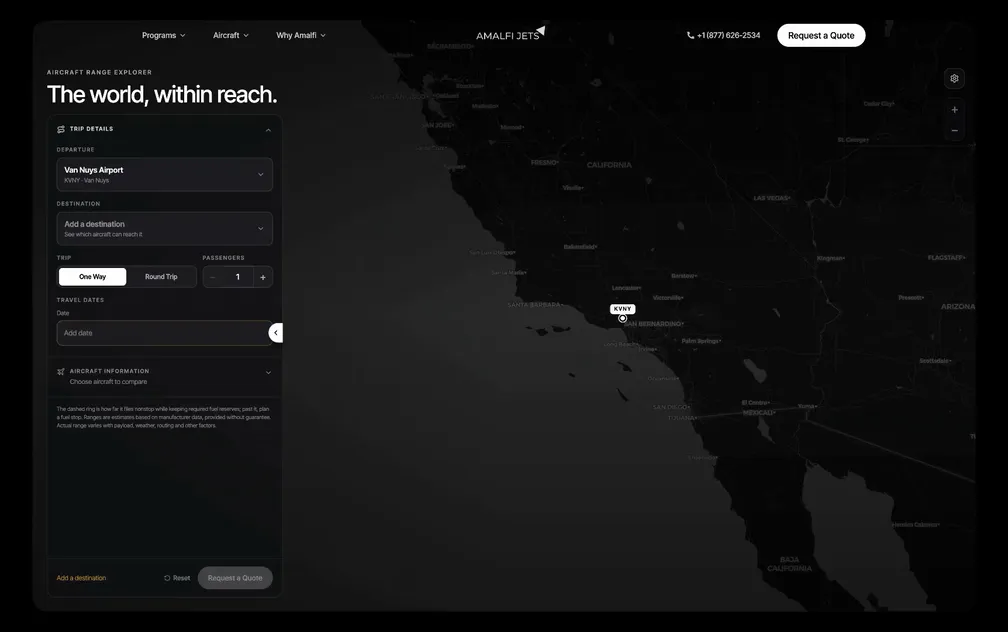
Try Range Explorer
See how far you can fly nonstop
Explore aircraft range, compare options, check flight times, and better understand which aircraft fits your trip.

Ready to fly to Big Sky?
Request a charter and our team will tailor an itinerary for your next journey.
*Takes only about 40 seconds to request your quote.
