




Booking a private jet to Washington DC is not only about choosing the aircraft. For many travelers, the more consequential decision is choosing the right airport for your specific itinerary.
Summer 2026 is expected to bring exceptionally strong demand across Washington, with political travel, board meetings, legal schedules, fundraising events, and international business all competing for lift and access. For travelers departing from New York, Miami, Chicago, Los Angeles, or Boston, the smartest arrival point may be HEF in Manassas, IAD in Dulles, or, in narrower cases, DCA near downtown. Understanding the difference is essential for anyone planning a private jet Washington DC trip with efficiency, discretion, and cost control in mind.
This guide explains how each airport fits within Washington DC private aviation and when each one makes the most sense. We also detail how our team at Amalfi Jets helps clients align aircraft, airport, and ground strategy for a completely seamless trip.
Why airport choice matters for a private jet to Washington DC
When planning a charter flight DC travelers often discover that airport choice shapes nearly every part of the mission. It affects ground transfer time, operating flexibility, aircraft compatibility, security considerations, and the total trip budget. In a high-traffic market like Washington, those differences can be highly meaningful for your schedule.
Some travelers need the closest possible access to Capitol Hill, K Street, or federal offices. Others care more about avoiding congestion, simplifying an international arrival, or reducing the friction that can come with larger commercial hubs. The same aircraft can produce a very different travel day depending on whether it lands at HEF, IAD, or DCA.
That is why many private jet DC itineraries begin with an airport strategy conversation well before the aircraft is finalized. For domestic business and political trips, airport choice can directly influence punctuality and convenience. For transcontinental or international missions, it can also affect ground handling, customs coordination, and ramp costs. In short, choosing the right airport is often the first step in planning the right trip.
HEF and Washington DC private aviation for domestic missions
For many domestic travelers, Manassas Regional Airport (HEF) has become one of the most practical gateways to the capital region. It sits in Northern Virginia, roughly 30 miles from central Washington, and is widely viewed as an outstanding business aviation field. Because scheduled airline traffic does not dominate the space, this operating environment translates into smoother movements and a highly predictable arrival experience for your private flight.
In the context of Washington DC private aviation, HEF stands out because it aligns flawlessly with the needs of recurring corporate and political missions. Travelers arriving for same-day meetings, executive sessions, hearings, or fundraising stops value an airport built around private operations rather than commercial volume. This focus results in an airfield that feels distinctly tailored to the brisk pace of business aviation.
Established fixed-base operator infrastructure heavily supports HEF and reinforces its reputation as a practical private hub near Washington. Ground access serves as another major advantage for your journey. While all drive times in the region depend on traffic, HEF benefits from Northern Virginia road connections that make it a compelling alternative to busier airports. This routing proves especially advantageous when your final destination is in Virginia or downtown DC.
For many clients booking a private jet to Washington DC, HEF offers an ideal balance. It remains close enough to the city to be highly efficient, yet separate enough from the commercial airline environment to reduce operational complexity. That creates an extremely appealing combination during elevated demand periods such as the summer months.
When a private jet to Dulles is the better fit
If HEF serves as the preferred domestic workhorse, Washington Dulles International Airport (IAD) typically represents the more expansive option. A private jet Dulles itinerary is often the better choice when your mission includes long-range flying, international arrivals, or larger cabin aircraft. It also serves as the ideal facility if you require a seamless connection between your charter flight and scheduled airline service.
Washington Dulles functions as the region's primary international gateway, making it highly relevant for travelers arriving from overseas or continuing onward on a global itinerary. It is also well suited to domestic long-range missions from the West Coast. This is particularly true when passengers prefer a super-midsize, heavy, or ultra-long-range aircraft with increased baggage capacity and robust airport support.
For a traveler flying from Van Nuys Airport (VNY) to the capital region, for example, IAD may be the most natural choice if your schedule calls for a larger cabin aircraft. The same logic applies to passengers coming into the DC area from international markets who want the infrastructure associated with a major global gateway. A larger airport simply offers the space and sophisticated ground handling required for extended, complex global missions.
This operational strength is a primary reason the phrase private jet Dulles appears so frequently in long-range itinerary planning. In a purely geographic sense, it may not always be the absolute closest option to your final meeting. In an operational sense, however, it remains the most capable facility in the immediate region. For international and transcontinental travelers, that elevated capability frequently outweighs any incremental ground transfer time.
DCA access for a private jet Washington DC itinerary
Reagan National Airport (DCA) is undeniably attractive on a map. Its immediate proximity to downtown Washington makes it incredibly appealing for high-priority meetings near the Capitol, the White House, K Street, or major federal agencies. Yet for the vast majority of private travelers, DCA is simply not the default answer.
A private jet Washington DC itinerary involving Reagan National is subject to significantly tighter access controls and security requirements than most charter travelers encounter at HEF or IAD. Because general aviation access is limited and carefully managed, DCA works best as a special-case airport rather than a routine private aviation solution. Travelers and operators may need extensive pre-approval, passenger screening, and compliance with specialized program requirements that add layers of complexity to your trip.
That operational reality does not mean DCA is completely irrelevant for private aviation. For select government, diplomatic, or mission-critical movements, its central location can absolutely justify the extra planning and coordination. It simply means that most charter clients should naturally approach Reagan National as an exception. In practice, many travelers who initially ask for the closest airport to downtown are ultimately routed to HEF or IAD once we review the operational realities together.
For anyone actively comparing airport options for a private jet to Washington DC, DCA should be understood as a high-convenience but limited-access field. It can work beautifully under the right circumstances, but it should never be assumed as a standard arrival point. We highly recommend discussing your exact security profile and timeline with our team before committing to a DCA arrival strategy.
Charter flight DC patterns from New York, Miami, Chicago, Los Angeles, and Boston
For travelers researching a private jet Washington DC itinerary, route patterns from major origin cities help clarify which airport is likely to fit best. The right answer depends heavily on your total flight distance, selected aircraft category, passenger count, and what matters most on the ground after landing. Our team routinely navigates these exact route profiles and can expertly help you optimize every aspect of your journey.
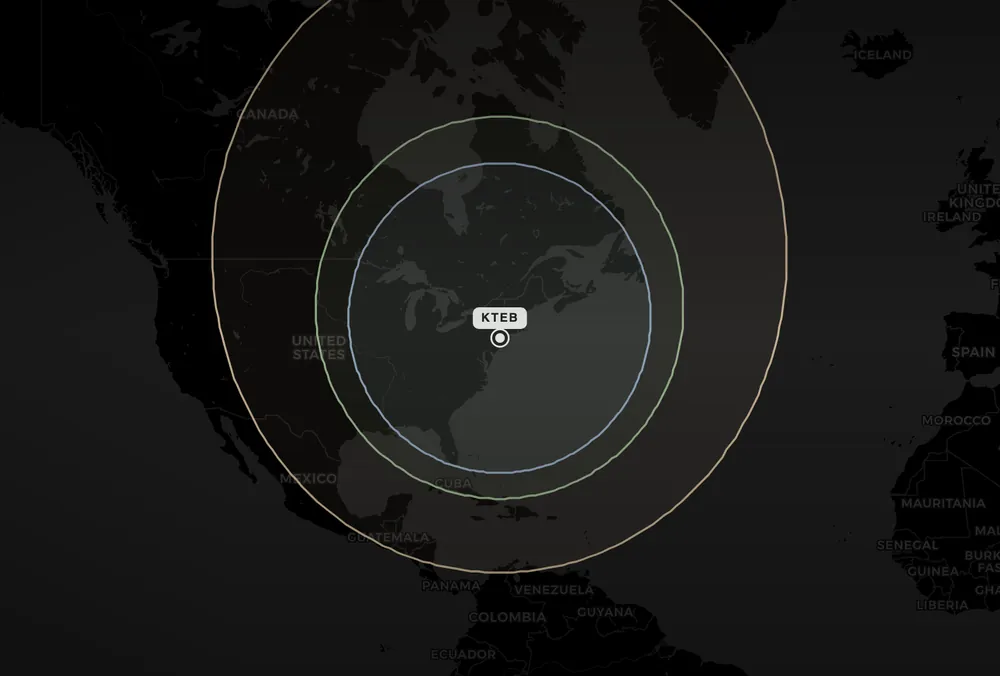
From New York, especially out of Teterboro (TEB), Washington stands as one of the most active private aviation corridors in the country. Typical airborne time is approximately one hour, depending on routing and regional traffic management. These flights are frequently tied to same-day executive meetings, political fundraising, consulting work, legal schedules, and multi-stop Northeast itineraries. In many of these cases, HEF is highly attractive because it supports fast aircraft turns and avoids the heavier operating feel of a major commercial hub.
From Miami, particularly departing from Miami-Opa Locka Executive Airport (OPF), a charter flight DC mission is commonly routed directly into HEF or IAD. Indicative airborne time is roughly two to three hours when flying in a midsize or super-midsize jet. This route remains highly popular for regulatory meetings, investment-related travel, family office schedules, and executive movement between South Florida and the Mid-Atlantic. Travelers evaluating their budget should also review our 2026 private jet charter cost guide, which explains how aircraft category, taxes, airport fees, fuel, and repositioning contribute to real trip totals.
From Chicago, frequently departing Chicago Midway International Airport (MDW), Washington missions are well suited to capable midsize and super-midsize aircraft. Flight times for this popular route commonly fall within the two-hour range. These rapid trips are consistently linked to crucial board meetings, conference traffic, legal teams, and consulting groups. Depending on your final destination and desired operating environment, either HEF or IAD may be the stronger fit for your specific schedule.
From Los Angeles, usually originating at VNY, the mission profile changes significantly. These are longer nonstop sectors that often call for super-midsize, heavy, or ultra-long-range aircraft, depending entirely on passenger count and comfort preferences. Indicative nonstop flight time typically requires approximately four to five hours. For these transcontinental trips, IAD frequently becomes the more natural arrival point because of its robust runway support for larger cabin aircraft and sophisticated global itinerary needs.
From Boston, Washington remains an essential, high-volume corridor for legal, healthcare, financial, and institutional travel. Typical airborne time holds steady at approximately 90 minutes, which seamlessly keeps efficient light and midsize jets very much in play. HEF regularly emerges as a highly flexible arrival point for this mission, especially when travelers prioritize private aviation efficiency over commercial airport scale.
What a charter flight to DC may cost in 2026
One of the most common questions travelers ask is how much a private jet to Washington DC actually costs. The most accurate answer is that pricing is always determined by the full, comprehensive mission, not just a simplified hourly rate. Our dedicated team successfully builds detailed, realistic budgets that capture the true scope of your personal or business travel needs.
A precise charter flight DC budget includes aircraft time, fuel conditions, crew logistics, landing fees, handling charges, taxes, and any repositioning required. Airport choice also tightly impacts this final total. A private jet DC itinerary into HEF may price altogether differently than the identical itinerary into IAD or DCA because each respective airport features a distinct operating environment and fee structure.
As a broad summer 2026 reference, turboprops and very light jets may start around $1,500 to $3,000 per hour. Moving up the cabin size scale, light jets sit around $2,500 to $4,000 per hour, while midsize jets command $4,000 to $8,000 per hour. Super-midsize jets typically range from $5,000 to $10,500 per hour, and heavy or ultra-long-range aircraft start from roughly $8,500 to over $20,000 per hour. These serve as useful baseline planning ranges, but they are never final trip totals without a custom quote.
That is exactly why we focus on providing itemized pricing rather than leading with vague headline numbers. For a Washington mission, the most helpful approach is to evaluate your entire itinerary through the lens of schedule, route, airport availability, passenger count, and required flexibility. That analytical framework becomes particularly critical during periods of elevated travel demand, when both aircraft availability and geographic positioning can shift costs meaningfully.
Summer 2026 strategy for private jet DC demand
Summer 2026 is fully expected to be an incredibly active period for private aviation broadly, and Washington may feel that sustained pressure more than many other markets. Intense political schedules, rapid fundraising activity, ongoing corporate travel, legal meetings, and high-value East Coast day trips all actively generate demand in the capital region. We highly encourage travelers to plan ahead to secure the very best options during these constrained windows.
For private jet DC travelers, the practical effect of this demand translates into tighter aircraft availability and more aggressive competition for preferred arrival windows. Greater overall pressure on charter pricing during peak dates will also become a far more frequent reality. Broader event activity across the United States may also actively influence large cabin availability, especially for travelers aiming to book on short notice.
Booking earlier consistently helps preserve better aircraft options and minimizes the stark risk of paying a premium for constrained lift. As a highly effective general planning rule, a four- to six-week booking window typically offers distinct advantages during busy periods, particularly for larger aircraft and complex multi-leg itineraries. Weather patterns should also actively remain part of your ongoing flight discussion. Mid-Atlantic summer conditions can swiftly introduce thunderstorms and subsequent routing changes, making early schedule flexibility incredibly valuable.
How Amalfi Jets plans Washington DC private aviation
Washington trips reward careful planning because no two flight missions are identical. A rapid same-day Teterboro meeting run, a complex Miami family office itinerary, and a transcontinental executive movement from Los Angeles each call for a unique blend of airport strategy, aircraft category, and ground planning. At Amalfi Jets, we operate as a charter broker, sourcing safe and reliable aircraft through a vetted global operator network. This allows our team to expertly match your exact mission to the market instead of forcing your trip into a fixed fleet.
This flexibility remains highly useful in Washington, where distinct airport restrictions, local traffic patterns, varying aircraft ranges, and shifting demand cycles all heavily influence the journey. For our clients, that translates directly into expert advisory support throughout the entire booking process. We evaluate whether HEF or IAD represents the better arrival point and precisely assess whether DCA access is a realistic option for your security profile. We also ensure transparent pricing by presenting a fully itemized quote rather than relying on a simplified hourly estimate.
For travelers who want to understand our foundational service approach, our Why Amalfi page offers essential operational context. Our broader news archive also includes related planning resources for smoothly navigating evolving charter markets. With extensive global access to a wide variety of distinguished aircraft, we can intricately tailor a Washington strategy built entirely around your schedule, absolute discretion, and pure efficiency.
Request a tailored Washington DC charter plan
The definitive strategy for a private jet Washington DC journey is rarely determined by simplistic geographic distance alone. Securing the precise right airport can immediately improve schedule reliability, dynamically streamline your travel day, and consciously shape the total cost of the mission in highly beneficial ways. Careful precision ensures you confidently avoid the complications that so frequently arise from rushed or poorly researched travel plans.
For many upcoming domestic trips, HEF will likely remain the strongest option for efficient, highly discreet access to the capital region. IAD will properly continue to serve as the preferred gateway for long-range and exceptional international travel. Meanwhile, DCA, while exceptionally close to downtown, will appropriately remain a far more specialized, limited-access solution.
If you are actively planning a private jet to Washington DC from New York, Miami, Chicago, Los Angeles, Boston, or another major market, our experts are fully prepared to assist. We can map the ideal airport and aircraft combination from the very outset of your journey. To discuss your precise schedule and receive an itemized quote, visit amalfijets.com to request a charter and let our team confidently build a tailored Washington itinerary around your exact mission.


