

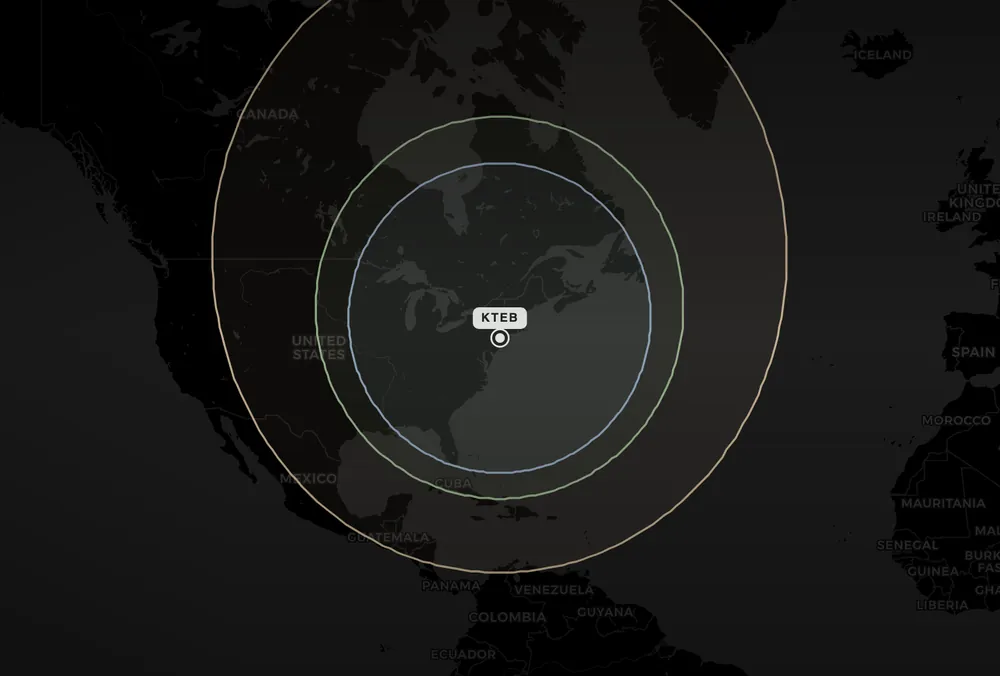


If you are trying to decide whether to lease a private jet or rely on on-demand charter in 2026, the real question is not which option sounds more exclusive. It is which structure actually fits the way you strategically travel. For many flyers moving between Los Angeles (VNY), New York (TEB), Miami (OPF), Dallas (DAL), and Chicago (MDW), the answer comes down to annual flight hours, schedule consistency, and how much operational responsibility they want to carry. In most cases, charter remains the more efficient choice until usage becomes high, predictable, and repetitive enough to justify a longer commitment.
That distinction matters because travelers often treat leasing, timeshare programs, and charter as entirely interchangeable arrangements. They are not entirely the same in execution or financial obligation. A lease can provide dedicated access to one aircraft over months or years, while charter is booked trip by trip with no ongoing obligation to a specific airframe. Timeshare and fractional-style programs sit between those two extremes, meaning that understanding private jet lease vs charter in practical terms can save substantial capital and reduce complexity.
For our clients at Amalfi Jets, that operational flexibility is especially relevant. Your week might begin with a VNY to TEB meeting run, continue with an OPF to TEB round trip, and end with a shorter DAL or MDW sector for a seamless team transfer. One aircraft will not always be the right fit for every unique mission. Before you commit to a lease, it is worth understanding where charter, leasing, and private jet timeshare cost truly diverge in 2026.
Private Jet Lease vs Charter Explained Clearly
Leasing a private jet can make sense for the right flyer, but it is rarely the automatic default answer. The better approach is to begin with how often you fly, how fixed your routes are, and whether you value dedicated access more than mission-by-mission flexibility. Travelers with lower or highly variable annual usage usually benefit from charter because they only pay when they physically fly. Conversely, travelers with repeat schedules and heavier utilization may find that a lease or timeshare structure becomes worth evaluating.
This is why the conversation has shifted in recent years. The old assumption dictated that frequent private flyers should eventually move directly into ownership or leasing. In reality, modern brokerage access has made on-demand charter exceedingly adaptable. Instead of committing to one aircraft type, you can select the right cabin, range, and baggage profile for each tailored itinerary.
When you compare private jet lease vs charter, you might collapse several different access models into one conversation, which is where expensive mistakes begin. Charter means securely booking an aircraft and crew for a specific mission without taking on long-term responsibility for the airplane itself. Once the trip ends, your financial obligation concludes as well. That simplicity is part of the appeal, particularly for travelers whose schedules shift dramatically from month to month.
Wet Lease, Dry Lease, and Structuring Access
A lease is a binding contract that provides access to an aircraft for a defined term, usually with recurring obligations and assumptions about minimum usage. Depending on whether the arrangement is wet or dry, you may carry limited or substantial responsibility for daily operations. That distinction matters because the economics of a lease encompass administrative burden, compliance, staffing, maintenance planning, and how efficiently one aircraft can cover a range of missions. For many individuals and companies, charter is the cleaner solution because it avoids locking one travel profile into one inflexible airplane.
We operate as a global charter broker rather than a fixed-fleet operator, which allows you to benchmark each mission against the aircraft most appropriate for that route. Our private jet aircraft categories guide is suited for understanding how turboprops, light jets, midsize jets, super midsize jets, and heavy jets align with different trip profiles. Anyone researching jet leasing companies will quickly encounter the terms wet lease and dry lease during their search. A wet lease generally provides the aircraft with crew, and often includes maintenance and insurance within the structure.
Under a wet lease, the lessor typically retains operational control, making the arrangement feel closer to a dedicated aircraft access solution than direct management. A dry lease is more demanding, as the aircraft is leased on its own while you arrange pilots, insurance, maintenance oversight, and operational control. Dry leasing tends to fit organizations with a capable internal flight department or extensive outside management support. For an executive who wants reliable premium travel without structural friction, a dry lease often introduces more complexity than tangible value.
Private Jet Timeshare Cost and the Middle Ground
This operational burden highlights one of the most important differences between lease private jets arrangements and on-demand charter options. As a charter client, you are not building an operating platform wrapped around a designated airplane. You are securing premium transportation for a specific mission profile. By contrast, the dry lessee steps closer to the operator side of the equation, meaning the decision is financial, legal, and managerial.
In 2026, indicative market ranges for aviation leasing can be substantial and vary widely. Dry leases for midsize to large aircraft routinely sit in the low six figures per month, moving materially higher depending on the specific aircraft, term length, and support structure. Wet leases can rise beyond that threshold because specialized crew, maintenance, and insurance are folded into the package. While those numbers are directional, they illustrate that leasing is a foundational commitment rather than a simple booking choice.
Between a fully flexible charter strategy and a long-term lease sits a third category that attracts frequent flyers, commonly known as a fractional model. This intersection is where private jet timeshare cost becomes relevant for your planning. These programs are designed for premium travelers who want more predictability than ad hoc charter but decline to assume direct aircraft management. The resulting structure offers consistent access alongside layered economics that may compare favorably with retail charter at certain usage thresholds.
What Charter Costs in 2026
That timeshare comparison only works if you evaluate your total annual spend rather than focusing on a simple hourly number. Upfront capital commitments, monthly management fees, occupied hourly base charges, interchange costs, and contract terms all shape your real financial picture over time. For travelers in roughly the 50 to 200 hour annual range, evaluating timeshare programs deserves serious consideration. The real lesson is that fractional timeshare costs should be judged alongside your needed flexibility, cancellation terms, and desired category access.
Any honest analysis of leasing versus charter needs a grounded view of current market pricing. According to our 2026 private jet charter cost guide, charter usage should be evaluated as a total trip budget rather than a standalone hourly figure. The baseline aircraft category forms only one piece of the comprehensive quote you receive. Repositioning, crew logistics, taxes, airport fees, fuel dynamics, and booking timing all influence the final number.
In broad terms, turboprops and very light jets often anchor the lower end of the market, while midsize and long-range heavy aircraft move progressively higher. A frequent traveler flying from VNY to TEB requires a different cabin solution than an executive booking a shorter DAL to MDW sector. A simple hourly rate fails to tell the whole story for these nuanced itineraries. For travelers flying across major coastal hubs, charter remains attractive because your cost scales alongside actual cabin use.
When It Makes Sense to Lease a Private Jet
By chartering your journeys, you avoid carrying monthly aircraft commitments during quiet periods, and you bypass forcing every itinerary into one specific aircraft profile. If your upcoming week calls for a super midsize jet and the subsequent trip requires a light cabin, charter allows that adjustment immediately. There are, however, structured situations where it is rational to formalize a private jet master lease. The strongest case appears when your annual usage is both high and highly predictable.
If your executive travel calendar consists of repeat corporate routes, stable passenger group counts, and a narrow range of mission requirements, a lease can deliver structural consistency. This scenario is especially true if dedicated guaranteed access matters more to you than the ability to change aircraft categories frequently. The practical rule of thumb for 2026 remains clear for our frequent flying clients. Tracking below roughly 150 annual flight hours, charter is typically your more financially efficient and lower-friction strategic option.
Between about 150 and 200 hours, a fractional timeshare or selective corporate lease starts to become worth serious evaluation. Climbing materially above 200 hours, especially on repetitive city pairs, corporate leasing becomes more structurally credible from an organizational perspective. A weekly executive shuttle operating between New York and Chicago may justify deep lease analysis. By contrast, an executive team shifting destinations constantly may still find that charter serves them well despite maintaining meaningful annual flight volume.
Why On-Demand Charter Still Fits Most Travelers
For most readers considering whether to pursue ownership or a lease, on-demand charter is still the most practical default path. The reason goes beyond enjoying a lower financial commitment to ensuring better alignment with how private travelers actually move across the modern globe. Schedules shift, passenger group counts change, and luggage profiles vary from trip to trip. One itinerary may call for an agile light jet, while another requires a heavy aircraft with transatlantic range and spacious seating.
This flexibility is particularly valuable for our clients navigating the coastal triangle of major domestic hubs in the United States. A tightly timed VNY to TEB mission is a different logistical proposition from an OPF to TEB flight. Charter allows each mission to be matched to the right aircraft instead of asking one leased solution to cover every scenario. That flexibility translates into better value, refined fit, and less operational waste over the course of a year.
It also creates a clean decision path for your executive aviation planning. Instead of trying to predict future utilization with perfect accuracy, you can use charter records as a live benchmark. If your annual usage rises and flight patterns become repetitive, the hard data will make that visible. Until that point, there is no reason to accept the inflexibility of a long-term lease without proving that your travel profile supports it.
A Practical Framework for Major Hub Travel
For a traveler based among coastal or central hubs, the best access model matches the right aircraft to each mission instead of asking one leased solution to cover every scenario. That flexibility translates into better value, refined fit, and less operational waste over the course of a year. Whether you are running a VNY to TEB executive shuttle, an OPF to TEB family trip, or a DAL to MDW team transfer, the ability to select the right cabin each time is a structural advantage that leasing cannot easily replicate.
The most disciplined approach is to let real data guide the decision. Track your annual hours, cabin categories used, and route repetition. If those patterns crystallize into a narrow, high-volume profile, revisit the lease conversation with a clear picture in hand. Until then, charter through a global brokerage remains the cleanest way to access premium aviation without absorbing the fixed costs and operational commitments of a leased aircraft.


