



The Formula 1 United States Grand Prix returns to Circuit of the Americas from October 23 through October 25, 2026. This major event reliably turns Austin into one of the most competitive private aviation markets of the fall. For travelers planning an f1 us grand prix 2026 private jet itinerary, the difference between a seamless arrival and a difficult one often comes down to airport strategy, timing, and how early the mission is confirmed.
This is not a weekend to improvise. Teams, sponsors, executives, and high-profile spectators converge on the same city with fixed schedules and very little tolerance for delays. As demand rises, aircraft availability tightens, preferred arrival windows narrow, and pressure builds at the most convenient airports. A smart private jet COTA plan starts well before race weekend and is built around realistic operating conditions rather than best-case assumptions.
Why F1 US Grand Prix 2026 Private Jet Planning Starts Early
Formula 1 compresses an enormous amount of activity into a short window. Practice takes place on Friday, qualifying follows on Saturday, and the Grand Prix anchors Sunday, while concerts, hospitality activations, private dinners, and sponsor events fill the surrounding schedule. That concentration of commitments is exactly why formula 1 Austin private aviation demand spikes each October, and why the most desirable aircraft and airport combinations are often reserved earlier than you might expect.
Unlike a flexible leisure itinerary, race-weekend movements are usually fixed. Guests may need to arrive in time for sponsor programming, team meetings, or paddock access, and departures often align with onward travel to New York, Miami, Los Angeles, Dallas, Houston, or other major markets immediately after the race. In practical terms, preferred aircraft categories tighten first, the primary airport becomes more congested, and last-minute changes typically become more expensive. By the time the busiest part of the weekend arrives, flexibility has already started to disappear.
That is also why a sophisticated charter plan for COTA week considers more than cabin size alone. The right solution may depend on whether you value direct access to downtown Austin, a less congested airfield, a specific post-race departure window, or a multi-city itinerary that needs accurate positioning and cost planning from the start. Our team evaluates every operational variable to ensure your travel aligns perfectly with your event schedule.
Circuit of the Americas Private Jet Airport Strategy: AUS vs GTU
For most travelers, Austin-Bergstrom International Airport (AUS) serves as the primary gateway for a circuit of the americas private jet arrival. AUS is usually the most direct choice for downtown hotels, city dining, and straightforward access to Circuit of the Americas. For passengers whose schedules center on Austin proper, AUS remains the natural first option and often the most convenient one.
Even so, convenience during race week can come with tradeoffs. As Formula 1 traffic builds, AUS can face heavier ramp activity, more pressure on handling capacity, and less room for preferred timing. That is where airport strategy becomes a meaningful part of the booking process rather than an afterthought. Our team's Austin private jet charter guide identifies AUS as the main airport for Austin private arrivals while also highlighting regional alternatives that can become valuable when event traffic intensifies.
Among those alternates, Georgetown Municipal Airport (GTU) is especially relevant. GTU sits north of Austin and can work well as an overflow option when pressure at AUS increases. For austin F1 private jet planning, GTU can be particularly useful for travelers who prefer a calmer general aviation setting, for teams and sponsors building in more schedule flexibility, or for missions where a slightly longer ground transfer is worth the tradeoff for a more predictable airport experience.
Other Austin-area alternates, including Austin Executive Airport (EDC), San Marcos Regional Airport (HYI), and New Braunfels National Airport (BAZ), can also make sense depending on where you are staying and how the broader itinerary is structured. The key point is that race-week planning should not begin and end with a single airport assumption. The strongest private jet COTA strategy evaluates AUS first, then weighs GTU and other regional fields based on timing, congestion, and your full ground schedule.
Austin F1 Private Jet Timing for Race Week
If there is one recommendation that consistently improves a race-weekend experience, it is arriving before the heaviest traffic develops. For many travelers, Tuesday or Wednesday is the strongest arrival window for an f1 us grand prix 2026 private jet itinerary. Coming in earlier can preserve more airport flexibility, widen aircraft choice, and make ground coordination easier before the city reaches peak event density.
This matters especially for teams, corporate hosts, and sponsor groups whose schedules begin before the first on-track session. It also matters for VIP travelers who simply want more control over their itinerary. A Tuesday or Wednesday arrival provides time to settle into the city, attend private meetings, and absorb operational changes without jeopardizing key race-weekend commitments. By contrast, if you wait until Thursday or Friday, you may find yourself dealing with fewer aircraft options and tighter airport conditions just as overall demand peaks.
Departure strategy deserves the same level of attention. Late Sunday and Monday are typically the most concentrated exit windows, particularly for travelers continuing to other business or leisure destinations. If your itinerary extends beyond Austin, understanding how aircraft positioning, airport choice, and schedule structure affect total cost becomes essential. Our 2026 private jet charter cost guide is a useful reference for understanding how timing, category, and operational charges shape a trip beyond the base hourly rate.
Private Jet COTA Routes From Major U.S. Markets
A useful formula 1 Austin private aviation guide should reflect where race-week demand is actually coming from. For the U.S. Grand Prix, New York, Los Angeles, Miami, Dallas, and Houston stand out as key domestic origin markets, each with slightly different aircraft and pricing considerations. Our team frequently structures itineraries from these cities to ensure smooth arrivals.
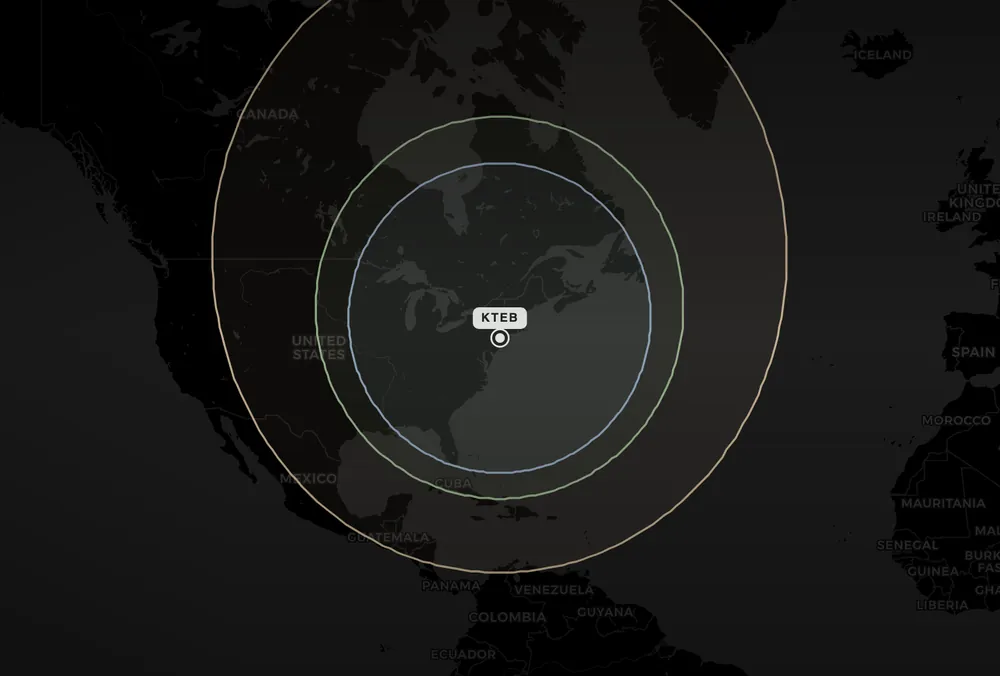
From the Northeast, Teterboro Airport (TEB) to Austin is a core route for executives, sponsors, and hospitality guests. These missions often fit well in midsize, super-midsize, or heavy aircraft depending on passenger count, baggage, and cabin expectations. Travelers departing from New York often value a nonstop experience and enough cabin comfort to move directly from the aircraft to race-weekend commitments.
From the West Coast, Van Nuys Airport (VNY) to Austin is one of the most important corridors for COTA week. This route frequently attracts entertainment, media, and corporate travelers who tend to favor super-midsize or heavy jets for comfort, range, and a stronger onboard experience. For clients arriving from Los Angeles, the flight itself is often part of a broader hospitality itinerary, so matching the aircraft category to both mission length and onboard expectations becomes vital.
From South Florida, Miami-Opa locka Executive Airport (OPF) to Austin is a natural route for clients moving between major Formula 1 destinations on the U.S. calendar. Midsize and super-midsize aircraft are often well-suited here, particularly for travelers who want a balance of efficiency and comfort. Demand from Miami can be especially strong among clients already familiar with premium race-weekend travel.
Shorter missions from Dallas Love Field (DAL) and Houston William P. Hobby Airport (HOU) introduce a different planning dynamic. Although airborne time is relatively brief, these routes can still be affected by minimum billable time, repositioning, and airport-related fees. A short hop does not automatically mean a simple quote, especially during a peak event period. For these Texas routes, the real value often comes from timing, airport selection, and whether AUS or GTU better supports the broader schedule.
F1 US Grand Prix 2026 Private Jet Pricing Framework
When travelers search for private jet COTA or austin F1 private jet, they often hope for a single number. In reality, race-week pricing is shaped by much more than flight time alone. Our 2026 pricing guidance places typical hourly rates for light jets at about $2,500 to $4,000 per hour, midsize jets at about $4,000 to $8,000 per hour, super-midsize jets at about $5,000 to $10,500 per hour, and heavy or ultra-long-range aircraft at roughly $8,500 to $20,000 or more per hour depending on mission and model.
Those categories are useful for setting expectations, but a final quote depends on the complete operating picture. Aircraft positioning can change the total materially, particularly during a major event when the nearest available aircraft may not already be based at your departure airport. U.S. federal excise tax, landing charges, handling fees, parking constraints, fuel adjustments, and crew logistics can all influence the final number. One-way itineraries and multi-city schedules can increase complexity further.
That matters for Formula 1 travel because many clients are not booking a simple out-and-back mission. You may arrive from one city and depart to another, or build your race weekend into a broader series of meetings, brand events, or leisure stops. A credible quote for an f1 us grand prix 2026 private jet trip should therefore account for the entire mission structure rather than relying on a headline hourly figure alone.
Why Billable Time Matters for Formula 1 Austin Private Aviation
One of the most misunderstood parts of charter pricing is billable time. Airborne time is only part of the story. Depending on the aircraft and operator, total billable time may also include repositioning segments, taxi time, and operational minimums. During a high-demand weekend such as COTA, those details matter because they shape the true cost of the mission even when the flight itself appears straightforward.
This is particularly relevant on shorter Texas routes from Dallas or Houston, on itineraries that use GTU instead of AUS, and on one-way race-week trips where an aircraft must be brought in specifically for the assignment. It is also important for teams and sponsors managing larger event budgets across multiple passengers, multiple sectors, or a combination of race, hospitality, and onward travel commitments. Our charter brokers ensure you understand exactly how these minimums apply to your specific routing before you book.
For clients researching formula 1 Austin private aviation, this is where transparent quoting becomes a real differentiator. We operate as a charter broker sourcing aircraft through a vetted global operator network, which allows the mission to be matched to the most suitable aircraft and operating profile rather than forcing the trip into a fixed fleet structure. That flexibility is particularly valuable during event periods when accuracy matters more than generic averages.
Ground Transfers and Arrival Planning After Landing
Your airport decision shapes more than the runway. It influences your entire weekend on the ground. AUS generally offers the most direct path to downtown Austin hotels, private residences near the city, business dinners, nightlife, and chauffeured transfers to Circuit of the Americas. If your schedule is strictly centered on the city, this convenience can be well worth the added race-week pressure.
GTU offers a different type of advantage. While the drive south can be longer, the arrival environment may feel more controlled when AUS is under strain. For some travelers, especially those arriving before the peak rush or operating more discreet schedules, that tradeoff can make perfect sense. The right choice depends on whether minimizing ground time or reducing airside congestion is your higher priority.
Most COTA travelers rely on premium chauffeured SUVs or executive sedans for airport-to-hotel and hotel-to-track transfers. If you are considering helicopter support, availability and operating constraints should be confirmed well in advance rather than assumed. As with airport choice, your ground planning works best when it is integrated into the full mission instead of handled at the last moment.
How Amalfi Jets Supports Circuit of the Americas Private Jet Travel
A COTA itinerary is not simply about getting to Austin. It is about protecting your time during one of the busiest event weekends in the country and building a schedule resilient enough to hold up under pressure. That is where our tailored brokerage process matters. Rather than offering a one-size-fits-all answer, our team evaluates your route profile, airport access, timing, passenger count, and budget clarity together.
For a circuit of the americas private jet request, the right plan may involve using AUS for direct city access, shifting to GTU when demand at the primary field compresses, arriving Tuesday or Wednesday instead of Thursday, or choosing a larger cabin category to support sponsor hosting or team travel more comfortably. Our approach ensures there are no hidden surprises on your invoice. It may also mean structuring an itemized quote that reflects the full mission, including positioning and operational charges, instead of reducing the conversation to a single hourly number.
If you want a broader background on our service standards, we encourage you to discover why fly with Amalfi Jets. When you are ready to move from planning to booking, you can request a private jet charter directly to begin evaluating aircraft options, airport strategy, and race-week timing.
Booking Timeline for Austin F1 Private Jet Demand
October is already a busy season in Austin, and Formula 1 adds another layer of concentration to an already active market. As a practical rule, you should aim to secure your aircraft and airport strategy several weeks in advance, while larger sponsor programs, executive groups, and team-related movements often benefit from locking in much earlier. During peak periods, the best aircraft and the most convenient airport windows do not remain open for long.
The strongest process is to secure race dates first, decide early whether AUS or GTU better fits the mission, confirm passenger count and baggage requirements, and align ground transport with the selected airport before availability tightens. Our team guides you through every step to secure your preferred itinerary. This approach reduces the risk of compromise later and allows quotes to be built around realistic operating conditions rather than late-stage limitations.
For a wider perspective on routing and pricing, it can be useful to explore other destination and market insights through our private aviation news and guides. We continuously update these resources to reflect current charter market conditions. That broader context can help frame how race-week demand compares with other seasonal and event-driven travel periods.
Preparing for Your Private Jet COTA Arrival
The smartest private jet COTA strategy for October 2026 is not simply to fly into Austin and hope for the best. It is a coordinated plan built around airport access, congestion management, arrival timing, and a realistic view of charter pricing. For many travelers, AUS will remain the primary choice because of its direct access to the city and Circuit of the Americas. During race week, however, GTU and other regional alternatives can become valuable tools for preserving flexibility and reducing operational pressure.
If you are planning austin F1 private jet travel for race weekend, our team can help structure your itinerary around the right airport, aircraft category, and timing for the mission. For destination-specific guidance, review the Austin private jet charter guide. For broader budget context, see the 2026 private jet charter cost guide. When you are ready to secure your itinerary, request a charter and begin planning your F1 US Grand Prix 2026 private jet experience with a strategy designed for COTA week.


