




Destination Hub
Private Jet Charter to Tokyo
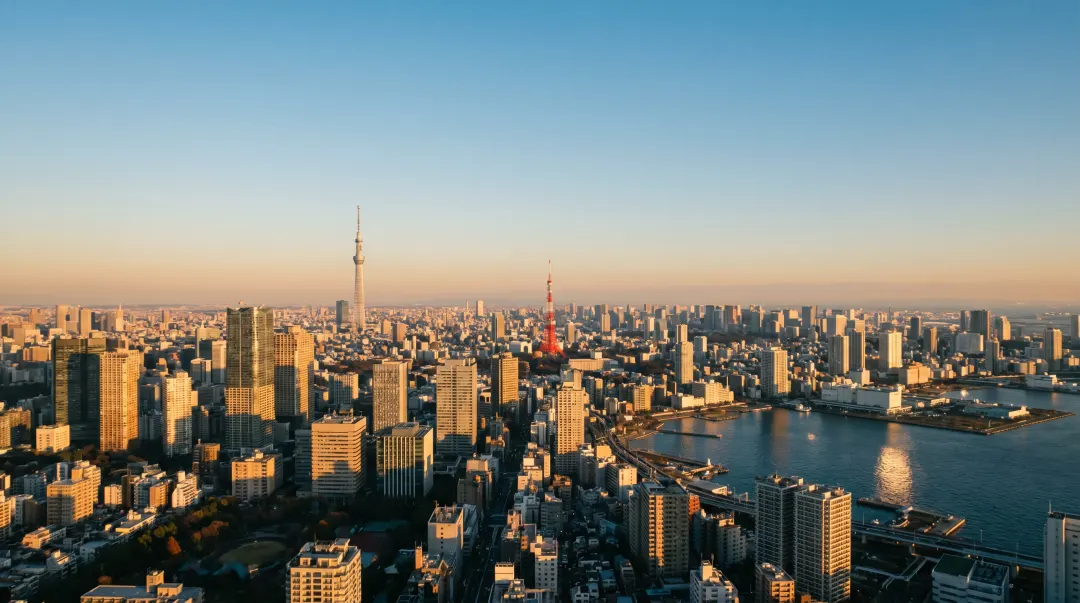
Private arrival is simplest through Haneda/Tokyo International Airport (HND), where one coordinated plan can carry you from aircraft to city with fewer moving parts. With Amalfi Jets arranging the aircraft, handling details, and onward transfer, the day follows your calendar rather than an airline timetable.
Quick facts
Why charter a private jet to Tokyo?
Private charter gives travelers a cleaner way into Japan’s capital: HND becomes a planned arrival, not the start of a connection.
A more controlled arrival
For most city-focused itineraries, Haneda/Tokyo International Airport (HND) is the natural point of arrival because the aircraft, ground transfer, and passenger handling can be organized around a single gateway. That matters when the schedule includes board meetings, hotel arrivals, dinners, or same-day onward movement.
A private itinerary reduces the parts of the journey that tend to consume energy: fixed airline departure times, commercial connections, public terminals, and mismatched ground transfers. The benefit is not only privacy; it is control over the shape of the day.
Flexibility where it counts
Departure times can be built around the traveler’s calendar, subject to aircraft availability, airport permissions, and operating requirements. Itineraries can also be adjusted around meeting changes, family pacing, luggage needs, and onward travel within Japan.
- Direct scheduling keeps the trip centered on the passenger’s timing.
- Coordinated handling aligns the aircraft, crew, and ground team before arrival.
- Alternate planning gives the charter desk options when demand, parking, or routing considerations affect the preferred airport.
Charter planning also protects time on the other side of the trip. Instead of building a day around an airline schedule, Amalfi Jets can structure the flight, airport plan, and ground transfer around the reason for the journey.
“Our charter desk secures the preferred HND plan first, then holds vetted alternates when peak weeks narrow availability. Firm March, April, and November dates should be shared early so aircraft choice and ground handling stay flexible.”

When is the best time to fly to Tokyo?
The best time to visit Tokyo depends on whether the priority is cultural atmosphere, weather-sensitive touring, aircraft choice, or softer demand.
Peak demand periods
March and April bring cherry blossom travel, a calendar moment that concentrates demand across hotels, guides, dining, and premium aviation. Golden Week spillover can add pressure around late spring planning, particularly when travelers hold firm arrival or departure dates.
November is another high-demand window, with fall foliage drawing visitors to gardens, temple districts, and day trips beyond the city. Early aircraft planning is especially useful during these months because the best-fit cabins and preferred airport plans tend to narrow first.
Value-minded timing
January and February often bring a post-holiday lull, which can improve availability for travelers who have flexibility. June’s rainy-season patterns can also soften demand, creating a more favorable planning environment for those who value access and discretion over peak seasonal scenery.
Travelers tied to school breaks, major meetings, or fixed hotel dates should secure the aviation plan early. Those with adjustable dates may find better aircraft options by shifting away from the most requested arrival and departure days.
Where our clients stay and go
Tokyo feels both immense and finely detailed, a capital where glass towers, quiet shrines, rail lines, gardens, and bay light form a rhythm that rewards precise planning.
The city spreads across the Kanto Plain toward the water, with Tokyo Bay shaping its eastern edge and the Sumida River cutting through older neighborhoods. Morning can begin with a calm garden walk or sushi counter; by evening, the skyline turns electric above Shinjuku, Marunouchi, Roppongi, and Shibuya.
A city of layers
In Ginza, polished retail and dining move at a measured pace. Around Nihonbashi and Marunouchi, business travel feels formal and efficient, with hotels and offices arranged for decisive days. Across Aoyama, Daikanyama, and Omotesando, the mood shifts toward design, fashion, architecture, and private appointments.
A well-planned stay can move from temple courtyards and museum galleries to omakase counters, members’ clubs, contemporary art, and discreet retail appointments without turning the journey into a race across the map. Ground planning matters because the city is vast, and each district has its own tempo.
For private travelers, the appeal is not only what can be seen, but how carefully the day can be shaped. Meetings can be anchored close to the hotel, dining can be timed around arrival, and onward travel within Japan can be layered into the itinerary without surrendering control of the schedule.
What determines the cost of a flight to Tokyo?
The cost of chartering into Japan’s capital is shaped by the aircraft selected, routing, airport plan, season, and the availability of repositioning opportunities.
Aircraft selection
Aircraft class is one of the central cost drivers. Larger cabins, longer-range aircraft, additional crew requirements, and more complex onboard service expectations generally increase the overall charter profile. The right aircraft is chosen around passenger count, luggage, routing, desired cabin experience, and operating requirements rather than a generic category.
One-way versus round trip
A one-way itinerary can require the aircraft to reposition before or after the passenger flight, which may influence the quote. Round-trip planning may reduce repositioning complexity when the same aircraft and crew can remain aligned with the traveler’s return, although timing, parking, and crew logistics still matter.
HND positioning, fees, and handling
HND is the preferred airport plan for many city-centered arrivals, but the final cost depends on the confirmed operating setup. Positioning into or out of the airport, airport fees, handling arrangements, parking availability, crew logistics, and ground coordination can all affect the charter proposal.
Seasonal demand
Peak travel periods place more pressure on aircraft availability and airport planning. March and April, with cherry blossom travel and Golden Week spillover, can tighten premium inventory; November can see similar pressure around fall foliage. Those windows reward early commitment, especially for travelers with fixed dates.
Empty-leg availability
Empty-leg opportunities can sometimes soften the economics of a private flight when an aircraft is already scheduled to reposition on a compatible route. They are not guaranteed, and they usually require flexibility on timing, airport pairing, and itinerary structure. Amalfi Jets can review whether an empty leg fits the trip without compromising the traveler’s preferred schedule.
Which airports serve Tokyo?
Tokyo is served by HND, NRT, and IBR for private-jet planning, with the best choice depending on where the traveler is staying, the preferred handling plan, and regional ground logistics.
Haneda/Tokyo International Airport (HND)
HND is the primary airport for city-centered private arrivals. For travelers staying in central districts or moving directly into meetings, it is usually the first airport Amalfi Jets evaluates because the arrival plan can be built around a direct transfer into the capital.
The airport is best suited to itineraries where time on the ground matters: a same-day meeting, a hotel arrival before dinner, or a departure timed closely to the end of a program. Private-terminal suitability, parking, and handling details are confirmed during trip planning rather than assumed from the airport code.
Narita International Airport (NRT)
NRT is the principal alternate when the preferred HND plan is not the right fit or when the traveler’s onward movement makes an eastern approach more practical. It can also be useful when airport congestion, aircraft positioning, or schedule structure points away from the primary gateway.
This airport is often considered for itineraries that require more flexibility around international routing or for travelers whose ground plan is not centered exclusively on the city core. Amalfi Jets evaluates NRT alongside the preferred airport so the traveler understands the tradeoff between airport availability and ground transfer strategy.
Ibaraki Airport (IBR)
IBR gives the planning team another regional option when the itinerary points toward Ibaraki or the wider northeast side of the metropolitan region. It is not simply a backup name on a list; it can be relevant when avoiding pressure at the busier gateways or shortening the drive to a specific regional destination matters more than arriving in the city center.
For private travelers, the value of IBR depends on the ground program. If the traveler is continuing outside the capital, meeting outside the core, or prioritizing a quieter alternate airport plan, the charter desk can assess whether it provides a better operational fit.
A good airport strategy begins with the preferred arrival, then protects the itinerary with credible alternates. That is why Amalfi Jets reviews HND first, considers NRT when routing or availability calls for it, and keeps IBR in view for regional movements.
Routes to & from Tokyo
Common questions about Tokyo charter
Which airport is best for a private arrival in Tokyo?
For Tokyo, HND is usually the first choice for city-focused itineraries because it keeps the airport plan aligned with central meetings, hotels, and onward transfers.
Can private flights use Narita or Ibaraki instead of HND?
Tokyo can also be served by NRT or IBR when routing, airport availability, congestion, or the traveler’s regional ground plan makes an alternate more practical.
What determines the cost of chartering into Tokyo?
The cost of chartering into Tokyo depends on aircraft class, one-way or round-trip structure, positioning, airport fees, seasonal demand, handling needs, and empty-leg availability.
When should I book a private flight for cherry blossom or fall foliage travel?
Peak Tokyo demand builds in March, April, and November, so fixed travel dates should be planned early to preserve aircraft choice and preferred airport options.
How does Amalfi Jets choose between HND, NRT, and IBR?
For Tokyo, the charter desk starts with the preferred arrival airport, then compares alternates based on schedule, routing, ground destination, handling feasibility, and availability.
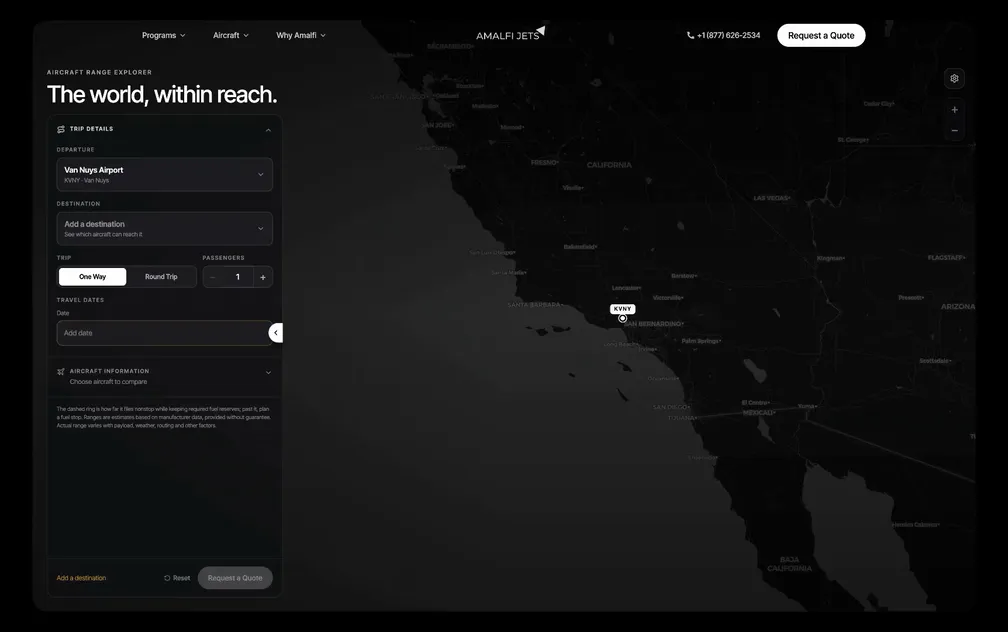
Try Range Explorer
See how far you can fly nonstop
Explore aircraft range, compare options, check flight times, and better understand which aircraft fits your trip.

Ready to fly to Tokyo?
Request a charter and our team will tailor an itinerary for your next journey.
*Takes only about 40 seconds to request your quote.
