



Private Jet Charter Route
San Francisco to Tokyo

A private San Francisco to Tokyo charter turns the Pacific crossing into a composed cabin experience, with 577-673 min in flight between SFO and HND. Settle into an ultra-long-haul-jets environment built for rest, work, and a measured arrival rather than managing a connection halfway across the journey.
Quick Facts
Departure Airports
Arrival Airports
Skip the terminal queues, connections and layovers of commercial travel. On a private jet charter you arrive minutes before departure and fly point to point — turning a full travel day into a short hop.
Why fly private from San Francisco to Tokyo?
This route suits private charter because SFO and HND give travelers a direct private-aviation framework between the Bay Area and Tokyo, supported by an aircraft category appropriate to the crossing.
Why the pairing works
At 4474 NM, this leg is a serious transpacific mission, and the recommended category is ultra-long-haul-jets. That matters for the onboard experience: the cabin becomes part of the day, not simply transportation between continents.
SFO keeps the departure close to San Francisco’s business, technology, and residential centers, while HND places the arrival directly into Tokyo’s rhythm. For travelers moving between boardrooms, family offices, production schedules, or extended stays in Japan, the value is in having one planned itinerary rather than a chain of fixed commercial segments.
Cabin-first planning
Ultra-long-haul-jets are the practical focus for this leg because they are aligned with the route’s distance and duration. The charter conversation typically centers on:
- Cabin layout for sleeping, dining, and working across the Pacific
- Baggage profile for longer international stays
- Departure timing from SFO to shape the arrival day at HND
- Passenger count and service expectations for a long cabin day
Handled well, this is a quiet, controlled way to move from California to Japan: fewer interruptions, a private cabin for the full crossing, and an arrival planned around the traveler rather than the airline schedule.
“Our charter desk typically secures the HND arrival window first, then aligns the SFO departure and ultra-long-haul-jets options around it. Firm dates early widen cabin choice, especially during high-demand international travel weeks.”

What determines the cost of a San Francisco to Tokyo private jet charter?
The cost of this leg is shaped by aircraft class, distance, flight time, routing structure, positioning, and demand at the time of travel.
Primary cost drivers
For this route, ultra-long-haul-jets are the recommended class, and aircraft category is one of the most important variables. Larger long-range cabins can support a more restful transpacific experience, but the final charter quote depends on the specific aircraft available for the requested dates.
Distance and time also matter. At 4474 NM and 577-673 min in flight, this is a long international sector, so planning accounts for crew, aircraft utilization, handling, and the operating profile of the selected jet.
Trip structure
A one-way itinerary may involve different economics than a round trip, especially if the aircraft and crew need to reposition before or after the booked sector. Round trips can sometimes create a cleaner aircraft schedule, while one-way requests depend more heavily on where suitable ultra-long-haul-jets are already located.
Positioning is another key factor. If the best aircraft for the mission is not already aligned with SFO or HND, the quote may reflect the movement required to place it correctly.
Demand and timing
Seasonal demand affects availability, particularly around high-volume international travel periods, major business weeks, school holidays, and widely traveled vacation windows. Firm dates allow the charter desk to compare more suitable aircraft before the closest options are committed elsewhere.
Which jets can fly San Francisco to Tokyo nonstop?
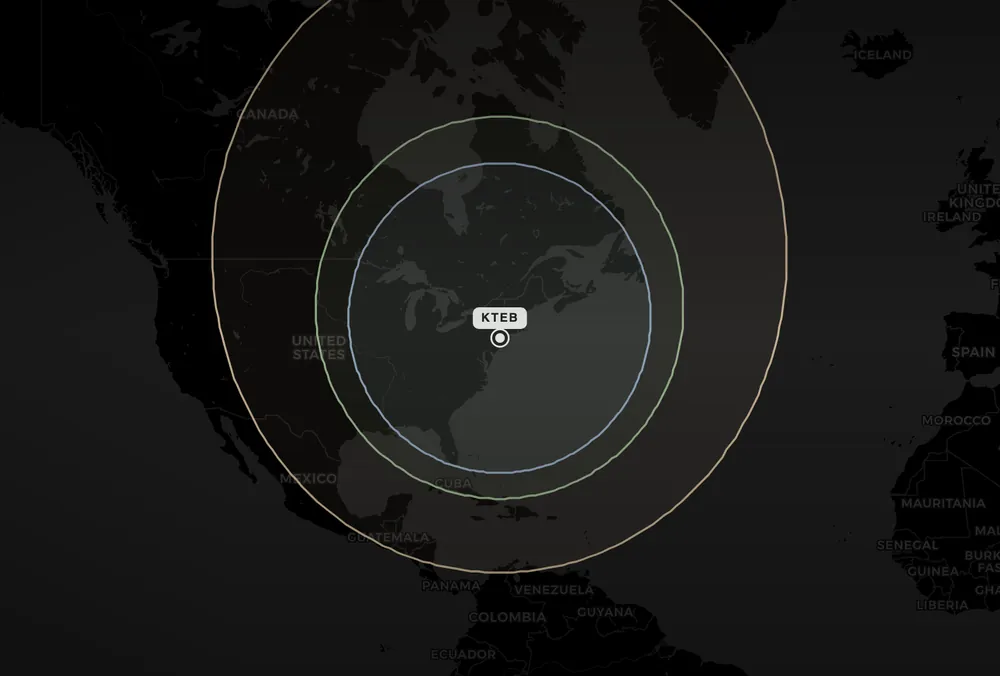
Range-matched to the 4,474 nm leg.
When is the best time to fly San Francisco to Tokyo?
The best time to fly this route is when your schedule can be set early enough to secure the right ultra-long-haul-jets cabin and preferred timing at both ends.
Date-flexible guidance
Because this is a long transpacific leg, timing is less about finding a single ideal season and more about controlling the quality of the itinerary. Travelers with flexibility should first choose the desired arrival day in Tokyo, then work backward to set the SFO departure time that best supports rest, meetings, or onward plans.
High-demand travel weeks can tighten aircraft choice, especially for larger long-range cabins. Early firm dates help preserve better options for cabin layout, baggage capacity, catering preferences, and departure windows.
When to start planning
For fixed business dates, family travel, or trips connected to events, begin the charter process as soon as the schedule is credible. If the date can move slightly, sharing a range of acceptable departure and arrival windows gives the desk more room to identify an aircraft that fits the mission cleanly.
Related routes & cities
Routes
Common questions about flying San Francisco to Tokyo
How long is the private jet flight from San Francisco to Tokyo?
San Francisco to Tokyo is typically 577-673 min in flight between SFO and HND, depending on the final operating plan for the charter.
What type of aircraft is recommended for this route?
For San Francisco to Tokyo, ultra-long-haul-jets are the recommended class because the route covers a 4474 NM transpacific sector.
What determines the cost of flying San Francisco to Tokyo by private jet?
The cost of flying San Francisco to Tokyo depends on the ultra-long-haul jet selected, aircraft availability, one-way versus round-trip structure, positioning needs, timing, and seasonal demand.
Can this be booked as a one-way charter?
San Francisco to Tokyo can be requested as a one-way charter, with aircraft availability and positioning reviewed around the desired SFO departure and HND arrival.
When should I book this private jet route?
For San Francisco to Tokyo, booking early is best when dates are fixed, because firm timing gives the charter desk more aircraft choice and better control over the arrival window.
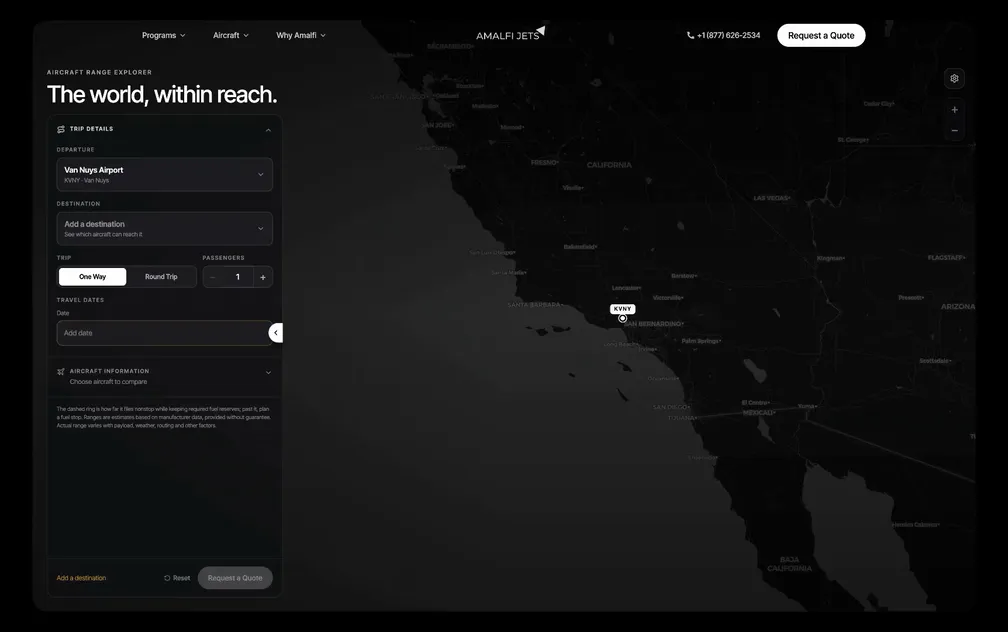
Try Range Explorer
See how far you can fly nonstop
Explore aircraft range, compare options, check flight times, and better understand which aircraft fits your trip.
Ready to fly San Francisco to Tokyo?
Request a charter and our team will tailor an itinerary for your next journey.
*Takes only about 40 seconds to request your quote.
