



Destination Hub
Private Jet Charter to San Francisco
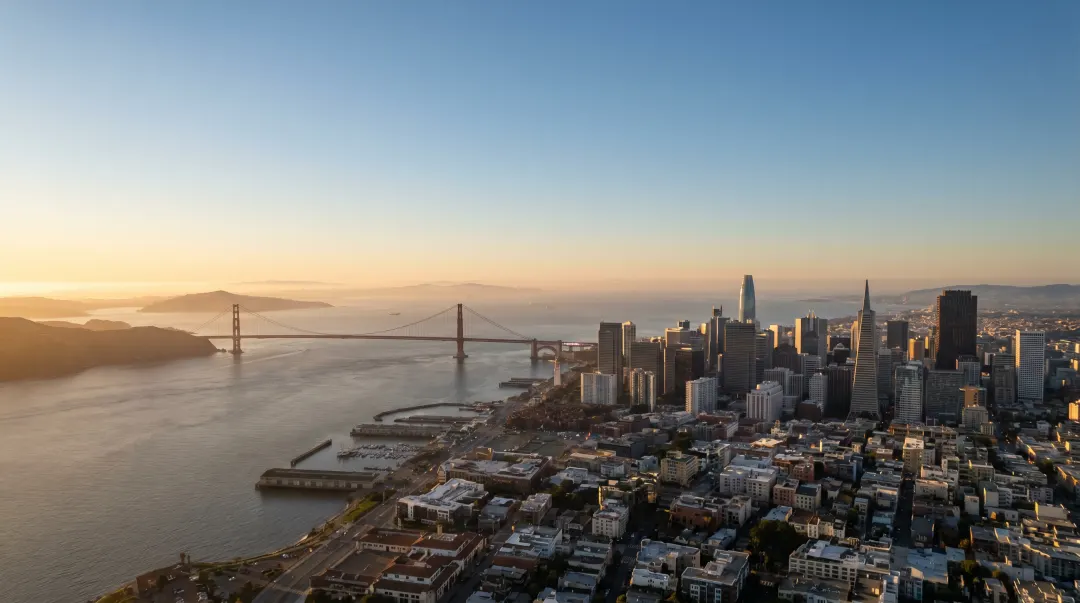
Private jet arrivals into San Francisco International Airport keep the city’s business, culture, and waterfront within a clean, coordinated charter plan. From touchdown to curbside transfer, the day is organized around your timing rather than an airline schedule.
Quick facts
Why charter a private jet to San Francisco?
Chartering privately into San Francisco gives travelers control over the airport, schedule, and ground handoff from the start. The value is not theatrical; it is practical. Instead of building a trip around fixed airline inventory, your advisor can shape the departure time, aircraft category, and arrival plan around meetings, residences, hotels, and onward commitments. It is a quieter way to move through a city where calendars often matter as much as views.
A simpler arrival day
SFO remains the primary gateway for private flights into the city, making it a natural choice when the itinerary is centered on the waterfront, downtown, the Financial District, Pacific Heights, or a hotel plan already built around the peninsula side of the bay. Advisors coordinate the handling sequence, passenger details, catering preferences, and ground transportation before the aircraft departs, so the arrival feels composed rather than improvised. That coordination is especially valuable when the trip is tied to a board meeting, convention schedule, medical appointment, or tightly timed social weekend.
Flexibility across the Bay Area
For many private travelers, the best airport is the one that best matches the final address. OAK can make sense for East Bay plans, HWD may suit travelers who prefer an executive-airport environment, and SJC is often considered when the trip continues toward the South Bay or Silicon Valley. Alternate airport planning also gives the charter desk more room to respond to congestion, aircraft positioning, preferred departure windows, and ground-route priorities without forcing the entire itinerary through one point.
“For firm January, September, and October dates, our charter desk secures the handling plan, airport preference, and ground timing first. Early confirmation usually widens aircraft choice before conference and event weeks tighten lead times.”

When is the best time to fly to San Francisco?
The best time to visit San Francisco by private jet is often September or October for weather and atmosphere, while January can be one of the strongest business-travel months. Those periods tend to attract earlier planning because they align with J.P. Morgan Healthcare, Dreamforce, Fleet Week, major conventions, and the clear, bright fall conditions that make the bay feel especially cinematic.
January brings a concentrated healthcare and finance audience, so firm meeting dates benefit from early aircraft sourcing and a disciplined handling plan. September and October layer corporate events with leisure demand, meaning preferred departure windows and alternate airport strategies should be discussed before the calendar tightens.
February, March, and November can offer comparatively better planning value during rainy shoulder periods between major event spikes. Weather can still shape the mood of the trip, but travelers with flexible dates may find more room to consider aircraft options, departure timing, and airport alternatives.
Where our clients stay and go
San Francisco rewards private travelers with a compact, dramatic setting: water on three sides, hills that lift the skyline into view, and a culture that moves easily between finance, technology, art, food, and the outdoors. The city feels intimate from the street and expansive from the air, a place where a short drive can shift the mood from glass towers to Victorian facades, fog-softened parks, or a table facing the bay.
The city by light and water
The first impression is often the light. Mornings can arrive silver and cool over the bay, with the Golden Gate emerging through fog as ferries cross toward the piers. By afternoon, the city’s neighborhoods sharpen into distinct personalities: North Beach with its cafe rhythm, the Mission with murals and restaurants, Pacific Heights above the water, and the Embarcadero tracing the edge of the skyline.
Why private travelers come
Private aviation fits the pace of the destination because the region’s draw is rarely limited to one purpose. A trip may begin with investor meetings, continue to a museum opening, move across the bay for dinner, and finish with a weekend in wine country or along the coast. Dinner reservations, hotel arrivals, road transfers, and meeting windows can sit close together here, and a privately organized flight gives the day more structure without making it feel rigid.
A city that works for business and leisure
Few places carry such different energies within such a small geographic frame. There is the corporate edge of downtown, the academic and medical gravity of the wider Bay Area, the design and restaurant culture that has shaped national taste, and the immediate access to water, bridges, parks, and coastal drives. That mix is what makes the destination especially well suited to discreet, high-control travel: the trip can be serious, social, restorative, or all of those in the same itinerary.
What determines the cost of a flight to San Francisco?
The cost of chartering into San Francisco is determined by the aircraft, itinerary structure, airport plan, seasonal demand, and live aircraft availability. No single factor sets the final quote on its own; the charter desk prices the trip by matching your schedule and service requirements to aircraft that can operate the requested route and timing.
What shapes the quote
- Aircraft category: Cabin size, onboard amenities, luggage requirements, passenger count, and route profile all influence which aircraft are appropriate for the mission.
- One-way versus round trip: A one-way itinerary may require aircraft repositioning before or after your flight, while a round trip can sometimes keep the same aircraft and crew aligned with the traveler’s schedule.
- SFO positioning and fees: The primary airport plan can affect handling, parking, airport-related charges, and aircraft availability, particularly when demand is concentrated around major business periods.
- Seasonal demand: January, September, and October often carry stronger demand because of healthcare, technology, convention, and civic-event traffic, along with the city’s prime fall weather.
- Empty-leg availability: Empty legs can create value when an aircraft is already moving in the right direction, but they are opportunistic and usually less flexible than a fully sourced charter.
Why flexibility matters
A traveler with firm meeting times may prioritize schedule certainty over opportunistic savings. Another client with flexible dates, nearby airport options, or a willingness to adjust departure windows may see more aircraft choices. In practice, the most efficient quotes come from clear trip details: passenger count, luggage profile, preferred airports, ground timing, catering needs, and how much flexibility exists around departure or return.
Which airports serve San Francisco?
San Francisco is served for private charter planning by SFO, OAK, HWD, and SJC, with the right choice depending on where the trip begins or ends on the ground. The primary airport is often the cleanest plan for city-focused itineraries, while alternates can help when the final address points toward the East Bay, an executive-airport setting, or the South Bay.
San Francisco International Airport (SFO)
SFO is the primary airport for private flights into the city and is often the preferred plan when the traveler’s schedule is centered on downtown, the waterfront, the peninsula side of the bay, or an international-facing itinerary. It keeps the arrival plan straightforward when commercial connections, hotel logistics, or city-side commitments are part of the same trip. During busier periods, the charter desk may also compare alternates to protect timing and preserve aircraft choice.
Oakland International Airport (OAK)
OAK can be a practical alternate when the trip is oriented toward the East Bay or when ground routing makes an east-side arrival more efficient than crossing the region after landing. It also gives advisors another airport to consider if the primary gateway is under heavier demand. For private travelers, that extra option can matter when the schedule is fixed but the arrival point can flex.
Hayward Executive Airport (HWD)
HWD is useful for travelers who want an airport profile associated with executive and general-aviation movements rather than a large commercial terminal environment. Its role in the charter conversation is often about fit: a quieter regional arrival, a Bay Area address that sits better with Hayward, or a plan that benefits from avoiding the main airport flow. Advisors confirm handling arrangements before recommending it for a specific aircraft and itinerary.
San Jose International Airport (SJC)
SJC is the airport to evaluate when the trip points south toward Silicon Valley, South Bay offices, or residential destinations below the peninsula. It can reduce unnecessary backtracking when the traveler’s actual commitments are closer to San Jose than to the city center. For itineraries that mix boardrooms, campuses, and private residences, it gives the charter desk another way to align the flight with the ground plan.
Routes to & from San Francisco
Common questions about San Francisco charter
What is the primary airport for private flights into the city?
San Francisco International Airport (SFO) is the primary airport for private charter arrivals, while OAK, HWD, and SJC can be useful when the traveler’s final stop sits elsewhere in the Bay Area.
When should I consider an alternate airport?
Private travelers to San Francisco may consider OAK, HWD, or SJC when an East Bay, executive-airport, or South Bay arrival better matches the ground itinerary.
What determines the cost of chartering privately into the city?
For San Francisco, cost is shaped by aircraft category, itinerary structure, SFO positioning and fees, seasonal demand, and empty-leg availability, with flexibility often expanding the range of suitable options.
Which months require the most advance planning?
Travelers planning San Francisco during January, September, or October should start early because healthcare, technology, convention, Fleet Week, and fall-weather demand can tighten aircraft choice.
Is SJC useful for Silicon Valley plans?
For San Francisco trips that continue to Silicon Valley or the South Bay, SJC can be a practical airport to compare against SFO and other Bay Area options.
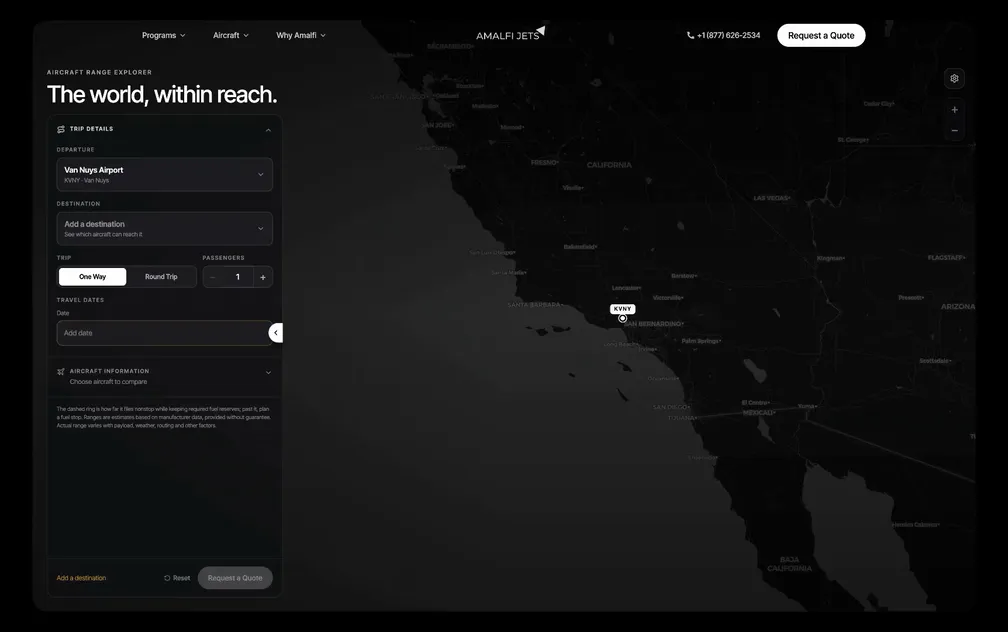
Try Range Explorer
See how far you can fly nonstop
Explore aircraft range, compare options, check flight times, and better understand which aircraft fits your trip.

Ready to fly to San Francisco?
Request a charter and our team will tailor an itinerary for your next journey.
*Takes only about 40 seconds to request your quote.
