



Private Jet Charter Route
Tokyo to Rome

Flying privately from Tokyo to Rome saves time by turning a long intercontinental transfer into a single scheduled movement from Haneda Airport (HND) to Rome Ciampino Airport (CIA), with a typical flight time of 684-798 min. Covering 5332 NM, this leg sits in the ultra-long-haul-jets category, giving travelers the right cabin class for a demanding east-west itinerary. Your itinerary moves on your clock, not around a connection bank.
Quick Facts
Departure Airports
Arrival Airports
Skip the terminal queues, connections and layovers of commercial travel. On a private jet charter you arrive minutes before departure and fly point to point — turning a full travel day into a short hop.
Why fly private from Tokyo to Rome?
This HND-CIA pairing suits private charter because it compresses a complex long-haul journey into one controlled itinerary.
Built for a private schedule
Haneda Airport (HND) gives the trip a Tokyo departure point that works naturally for private travelers who need their day organized tightly before wheels-up. Rome Ciampino Airport (CIA) keeps the arrival focused on Rome, so the private schedule remains intact from departure planning through touchdown.
Range that calls for the right aircraft class
At 5332 NM, the route belongs in the ultra-long-haul-jets category. That category is recommended for this mission because the distance and duration call for a cabin and operating profile suited to a long intercontinental sector.
Why private charter fits the city pair
Because the itinerary is built around HND and CIA, the flight plan can be shaped around meetings, family schedules, hotel arrivals, and onward ground movements rather than a public airline timetable. Travelers can organize the long crossing as a single private block of time, with the aircraft, crew schedule, and departure window aligned before the day begins.
“For this leg, our charter desk secures CIA timing before locking the aircraft plan, then works backward from the HND departure window. Firm dates early are especially useful around holiday and major-event weeks because they widen the ultra-long-haul jet options.”

What determines the cost of a Tokyo to Rome private jet charter?
The cost of this charter is shaped by aircraft class, distance, flight time, trip structure, positioning, and seasonal demand.
Aircraft class
Ultra-long-haul-jets are the recommended class for this route, and aircraft selection is one of the central cost drivers. Cabin size, baggage requirements, onboard service preferences, crew planning, and availability within that class all influence the final charter proposal.
Distance and block time
The 5332 NM distance and 684-798 min typical flight time place the itinerary firmly in long intercontinental territory. Longer sectors require more aircraft time, crew planning, fuel planning, and operational coordination, all of which shape the charter economics.
One-way or round trip
A one-way itinerary may involve positioning if the aircraft needs to reach HND before departure or continue from CIA after arrival. Round-trip planning can sometimes create a more efficient aircraft schedule, particularly when the return date is clear and the aircraft can be held or repositioned sensibly.
Positioning and availability
Round-the-world aircraft movement, maintenance schedules, crew duty planning, and where suitable ultra-long-haul jets are located can materially affect options. The strongest quotes are often built when the charter desk can compare several viable aircraft rather than forcing a late match.
Seasonal demand
Seasonal pressure changes the market even when the route itself stays the same. Holiday periods, school breaks, major events, and citywide demand in either market can tighten availability, while more flexible dates usually broaden aircraft choice.
Early firm dates help the charter desk source the right ultra-long-haul jet, manage positioning, and protect a departure time that fits the traveler’s agenda.
Which jets can fly Tokyo to Rome nonstop?
Range-matched to the 5,332 nm leg.
When is the best time to fly Tokyo to Rome?
The best time to fly this leg is when your preferred departure window, arrival commitments, and aircraft choice can be aligned early.
Without fixed peak or value months to plan around, the most useful strategy is date flexibility. High-demand holiday periods, school breaks, major-event weeks, and heavy corporate travel windows can reduce aircraft choice, especially for ultra-long-haul-jets.
Flexible departure times give the charter desk more room to compare suitable aircraft, crew schedules, and positioning options. For travelers with immovable commitments in Rome or Tokyo, confirming the itinerary early is the cleanest way to protect the preferred schedule.
If the calendar is still fluid, ask for side-by-side options across nearby dates. A small adjustment to departure day or time can improve aircraft availability without changing the purpose of the trip.
Related routes & cities
Common questions about flying Tokyo to Rome
How long is the private jet flight?
Tokyo to Rome typically takes 684-798 min by private jet, depending on the final operating plan for the day.
What aircraft class is recommended for this route?
Tokyo to Rome is recommended for ultra-long-haul-jets because the route covers 5332 NM and requires an aircraft class suited to a long intercontinental sector.
What determines the cost of flying Tokyo to Rome?
The cost of flying Tokyo to Rome is determined by the ultra-long-haul jet selected, the 5332 NM distance, the 684-798 min block time, one-way versus round-trip structure, positioning, and seasonal demand.
Can this be arranged as a one-way charter?
Tokyo to Rome can be arranged one way, though aircraft positioning before departure or after arrival may influence which ultra-long-haul jets are available.
How early should I request a quote?
For Tokyo to Rome, early firm dates give the charter desk more room to compare ultra-long-haul aircraft, protect timing at both airports, and manage positioning efficiently.
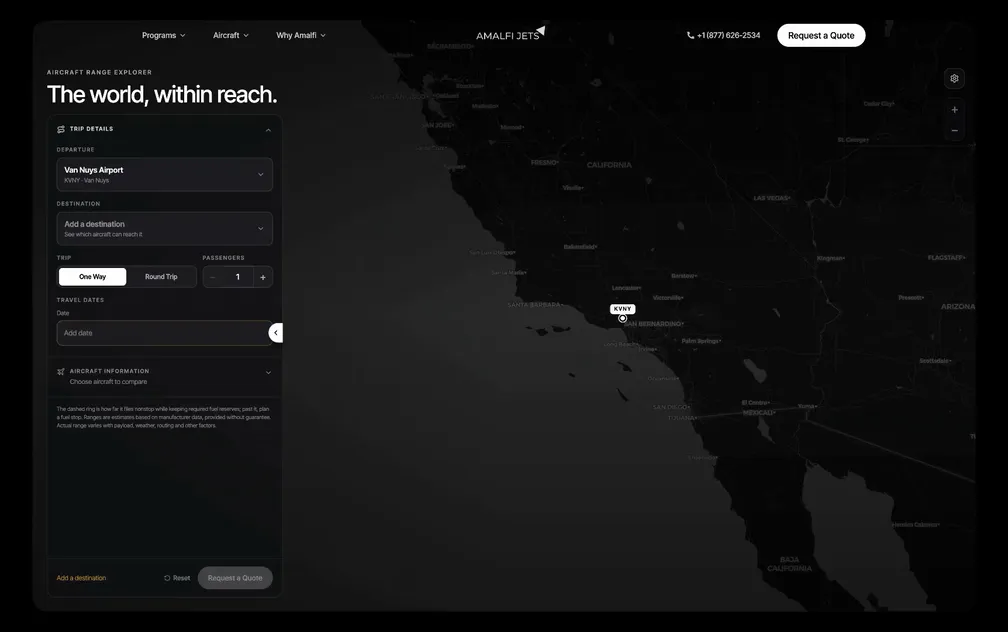
Try Range Explorer
See how far you can fly nonstop
Explore aircraft range, compare options, check flight times, and better understand which aircraft fits your trip.

Ready to fly Tokyo to Rome?
Request a charter and our team will tailor an itinerary for your next journey.
*Takes only about 40 seconds to request your quote.
