



Destination Hub
Private Jet Charter to Paris
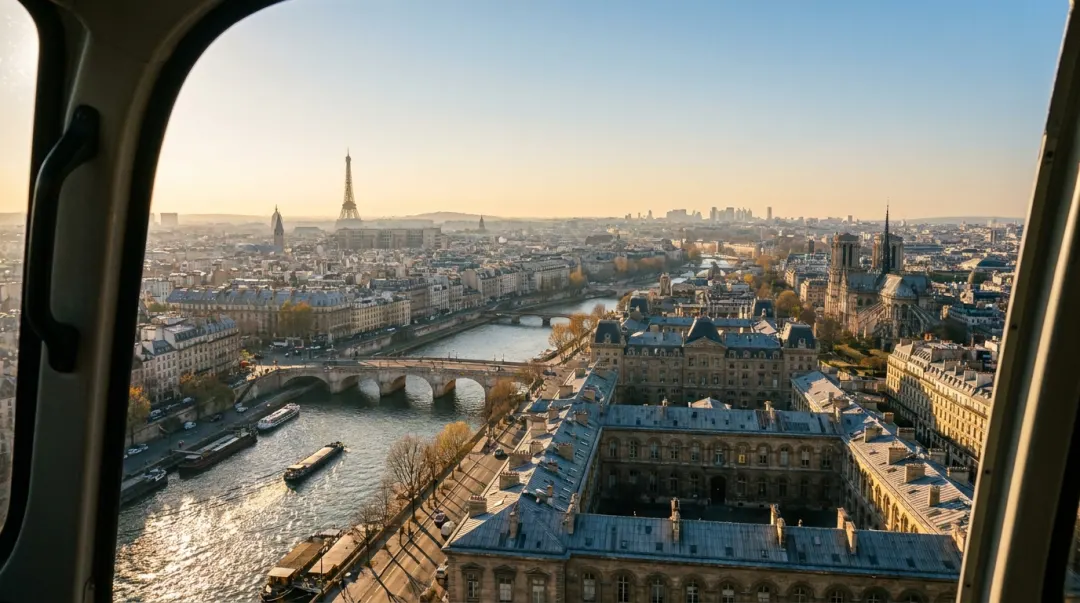
Arriving in the French capital by private charter is simplest when the day is built around Paris Airport-Le Bourget (LFPB). The aircraft, crew, and ground plan stay aligned from the first brief, so the journey feels composed before the cabin door opens. Private aviation turns the trip into a matter of timing, discretion, and clear handoff rather than connections.
Quick facts
Why charter a private jet to Paris?
Private charter gives travelers to Paris control over timing, privacy, and the arrival sequence instead of asking the trip to fit an airline schedule.
LFPB is the primary airport for this destination, which keeps planning focused: one principal gateway, one handling strategy, and one point of coordination for arrival and departure. For travelers moving between meetings, hotels, residences, galleries, couture appointments, or a weekend in the city, that clarity is often the difference between a long travel day and a precise one.
Why private aviation works here
- Schedule control: Depart when the aircraft, passengers, and agenda are ready rather than building the day around published airline times.
- Direct routing: A charter itinerary can be organized around the traveler’s origin, destination, and preferred timing without unnecessary connections.
- Privacy on the ground and in the air: The experience is designed for confidential conversations, quiet transfers, and minimal public exposure.
- Responsive changes: If a meeting moves, a dinner runs late, or a departure needs to be adjusted, the charter desk can evaluate options quickly.
- A cleaner arrival day: With LFPB as the central plan, ground transportation, luggage handling, and crew coordination can be arranged as one continuous movement.
“For peak-month trips, we secure preferred LFPB handling and slot strategy before refining aircraft options. Firm dates early in May, June, September, and October widen choice.”

When is the best time to fly to Paris?
The best time to visit Paris depends on whether the priority is marquee cultural energy, mild weather, or easier aircraft availability.
May, June, September, and October are the peak planning months. Roland-Garros brings a defined sports calendar, Fashion Week creates sharp demand around specific dates, and major trade shows and art fairs add pressure from corporate and collector travel. The weather is also part of the appeal: spring and early fall lend themselves to long lunches, river walks, gallery days, and evenings that move easily from hotel to restaurant.
January, February, August, and November can be value-minded planning windows. Colder winter weeks tend to soften leisure demand, August brings a slower business rhythm, and fewer marquee events can improve aircraft and slot availability. Travelers with flexible dates often find these periods useful for shorter-notice planning or a broader review of aircraft options.
For firm peak-season dates, early commitment is the more elegant strategy. It gives the charter desk time to secure the preferred LFPB plan, compare aircraft thoughtfully, and coordinate the ground schedule before the calendar tightens.
Where our clients stay and go
Paris rewards private travelers with a cityscape built on river light, formal avenues, limestone facades, and a daily rhythm that moves between art, commerce, dining, and quiet ritual.
The Seine gives the city its center of gravity. Bridges frame the water at different angles, the islands hold some of its oldest stories, and the skyline is read in silhouettes: the Eiffel Tower, the dome of Les Invalides, the towers and stonework of Notre-Dame, the hill of Montmartre, and the long perspective of the Champs-Élysées.
For private travelers, the appeal is rarely a single monument. It is the ability to shape the day with precision: a morning appointment on the Right Bank, a private viewing near Saint-Germain-des-Prés, lunch behind a discreet doorway, an afternoon in the design houses, and dinner that starts only when the table is ready. The city suits travelers who value access, taste, and time used well.
The best stays feel layered rather than rushed. A visitor might move from the Louvre to a small Left Bank bookshop, from the gardens of the Tuileries to a contemporary gallery in the Marais, or from a hotel courtyard to a late crossing of the Pont Alexandre III. Chartering privately preserves that sense of control, allowing the itinerary to stay fluid without losing its structure.
What determines the cost of a flight to Paris?
The cost of chartering into Paris is shaped by the aircraft selected, itinerary structure, LFPB planning requirements, seasonal demand, and the availability of suitable empty-leg opportunities.
Aircraft category and cabin needs
Aircraft class is one of the core drivers of charter cost. Cabin size, passenger count, luggage requirements, onboard service expectations, and range all influence which aircraft are considered for the mission. A larger cabin may offer more comfort and flexibility, while a smaller aircraft may be appropriate for certain shorter routes and lighter travel parties.
One-way versus round trip
A one-way charter can price differently from a round trip because the aircraft and crew still need an efficient operating plan before and after the passenger segment. Round trips may create a more balanced schedule when the aircraft can remain positioned appropriately, while one-way flights often require closer review of repositioning, crew duty, and onward aircraft use.
LFPB positioning and fees
The airport plan affects the final quote. Positioning into or out of LFPB, crew logistics, handling, airport-related fees, and the timing of requested movements all contribute to the overall structure. When the trip is firm, the charter desk can compare viable aircraft and build the routing around the cleanest operating plan.
Seasonal demand
May, June, September, and October are typically stronger demand periods because of Roland-Garros, Fashion Week, major trade shows, art fairs, and mild-weather leisure travel. During these periods, earlier confirmation can improve aircraft choice and reduce the risk of constrained availability.
Empty-leg availability
Empty legs can occasionally create attractive opportunities when an aircraft is already positioned in the right direction at the right time. They are inherently schedule-dependent, less flexible than a dedicated charter, and best suited to travelers who can adapt timing or accept a narrower set of options.
Which airports serve Paris?
Private flights into the French capital are planned first around Paris Airport-Le Bourget (LFPB), with LFPG and KPRG reviewed only when the itinerary gives a clear reason to use an alternate.
LFPB
As the primary airport for this destination, LFPB is the natural starting point for a private-charter plan. It keeps the operation centered on the gateway designated for the trip, allowing the charter desk to coordinate aircraft timing, handling, crew movements, luggage, and ground transportation around one clear point of arrival.
A private traveler would choose LFPB when the goal is a focused, purpose-built charter experience: fewer variables, a direct handoff to the ground team, and a departure plan that can be aligned with the traveler’s calendar. During peak event weeks, confirming this plan early helps protect choice and timing.
Aéroport de Paris-Charles de Gaulle (LFPG)
LFPG can make sense when the wider itinerary calls for it rather than when the traveler simply wants the default private-arrival plan. If a passenger is connecting with a commercial airline movement, meeting another party already routed through the airport, or arranging ground logistics that point specifically to LFPG, the charter desk can evaluate whether it is the better operational fit.
Because LFPG is listed here as a secondary option, it should be treated as an alternate to be confirmed, not assumed. Suitability depends on the details of the flight request, handling arrangements, timing, and the passenger’s onward movement.
Edgar County Airport (KPRG)
KPRG is best treated as a deliberate routing choice, not a default gateway for the French capital. If a broader itinerary specifically calls for Edgar County Airport, the charter team can review it in that context and separate that requirement from the main LFPB plan.
This is the type of alternate that benefits from early clarification. Before presenting it as part of an itinerary, the desk should confirm why it belongs in the routing, how it affects passenger movement, and whether it supports the traveler’s actual destination plan.
Routes to & from Paris
Common questions about Paris charter
Which airport is primary for private flights into the city?
For Paris, the primary airport in the provided charter plan is LFPB; alternates are reviewed when schedule, handling, or ground logistics support them.
How early should I plan a peak-season charter?
For Paris, lead time matters most in May, June, September, and October because event calendars and mild-weather demand can tighten aircraft availability.
What determines the cost of chartering into the city?
The cost of chartering into Paris depends on aircraft category, routing as one-way or round trip, LFPB positioning and airport-related fees, seasonal demand, and empty-leg availability.
Can I use Charles de Gaulle instead of LFPB?
A Paris charter can be evaluated for LFPG when the wider itinerary or ground plan makes that alternate more practical than LFPB.
Does KPRG work for this destination?
For Paris, KPRG should be treated as a special-case airport review, used only when the broader itinerary specifically calls for Edgar County Airport.
What makes the arrival experience different by private charter?
A Paris arrival by private charter is coordinated around aircraft schedule, crew timing, handling, and onward ground movement so the day stays organized.
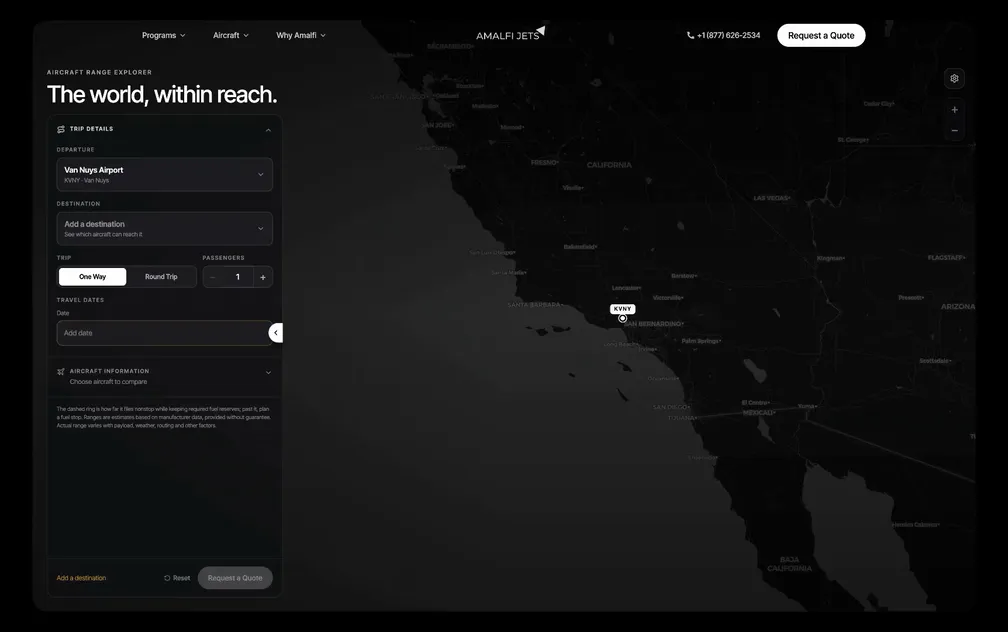
Try Range Explorer
See how far you can fly nonstop
Explore aircraft range, compare options, check flight times, and better understand which aircraft fits your trip.
Ready to fly to Paris?
Request a charter and our team will tailor an itinerary for your next journey.
*Takes only about 40 seconds to request your quote.
