



Destination Hub
Private Jet Charter to Jackson Hole
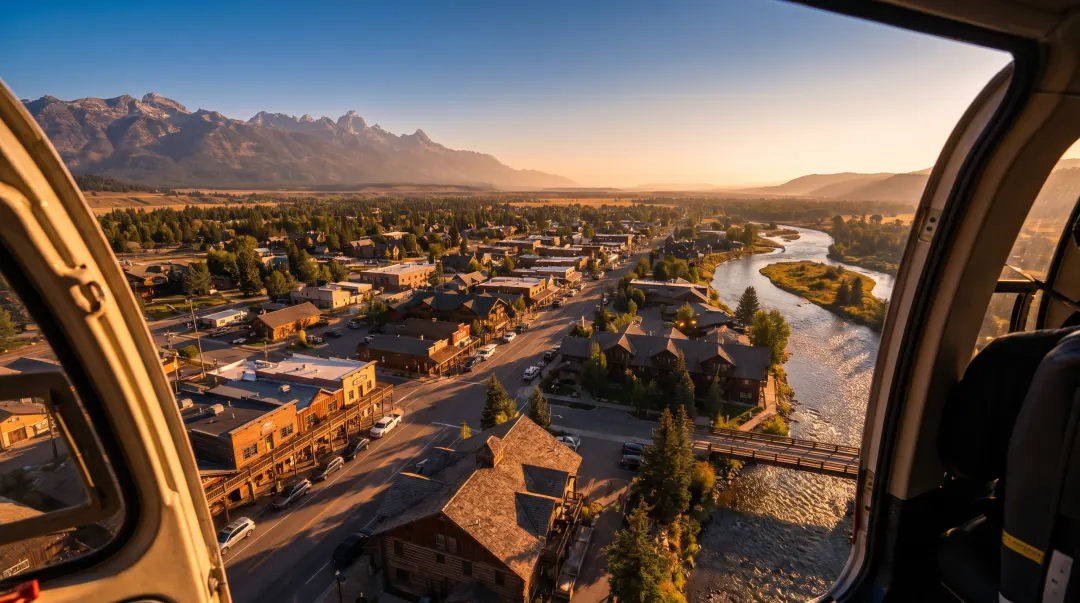
Most private arrivals into Jackson Hole come through Jackson Hole Airport, keeping the charter day clean, direct, and built around your schedule. From the ramp, the valley’s scale is immediate: open sky, mountain light, and a swift transition from aircraft to lodge, residence, or trailhead.
Quick facts
Why charter a private jet to Jackson Hole?
Private charter is the most controlled way to reach Jackson Hole when time, privacy, and schedule integrity matter more than airline routing.
A simpler arrival pattern
Jackson Hole Airport is the primary gateway for private flights into the valley, which allows the charter plan to focus on one preferred arrival point before considering alternates. That clarity matters in a mountain destination where peak lodging nights, ski plans, national park access, and private ground transfers often need to align precisely.
Flexibility for high-value itineraries
A private flight can be organized around your preferred departure time, passenger list, baggage profile, and onward plans. Instead of building the trip around fixed airline schedules, the itinerary can hold space for late meetings, family coordination, ski equipment, fishing gear, or a same-day return.
Time saved on both ends
Discerning travelers charter privately to reduce friction, not simply to arrive in style. The value is in fewer touchpoints, coordinated ground service, and a departure process designed around the passengers rather than the terminal clock.
- Direct scheduling: depart when the group is ready, subject to aircraft, airport, and crew planning.
- Private handling: keep the travel day discreet and efficient from origin to arrival.
- Contingency planning: review alternate airports when JAC demand, weather, or operational constraints make a second option prudent.
- Trip continuity: coordinate aircraft, ground transportation, lodging timing, and return planning through one advisory process.
“For peak summer and winter weeks, our charter desk secures the aircraft and JAC handling plan first, then confirms alternates and ground transfer timing. Firm dates early in the process usually widen aircraft choice.”

When is the best time to fly to Jackson Hole?
The best time to fly privately into Jackson Hole depends on whether the trip is built around national parks, skiing, holidays, or quieter shoulder-season space.
Peak travel months
June, July, and August bring the strongest summer pull, as travelers build itineraries around Grand Teton, Yellowstone, fly-fishing, hiking, ranch stays, and long daylight in the valley. Aircraft and lodging availability can tighten early because many trips involve families, guides, residences, and multi-day ground plans.
December, January, and February create a second peak, driven by ski demand and holiday travel. During those winter months, firm dates benefit from earlier planning because desirable aircraft, crew schedules, and premium accommodations can be claimed well before departure.
Value months
April, May, and November tend to be more flexible for charter availability. These mud-season periods can bring lighter crowds and a quieter valley rhythm, though travelers should expect some seasonal closures, variable conditions, and fewer fully active outdoor programs.
That tradeoff can be appealing for guests who value privacy and a less crowded arrival. A well-built itinerary will confirm what is open, where ground transfers make sense, and whether a primary or alternate airport plan best fits the trip.
Planning guidance
Travelers with exact holiday, school-break, or peak ski dates should secure aircraft early. Those with flexible arrival windows can often evaluate more aircraft options, compare JAC with regional alternates, and adapt around weather or lodging availability with less pressure.
Where our clients stay and go
Jackson Hole is a mountain valley with a strong sense of place: dramatic Tetons to the west, broad ranchland on the valley floor, and a town whose luxury still keeps close to the outdoors.
The arrival feels different from a typical resort transfer. Light moves quickly across the peaks, the Snake River cuts through the landscape, and the built environment gives way almost immediately to open country. Even polished stays here tend to revolve around the same elements that first made the valley famous: snow, water, wildlife, trail systems, and western space.
The character of the valley
Downtown Jackson centers around a compact Town Square known for its elk antler arches, galleries, restaurants, outfitters, and a walkable western core. It is refined without becoming anonymous; a traveler can move from a private dinner to a morning on the river without losing the feel of Wyoming.
Teton Village brings a different rhythm, especially in winter, with ski access, mountain lodging, and après-ski energy close to the slopes. Private residences and ranch properties spread the experience wider, giving families and groups room to gather away from the town center.
What draws private travelers
Summer itineraries often pair national park access with guided wildlife viewing, hiking, horseback riding, cycling, climbing, and fly-fishing. The long days suit multi-generational travel because the schedule can hold both active mornings and slower evenings.
Winter shifts the focus to skiing, snowboarding, fireside dining, spa time, and holiday gatherings. The valley also appeals to travelers who do not need a packed schedule; in this landscape, a clear morning view of the Tetons can be the main event.
A destination that rewards coordination
The most successful trips are carefully timed. Aircraft arrival, lodge check-in, private drivers, guides, gear, dinner reservations, and return flights all work better when they are planned together.
That is where private aviation becomes more than transportation. It turns the trip into a connected sequence: depart on your terms, arrive closer to the plan, and let the valley set the pace once you are on the ground.
What determines the cost of a flight to Jackson Hole?
The cost of chartering privately into Jackson Hole is shaped by the aircraft selected, the itinerary structure, seasonal demand, airport-related charges, and aircraft availability.
Aircraft selection
Aircraft class is one of the central cost drivers because each aircraft type carries a different operating profile. Cabin size, passenger count, baggage needs, nonstop routing goals, and onboard service expectations all influence which options are appropriate for a quote.
A larger cabin may suit a family group with ski equipment or a longer nonstop itinerary, while a more compact aircraft may be appropriate for a shorter regional trip. The right choice is not only about comfort; it is about matching the aircraft to the route, passengers, luggage, and operating conditions.
One-way versus round trip
A one-way charter may require the aircraft to reposition before or after your flight, which can affect the total cost. A round trip can sometimes create a more efficient aircraft schedule, particularly when the same aircraft and crew can remain aligned with your return.
Trip length also matters. A brief stay, an extended holiday, or a flexible open-jaw itinerary can each create a different aircraft-use pattern, which is why the charter desk evaluates the entire travel plan rather than a single flight segment.
JAC positioning and fees
JAC can influence pricing through aircraft positioning, airport fees, handling requirements, and local operating considerations. If the ideal aircraft is already nearby, the quote may look different than if it must be brought in from another market.
Airport-related charges are also part of the final charter picture. These are reviewed as part of the trip build so that the routing, arrival airport, and any alternate plan are considered together.
Seasonal demand
Summer park travel and winter ski demand can tighten aircraft availability, especially around firm holiday weeks and peak lodging periods. When more travelers want to arrive on the same days, suitable aircraft can be claimed earlier and repositioning options can become less favorable.
Shoulder periods may offer more choice, but planning still matters in a mountain destination where weather, closures, and lodging calendars can shape the trip.
Empty-leg availability
Empty-leg opportunities can occasionally reduce the cost of a suitable itinerary, but they are never as flexible as a dedicated charter. Timing, route direction, aircraft size, passenger needs, and repositioning all have to match.
For travelers with fixed plans, a confirmed charter remains the more dependable approach. For flexible travelers, the advisor can monitor empty-leg possibilities while keeping a primary aircraft plan in view.
Which airports serve Jackson Hole?
Private travelers serve Jackson Hole primarily through JAC, with regional alternates in Idaho and Wyoming that can be considered when location, availability, or operational planning calls for another approach.
Jackson Hole Airport (JAC)
JAC is the primary airport for the destination and the natural first choice for most private itineraries into the valley. Its appeal is straightforward: it keeps the arrival closest to the core trip plan, whether the stay is centered on town, Teton Village, a private residence, or access to nearby national park country.
Because demand can concentrate around summer park travel and winter ski weeks, the charter desk evaluates aircraft availability, handling, ground transfer timing, and any alternate strategy early. Choosing JAC can simplify the passenger experience, but the best plan still accounts for weather, peak-day congestion, and the return schedule.
Driggs-Reed Memorial Airport (DIJ)
DIJ can make sense for travelers whose plans lean toward the Idaho side of the Tetons or Teton Valley. It may also be reviewed as an alternate when the desired JAC plan is constrained by availability or when the ground itinerary points west rather than directly into the town core.
The value of this option is geographic flexibility. For certain residences, ranch stays, or regional movements, arriving on the Idaho side can support a more tailored ground plan, provided the aircraft, handling arrangements, and transfer logistics align.
Ralph Wenz Field Airport (PNA)
PNA is a Pinedale-area option that may be relevant for trips tied to Sublette County, the Wind River side of western Wyoming, or a broader regional itinerary rather than a classic town-and-Teton Village stay. It gives the advisor another way to think about the trip when the final destination is not in the central valley.
This airport is best considered strategically: not as a default replacement for JAC, but as a practical alternate when the traveler’s ground destination, aircraft availability, or arrival-day conditions make a southern Wyoming approach more efficient.
Idaho Falls Regional Airport (IDA)
IDA offers a broader regional gateway on the Idaho side and can be useful when a trip pairs the Tetons with eastern Idaho, when aircraft positioning favors that market, or when the traveler wants another option outside the busiest valley arrival pattern.
For private flyers, its role is often about resilience. If the preferred arrival airport is not ideal for the trip day, an Idaho Falls plan may preserve schedule control while keeping the broader region within reach by coordinated ground transfer.
Afton Municipal Airport (AFO)
AFO serves the Afton area and can be considered for itineraries connected to Star Valley, the southern approach to the region, or private stays that sit away from the main resort corridor. It is not the typical first choice for a central valley arrival, but it can be the more sensible conversation when the ground destination points south.
A thoughtful airport plan weighs more than the airport code. The advisor looks at where passengers actually need to be, how much time the ground transfer adds, what aircraft options are realistic, and how peak-season pressure may affect JAC compared with regional alternates.
Routes to & from Jackson Hole
Common questions about Jackson Hole charter
Which airport is best for a private flight into the valley?
Jackson Hole is usually served first through JAC because it is the primary airport for the destination and keeps the arrival plan closest to town, Teton Village, private residences, and national park access.
When should I book a private flight for peak dates?
Jackson Hole demand is strongest in June, July, August, December, January, and February, so firm peak-week plans should be arranged early to preserve aircraft choice and handling options.
What determines the cost of chartering privately?
Jackson Hole charter cost depends on aircraft class, itinerary structure, aircraft positioning, JAC fees, seasonal demand, and whether a suitable empty-leg opportunity matches your route and timing.
Can alternate airports be considered for a private trip?
Jackson Hole itineraries can include DIJ, PNA, IDA, or AFO when an alternate better fits the ground destination, aircraft availability, congestion planning, or a broader regional route.
Is spring or late fall a good time to fly privately?
Jackson Hole can be quieter in April, May, and November, with lighter crowds and often better charter availability, though travelers should plan around seasonal closures and variable conditions.
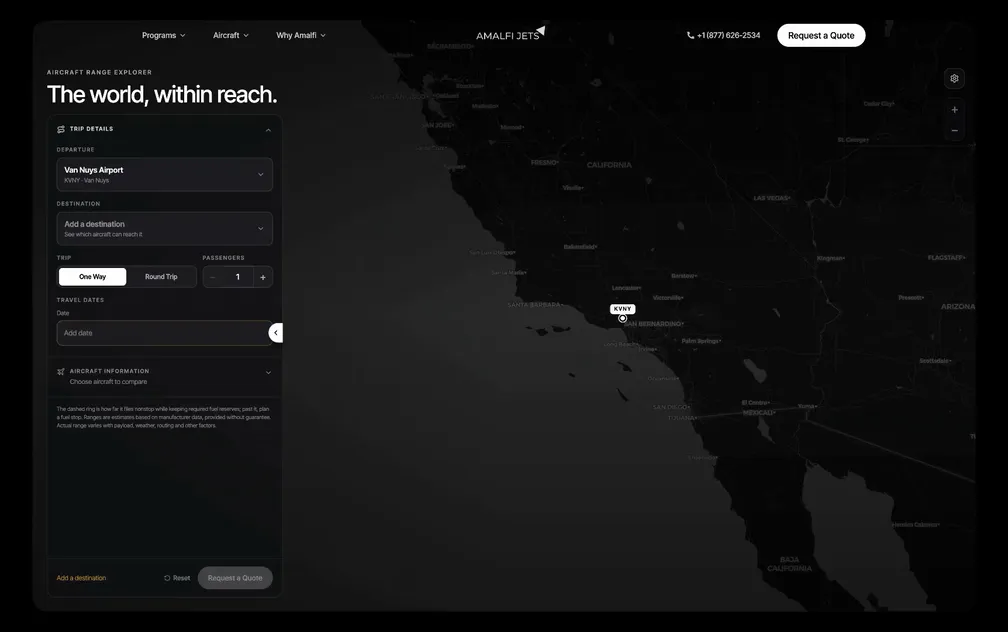
Try Range Explorer
See how far you can fly nonstop
Explore aircraft range, compare options, check flight times, and better understand which aircraft fits your trip.

Ready to fly to Jackson Hole?
Request a charter and our team will tailor an itinerary for your next journey.
*Takes only about 40 seconds to request your quote.
