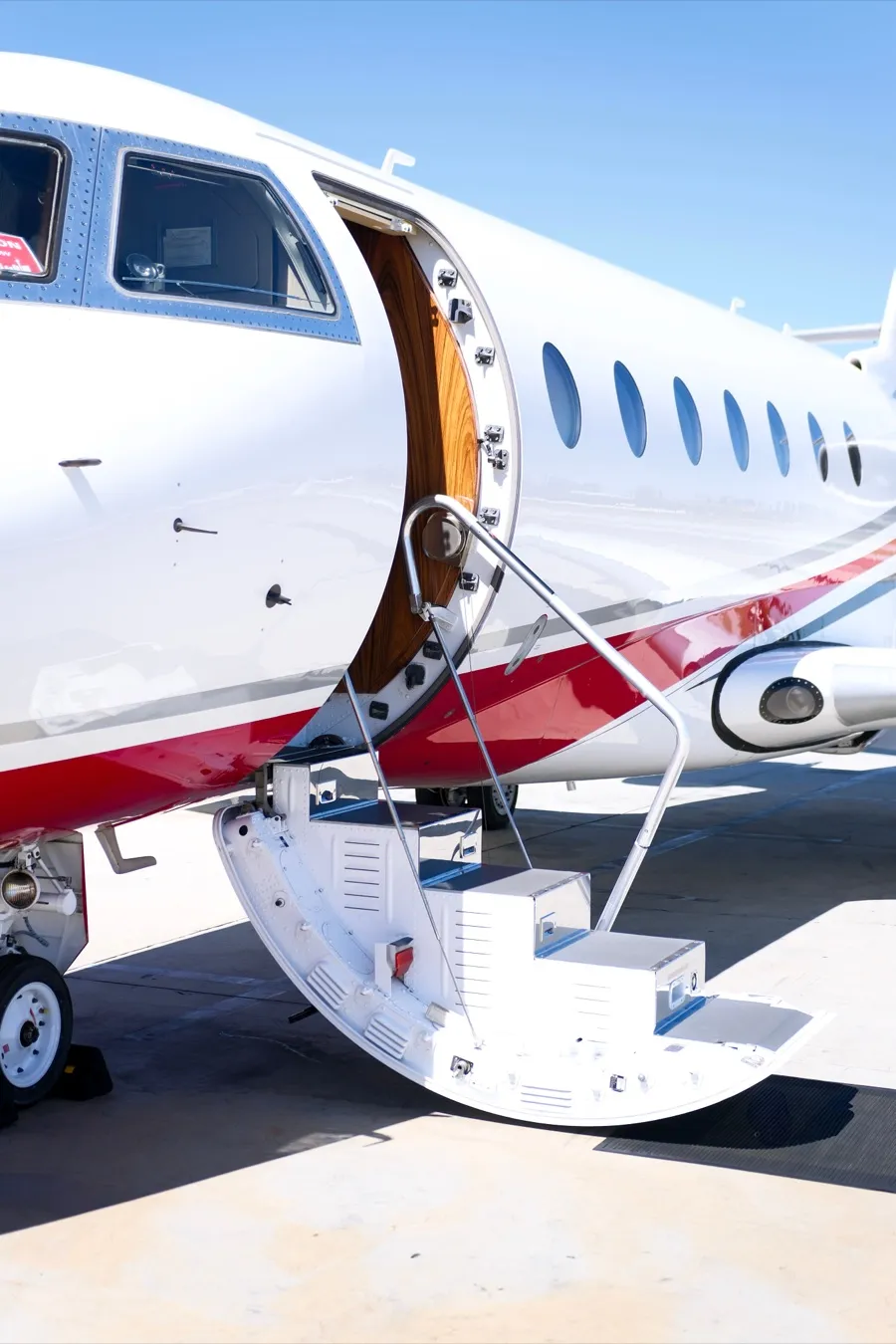





A G4 plane usually refers to an aircraft in the Gulfstream GIV family, but the shorthand will not tell you exactly what you are being offered. The Gulfstream GIV is the original model, the Gulfstream GIV-SP is a performance update, and the Gulfstream G450 is a later successor. All three serve a similar large-cabin role, yet the differences that matter on charter often come down to the individual aircraft and the trip you have planned.
If you ask Amalfi Jets for a G4 jet, we will start by asking how you want to spend the flight. On a trip from New York to Los Angeles, you might need a table where you can work while the rest of your group relaxes. On an overnight flight, the deciding detail may be whether one passenger can sleep without taking over the seating area everyone else plans to use.
What is a G4 plane?
The term most commonly refers to the Gulfstream GIV or Gulfstream GIV-SP. The Gulfstream G450 is a later aircraft in the same lineage, so it belongs in the comparison, but it is not another name for either earlier model. If a proposal says only "G4," ask for the exact model and tail number, which is the registration that identifies the individual aircraft.
The Gulfstream GIV-SP may also appear as Gulfstream G-IV SP or Gulfstream GIV SP. Some listings compress the name to Gulfstream GIVSP. These spellings all refer to the same model, and they tell you nothing about the seating arrangement, cabin condition, or equipment on board.
Gulfstream GIV: The original large-cabin option
The original Gulfstream GIV established the family’s large-cabin format. It remains worth considering when the proposed aircraft suits your group and the operator determines it can carry your passengers and baggage on the planned route. A later model is not automatically a better choice if the Gulfstream GIV offers a layout you would rather spend time in.
Our Gulfstream GIV charter guide describes how a cabin might be arranged for work, dining, and rest. Treat that as a way to picture the space, rather than a promise that every Gulfstream GIV has the same layout. If you plan to hold a conversation at a table while someone else reads or rests, ask to see how those seating areas are arranged on the aircraft in your proposal.
The heavy jet charter guide puts that choice in context. You do not have to be taking a long trip to appreciate a cabin with multiple seating areas. For a shorter flight with colleagues or family, the ability to sit together when you want to and spread out when you do not may be the strongest reason to choose a heavy jet.
Gulfstream GIV-SP: What Special Performance adds
The SP stands for Special Performance. The Gulfstream GIV-SP retained the broad cabin format of the Gulfstream GIV while introducing higher takeoff and landing weight limits. That distinction is worth understanding, but it does not tell you how much the proposed aircraft can carry on a particular flight.
If you are comparing a Gulfstream GIV and a Gulfstream GIV-SP, ask whether the difference affects your itinerary once the operator accounts for passengers, baggage, weather, and runway conditions. If both aircraft meet the trip requirements, look at the cabin rather than treating the suffix as a deciding factor. The stronger proposal may be the one with a table your group can actually work around or a seating arrangement that makes an overnight flight easier.
Gulfstream G450: A later generation
The Gulfstream G450 is more than a renamed Gulfstream GIV-SP. It carries the same broad mission forward with changes to the airframe, flight deck, and aircraft systems. Those changes distinguish the models, but they do not tell you whether a particular cabin has the seating, connectivity, or sleeping arrangements you require.
Our Gulfstream G450 charter guide explains what to ask about on the individual aircraft, from convertible divans to galley equipment. If you are comparing a Gulfstream G450 with a Gulfstream GIV-SP, ask to see the layout of each aircraft and request a route assessment using the same passenger and baggage details. A Gulfstream G450 may offer the cabin you prefer or better suit the planned trip, while an earlier aircraft can still be the better choice when its cabin works better for your group.
Choose the cabin you will actually use
Start by picturing the busiest part of the flight. If several people need to work at once, check which seats have usable tables and whether they face one another. If you want to dine together, ask how many guests can sit comfortably at the table and whether the galley setup suits the service you have in mind.
For an overnight trip, tell us how many passengers need a place to sleep and who expects to stay awake. Ask which seats or divans convert for sleeping and what seating remains once those spaces are made up. A cabin can seat everyone for departure and still be a poor fit once a bed takes up the area someone else planned to use.
Apply the same scrutiny to connectivity and baggage. If staying online is important, ask what is installed on the proposed aircraft and what to expect on your route. Mention oversized items when you request options so we can consider both where they will fit and how their weight affects the operator’s flight planning.
Published range is not a nonstop guarantee
Published range gives you a sense of the kind of trip an aircraft was designed to fly. It does not account for the exact load, winds, routing, fuel reserves, or runway conditions on your departure day. When two proposals list different range figures, an operator’s assessment of both aircraft against the same itinerary is the more useful comparison.
If nonstop travel is a priority, share this requirement before you shortlist aircraft. As your charter broker, Amalfi Jets can ask each operator to assess the proposed route and load to explain whether a fuel stop may be needed. Knowing that possibility early lets you weigh it alongside cabin layout and departure airport, rather than discovering it after you have settled on an aircraft.
New York (TEB) and Los Angeles (VNY): Planning a coast-to-coast charter
For New York area departures, you may be considering Teterboro (TEB). For Los Angeles, Van Nuys (VNY) may make sense depending on where your day begins or ends. On a trip between the two, tell us what you need from the cabin and whether the flight needs to be nonstop. The operator can then assess the proposed aircraft for that direction of travel with your specific passenger and baggage details.
The same route can call for a different cabin depending on the day you have planned. If you will go straight into meetings after arrival, you might want room to prepare without asking everyone else to move. If the flight is time to catch up with family, the way the seats face one another may matter more than having a separate work area.
Miami (OPF) and Houston (SGR): Choosing the right departure airport
For Miami, consider Miami-Opa-locka Executive (OPF) in relation to where you need to be on the ground. On a trip between Teterboro (TEB) and Miami, you might shortlist a Gulfstream GIV family aircraft because its seating gives everyone room to work or relax, rather than because you need the greatest published range. Once the operator has assessed the trip, the cabin may be what separates two otherwise suitable proposals.
For Houston, consider Sugar Land Regional (SGR) alongside your plans before departure or after arrival. Let us know whether the airport is a firm preference or whether another option could work if it suits your ground itinerary. For any of these airports, confirm the departure terminal and handling arrangements for your specific flight instead of assuming they will match a previous trip.
What Amalfi Jets compares before you choose
Amalfi Jets is an air charter broker, and we never operate aircraft. We compare options from qualified operators and coordinate arrangements for the aircraft you select. The operator assesses whether the aircraft can fly the proposed route with your passengers and baggage under the expected conditions.
When two proposals look similar, we compare the aircraft by tail number, cabin layout, positioning, and the operator’s plan for the trip. If cabin use is your priority, we will focus on practical differences such as whether the table suits your group or what seating remains once beds are made up. If nonstop travel or bulky baggage is the deciding factor, we will bring that into the comparison before you choose.
To begin, share your itinerary, preferred airports, passenger count, and baggage details with our team. Tell us what you want to do on board, and we will help you compare a Gulfstream GIV, Gulfstream GIV-SP, and Gulfstream G450 around the way you plan to travel. Discover more about our approach at amalfijets.com or explore Why Amalfi to learn how we elevate your charter experience.