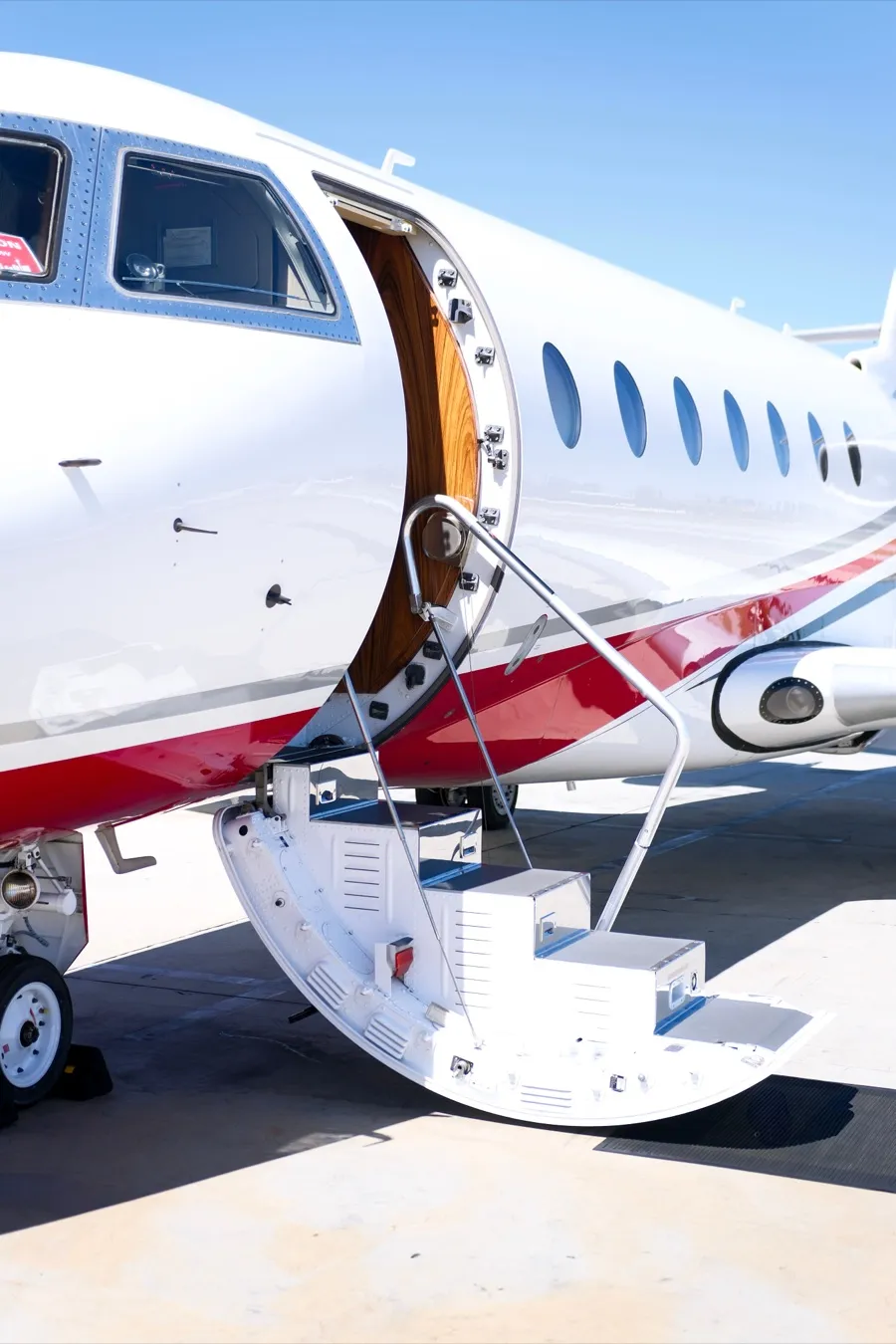





For trips under three hours, the light jet vs turboprop decision begins with your schedule and your final destination. A light jet often provides more room to breathe during a tightly scheduled day in Las Vegas or Scottsdale. Conversely, a turboprop may be the better choice if it can access an airfield that leaves you with a much shorter drive. Ultimately, the metric that matters most is the total time spent traveling between your starting point and your final destination.
If you are comparing short private jet flights from Los Angeles, Van Nuys Airport (VNY) serves as an excellent departure point to evaluate both aircraft categories. For destinations like Las Vegas and Scottsdale, you should compare the door-to-door time each aircraft could save on the exact same itinerary. For mountain destinations like Aspen or Sun Valley, start by asking whether the operating carrier can safely serve the requested airport with your passengers and baggage under the expected weather conditions.
Light Jet Charter: When Speed Matters
A light jet charter is worth prioritizing when time in the air can dramatically reshape your day. Light jets generally cruise faster and fly higher than turboprops, allowing them to climb above some weather systems for a potentially smoother ride. However, on a short flight, the climb and descent phases leave relatively little time at cruising altitude. You should ask your broker how that speed advantage translates to your actual itinerary.
That speed difference becomes most valuable when you face a strict arrival time, a full afternoon of meetings, or a same-day return flight. Consider how much margin the faster aircraft leaves between landing and your first commitment, rather than simply looking at the top cruise speed. If both options get you there comfortably and on time, the cabin experience may become the deciding factor.
Review the seating plan for the specific aircraft offered, particularly if you plan to conduct business with colleagues during the flight. A layout designed for a small group traveling with soft overnight bags might prove less practical for the same number of passengers carrying large suitcases. Always compare the actual cabin dimensions and baggage capacity before deciding that a particular jet is the right fit for your group.
Turboprop Charter: When Airport Access Matters More
A turboprop charter deserves a close look when the airfield nearest your destination features a shorter runway or when the jet’s time advantage appears modest. Certain turboprops can utilize runways that are unsuitable for light jets, granting you superior access to remote or niche locations. This flexibility always depends on the specific aircraft, the planned payload, and the weather conditions on the day of departure. The operating carrier must assess the requested airport parameters before you can count on that access.
The turboprop cabin merits careful consideration in its own right. Some models offer expansive room for a group and their luggage in a layout that may suit your trip better than a typical light jet. Always share your exact passenger count along with the number and approximate size of your bags, especially if you are bringing oversized sporting equipment. A simple seat count will never tell you the full story of what fits comfortably onboard.
If both aircraft categories can serve the same airports, a turboprop often emerges as the more economical option on a short regional hop. Compare quotes for the same itinerary alongside the cabin layouts and estimated block times to make an informed decision. If one aircraft can utilize an airfield closer to your final destination, factor in the shorter drive before deciding which option makes better use of your day.
Turboprop vs Jet: Which Gets You There Sooner?
Start your evaluation with the estimated block time, which covers the entire flight from departure movement to arrival and includes taxiing. Because climb, descent, and traffic sequencing consume a large portion of a short flight, a difference in cruise speed will not translate directly into an identical difference in block time. Custom estimates for your specific route and requested schedule offer a much more useful comparison than published cruise figures.
Once you have those estimates, work backward from the exact moment you need to arrive at your final stop. Allow ample time for the transfer from the arrival airfield, ground logistics at both facilities, and the drive to your departure airport. If the aircraft options dictate using different facilities, compare the two itineraries door to door. Our turboprop vs. private jet comparison takes a broader look at these trade-offs to help you frame your decision. Ultimately, the most useful measure is whether either option gets you where you need to be with time to spare.
Los Angeles to Las Vegas: Van Nuys (VNY) to Henderson (HND)
For a departure from Van Nuys, Henderson Executive Airport (HND) provides an excellent arrival option just south of Las Vegas. Whether it remains the right arrival airport depends entirely on where your day takes you next. If you have a fixed meeting time, a light jet is absolutely worth comparing to ensure you hit your schedule. Always leave room for the drive from Henderson before deciding exactly how much the faster flight helps your agenda.
If both aircraft can easily serve VNY and HND for your dates, keep the airports and requested schedule identical when comparing estimates. Ask whether the difference in block time allows you to depart Los Angeles later or gives you more margin before your appointment. If the speed difference achieves neither, you can give greater weight to the seating arrangement or baggage space that best suits your group.
Los Angeles to Scottsdale: Van Nuys (VNY) to Scottsdale (SDL)
Scottsdale Airport (SDL) is a natural arrival choice to consider for a trip originating from Van Nuys, though its ultimate convenience depends on your final address. A light jet may make perfect sense if you need to fit the flight into a very narrow scheduling window. Conversely, a turboprop may be just as practical if the estimated arrival aligns with your plans and the aircraft features the right cabin layout.
Share the exact address you are heading to as well as the precise time you would like to arrive. If everyone is traveling together to the same appointment, compare how much time margin each aircraft leaves your group. If there is no strict pressure on arrival time, look instead at where passengers will sit and how their luggage will fit. With identical ground transfers either way, it becomes much easier to see whether the flight time is worth prioritizing.
Aspen (ASE) and Sun Valley (SUN): Start With Airport Performance
For Aspen/Pitkin County Airport (ASE) and Friedman Memorial Airport (SUN), airport suitability must come before any cabin preference. Elevation, temperature, weather, runway conditions, and the total weight of the aircraft all factor heavily into the operating carrier’s safety assessment. A short flight into a mountain airport does not inherently make either aircraft category universally suitable.
Provide your broker with your passenger count and baggage details early, making sure to include any oversized items like skis or snowboards. The operating carrier can then assess the specific aircraft and planned load rather than relying on what the category can achieve in general terms. If the requested airport is not suitable for that combination, ask whether a different aircraft or a nearby alternative arrival airport would work. Always compare the onward drive before settling on an alternative, since that change can impact your day more than the flight itself.
Light Jet vs Turboprop: How to Choose for a Trip Under Three Hours
For a regional hop of roughly an hour or less, you should compare estimated block times and ground transfers first. When both aircraft can use your preferred airports and the time estimates are close, simply choose the cabin and baggage arrangement that works better for your group. If one aircraft can bring you significantly closer to your final stop, that shorter drive may matter far more than a slightly faster flight.
For a trip closer to three hours, give the light jet’s speed advantage more weight, especially if you are working around a firm appointment or a same-day return. Runway suitability still precedes that comparison at mountain airports or wherever access remains uncertain due to weather or elevation. Once the operating carrier has assessed the itinerary, confirm that the cabin and baggage space work seamlessly for everyone traveling. You can then use trip length to judge the value of speed, runway suitability to narrow the options, and group size to make the final choice.
Find the Aircraft That Fits Your Itinerary
Amalfi Jets acts as a premium charter broker, not a direct aircraft operator. We arrange bespoke charter options tailored around your schedule, preferred airports, passenger count, and specific baggage requirements. The operating carrier is solely responsible for assessing the proposed flight and for its safe operation.
Request a charter with Amalfi Jets and share where you are going, when you need to arrive, and who is traveling with you. We will help you compare suitable light jet and turboprop options side by side. Our team ensures you can see exactly what each aircraft choice would mean for your travel day.