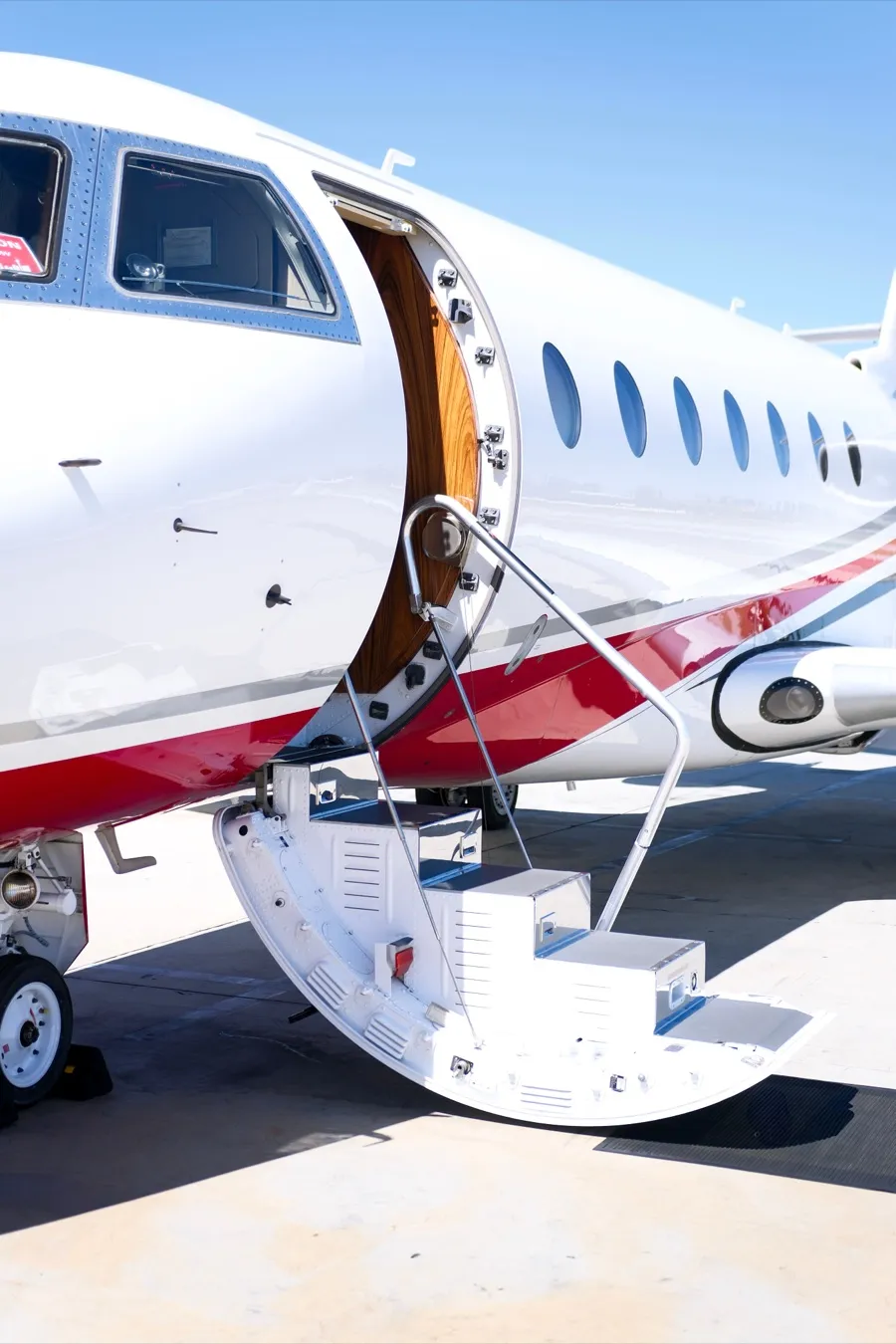




The Gulfstream G450 combines substantial range with a versatile cabin designed for work, dining, conversation, and rest. For travelers comparing heavy jet charter options, its appeal lies not only in the published Gulfstream G450 specs, but also in how a particular aircraft fits the route, passenger count, baggage, and expectations for time on board.
That distinction is essential when planning journeys among New York, Los Angeles, London, Miami, and Dallas. A published range figure offers a useful starting point, while the actual charter decision depends on the individual aircraft, forecast conditions, operator planning, and the details of your itinerary.
Why the Gulfstream G450 Remains Relevant for Charter
The Gulfstream G450 charter aircraft occupies a compelling position within the heavy jet category. It is suited to transcontinental journeys, select transatlantic sectors, and multistop itineraries that benefit from a generous cabin and meaningful range.
For charter clients, the Gulfstream 450 offers a balance between performance and cabin flexibility. Its interior can provide distinct areas for meetings, dining, quiet conversation, and rest, allowing passengers to use the aircraft differently as the journey progresses.
The aircraft should nevertheless be assessed by tail number rather than by model name alone. Seating plans, interior condition, connectivity, galley equipment, entertainment systems, and sleeping arrangements can vary considerably between available examples.
Gulfstream G450 Specs That Matter for Charter
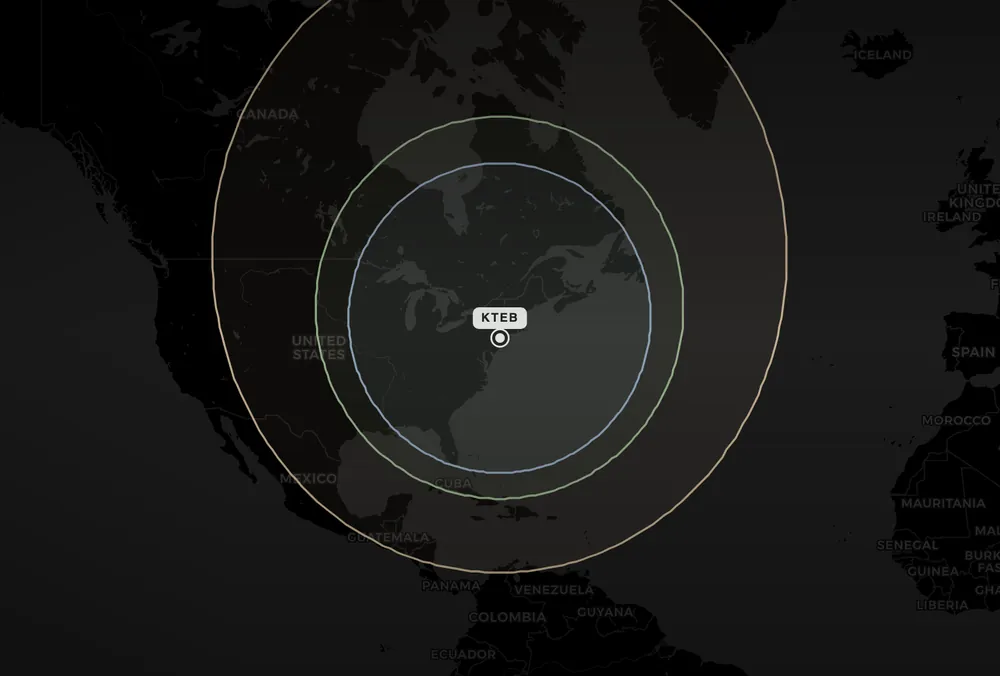
The most useful Gulfstream G450 specs for charter planning begin with its category, range, and passenger capacity. The aircraft is presented as a heavy jet with a published range of 4,350 nautical miles and typical capacity for 14 to 16 passengers, subject to the configuration of the aircraft offered.
These figures are reference points rather than guarantees for a specific mission. Passenger count, baggage, forecast winds, temperatures, routing, fuel reserves, airport conditions, and other operational requirements can change the distance an aircraft can responsibly complete without a fuel stop.
Passenger capacity also requires context. A cabin certified for a particular number of travelers may not provide an equivalent number of sleeping positions, and an aircraft with fewer seats may offer more lounge space or a layout better suited to an overnight journey.
The G450 Gulfstream cabin and operating profile make the aircraft relevant for travelers who value separate cabin zones as much as distance capability. For many clients, the most important specification is ultimately whether the selected aircraft supports the way they intend to work, dine, rest, and travel together.
What Is the Practical G450 Range?
The published G450 range is 4,350 nautical miles, but practical nonstop capability must be calculated for your actual trip. A responsible assessment starts with the exact departure and arrival airports, then considers payload, baggage, weather, routing, reserves, and the operator's flight plan.
This distinction becomes more important as a proposed sector approaches the aircraft's range margin. A route that appears possible when measured geographically may require a fuel stop when forecast winds are unfavorable or when the aircraft carries a fuller passenger and baggage load.
Favorable conditions may create greater flexibility, but they should not be presumed during the initial inquiry. Our team reviews each proposal in the context of the mission so you understand whether nonstop travel is expected, whether a technical stop may be prudent, and what alternatives deserve consideration.
For domestic travel, the G450 can be a strong candidate for transcontinental routes such as New York to Los Angeles. The aircraft may offer more range than shorter routes require, yet its cabin can remain valuable when the party is larger, the schedule includes several stops, or passengers want distinct areas for work and rest.
Gulfstream G450 Interior and Cabin Layout
The Gulfstream G450 interior is known for a standing cabin and a layout that can be divided into several functional zones. A representative configuration may include club seating, a conference or dining arrangement, and an aft area with additional seats or a divan.
That separation supports several activities during the same journey. An executive group may conduct a meeting in one section while other passengers dine, read, or rest elsewhere, and a family may use the zones to create greater privacy over a longer flight.
There is no single interior shared by every G450 available for charter. Materials, lighting, seating design, entertainment equipment, power access, Wi-Fi capability, galley features, and refurbishment history depend on the individual aircraft.
Cabin photographs and configuration diagrams are therefore more useful than broad model assumptions. When those materials are available, we review them alongside amenity notes and operator information so the proposed cabin can be considered as carefully as the route.
How Many Passengers Can a Gulfstream 450 Carry?
A Gulfstream 450 commonly accommodates 14 to 16 passengers, depending on its approved seating configuration. The precise count must be confirmed for the specific aircraft presented because privately configured cabins can exchange additional seats for lounge space, tables, storage, or a different arrangement of cabin zones.
Travelers should also distinguish passenger seating from sleeping capacity. Certain seats or divans may convert for rest, but the number, dimensions, and style of those positions vary, so an overnight itinerary requires more detailed review than a daytime sector.
A group does not necessarily benefit from selecting the aircraft with the highest nominal seat count. The better choice may be a G450 with fewer seats but a more suitable conference arrangement, a more practical berth plan, or a cabin condition that better reflects the character of your trip.
Baggage deserves the same advance attention. The number and type of cases, garment bags, equipment, and oversized items should be disclosed before confirmation so the operator can evaluate the complete load for the proposed flight.
G450 Routes for New York, Los Angeles, London, Miami, and Dallas
Teterboro (TEB) and Van Nuys (VNY) provide a natural New York to Los Angeles planning example for the G450. A transcontinental mission is aligned with the aircraft's broad capabilities, although performance, payload, weather, routing, and airport conditions must still be reviewed for the specific departure.
Between Teterboro and Miami Opa-locka Executive (OPF), range is unlikely to be the only reason to consider this aircraft. Cabin size, passenger count, privacy, baggage needs, and the possibility of continuing to another destination may carry greater weight in the decision.
A Teterboro to Dallas Love Field (DAL) itinerary raises similar considerations. The route may not require the full published G450 range, but the aircraft can provide a consistent cabin experience for a larger party or a schedule continuing beyond Dallas.
Van Nuys to Dallas and Van Nuys to Miami also fall within the broad mission profile of the G450. These city pairs illustrate how the aircraft can serve both medium and longer domestic sectors while preserving the same working and resting environment throughout a multistop itinerary.
London Heathrow (LHR) requires a more deliberate review. A New York region to London journey may be suitable under the right conditions, but forecast winds, payload, routing, airport permissions, and operator planning determine whether a specific proposal should be presented as nonstop.
London to Miami can place greater demands on the practical range of the aircraft. Rather than relying on a published model number, we distinguish between a route that appears possible and a mission that has been planned with appropriate operational margins.
Airport Planning at TEB, VNY, LHR, OPF, and DAL
Airport selection shapes more than the distance shown on an itinerary. Scheduling considerations, operating restrictions, handling arrangements, aircraft parking, ground access, and current airport conditions can all influence the final recommendation.
Teterboro (TEB) is frequently considered for private travel in the New York region, while Van Nuys (VNY) is a prominent option for access to Greater Los Angeles. Their suitability for a particular trip still depends on the departure schedule, aircraft availability, local restrictions, and the operating plan confirmed for that day.
Miami Opa-locka Executive (OPF) can be considered for access to the Miami area, and Dallas Love Field (DAL) may suit travelers whose plans center on Dallas. The preferred airport should be selected in relation to the full itinerary rather than on city name alone, particularly when ground transportation or a subsequent flight is involved.
London Heathrow (LHR) requires careful coordination because permissions, slots, handling, parking, and other constraints may affect feasibility. Depending on the itinerary, an alternative London area airport may provide a more appropriate operating plan or arrival experience.
Specific handling assignments and available services can change. We coordinate around confirmed arrangements rather than promising a particular facility before the operator and airport have finalized the plan.
What to Expect When Chartering a G450
A well considered G450 charter begins with the mission rather than the model name. We ask about the route, dates, passenger count, luggage, preferred cabin layout, connectivity, catering, ground transportation, sleeping requirements, and schedule constraints before curating suitable options.
Amalfi Jets is a private jet charter broker, not an aircraft operator. Our team sources aircraft from qualified operators and compares individual options, allowing the recommendation to reflect your needs rather than treating every G450 as interchangeable.
Once appropriate aircraft are identified, the review may include passenger configuration, cabin photographs, positioning, operator information, baggage considerations, connectivity, galley capability, and the expected routing. Longer sectors receive particular attention because berth arrangements, cabin condition, weather, and nonstop expectations can have a greater effect on the experience.
The final aircraft and itinerary remain subject to operator confirmation and operational review. Clear information at the beginning of the process allows our team to present options aligned with your trip instead of asking you to interpret model specifications without context.
How Gulfstream G450 Charter Costs Are Determined
A G450 charter quote reflects the complete itinerary rather than a simple hourly rate. Route length, aircraft positioning, airport charges, crew requirements, overnight expenses, international handling, catering, ground services, applicable weather considerations, and taxes may all influence the proposal.
Aircraft availability is equally important. The nearest suitable G450 may need to reposition before the passenger flight, while an aircraft already located near the departure point may support a more efficient schedule and quote.
Our private jet charter cost guide provides broader context on the variables behind a private flight proposal. It also explains why a generalized hourly figure does not represent the complete cost or operational structure of an itinerary.
Value should be assessed beyond the lowest quote. Cabin condition, configuration, route suitability, operator standards, aircraft positioning, and schedule resilience can be more consequential than a narrow difference between proposals.
Is the Gulfstream G450 Right for Your Trip?
The Gulfstream G450 can be particularly well suited to executive teams, families, and private groups seeking substantial range with separate areas for productivity, dining, and rest. It can also support multistop itineraries involving cities such as New York, Los Angeles, London, Miami, and Dallas.
A smaller aircraft may be more appropriate when the passenger count is limited and the route is shorter. Conversely, an aircraft with greater range may offer additional margin for demanding intercontinental journeys, particularly when payload and forecast winds challenge the expected nonstop capability of the G450.
The decision should therefore compare the aircraft with the mission, not simply with another specification sheet. The heavy jet charter overview offers additional context for travelers considering the G450 alongside other aircraft in the same broad category.
The G450 remains persuasive when its range, configuration, and cabin character align with the itinerary. Its value is most apparent when travelers intend to make full use of its distinct spaces over a substantial journey.
How Amalfi Jets Curates the Right G450
We evaluate each available aircraft individually. The review considers the operator, cabin arrangement, interior condition, passenger capacity, baggage requirements, connectivity, positioning, route suitability, and service details that will shape your trip.
This approach is especially important for an aircraft type with varied private interiors. One cabin may be organized around conference seating for an executive journey, while another may offer a divan and rest arrangement better suited to a family traveling overnight.
When the G450 fits the mission, our team works to ensure that the proposed aircraft also fits the passengers. When another heavy jet offers a more appropriate combination of range, cabin, or availability, we explain that distinction clearly.
Share your itinerary through a private jet charter request to begin a tailored review. We will curate an appropriate Gulfstream G450 or comparable heavy jet and guide you through the aircraft, cabin, routing, and quote details with discretion and clarity.


