



What Is a Group Empty Leg Flight?
An empty leg is a repositioning flight that exists because an aircraft must move for another client itinerary. Instead of flying without passengers, that segment may be offered at a reduced charter rate. For an individual traveler, that can be interesting but sporadic. For a group, the opportunity becomes far more strategic because the aircraft is booked as a whole, and the total cost can be divided across everyone traveling.
That distinction matters, as a group empty leg flight is not a seat-by-seat marketplace but a full aircraft charter. The value comes from using the cabin efficiently. If a group can fill most of a super midsize or heavy jet, the cost per traveler can begin to look far more rational than many first-time charter clients expect.
This is also why the concept tends to work best for executive teams, founders, family offices, event parties, and multigenerational families rather than very small parties chasing a broad idea of cheap private flying. Empty legs reward coordination, flexibility, and full cabin usage more than casual browsing. If you want the operational background first, our guide on how empty leg private jet deals work explains how repositioning flights are created, why they are discounted, and where schedule rigidity comes into play.
Why Empty Leg Flights Groups Should Focus on Aircraft Size
Aircraft size is the hinge point in this conversation. Our overview of private jet aircraft categories shows why the strongest fit for group travel usually lands in two specific classes. Super midsize jets typically accommodate up to nine passengers, while heavy jets can easily accommodate up to 14. That makes them the most relevant categories for parties of eight to 12 travelers who want to stay together on one aircraft.
A smaller cabin can still be offered as an empty leg, but the economics are usually less compelling for a larger party. If you need to split a group across multiple aircraft or leave people off the manifest, the efficiency disappears quickly. By contrast, a private jet empty leg large group opportunity becomes attractive when one well-matched cabin handles the entire trip with room for the party and baggage profile involved.
That fit matters just as much as the headline discount. An empty leg on the wrong aircraft is not a value; it is simply a compromise. The best opportunities come when the cabin category already suits the mission, and the pricing advantage is a bonus rather than the only reason to consider the flight.
Group Charter Empty Leg Math: When the Numbers Work
The most persuasive case for a group charter empty leg is simple per-person math. Our 2026 private jet charter cost guide puts normal on-demand charter pricing for super midsize aircraft in the rough range of $5,000 to $10,500 per hour, with heavy and ultra-long-range jets beginning around $8,500 per hour and moving upward depending on aircraft, routing, taxes, airport fees, and repositioning. Empty legs often price well below standard charter because the aircraft is moving anyway, but the true question is not the discount percentage alone. It is what the final number becomes once your group splits it.
Consider a simple illustrative scenario for a domestic routing. If a super midsize empty leg prices around $16,000 and eight travelers split the aircraft, the cost lands at roughly $2,000 per person. If a heavy jet prices around $24,000 and 12 travelers divide the total, that lands in a similar range. If the route is time-sensitive, if premium commercial fares are elevated, or if the group would otherwise book business class close to departure, the comparison becomes highly meaningful.
That does not mean a group empty leg flight always beats premium airline cabins on price. It means there are moments when it can compete on total value. The private terminal experience, reduced airport dwell time, one shared itinerary, and access to airports closer to the real destination can all matter to a group whose alternative is coordinating multiple commercial tickets and managing fragmented arrivals.
This is where empty leg flights groups become practical planning tools rather than promotional ideas. The opportunity is not about claiming private aviation is universally inexpensive. It is about identifying when a fixed aircraft price, divided across a properly sized group, creates a credible value comparison.
When a Group Empty Leg Flight Is Most Likely to Work
The best empty leg charter group candidates usually share a few distinct characteristics. The first is obvious but important: they have enough travelers to use the cabin efficiently. A group of eight to 12 is often the sweet spot because it aligns with the super midsize and heavy categories that most naturally support this strategy.
The second is flexibility. Empty legs are defined by schedule constraints because the aircraft is repositioning around a primary charter. When a group can work within a departure window rather than needing total timing control, the range of viable options opens up. This is why corporate off-sites, executive meetings, event travel, and family movement with a little date elasticity often perform better than rigid itineraries.
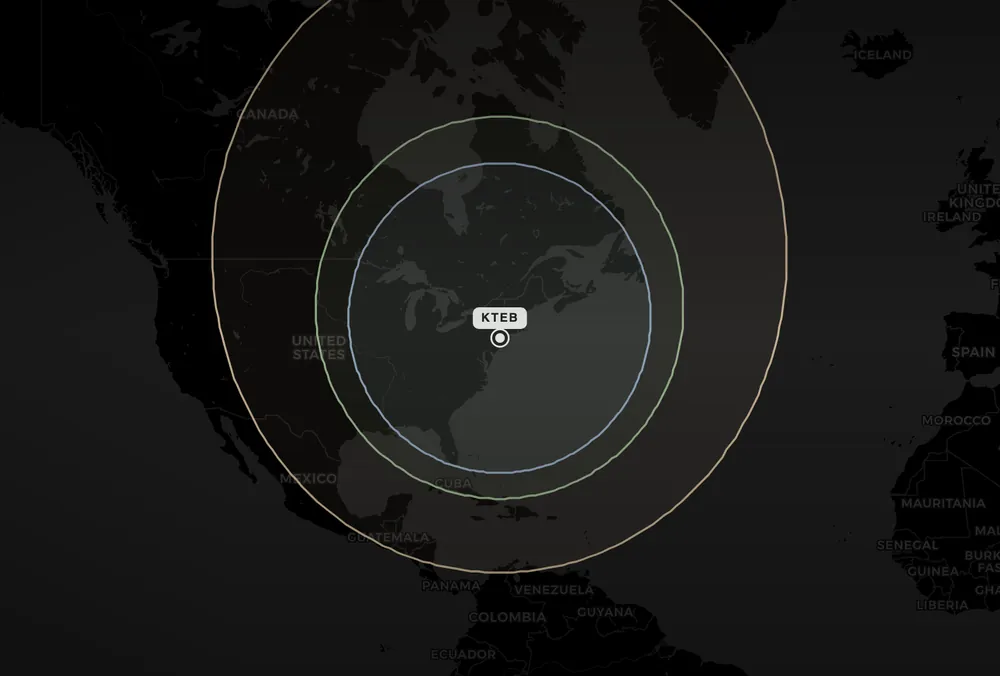
The third is route relevance. Major charter markets such as Los Angeles, New York, Miami, Dallas, Chicago, and Las Vegas can produce more repositioning activity because they are tied to denser private aviation demand. In practical terms, airports like Van Nuys (VNY) and Teterboro (TEB) are particularly important because they sit inside ecosystems where private aircraft movement is consistently high. Availability still changes quickly, but larger markets tend to generate more opportunities than thin regional city pairs.
The fourth is buyer behavior. A group empty leg flight makes the most sense when the alternative would already be premium commercial travel rather than the lowest available airline fare. If the group was going to purchase business class or flexible last-minute tickets anyway, comparing that spend against a shared aircraft becomes much more realistic.
The fifth is mission quality. Some trips gain real operational value from keeping everyone together, avoiding congested terminals, reducing lost time, and arriving closer to the actual meeting or estate. In those cases, the value is not only financial but also logistical and experiential.
Why Fall 2026 Can Favor Group Empty Leg Demand
Fall 2026 is a particularly useful seasonal lens because corporate group travel tends to rise after summer. More executive movement, more events, and more one-way charter activity can also mean more repositioning segments enter the market. For buyers who can act quickly, that creates a stronger possibility of seeing super midsize and heavy empty legs emerge on routes that fit a group mission.
At the same time, seasonality introduces urgency rather than certainty. Larger cabins that work well for eight to 12 passengers can tighten during active business periods, and empty leg inventory often appears inside a 48- to 72-hour window. That means the strongest candidates are groups that know their traveler count, understand their destination priorities, and can make a fast decision when a suitable aircraft surfaces.
In other words, fall demand does not guarantee a deal. It increases the relevance of watching for one. For the right traveler profile, that is enough to make empty leg planning a serious part of the charter conversation rather than an afterthought.
Major Markets Where Empty Leg Charter Group Value Can Appear
High-volume metro pairs are often where the math becomes most interesting. Los Angeles and New York remain two of the clearest examples. A routing that touches Van Nuys and Teterboro sits within some of the most active private aviation corridors in the country, which can improve the odds that a larger cabin appears at the right moment. For a team moving cross-country on short notice, an empty leg charter group opportunity can become more persuasive if the commercial alternative involves expensive premium fares and scattered airport timing.
Miami (OPF) and Dallas (DAL) also remain relevant because they are tied to both business and leisure demand patterns. The same is true for Chicago (MDW) and Las Vegas (LAS), especially around convention schedules, private events, and concentrated corporate movement. The exact airport choice should always be matched to the mission, and not every listed airport carries the same private aviation profile in every scenario.
The broader point is that dense travel markets tend to generate more repositioning activity, which is where group opportunities are most likely to surface. This is also where a broker adds clarity. Rather than forcing a route based on the existence of a discount, the better approach is to assess whether the airport, timing, and aircraft truly fit your group's purpose.
When Not to Book a Group Charter Empty Leg
There are several cases where a group charter empty leg is simply the wrong tool. If your departure time cannot move, if the return must be synchronized perfectly, or if the trip carries material consequences should the underlying charter shift, then the schedule risk may outweigh the savings. Empty legs are dependent on the original mission that created them, and they can change or cancel if that upstream itinerary changes.
This option also weakens when the headcount is unstable. If your group may expand, shrink, or split at the last minute, the per-person economics become harder to trust. It can also be a poor fit when the airport pair is extremely specific or when the destination requires highly tailored ground timing that a fixed repositioning segment cannot support.
In those situations, on-demand charter often delivers better overall value even if the headline price is higher. Control has value, and reliability carries a premium. The sophistication lies in knowing when flexibility creates savings and when it simply creates risk.
Why Amalfi Jets Matters When the Deal Looks Good
Empty legs look simple from a distance, where a route appears, the rate seems attractive, and the aircraft looks close enough. For groups, however, the real questions are more nuanced. You must determine if the cabin is genuinely suitable for 10 to 12 passengers plus luggage, and whether the quoted price still holds once taxes and airport fees are considered. Furthermore, we must ask if the airport is practical for the destination, what the backup plan is if the original charter shifts, and if a standard charter would ultimately produce a stronger outcome.
This is where exploring why Amalfi Jets becomes more than a brand page. We do not position empty legs as a seat inventory gimmick or a stand-alone bargain product. As a premium charter broker, our role is to source the right aircraft for your mission, whether that means an empty leg, a one-way charter, or a fully customized itinerary matched to your priorities.
For many travelers, the empty leg becomes an entry point into understanding private charter more broadly. It introduces the economics, but it also highlights the importance of aircraft selection, schedule tolerance, and routing strategy. If you already know your dates and headcount, you can request a private charter quote to see whether an available empty leg or a conventional charter structure better fits your mission.
The Real Test for a Private Jet Empty Leg Large Group Booking
The cleanest way to think about a private jet empty leg large group opportunity is this: does the cabin fill well enough to justify the tradeoff in flexibility? If the aircraft is correctly sized, the route is useful, the timing is workable, and the per-person cost compares favorably with premium commercial options, then the booking deserves serious consideration.
If the cabin is too large for the party, if the group is too small to divide the price efficiently, or if rigid scheduling would introduce more risk than savings, then the opportunity is weaker no matter how attractive the discount first appears. Empty legs are not supposed to win every comparison. They are supposed to win the right comparisons.
That perspective is especially valuable for corporate groups in fall 2026, when super midsize and heavy inventory may appear in response to stronger business travel patterns. Our team helps clients navigate this exact balance. The best buyers will be the ones prepared to act quickly on a fit, not the ones trying to force every discounted aircraft into a mission it was never meant to serve.
Maximizing Value on Empty Leg Flights for Groups
Empty leg flights groups consider should not be framed as universally low-cost private travel. They are best understood as situational value opportunities. For eight to 12 travelers, especially on super midsize and heavy aircraft, the right empty leg can produce a per-person figure that earns a real comparison against business class or other premium commercial options.
The strongest scenarios tend to involve flexible group travel, major charter markets, and a clear reason to keep everyone on one aircraft. When those variables line up, a group empty leg flight can deliver privacy, time efficiency, and a more disciplined total spend than many travelers assume private aviation requires. Partnering with a knowledgeable charter broker ensures you capture these benefits without assuming unnecessary operational risk.
To go deeper, start with our article on how empty leg private jet deals work, review the available private jet aircraft categories, and compare broader market context in our 2026 private jet charter cost guide. You can also explore more private aviation insights or request a tailored option directly through Amalfi Jets if you want to evaluate a specific upcoming group itinerary. Our team is ready to design a flight solution that perfectly aligns with your schedule, budget, and passenger requirements.


