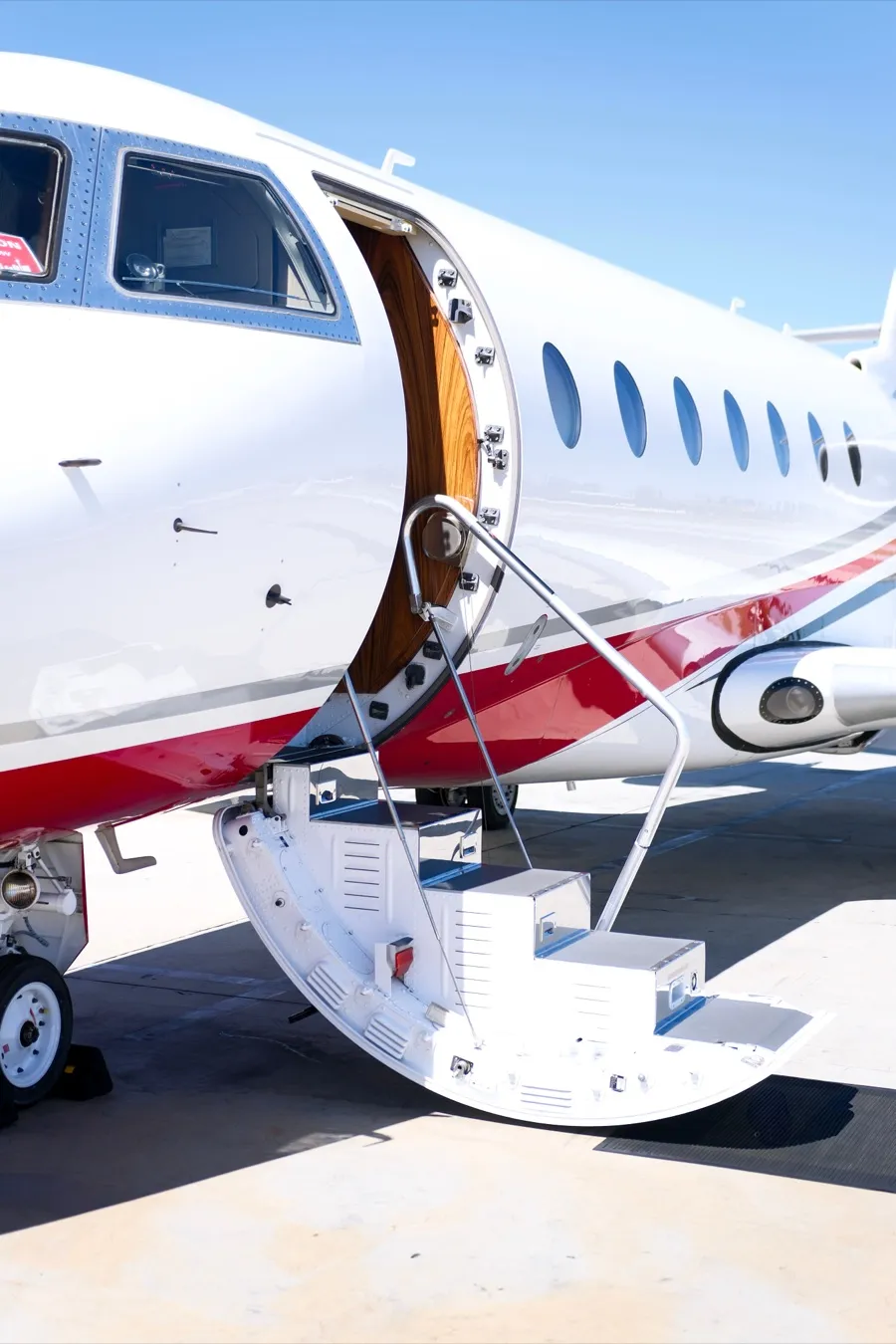





An accessible private jet journey begins with the details between your vehicle and your aircraft seat. Private aviation can simplify the airport experience, but a suitable arrangement depends on your mobility, the aircraft entrance, available assistance, and a coordinated plan at both ends of the flight.
At Amalfi Jets, we work as your charter broker to source aircraft options and coordinate requirements with third-party operators, FBOs, and ground transportation providers. The starting point is not a general assurance that boarding will be easy, but a conversation about what works for you, at your pace and with your preferences respected.
What Makes an Accessible Private Jet Suitable for You?
An accessible private jet is not a universal aircraft category. Suitability depends on the passenger's requirements, the specific aircraft, compatible boarding equipment, and arrangements on the ground. A spacious cabin alone does not establish that you can enter the aircraft or reach your seat comfortably.
Consider the journey as a connected sequence. It involves leaving your vehicle, moving through the departure facility, boarding, reaching your seat, and meeting transportation after arrival. Each stage needs to support the next, with the selected operator confirming the aircraft arrangements and the relevant ground providers confirming their responsibilities.
Personal preferences matter alongside physical access. You may want a companion present during a transfer, additional boarding time, or assistance discussed discreetly. Sharing those preferences early makes them part of the planning conversation rather than an adjustment requested at the aircraft door.
Flying Private With a Disability: What to Share First
When flying private with a disability, describe your mobility in practical terms using whatever language you prefer. Tell our team whether you can walk short distances, stand for a transfer, or use stairs, and whether you need a handrail or other assistance. If aircraft stairs are not an option, establish that before aircraft selection begins.
Explain who will travel with you and what assistance, if any, that person expects to provide. A companion should not automatically be assigned responsibility for transfers, and airport assistance should not be assumed to include lifting. Ask who will perform each task and whether the proposed support meets your requirements.
Share relevant equipment and travel requirements established by you or your care team. You can focus on what you need to do throughout the journey rather than providing a broad description of a condition. Also identify whom you would like involved in coordination and how you prefer assistance to be discussed.
Aircraft Size, Door Dimensions, and Step Height
Aircraft size is a starting point, not an accessibility guarantee. Smaller and larger aircraft can present different entrance arrangements, but the actual door opening, steps, threshold, and transfer space must be reviewed for the proposed aircraft. A larger cabin should never be treated as a promise of level boarding.
Ask the operator to confirm the door width and height, entrance height above the ramp, threshold height, step count, individual step dimensions, and handrail arrangement. These details answer different questions, as the entrance height describes the overall climb, while individual step dimensions help establish whether the stairs are manageable. A photograph or broad aircraft category cannot replace that review.
Inside the cabin, consider the route from the entrance to your seat. Aisle width, seating access, and available transfer space need to support the proposed boarding method. If lavatory access is important, request specific information about its entrance and interior rather than assuming that an onboard lavatory will meet your needs.
If an aircraft substitution is proposed, revisit these details before accepting the change. Another aircraft in the same size category may not offer the same doorway, seating layout, or equipment compatibility.
Boarding Assistance Must Be Confirmed at Both Airports
Business jets commonly use aircraft stairs rather than a terminal jet bridge. Those stairs can differ from steps you use at home, so managing ordinary stairs does not by itself establish suitability. The full path from the ramp to the cabin seat needs to be considered.
A ramp, mechanical lift, ambulift, boarding chair, or aisle chair may be discussed as part of a proposed arrangement. None should be assumed available or compatible with the selected aircraft. The operator and ground providers need to confirm the equipment, its availability for your travel date, and who will provide the agreed assistance.
Arrival deserves the same attention as departure. Establish how you will leave your seat, exit the aircraft, regain access to your mobility device, and reach your vehicle. An arrangement confirmed at the departure airport does not establish what will be available at the destination.
Planning Wheelchair Travel by Private Jet
Your wheelchair or mobility device should inform aircraft selection from the outset. Share whether it is manual or powered, whether it folds or disassembles, and its dimensions and weight. For a powered device, provide the battery type and relevant handling information so the operator can review carriage requirements.
Explain whether you need your own chair until a transfer near the aircraft and when you will need it returned after landing. Bringing a wheelchair does not establish that it can enter the cabin or be used as an occupied seat during flight. The operator must confirm seating arrangements, storage, and how the device will be loaded and unloaded.
Share handling instructions for any removable components or controls. Confirm who will receive the device at departure, where those instructions will be available, and who will return it on arrival. Treat that handoff as part of the itinerary, not simply a baggage detail.
The Exact FBO Matters
An FBO, or fixed base operator, is a private aviation facility and airport business that supports passengers, crews, and aircraft. It can serve as a coordination point for transportation, baggage, and ramp access, but it is not necessarily the aircraft operator conducting your flight. Knowing the airport code is only the beginning of the ground plan.
Your itinerary should identify the exact facility, its address, the correct entrance, and the agreed vehicle meeting point. Ask how you will move from your vehicle through the facility and onward to the aircraft. Vehicle proximity and ramp access must be confirmed locally rather than inferred from the private setting.
For additional context, explore what an FBO is and how it fits into your journey. Understanding the facility's role can help you direct questions about ground access to the appropriate team.
If this is your first charter, what to expect when flying private for the first time offers a broader introduction to the departure experience. Your own arrival instructions should still come from the selected operator and FBO, since accessibility arrangements may affect timing and the sequence of boarding.
Los Angeles VNY, New York TEB, Miami OPF, and Palm Beach Area BCT
For Los Angeles travel through Van Nuys Airport (VNY), establish the exact departure facility before arranging transportation. Ask the operator and FBO to confirm the route from your vehicle to the aircraft and any required boarding equipment. The airport name alone does not confirm a particular transfer arrangement.
For New York journeys through Teterboro Airport (TEB), give your driver the confirmed facility name and address rather than only the airport code. Clarify where assistance begins and who will meet you. Any arrangement involving vehicle access near the aircraft needs specific approval for that departure.
For Miami travel through Miami-Opa Locka Executive Airport (OPF), request a facility-specific plan for passenger access, equipment, and the handoff to the aircraft. Reconfirm these details for the current itinerary, even if you have used the airport before. A previous visit should not substitute for current arrangements.
For travelers considering Boca Raton Airport (BCT) as part of a Palm Beach area itinerary, review the onward ground journey as well as aircraft access. Confirm that the airport location works for your destination and mobility requirements. The selected FBO and transportation provider should establish the entrance, meeting point, and assistance arrangements before travel.
Accessible Ground Transportation Completes the Plan
If you need a wheelchair-accessible vehicle, arrange it alongside the charter planning process. The provider needs to understand your mobility device, whether you will transfer to a vehicle seat, and what assistance you require. It also needs the confirmed FBO destination, not simply the airport name.
At arrival, establish where the vehicle will wait and how you will reach it after leaving the aircraft. Confirm whether your mobility device will be available before you move to the vehicle. If you need assistance during that transition, identify the responsible provider in advance.
Choosing a Private Jet for Elderly Travelers
Choosing a private jet for elderly travelers should begin with the individual rather than assumptions about age. Some passengers want no assistance, while others prefer less walking, more boarding time, or a companion nearby. Ask what would make the experience comfortable while preserving the traveler's control over those choices.
Discuss seating preferences, access to personal belongings, and restroom requirements before selecting an aircraft. If standing or moving through the cabin would be difficult, explain that during planning so the operator can address the proposed layout. A convenient schedule does not compensate for an unsuitable entrance or transfer arrangement.
Pacing also matters on the ground. Allow the confirmed boarding plan to guide arrival timing, and make sure everyone understands how assistance will be offered. A calm experience depends on clear responsibilities rather than assumptions about what a passenger can do independently.
Mobility Assistance Is Different From Medical Transport
A need for boarding assistance does not, by itself, make a journey medical transport. Conventional private charter and dedicated air ambulance services address different requirements, and one should not be presented as a substitute for the other. Where care needs affect travel, qualified professionals and the selected provider should establish the appropriate arrangements.
Medical clearance, oxygen, monitoring, stretcher use, and clinical escort requirements belong with those professionals. Amalfi Jets' role as a charter broker is to coordinate the requirements you share and seek suitable aviation options, not to make clinical judgments. Establish those requirements before proceeding with aircraft selection.
For related context, read about private jet medical travel in Miami. Keep any decisions about care, fitness to travel, and clinical support with your medical team and the appropriate transport provider.
What to Confirm Before Departure
Request written confirmation of the proposed aircraft, reviewed entrance details, and agreed boarding and transfer method. The plan should identify required equipment at both airports and who will provide each part of the assistance. It should also cover the carriage of your mobility device, its handling, storage, and return after landing.
Confirm both FBOs, their addresses, vehicle meeting points, and the arrival handoff. Keep relevant contact details available to you and your companion, including whom to contact if an arrangement changes. Revisit the access plan whenever the aircraft, facility, or transportation changes.
Written confirmation clarifies responsibilities, but operational changes may still require a revised plan. Ask how changes will be communicated and how their effect on accessibility will be reviewed. The revised journey should address the same requirements established at the beginning.
Plan Your Journey With Amalfi Jets
An accessible private jet experience depends on matching the proposed journey to the person traveling. At Amalfi Jets, we source charter options and coordinate with third-party aircraft operators and ground providers around those individual requirements. We do not own or operate the aircraft, and suitability remains subject to the selected operator's confirmation.
Tell our team what you need from vehicle arrival to aircraft seat, including your mobility device, preferred assistance, and destination arrangements. Review why Amalfi is the right partner for your travel planning, and request a charter to begin a considered conversation about options that reflect your needs, preferences, and pace.