



If you are new to private charter, one of your first questions may be: what is an FBO? In aviation, an FBO is an airport business that supports private and general aviation by providing services for aircraft, crews, and passengers. For charter travelers, it is commonly the private aviation facility through which a journey begins or ends.
What does FBO stand for? The letters mean fixed base operator, describing a commercial aviation business based at an airport. Although passengers often think of the lounge first, the full operation extends well beyond the building they enter before a flight.
What Is an FBO? Meaning in Private Aviation
The formal FBO meaning is broader than a simple private jet terminal. A fixed base operator can provide aircraft fueling, parking, storage, ground handling, maintenance coordination, and crew support, along with passenger services. The exact combination depends on the airport, facility, and services it is authorized and equipped to offer.
While passengers prepare for departure inside, FBO personnel may be coordinating fuel, aircraft positioning, baggage movement, catering delivery, transportation, and communication with the flight crew. Much of that activity remains out of sight, which is one reason an efficient FBO experience can feel remarkably simple from the passenger’s perspective.
The word operator can create confusion for travelers who are unfamiliar with private aviation. The fixed base operator provides airport services, while the aircraft operator is responsible for conducting the charter flight under the applicable operating authority. Those are separate roles with different responsibilities.
Amalfi Jets is a charter broker rather than an aircraft operator or an FBO. We source private charter options through appropriate aircraft operators and coordinate the itinerary around the client’s schedule, route, preferences, and ground arrangements. Our related FBO airport and private jet terminal guide offers another perspective on the passenger gateway.
What Happens at an FBO?
Your FBO experience begins before you arrive at the airport. A confirmed itinerary should identify both the airport and the specific facility, allowing your driver to proceed to the correct private aviation entrance rather than the main airline terminal.
When you arrive, FBO personnel and the flight crew coordinate the remaining departure steps. Identification and travel documents may be reviewed as required, baggage is prepared for loading, and passengers may wait in a lounge while the aircraft and final arrangements are readied.
The precise sequence depends on the airport, route, aircraft, and any domestic or international requirements that apply. Some passengers may proceed from their vehicle toward the aircraft after the required checks are complete, while others may spend more time inside the facility. A private setting does not remove applicable identification, security, customs, or operating procedures.
Behind the passenger experience, the FBO can provide essential services to the aircraft and crew. These may include fueling, parking, towing, hangar coordination, ground power, lavatory servicing, maintenance support, and communications with airport personnel. Service availability should always be confirmed for the selected facility rather than assumed.
After arrival, the process generally moves in the opposite direction. Baggage is transferred, transportation meets the passengers at the designated location, and the aircraft receives any required servicing. The objective is a controlled transition between the aircraft and the next stage of the journey.
How FBO Aviation Differs From a Commercial Terminal
A commercial airline terminal is designed to move many travelers through standardized systems. Ticketing areas, public security checkpoints, boarding gates, and centralized baggage operations support scheduled flights that depart according to published timetables.
FBO aviation serves a different operating model. A private charter itinerary centers on a specific passenger party, aircraft, crew, and departure plan, allowing the facility to provide a more direct flow between ground transportation and the aircraft. The arrangements are coordinated for that particular trip rather than a large group of unrelated passengers.
This difference does not mean that safety, identification, or security requirements disappear. Instead, applicable procedures are managed according to the charter, airport, route, and passenger circumstances rather than through the same public terminal sequence used for scheduled airline service.
Privacy is another meaningful distinction. An FBO typically has less public foot traffic and provides separate areas for passengers, crews, and airport personnel. For executives, families, and public figures, that separation can make an airport arrival more discreet and manageable.
The physical setting varies considerably among facilities. Some FBOs offer spacious lounges, meeting rooms, refreshments, and dedicated passenger areas, while others are compact operations focused on essential aircraft support. An attractive interior may enhance the visit, but location, access, service coordination, and operational suitability usually have a greater influence on the complete trip.
FBO Airport Meaning: The Difference Between an FBO and an Airport
An airport is the complete aviation property, including its runways, taxiways, ramps, terminals, and supporting infrastructure. An FBO is a business operating within that airport and providing defined services to aircraft, crews, passengers, or a combination of the three.
The phrase FBO airport is convenient shorthand, but it does not mean that the airport and FBO are the same organization. When a charter itinerary names an FBO, it is identifying the particular facility through which passengers are expected to depart or arrive.
An airport may have one fixed base operator, several facilities, or more limited general aviation support. Provider availability, facility hours, handling arrangements, and local procedures can change, so trip details should be confirmed for each itinerary rather than assumed from a previous visit.
This distinction matters most at airports with multiple private aviation facilities. A passenger can reach the correct airport but still arrive at the wrong entrance or ramp area if the FBO details are overlooked. Clear instructions keep passengers, drivers, crew members, and baggage teams aligned around the same plan.
FBOs in Los Angeles, New York, Miami, Dallas, Chicago, and Aspen: VNY, TEB, OPF, DAL, MDW, and ASE
Private charter planning requires more than choosing a destination city. The selected airport and FBO influence passenger access, ground transportation, aircraft support, and the overall operating plan. That distinction is especially important in markets served by several airports or multiple private aviation facilities.
Van Nuys (VNY) is a familiar private aviation gateway for the Los Angeles market. A VNY itinerary should still name the assigned FBO because entering only the airport code may not provide a driver with the exact passenger meeting point.
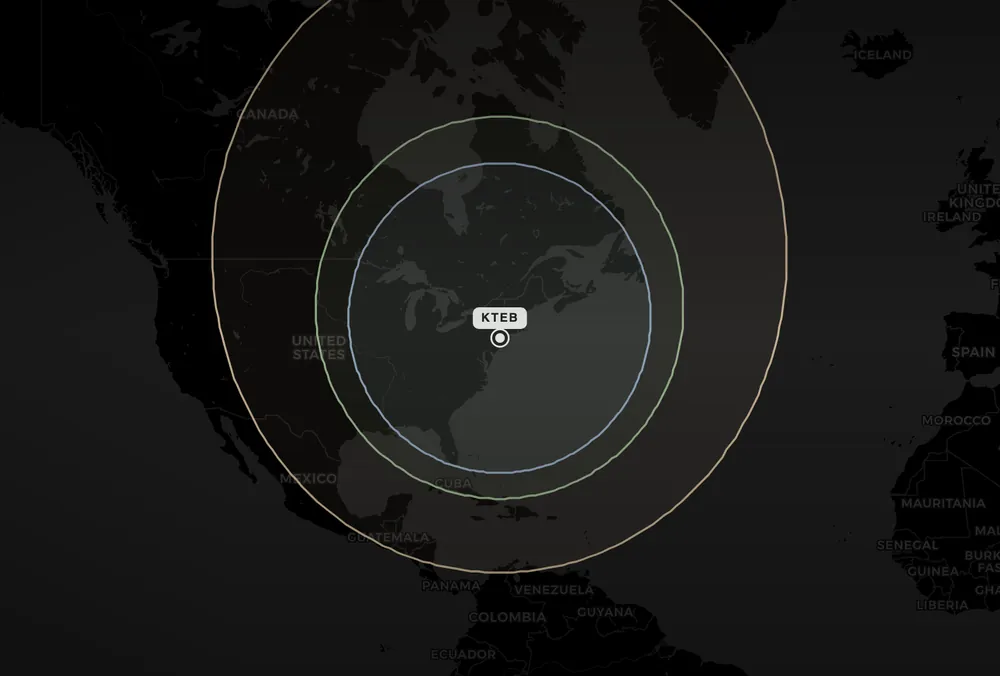
Teterboro (TEB) serves the New York City area as a prominent private aviation gateway. At TEB, the selected facility can shape passenger access, aircraft handling, parking coordination, and transportation instructions, so the confirmed FBO is an essential itinerary detail.
Miami Opa-locka Executive (OPF) supports private aviation in the Miami market and has more than one facility serving aircraft and passengers. When an airport offers several choices, the arrangement can depend on operator requirements, aircraft needs, current availability, passenger access, and onward transportation.
Dallas Love Field (DAL) accommodates private aviation alongside other airport activity. For a charter itinerary, the named FBO determines where passengers should arrive and where the aircraft is expected to receive ground support.
Chicago Midway International (MDW) also supports private aviation through dedicated facilities. Because the airport includes separate passenger environments, drivers should follow the complete facility address and instructions rather than relying only on the MDW code.
Aspen/Pitkin County (ASE) requires thoughtful advance coordination because operating conditions, demand, and local procedures can affect a private charter itinerary. Facility arrangements, aircraft parking, and ground transportation should be confirmed as part of the complete plan rather than treated as incidental details.
These airports are not interchangeable solutions for every charter. Amalfi Jets evaluates the destination, airport, FBO, operator requirements, aircraft suitability, passenger priorities, ground access, and current availability together. The appropriate choice depends on the complete mission.
What Services Does a Fixed Base Operator Provide?
Aircraft fueling is one of the core services associated with a fixed base operator. Depending on its capabilities, an FBO may also support aircraft parking, towing, storage, ground power, ground handling, maintenance coordination, and services for pilots and flight crews.
Passenger amenities can include a lounge, restrooms, refreshments, workspace, meeting rooms, and assistance with transportation. The range and standard of these amenities vary, and a feature shown during an earlier trip may not always be available. Any service that is important to the passenger should be confirmed before departure.
FBO teams also serve as a central communication point on the airport. They may coordinate with flight crews, airport personnel, drivers, caterers, and other approved vendors so that the separate elements of a trip converge at the right place and time.
For passengers, much of this work is intentionally unobtrusive. A smooth departure feels effortless because aircraft servicing, baggage handling, positioning, and transportation have already been coordinated. The lounge is therefore only the visible front of a much broader aviation operation.
How Fixed Base Operator Fees Work
FBO fees can relate to aircraft handling, parking, storage, ground services, or support requested outside a facility’s customary arrangements. Fuel purchases may affect how some charges are applied, but policies differ among facilities and airports. There is no single fee structure that applies to every FBO or itinerary.
Some charges are easier to identify in advance than others. Handling, parking, or additional service costs may require confirmation with the facility and aircraft operator, particularly when an itinerary involves an extended stay, a busy travel period, or specialized support.
The practical lesson for charter clients is that a ground arrangement can influence the complete trip budget even when passengers never see the individual service process. FBO selection may also affect aircraft positioning, parking availability, passenger access, and the operator’s ability to support the intended plan.
A charter proposal should therefore be considered as a complete itinerary rather than reduced to one visible aircraft charge. Our guide to private jet charter costs, fees, and taxes in 2026 explains the broader factors that can shape a charter quote.
Why FBO Choice Matters in 2026
Choosing an FBO is not simply a matter of selecting the most impressive passenger lounge. The facility must be capable of supporting the aircraft, fit the operating plan, communicate with the crew, and provide suitable access for passengers and transportation.
Location within the airport can also matter. At a large or complex field, the chosen facility may affect vehicle access, the route to the aircraft, and coordination with local drivers. At an airport with several FBOs, the most appropriate choice can change from one trip to another.
Transparency is another consideration. Since certain handling, parking, or service charges may not be consistently displayed, accurate planning can require confirmation from the facility and operator before the itinerary is finalized.
Conditions may continue to evolve after booking. Ramp availability, airport restrictions, facility hours, and handling arrangements can change as the travel date approaches, particularly at airports with constrained capacity or elevated demand. Important details should be monitored and reconfirmed as necessary.
A thoughtful charter broker treats the FBO as part of the trip strategy rather than an afterthought. The objective is to align the aircraft, operator, airport, facility, crew, transportation, and passenger plan so that the journey functions as intended.
How Amalfi Jets Coordinates the FBO Experience
As a charter broker, Amalfi Jets does not operate aircraft or own the FBOs used during a trip. We source suitable charter options through aircraft operators and coordinate with the relevant parties to build an itinerary around the client’s route, schedule, and preferences.
Our work extends beyond identifying an airport code. We consider the facility planned for the trip, how passengers will reach it, whether the aircraft’s requirements can be supported, and how transportation fits into the departure or arrival. Those details can be especially important at airports with multiple FBOs.
We also help keep itinerary instructions clear. The confirmed plan should identify the airport, FBO, address, and relevant arrival guidance so that passengers, drivers, and crew members are working from the same information. If an operational change affects the facility, our team can coordinate with the aircraft operator and communicate the revised arrangement.
This brokerage perspective helps prevent a familiar airport or facility name from becoming an automatic choice. The recommendation should reflect the complete mission, current circumstances, and passenger priorities rather than name recognition alone.
Common Questions About FBO Aviation
What is an FBO in aviation? An FBO is a commercial business located at an airport that provides services to aircraft, crews, and passengers. For private charter travelers, it is commonly the facility used to reach the aircraft while ground teams coordinate fueling, parking, baggage, handling, and related support.
What does FBO stand for? FBO stands for fixed base operator. The term describes an aviation business that operates from a fixed airport location and provides defined aeronautical services.
Is an FBO the same as a private terminal? Not exactly. The passenger area may function as a private terminal, but the complete FBO can also include ramps, fueling services, aircraft storage, crew facilities, and ground handling operations.
Do all airports have an FBO? Airports differ in the private and general aviation services they offer. Some have multiple FBOs, while others have one provider or more limited facilities, so availability must be confirmed for the chosen airport.
Are FBO fees the same everywhere? No, charges and policies vary according to the airport, facility, aircraft, requested services, and operating circumstances. Handling, parking, and other costs may require direct confirmation even when certain fuel information is publicly available.
Are FBO fees included in a charter quote? That depends on how the proposal is structured and the services anticipated for the itinerary. Clients should review what is included and ask about circumstances that could introduce additional charges.
Can passengers choose the FBO? Passenger preferences can often be considered, but the final arrangement must also account for aircraft operator requirements, facility capabilities, airport procedures, and current availability. Amalfi Jets reviews these factors before the itinerary is confirmed.
Can an FBO change after a charter is booked? A facility may change when operations, airport conditions, parking, handling arrangements, or operator requirements make an adjustment necessary. If that occurs, passengers and drivers should receive updated instructions before proceeding to the airport.
Begin Your Next Charter With Amalfi Jets
The right FBO can turn a complex aviation movement into a composed passenger experience. Amalfi Jets brings the aircraft, airport, facility, and ground plan together through attentive charter brokerage and clear coordination.
For your next private flight, request a private charter with Amalfi Jets. Our team will curate suitable options and help shape the journey from your arrival at the FBO through your final destination.