



Destination Hub
Private Jet Charter to New York

Arriving into New York by private charter is most seamless when the day is built around Teterboro Airport (TEB). The aircraft, crew, ground transportation, and departure plan are organized around one private schedule, keeping the city’s pace outside the cabin until you are ready to meet it.
Quick facts
Why charter a private jet to New York?
Private charter gives travelers a calmer way to enter New York: direct routing, private-terminal handling, and a schedule built around the meeting, residence, hotel, or evening reservation rather than an airline timetable.
Why private access matters
For many travelers, the value is not only the flight; it is the control around it. Teterboro Airport is the primary gateway for private arrivals, allowing a charter plan to stay focused on discretion, timing, and a clean handoff from aircraft to ground transportation.
That structure is especially useful when the day is dense:
- Business schedules can move around board meetings, site visits, media commitments, or late-breaking calendar changes.
- Leisure trips can begin with the hotel, restaurant, gallery, or family itinerary rather than a commercial-airport connection.
- Multi-city travel can be planned as a single aircraft movement, reducing friction between stops.
- Return timing can remain flexible when dinner runs long, a meeting extends, or weather asks for a smarter departure window.
Time saved without theatrics
A private flight does not make the region stand still, but it does remove several layers of delay from the travel day. The charter desk can align aircraft availability, preferred airport, handling, and ground movement in advance, then adjust the plan if the city’s traffic pattern or the traveler’s calendar changes.
Plans that would feel compressed on a commercial itinerary often become workable by charter: a morning arrival, a full day in Manhattan, and a controlled evening departure; a weekend split between the city and Long Island; or a family trip that avoids the strain of terminals, connections, and fixed airline schedules.
“For New York we book TEB first, with HPN, FRG, ISP, and MMU held as secondary-airport options when routing, handling, or schedule needs call for flexibility. Because New York seasonal demand is trip-date dependent, confirm TEB handling and secondary-airport options before finalizing.”

When is the best time to fly to New York?
The best time to visit New York depends on whether the priority is energy, access, or aircraft availability.
September brings the city back to a serious tempo, with UN week and fall business travel increasing demand for private arrivals. November and December add holiday trips, parade travel, and New Year’s plans, making firm dates especially important to secure early.
Those peak months have a distinct appeal. Restaurants feel animated, cultural calendars are full, and the city’s streets carry the rhythm of both commerce and celebration. For private travelers, the same energy that makes the season compelling can also compress aircraft choice and preferred departure windows.
January, February, and March are often better for value-minded planning. Cold weather and the post-holiday lull soften leisure demand, and aircraft availability can be more favorable for travelers with some flexibility.
For the smoothest plan, treat fixed dates as the first decision. Once the travel window is firm, the charter desk can compare the right aircraft, confirm the preferred airport strategy, and watch alternates if congestion or schedule changes make another regional gateway more practical.
Where our clients stay and go
The city is built for arrival: water on three sides, bridges strung across the rivers, and a skyline that changes character as the light moves from glass to stone to neon.
Water gives the place its drama. The Hudson and East River frame Manhattan, ferries cut across the harbor, and the approach to the city has the visual clarity of a stage set: towers, piers, parks, and traffic moving in layers below.
A city of precise purposes
Private travelers come for different versions of the same intensity. A financial meeting in Midtown. A collection preview on the Upper East Side. A dinner downtown that starts late and ends later. A family weekend built around museums, theater, shopping, and time in the park.
A charter itinerary works well here because the city rewards precision. Plans often hinge on timing: the right arrival window before a meeting, a clean departure after an event, or a schedule that keeps multiple neighborhoods within reach without building the day around airline constraints.
Downtown feels different from uptown; Brooklyn different again. The best visits acknowledge that contrast instead of trying to flatten it. Morning light over Central Park, evening traffic along the avenues, the dark edge of the rivers, the low glow of restaurant windows after rain — these are not side notes to the trip. They are the texture of the place.
Uptown can be formal, gallery-lined, and residential. Midtown is vertical and purposeful. Downtown carries history in tighter streets and a more improvisational rhythm. Across the bridges, Brooklyn brings warehouses, brownstones, studios, waterfront parks, and restaurants that feel close to the people who made them.
What makes the destination endure is not one landmark or one district. It is the concentration: finance, art, fashion, theater, media, medicine, dining, and family life compressed into a place that moves quickly but remembers everything.
What determines the cost of a flight to New York?
Charter cost into New York is shaped by the aircraft, itinerary structure, airport plan, seasonal demand, and the availability of suitable aircraft already moving through the region.
Aircraft class and cabin requirements
Aircraft class is usually the first cost driver. A short regional flight with a smaller cabin profile is priced differently from a longer itinerary requiring more range, cabin space, baggage capacity, or onboard service. Passenger count, luggage, pets, catering, and desired cabin experience all affect which aircraft are appropriate.
One-way vs round trip structure
A one-way itinerary may require the aircraft to reposition before or after the passenger flight. Round trips can sometimes create a more efficient plan when the same aircraft and crew can remain aligned with the return schedule, though that depends on timing, crew duty rules, aircraft availability, and the length of stay.
TEB positioning, handling, and airport fees
TEB is the primary airport for private charter into the city, and costs can reflect the realities of operating in a high-demand metropolitan environment. Positioning, ramp handling, airport-related fees, crew logistics, and overnight requirements may all influence the final charter quote.
Seasonal demand
September, November, and December can tighten availability because of UN week, fall business travel, holiday trips, parade travel, and New Year’s demand. When more travelers want similar departure windows, earlier planning generally widens aircraft choice and gives the charter desk more room to compare viable options.
Empty-leg availability
Empty legs can create value when an aircraft already needs to move in the same direction as your itinerary. They are opportunistic rather than guaranteed: the routing, timing, aircraft type, and flexibility must all line up. The best use of an empty leg is often for travelers who can adjust departure time or airport choice without compromising the purpose of the trip.
Which airports serve New York?
New York is served for private charter by TEB as the primary airport, with HPN, FRG, ISP, and MMU available when the itinerary points to another side of the region.
Teterboro Airport (TEB)
TEB is the main private-charter choice for travelers whose plans center on Manhattan or require the most straightforward regional access. It suits itineraries where discretion, private handling, and a tight aircraft-to-car transition matter, especially for business travelers moving between meetings, residences, hotels, and evening commitments.
This airport is often the first plan because it keeps the charter day simple. The aircraft, crew, handling, catering, and ground transportation can all be organized around a single preferred arrival point, while alternates remain available if timing, congestion, or ground destination suggests a different strategy.
Westchester County Airport (HPN)
HPN makes sense when the traveler’s final stop is north of the city or in the Westchester area. It can also be useful for travelers who want to avoid building the day around a Manhattan-first arrival when meetings, residences, schools, country homes, or weekend plans sit farther up the region.
The appeal is directional. Rather than landing at the primary airport and then driving across the metropolitan area, a charter can be planned around the part of the region that actually matters to the trip.
Republic Airport (FRG)
FRG is a practical Long Island option for travelers whose plans lean east, particularly when the day is tied to residences, business stops, or leisure plans outside the city core. It can reduce unnecessary ground movement when the itinerary does not need to begin in Manhattan.
This is the kind of alternate that matters most when the destination is specific. If the ground plan points toward Long Island, the airport choice can help the trip feel more direct from the moment the cabin door opens.
Long Island MacArthur Airport (ISP)
ISP can be considered for itineraries deeper into Long Island, especially when an arrival closer to that side of the region is more useful than routing through the primary private gateway. It is also a sensible planning option when airport availability, passenger destination, or schedule flow favors an eastern approach.
For private travelers, the question is rarely which airport is most familiar. It is which one best matches the road journey after landing, the return plan, and the traveler’s tolerance for moving across the region by car.
Morristown Municipal Airport (MMU)
MMU gives the charter desk a New Jersey-side alternative for travelers whose plans sit west of the Hudson or whose schedule benefits from avoiding the primary flow. It can be helpful for residences, corporate campuses, or regional travel patterns that make a Manhattan-focused arrival less efficient.
A good airport strategy keeps more than one option visible until the itinerary is firm. TEB may be the default, but MMU can be the cleaner answer when the traveler’s actual destination is better served from the west.
Routes to & from New York
Common questions about New York charter
What is the primary airport for private flights into the city?
For New York, TEB is the primary private-charter airport, especially when the itinerary is centered on Manhattan, business meetings, hotels, residences, or a fast aircraft-to-car transition.
When would an alternate airport make more sense than TEB?
Some New York travelers use HPN, FRG, ISP, or MMU when their final destination is closer to Westchester, Long Island, or the New Jersey side of the region, or when an alternate helps avoid congestion.
What determines the cost of chartering into the city?
The cost of chartering into New York depends on aircraft class, one-way versus round-trip structure, positioning, airport and handling fees, seasonal demand, and whether a suitable empty leg is available.
Which months should I plan earliest for a private arrival?
September, November, and December are the tightest planning months for New York because UN week, fall business travel, holidays, parade travel, and New Year’s demand can reduce aircraft choice.
Can Amalfi Jets coordinate ground transportation after landing?
For New York arrivals, the charter desk can align the selected airport with ground transportation timing so the handoff from aircraft to car is planned before departure.

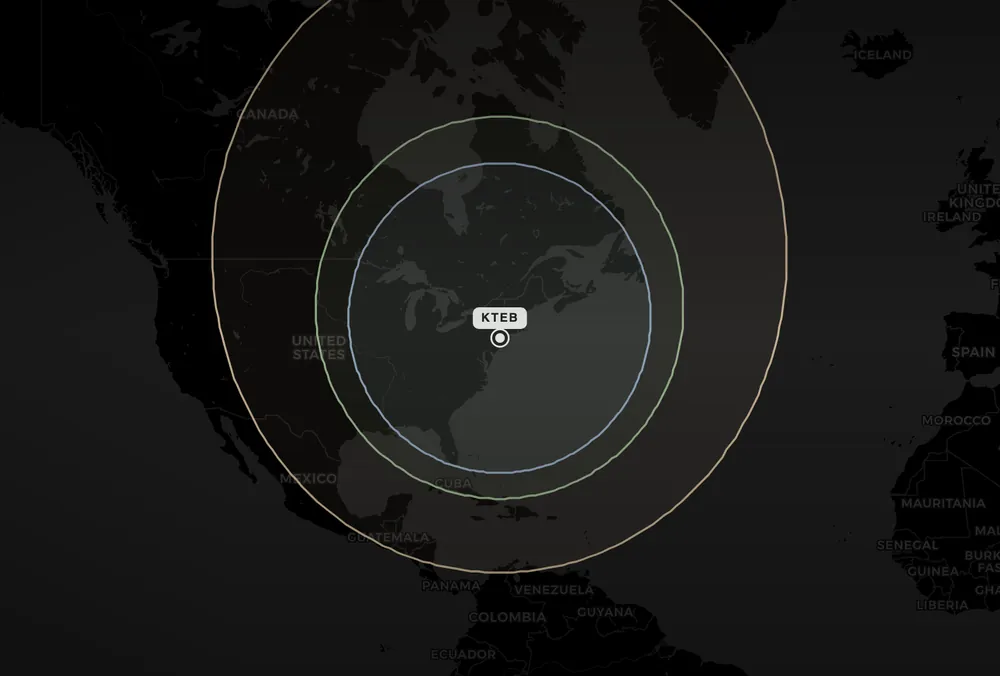
Try Range Explorer
See how far you can fly nonstop
Explore aircraft range, compare options, check flight times, and better understand which aircraft fits your trip.

Ready to fly to New York?
Request a charter and our team will tailor an itinerary for your next journey.
*Takes only about 40 seconds to request your quote.
