




Destination Hub
Private Jet Charter to Marathon
Arriving by private aircraft is simplest when the day is built around Marathon Airport (MTH), the primary gateway for this Middle Keys city. Your schedule can move around villa check-ins, boat departures, and a clean transfer plan instead of the fixed rhythm of airline connections.
Quick facts
Why charter a private jet to Marathon?
Private flying into Marathon gives travelers direct control over timing, routing, and the shape of the arrival day. With MTH as the primary airport, the trip can be organized around the people and plans that matter most: family arrivals, yacht schedules, fishing departures, resort transfers, and same-day returns when time is tight.
Why fly privately here
- Direct access to the Middle Keys: MTH keeps the arrival focused on the local area, reducing the need to build the day around a larger airport farther from the final destination.
- Flexible departure windows: Charter scheduling lets travelers choose a time that fits the trip, rather than accepting airline inventory, connection risk, or a rigid return.
- Less wasted time on the ground: Private aviation streamlines the airport experience, especially for parties carrying luggage, gear, or traveling with children and pets.
- Ground plans that match the itinerary: Transfers can be arranged around private residences, marinas, resorts, and meetings instead of a standardized terminal flow.
For travelers who value privacy as much as speed, the advantage is not only the flight itself. A well-planned charter day feels quieter from end to end: fewer public touchpoints, less waiting, and a team coordinating the aircraft, ramp timing, and onward movement before departure.
“Our charter desk secures the preferred MTH handling plan first, then protects vetted alternates in Key West or Miami when peak winter weeks compress lead time. Firm January through March dates should be held early to widen aircraft choice.”

When is the best time to fly to Marathon?
The best time to visit Marathon is typically January through March, when winter weather, fishing travel, and spring-break demand make the Keys feel especially active. During these peak months, early planning gives the charter desk more room to secure suitable aircraft and protect preferred departure windows.
August, September, and October are the value-minded months, with hot, humid hurricane-season conditions often bringing softer rates and better aircraft availability. Travelers who can keep timing flexible may find more options in these late-summer and early-fall windows, while those with fixed dates should still plan around the possibility of tropical-weather adjustments.
For holiday periods, school breaks, and prime fishing dates, lead time matters. A confirmed schedule gives the team more leverage to coordinate aircraft sourcing, airport preferences, crew logistics, and backup planning before demand tightens.
Where our clients stay and go
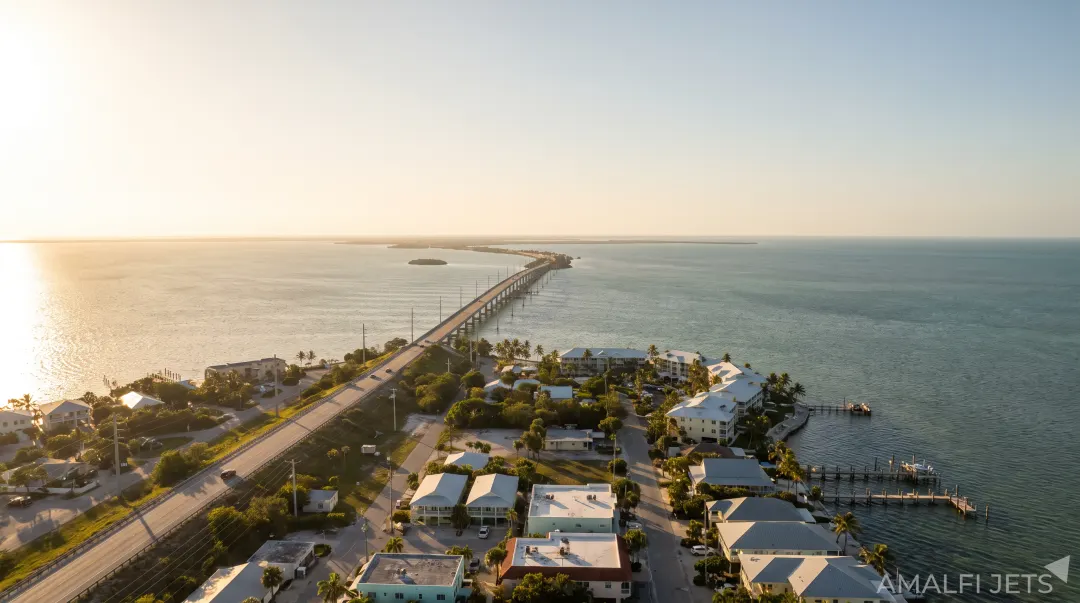
Marathon is the Middle Keys at water level: low horizon, bright flats, working marinas, and the long sweep of the Seven Mile Bridge. The city has a quieter rhythm than Key West and a more open, nautical character than the mainland, making it especially appealing to travelers who come for time on the water rather than a packed social calendar.
The setting is a chain of islands, including Vaca Key, Fat Deer Key, and Grassy Key, stitched together by the Overseas Highway. Boats sit close to restaurants and rental homes, skiffs move through mangrove channels, and the light changes quickly from pale morning blue to the deep gold that gathers near the bridges at day’s end.
On the Atlantic side, Sombrero Beach gives the area one of its clearest sandy gathering points, while nearby reefs, fishing grounds, paddling routes, and marine-life experiences draw families and repeat Keys travelers. The Turtle Hospital, Crane Point, and the Old Seven Mile Bridge add a sense of local identity beyond resort time, grounding the stay in conservation, history, and the unusual geography of the island chain.
For private travelers, the appeal is the ease of living close to the itinerary. A morning can begin at the dock, shift to a reef or flats boat, pause for lunch near the water, and end with a sunset drive across the bridge. The luxury is not excess here; it is access, space, and the ability to move at the pace of the tides.
What determines the cost of a flight to Marathon?
The cost of chartering to Marathon is shaped by aircraft selection, trip structure, airport planning, seasonal demand, and market availability. Every quote is built around the actual itinerary, so the same destination can price differently depending on timing, aircraft sourcing, and how efficiently the aircraft can be used before and after your flight.
What influences the quote
- Aircraft class: Cabin size, range profile, baggage needs, passenger count, and onboard preferences all affect which aircraft are appropriate for the mission.
- One-way versus round trip: A round trip may allow the aircraft and crew to stay aligned with your return, while a one-way can require additional positioning before or after the passenger flight.
- MTH positioning and fees: The charter team accounts for where the aircraft is coming from, where it goes next, and airport-related charges tied to the confirmed operating plan.
- Seasonal demand: January, February, and March typically carry stronger demand because of winter escapes, favorable Keys weather, fishing travel, and spring-break movement.
- Empty-leg availability: Empty legs can sometimes create value when an existing aircraft movement matches the desired route and schedule closely enough.
During August, September, and October, hotter and more humid hurricane-season conditions often soften demand and can improve aircraft availability. That does not make every itinerary more efficient, but it can widen the set of aircraft options when travelers have some flexibility.
Empty-leg opportunities are best viewed as useful when they fit naturally, not as the foundation of a firm plan. They are schedule-dependent, can change quickly, and usually require the traveler to adapt to the aircraft’s existing movement.
Which airports serve Marathon?
Airports serving Marathon include MTH for the most direct arrival, plus EYW, TMB, OPF, and MIA when the itinerary benefits from a different regional gateway. The right airport depends on where the aircraft is sourced, how the passengers are approaching South Florida, and what the ground plan needs to accomplish after landing.
Marathon Airport (MTH)
As the primary airport, MTH is the natural first plan for travelers staying in the Middle Keys. The appeal is simplicity: one local arrival point, a focused handling plan, and a transfer that begins in the same island setting as the trip itself.
The airport is especially useful when the schedule is tied to a residence, resort, marina, or boat departure nearby. For many itineraries, choosing the local field keeps the day cleaner than routing through a larger South Florida airport and driving down the Keys.
Key West International Airport (EYW)
EYW can suit travelers whose trip includes Key West, the Lower Keys, or a split itinerary that begins or ends farther south. It is not the primary field for this destination, but it can be a practical alternate when the party’s plans extend beyond the Middle Keys.
It may also make sense when aircraft availability, weather planning, or passenger logistics point toward a southern arrival. A charter advisor can compare the total itinerary rather than looking at the airport name in isolation.
Miami Executive Airport (TMB)
TMB is a Miami-area alternate that can work well when passengers are beginning from the mainland, meeting others in South Florida, or pairing the Keys with business in the Miami area. Its executive-airport role makes it relevant for travelers who want a private-aviation-oriented plan outside the busiest commercial flow.
That choice can be useful when the trip calls for a Miami stop before continuing by ground or when aircraft positioning is more favorable on the mainland. The decision should weigh flight timing and transfer preferences together.
Miami-Opa Locka Executive Airport (OPF)
OPF gives charter travelers another executive-airport option in the Miami area, often considered when the wider trip is tied to northern parts of the metro region or when aircraft sourcing aligns better there. It can be a strong alternate for complex itineraries that combine private aviation with meetings, residences, or onward travel around South Florida.
Use this airport when the broader ground plan benefits from a Miami-area arrival rather than a direct Middle Keys landing. For some schedules, that tradeoff can create a smoother overall day.
Miami International Airport (MIA)
MIA is the broadest Miami gateway and can be appropriate when the charter itinerary connects with airline arrivals, international passengers, or commercial-airport logistics. It is usually considered for network convenience rather than for the quietest private-flight experience.
It can also serve as a fallback when the travel party needs the infrastructure of a major airport before continuing toward the Keys. For a purely local arrival, MTH remains the cleaner first discussion; for a multi-leg journey, MIA may belong in the comparison.
Common questions about Marathon charter
What is the best airport for flying privately into the Middle Keys?
For Marathon, MTH is the primary airport and the usual first plan because it keeps the arrival focused on the Middle Keys rather than a mainland connection.
Can I use Key West or Miami-area airports instead?
Yes, Marathon trips can be planned through EYW, TMB, OPF, or MIA when aircraft availability, passenger origins, or onward plans make an alternate more practical.
What determines the cost of chartering there?
Pricing for Marathon is influenced by aircraft class, routing, one-way versus round-trip structure, positioning, airport fees, seasonal demand, and any suitable empty-leg availability.
How early should I book for winter travel?
January through March are peak months in Marathon, so firm dates should be requested early to widen aircraft choice and protect preferred departure windows.
Are late-summer and fall trips easier to arrange?
In Marathon, August through October can bring softer demand and better availability, but plans should stay flexible because tropical weather can affect timing.
Is MTH always the right airport to choose?
For Marathon, MTH is the primary choice, but a Key West or Miami-area airport may be better when the wider itinerary starts or ends outside the Middle Keys.

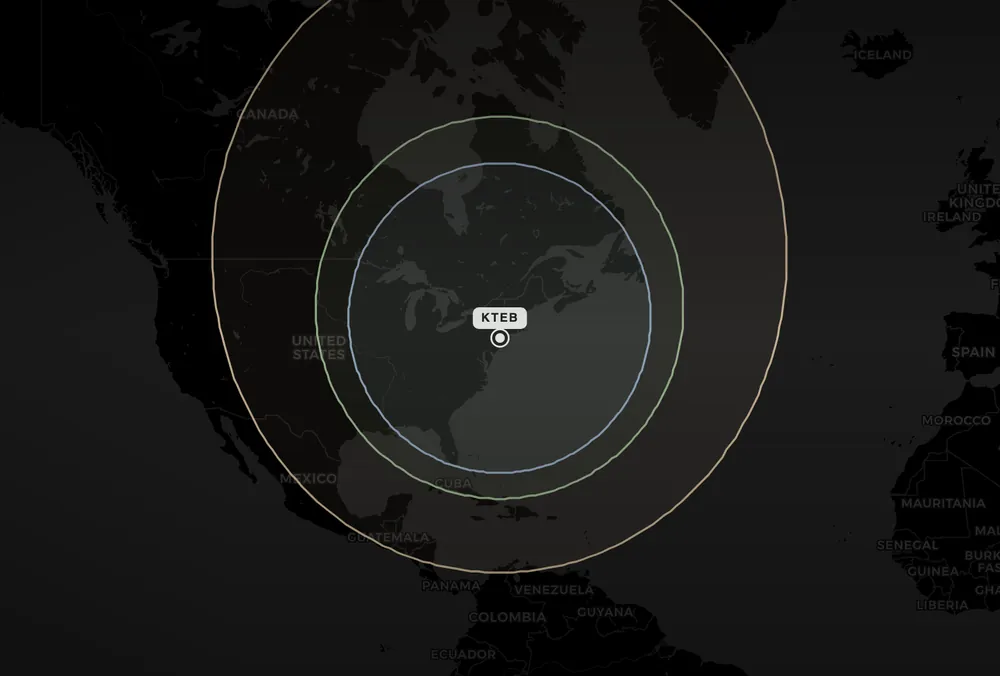
Try Range Explorer
See how far you can fly nonstop
Explore aircraft range, compare options, check flight times, and better understand which aircraft fits your trip.

Ready to fly to Marathon?
Request a charter and our team will tailor an itinerary for your next journey.
*Takes only about 40 seconds to request your quote.
