



Destination Hub
Private Jet Charter to Ft. Lauderdale
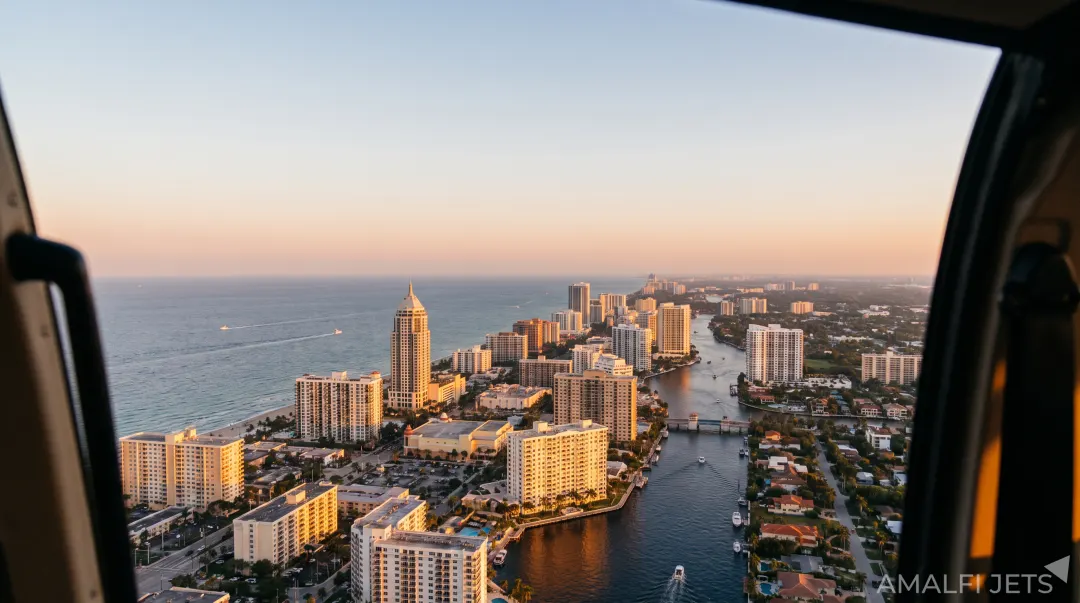
Arriving by private flight is simplest through Ft. Lauderdale Executive Airport (FXE), the primary airport for the city. From the ramp, the day can move directly toward the beach, Las Olas, the marina, or a meeting without building the itinerary around airline schedules.
Quick facts
Why charter a private jet to Ft. Lauderdale?
Private flying gives Ft. Lauderdale travelers a cleaner arrival day: primary access through FXE, a schedule built around the passenger, and no airline connection to protect.
Why private travelers choose this arrival
The city rewards efficient movement. A flight can be planned around a yacht handoff, a same-day meeting, a family holiday, or a weekend on the water rather than the fixed banks of commercial service.
With FXE as the primary airport, the trip has a clear first planning point. The charter desk can organize aircraft, handling, passenger timing, and ground transportation around one intended arrival, then keep the secondary airports in view if the day calls for a different South Florida solution.
Flexibility where it matters
For business travelers, the advantage is not only privacy in the cabin; it is control over the calendar. Departure times can be chosen around boardroom schedules, marina appointments, estate viewings, or dinner reservations rather than available seats.
Instead of padding the day for terminals, connections, and rigid boarding windows, private aviation lets the itinerary stay closer to the actual purpose of the trip. That is especially useful in a region where beach traffic, bridge openings, weather, and seasonal demand can all influence ground timing.
A better fit for South Florida travel
Plans often extend beyond the city line: Pompano Beach to the north, Boca Raton beyond that, Miami-Dade to the south, or Hollywood along the coast. Keeping PMP, BCT, OPF, and FLL in the planning conversation gives the trip room to adapt when an alternate airport better matches the passenger’s final address or the day’s operating conditions.
“For peak weeks from October through April, our charter desk secures the preferred airport slot and aircraft option first, then refines catering and ground transport. Early firm dates widen the aircraft choice.”

When is the best time to fly to Ft. Lauderdale?
The most in-demand time to visit Ft. Lauderdale runs from October through April, when FLIBS, winter sun, holidays, snowbird travel, and spring break compress availability.
Peak travel months
October brings yachting energy and a busier social calendar, with FLIBS creating one of the strongest demand periods of the year. November and December continue the shift into winter travel, as holiday plans, warm-weather escapes, and seasonal residences draw more private aviation activity.
January, February, and March are classic South Florida peak months. Travelers arrive for sun, school breaks, extended stays, and business that conveniently pairs with time on the water.
April often retains that momentum as spring break and late-season leisure travel continue. For these months, early firm dates tend to widen aircraft choice and make preferred departure windows easier to secure.
Value-oriented months
June, July, August, and September usually bring softer demand, with hotter, more humid weather and hurricane season tempering travel volume. Aircraft availability can be better in this window, making it a practical time for flexible travelers who want more choice.
Summer planning should still allow room for weather awareness. The most polished itineraries keep departure times, alternates, and ground logistics organized before the day of travel, especially when afternoon storms may affect South Florida operations.
Where our clients stay and go
Ft. Lauderdale draws private travelers with Atlantic beaches, inland waterways, yachting culture, and an easy South Florida rhythm.
Morning light comes off the ocean first, then flashes along glass towers, canal water, and white hulls tied behind waterfront homes. The city has a particular geometry: beach to boulevard, boulevard to marina, marina to the New River, all close enough that a day can move from boardroom to boat without changing its pace.
Las Olas gives the trip its walkable center, with galleries, restaurants, boutiques, and shaded patios that work as well after a meeting as they do before dinner. East of town, the shoreline feels open and polished, with palms, hotel terraces, and the steady Atlantic horizon setting the tone.
The boating culture is not decorative here; it is part of the city’s identity. Yachts, tenders, bridges, and canals shape how people move, gather, and spend time, which is why private travelers often arrive for more than a beach weekend.
There is also a practical appeal. The region sits between Palm Beach and Miami, giving travelers access to a broad South Florida circuit without committing the whole trip to either end. A long weekend might center on the beach, a marina, a private residence, or a dinner reservation; a business itinerary can thread through Broward, Boca Raton, and Miami-Dade with the aircraft plan built around the calendar.
What makes the destination feel refined is its ease. The best days are not over-scheduled; they are sequenced well. Arrive, clear the ramp, step into the car, and let the waterline lead the rest of the itinerary.
What determines the cost of a flight to Ft. Lauderdale?
The cost of chartering into Ft. Lauderdale is shaped by the aircraft selected, the route structure, airport and positioning requirements at FXE, seasonal demand, and whether a suitable empty leg is available.
Aircraft selection
Aircraft class is one of the largest qualitative drivers. A short regional flight, a longer domestic itinerary, a larger cabin preference, baggage volume, passenger count, and desired onboard experience can all change the aircraft that is most appropriate for the mission.
The right choice is not simply the largest cabin available. A well-matched aircraft balances comfort, runway and airport suitability confirmed by the operator, operating efficiency, and the passenger’s expectations for privacy, space, luggage, and timing.
Route structure
A one-way itinerary is priced differently from a round trip because the aircraft and crew may need to reposition before or after the passenger flight. If the aircraft can remain efficiently aligned with the next mission, the structure may be more favorable; if it must move significantly without passengers, that can increase the overall quote.
Round trips may create efficiencies when the schedule allows the same aircraft to remain with the itinerary. Longer stays, late changes, or split travel dates can alter that calculus, so the charter desk evaluates the complete movement rather than a single leg in isolation.
FXE positioning and airport-related items
Because FXE is the primary airport, it is usually the first operational plan evaluated. The final quote can reflect aircraft positioning, crew logistics, handling arrangements, parking availability, airport fees, and any requirements attached to the exact timing of the trip.
Secondary airports can be useful when they better align with the passenger’s ground plan or the aircraft’s positioning. PMP, BCT, OPF, and FLL are reviewed as practical alternatives when they support the itinerary more cleanly.
Seasonal demand
October through April is the higher-demand period, driven by FLIBS, winter sun, holidays, snowbird travel, and spring break. During those months, preferred aircraft and peak departure times can commit earlier, especially around firm travel dates.
Summer can bring softer demand and broader availability, particularly in June, July, August, and September. Heat, humidity, and hurricane-season weather still make thoughtful planning important, even when aircraft choice is easier.
Empty-leg availability
An empty leg can improve value only when the existing aircraft movement already matches the passenger’s route, date, timing, and airport preferences. It is not a guaranteed discount channel, and it often requires flexibility.
For fixed schedules, the most reliable approach is to build the right primary charter first, then let the charter desk monitor compatible empty-leg opportunities without compromising the trip.
Which airports serve Ft. Lauderdale?
Ft. Lauderdale is served by FXE as the primary private-flight airport, with PMP, BCT, OPF, and FLL available when the wider South Florida itinerary points in another direction.
Ft. Lauderdale Executive Airport (FXE)
FXE is the first airport the charter desk will typically evaluate for a private arrival because it is the primary airport for the city. It keeps the plan focused: one preferred gateway, a straightforward ground handoff, and a schedule built around the traveler’s actual day.
Pompano Beach Airpark (PMP)
Pompano Beach Airpark can be useful when the trip is oriented toward the Pompano Beach side of the region or when an alternate to FXE creates a better operating plan. It is worth considering for northern Broward itineraries, marina-adjacent plans, or any schedule where ground routing matters as much as the flight itself.
Boca Raton Airport (BCT)
Boca Raton Airport makes sense when the stay, meeting, residence, or club plan sits closer to Boca Raton than to the central city. For travelers splitting time between Broward and southern Palm Beach County, BCT can help keep the ground portion of the trip aligned with the real destination.
Miami-Opa Locka Executive Airport (OPF)
Miami-Opa Locka Executive Airport is a strong alternate when the itinerary leans toward the Miami side of South Florida while still calling for a private aviation environment. It can be especially helpful when the traveler’s schedule extends south after arrival or when aircraft availability points that way.
Ft. Lauderdale - Hollywood Airport (FLL)
FLL may be considered when the travel plan connects closely with the Hollywood side of the region, a commercial-airline movement, or a specific aircraft and handling option. The charter desk will compare it carefully against FXE and the executive-airport alternatives so the airport choice supports the whole day, not just the flight.
Common questions about Ft. Lauderdale charter
Which airport should I use for a private flight?
For most Ft. Lauderdale private flights, FXE is the primary planning point; PMP, BCT, OPF, and FLL can make sense when your ground itinerary points north, south, or toward an airline connection.
What determines the cost of chartering into the city?
The cost of chartering into Ft. Lauderdale depends on aircraft class, routing, one-way or round-trip structure, FXE positioning and fees, peak-season demand, and whether an empty-leg opportunity matches your timing.
How early should I book for the busiest season?
For Ft. Lauderdale trips in October through April, especially around holidays, FLIBS, snowbird season, and spring break, earlier firm dates usually give the charter desk more suitable aircraft and timing options.
Can I use a secondary airport instead of FXE?
Yes — Ft. Lauderdale can be planned through PMP, BCT, OPF, or FLL when an alternate airport better supports parking, handling, schedule flow, or the passenger’s final address in South Florida.
Is summer a good time to fly privately?
Summer travel to Ft. Lauderdale can offer softer demand and better aircraft availability, but plans should stay attentive to heat, humidity, and hurricane-season weather.
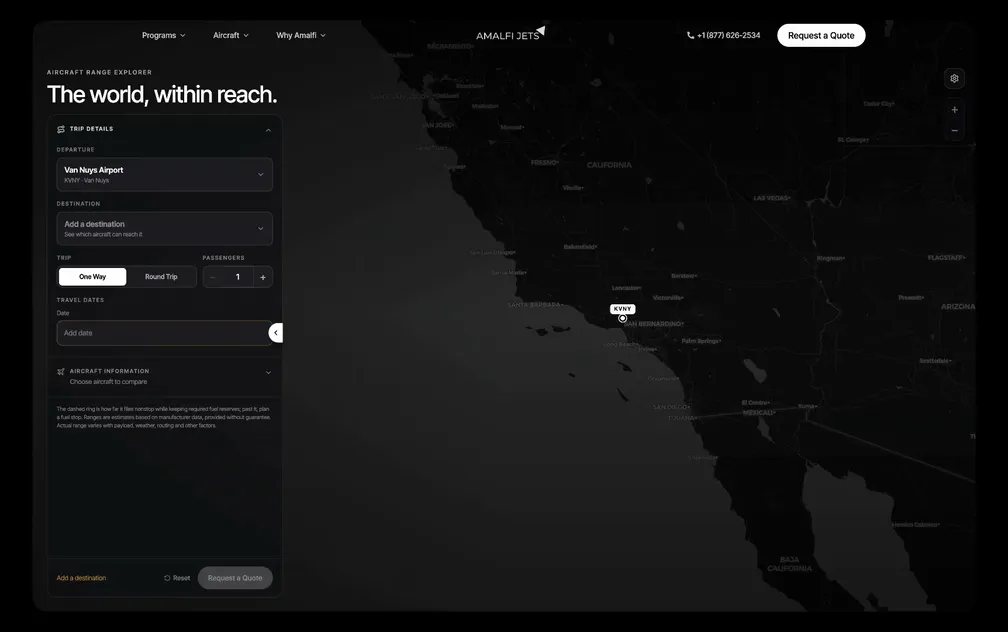
Try Range Explorer
See how far you can fly nonstop
Explore aircraft range, compare options, check flight times, and better understand which aircraft fits your trip.

Ready to fly to Ft. Lauderdale?
Request a charter and our team will tailor an itinerary for your next journey.
*Takes only about 40 seconds to request your quote.
