



Private Jet FIFA World Cup 2026 Host Cities: Why Demand Will Spike
Planning your private jet FIFA World Cup 2026 host cities itinerary will require a far more disciplined approach than a typical summer charter. With matches spread across multiple American markets and demand expected to surge around key fixtures, you will need more than the official FIFA World Cup 2026 host city schedule. You will need a realistic operating plan built around airport access, aircraft availability, and strategic route sequencing. Factoring in the cost implications of moving rapidly between cities during one of the busiest private aviation periods the market has seen is also essential.
This guide is designed as the operational companion to our earlier World Cup planning coverage. Rather than staying broad, it focuses on the practical details that matter most once your itinerary starts taking shape. We cover which general aviation airports make the most sense in major U.S. host markets and which route pairs are likely to be the most useful. We also explain how flight times and charter budgets should be framed, and why advance planning is essential when the market is compressed by extreme event demand.
Industry forecasts referenced in 2026 market coverage point to more than 73,000 private jet flights tied to match days. A dramatic surge is expected around the final, bringing significant upward pressure on charter revenue and aircraft utilization. For you and your group, that means tighter availability, more event-related airport charges, and less room for casual scheduling. It also reinforces the value of working with a charter broker like Amalfi Jets, as our team sources across a broad operator network to coordinate your itinerary as one seamless program.
If you are benchmarking aircraft categories before event premiums are layered in, our 2026 private jet charter cost guide is the most useful baseline. This resource helps clarify baseline market expectations before the additional pressures of tournament demand arrive.
Understanding the 2026 Operational Shift
The 2026 tournament creates a different private aviation profile because it is not concentrated in one metropolitan area. It stretches across the United States, Canada, and Mexico, with 11 U.S. host cities and a tournament rhythm that encourages you to move quickly between matches. For many clients, the greatest logistical challenge will not be the initial arrival into the country. It will be the complex, inter-city sequence that follows.
That shift changes the operating picture for your trip in three important ways. First, aircraft availability can tighten across entire regions rather than only at the host city itself, as operators reposition fleets extensively to meet demand. Second, preferred business aviation airports may introduce mandatory handling procedures, parking restrictions, or fuel commitments that affect total trip economics. Third, the most valuable planning work happens between match cities, where route choice, departure timing, and aircraft category must align with a narrow travel window.
The result is a travel environment where your charter flight World Cup cities US strategy must be built around realism. Travelers who book early and structure routes intelligently will enjoy more options, stronger price visibility, and better schedule control. Those who wait for match week may still find lift, but often at a significantly higher cost and with less attractive airport timing. Our team eliminates this uncertainty by managing the complexities of your multi-city routing from start to finish.
The U.S. Host City Airport Playbook for World Cup 2026
For this private aviation World Cup travel guide, nine key U.S. markets stand out for operational planning. In Miami, Opa-locka Executive Airport (OPF) is the preferred private gateway for many clients looking for easier access to the city and surrounding luxury destinations. During a major tournament, OPF is particularly relevant for travel onward to Atlanta, New York, Dallas, and Seattle. Booking your OPF departure early is essential, as South Florida aircraft demand stacks rapidly during international events.
In Los Angeles, Van Nuys Airport (VNY) remains the dominant business aviation choice. It is one of the most prominent private aviation airports globally and will see meaningful pressure during the tournament period. For your World Cup travel, VNY is especially useful on longer routes connecting to Seattle, Dallas, Atlanta, and Miami.
Dallas Love Field (DAL) is central to many inter-city itineraries because of both its geography and its expansive infrastructure. Dallas can function as a host destination, a connection point, and a practical repositioning market for operators serving several tournament cities in succession. You can expect DAL to feature heavily in routing conversations that include Kansas City, Atlanta, Miami, New York, and Los Angeles.
In Seattle, Boeing Field (BFI) is the principal private aviation airport and the best gateway for those targeting downtown access. Routes from Seattle are longer and naturally push you toward midsize, super-midsize, or heavy aircraft depending on your passenger count and luggage scope. That dynamic becomes especially relevant on longer sectors to Miami, Atlanta, Dallas, and Los Angeles.
Atlanta is best approached through DeKalb-Peachtree Airport (PDK), which is excellently positioned for private access to the metro area. This airfield should be one of the busier Southeastern hubs during the tournament. For many itineraries, Atlanta works perfectly as a same-day move between matches, provided departure windows are secured with our team appropriately early.
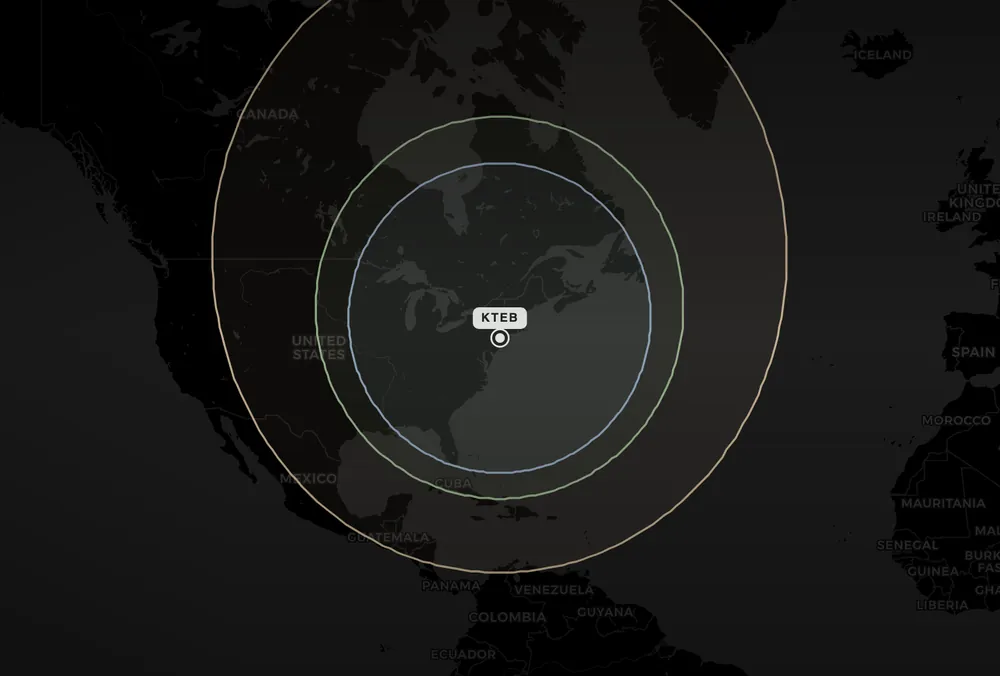
In the Northeast, Hanscom Field (BED) in Boston, Teterboro (TEB) in New York, and Northeast Philadelphia Airport (PNE) form an important regional cluster. These sectors may look short on paper, but event demand and regional congestion limit schedule flexibility. TEB in particular is likely to operate in a highly constrained environment, making advance coordination critical for a smooth departure.
Kansas City rounds out the core set through Charles B. Wheeler Downtown Airport (MKC). Its proximity to downtown makes it highly attractive for demanding match-day travel. However, that same convenience predictably fuels competition for preferred arrival and departure slots as the tournament advances into the knockout stages.
Charter Flight World Cup Cities US: Route Times and Budget Ranges
The most useful route pairs are those connecting host markets efficiently without forcing you through congested commercial terminals. For shorter sectors such as OPF to PDK, TEB to BED, TEB to PNE, or DAL to MKC, approximate flight times fall between one and two hours. On those routes, light and midsize jets are often fantastic choices. One-way charter budgets commonly range from $10,000 to $30,000 before unusual event handling constraints increase the total sum.
A route such as Miami to Atlanta can be an efficient same-day move if the schedule is set early and the airport plan is securely locked in. New York to Boston and New York to Philadelphia are even shorter in pure flight time, but you should not confuse short stage lengths with operational simplicity. During a tournament, runway flow, local handling windows, and ground transportation timing matter precisely as much as your airborne time.
For mid-length sectors such as Dallas to New York, Los Angeles to Dallas, or Miami to New York, you should expect midsize or super-midsize aircraft to offer the perfect balance of comfort, performance, and flexibility. On these routes, one-way pricing often exceeds $40,000 once taxes, positioning, and elevated event fees are incorporated. This confirms why quoting an event charter based solely on an anticipated hourly rate can be misleading.
Longer sectors create an entirely different level of planning. Flights connecting Los Angeles to Miami, Seattle to Miami, and Seattle to Atlanta are operationally demanding and remain better suited to super-midsize or heavy aircraft, depending on your distinct payload parameters. Program budgets can easily surpass $100,000 once several cross-country sectors are combined over multiple match days. If you are aiming to fly private World Cup 2026 inter-city on a multi-stop schedule, framing your expectations around the economics of the full itinerary is vital.
For a broader view of the aircraft classes behind these directional estimates, we encourage you to review our 2026 private jet charter cost guide. For wider context regarding market pressure during the season, the summer 2026 jet charter trend report offers excellent industry background. Together, these resources verify the financial realities for your upcoming tournament travel.
Why World Cup 2026 Charter Pricing Runs Above Standard Summer Rates
One of the most frequent mistakes in event travel planning is assuming that a simple hourly rate tells the comprehensive story. In reality, charter proposals during an anticipated period like the World Cup are influenced by countless overlapping variables. The hourly baseline is truly only the starting point for your customized flight program.
Aircraft positioning remains the most significant hidden cost driver. If an operator must move an empty aircraft into a host city before your leg and then reposition it again because overnight ramp parking is sold out, those movements affect the final quote. Specialized handling programs can strictly mandate event charges, and in some markets, fuel uplift commitments are fiercely enforced to avoid astronomical parking fees. Overnight parking, crew hotel accommodations, federal excise taxes, and minimum daily usage agreements all reliably push quotes beyond standard expectations.
This is precisely where the gap between ordinary summer pricing and tournament pricing becomes most visible. In a normal June market, there may be enough aircraft inventory to absorb a schedule shift without a dramatic reset in your total cost. During the World Cup, inventory compression quickly adds a staunch premium, particularly within the super-midsize and large-cabin categories. In practical terms, you should expect to see pricing running meaningfully above standard summer rates, especially during the semifinal and final stages.
Fly Private World Cup 2026 Inter-City With a Broker-Led Itinerary
A broker-led structure becomes uniquely valuable when your itinerary spans several remote host cities in rapid succession. Consider moving your group from Miami to Atlanta, onward to Dallas, and finally into the New York area over consecutive days. On paper, it appears to be a fairly simple sequence of sectors. Operationally, it raises several interconnected logistical decisions that our team seamlessly manages on your behalf.
The first decision dictates whether one aircraft should stay with you throughout the long program or whether the itinerary should be split across different operators to optimize your economics. The second evaluates whether your exact passenger count, luggage volume, and desired cabin layout warrant a midsize aircraft throughout or definitively call for a super-midsize solution on longer flights. The third weighs whether your preferred arrival windows remain entirely realistic after smartly modeling airport constraints, strict ramp availability, and ground transfer durations.
Working with an expert charter broker ensures those complex tradeoffs are managed centrally and transparently. As a premier charter broker, Amalfi Jets guarantees access to a global operator network rather than being restricted to a limiting owned-fleet model. We continuously source across the market, compare aircraft options by sector, and intelligently pivot if one host city becomes unexpectedly complicated. For you, that translates directly to one point of contact, one perfectly coordinated operating plan, and absolute clarity regarding your itinerary.
Travelers desiring a deeper understanding of our global sourcing model can read more about why Amalfi Jets stands apart within the industry. Those prepared to move directly from strategic planning to dedicated pricing can request a private charter with our team today. We proudly ensure that every phase of your journey is handled flawlessly.
When to Book Your Private Jet Soccer World Cup Summer 2026 Travel
The true booking window for this event matters far more than it ever would for a conventional summer leisure trip. Once your core match dates, desired city sequence, and passenger requirements are reasonably definite, your charter planning should officially commence. Waiting to make a short-notice reservation may technically yield options, but typically with noticeably less favorable pricing and drastically reduced control over your preferred schedule.
For the busiest tournament dates, particularly surrounding the later-stage knockout matches, securing your chosen aircraft early is undeniably the most prudent strategy. High-demand host city route pairings will tighten tightly several weeks in advance, and larger-cabin aircraft may need to be reserved even earlier to appropriately shield ideal departure windows. Rapid same-day trips between active host cities require extra discretion, as razor-thin timing margins disappear rapidly once heavy airport congestion builds.
A successful planning sequence begins with a well-confirmed city footprint, an accurate understanding of passenger priorities, and a clear visualization of your scheduling flexibility. From there, our dedicated charter experts help formulate the perfect aircraft strategy and systematically pressure-test alternate regional airport choices. This collaborative approach transforms a broad travel concept into a workable, stress-free itinerary with completely transparent trip economics.
Readers searching for additional planning context can proactively browse our latest private aviation insights on the blog. We encourage you to weave this practical operational guide with our broader World Cup strategy coverage once you firmly map your target matches. Meticulous early preparation guarantees you the absolute highest level of premium service and aircraft availability.
Plan Your Private Aviation World Cup Travel Guide With Amalfi Jets
The 2026 FIFA World Cup is unequivocally shaping up to be one of the most operationally intense private aviation events the U.S. market has handled in recent memory. Sudden match-driven demand, highly constrained airport operating windows, and fast-moving multi-city schedules will reward those who thoughtfully plan around core logistics rather than incorrectly assuming luxury flights can be organized at the final hour. Private aviation can effortlessly make the global tournament dramatically more efficient and comfortable, but only when your full itinerary thoughtfully accounts for strict market realities.
That is precisely why this private jet soccer World Cup summer 2026 guide focuses acutely on strategic airports, logical route structures, authentic charter budgets, and exact timing. For clients enthusiastically attending multiple matches across the vibrant country, the greatest advantage genuinely lies in having one experienced broker oversee meticulous sourcing, clever route sequencing, and the intricate operational details harmonizing every leg. We take absolute pride in delivering an effortlessly elevated travel experience from your very first departure to your momentous final arrival.
If you already know the select cities you intend to visit, now is accurately the time to transition from initial inspiration to brilliant execution. Rely on the official FIFA World Cup 2026 host city schedule to strategically map your optimal match windows, and consult our detailed 2026 private jet charter cost guide for insightful aircraft category financial benchmarks. After establishing your plans, seamlessly request a private charter so our dedicated team can immediately build an itemized, highly tailored multi-city proposal specifically for your momentous World Cup itinerary.