



Private Jet WiFi in 2026: Is Internet Access Guaranteed?
Private jet WiFi is available on some aircraft, but neither access nor performance is guaranteed simply because you book a private charter. Depending on the installed equipment, route, service plan, and number of passengers online, the experience may range from basic messaging to video meetings and streaming. Even a capable system can experience interruptions.
At Amalfi Jets, connectivity is part of aircraft selection rather than an assumed amenity. As a charter broker, we help compare aircraft offered by operators and clarify the equipment and service available on the proposed aircraft. If you intend to work onboard, the important question is not just whether internet is installed, but whether it suits the work you need to accomplish.
Cabin Wi-Fi, Internet Access, and Entertainment Are Different
Wi-Fi connects your device to the aircraft’s onboard wireless network. That network needs a separate connection to the internet, typically through terrestrial towers or satellites. Your device can therefore display a Wi-Fi connection while having limited internet access or none at all.
Cabin screens also tell you little about online capability. An aircraft may offer locally stored entertainment without supporting streaming from your personal subscriptions. If you want to watch your own content, ask about internet access and streaming permissions separately from the presence of televisions or cabin displays.
For a useful assessment of private plane WiFi, look beyond an amenities label. Confirm that the internet service is active, identify the installed system, and explain which applications you expect to use. These details matter more than a general description of the cabin.
How Private Jet Internet Connectivity Works
Air-to-ground connectivity, commonly called ATG, connects a suitably equipped aircraft to terrestrial towers. It can serve domestic U.S. itineraries within the relevant network’s coverage. Its principal geographic limitation is that ground-based service does not provide coverage across oceans.
Satellite systems connect through satellites rather than nearby ground towers. They are relevant when comparing aircraft for oceanic travel or routes beyond an ATG network’s reach. Satellite service still depends on the network footprint, onboard hardware, antenna, service plan, and operating conditions.
Neither connection type is a promise of uninterrupted service. The full itinerary matters, including any portions outside the expected coverage area. An installation that supports your needs on one domestic route may not offer the same experience on a different mission.
Ka-Band Versus Ku-Band Satellite Internet
Ka-band and Ku-band are frequency bands used for satellite communications. Ka-band generally offers access to more spectrum and greater potential capacity, while Ku-band can also provide useful onboard internet performance. The frequency band alone does not establish what an individual passenger will experience.
A Ka-band installation should not automatically be considered better than every Ku-band installation. Antenna design, network capacity, service limits, coverage, and simultaneous demand all affect the connection. For a charter decision, an explanation of supported activities is more useful than choosing by frequency band alone.
Satellite orbit is a separate consideration. Low-Earth-orbit systems can offer lower latency than geostationary systems, reducing the delay involved in exchanging information with the network. However, a lower-latency system still needs suitable hardware, active service, and coverage along your route.
Ask about the actual installation rather than treating technical labels as interchangeable. Ka-band and Ku-band describe frequency, while low-Earth orbit and geostationary orbit describe satellite positioning. Both may be relevant to the discussion, but neither replaces an aircraft-specific assessment.
How Fast Is Internet on a Private Jet?
There is no dependable speed figure that applies to every private aircraft or category. Older or lower-capacity installations may support modest online activity, while more capable systems can accommodate demanding applications under favorable conditions. A headline download speed is not necessarily the speed available to each passenger.
Realistic expectations start with your intended tasks. Messaging and routine email are generally less demanding than large file transfers, high-definition streaming, or several simultaneous video meetings. Cloud applications can vary considerably in their requirements, especially when documents include large images or other substantial files.
Bandwidth and latency also answer different questions. Bandwidth affects how much data the connection can carry, while latency influences how quickly an application responds. A connection may transfer documents adequately yet introduce noticeable delays during a live conversation.
If an operator provides a performance estimate, ask whether it describes total system capacity or an expected passenger experience. Also ask how shared use and service restrictions may affect that estimate. For essential work, plan around the supported activity rather than an unqualified speed claim.
Which Aircraft Categories Have the Best Connectivity?
Super-midsize, heavy, and ultra-long-haul aircraft are generally stronger starting points when comparing options for demanding internet use. Larger aircraft may accommodate more capable satellite installations, making them relevant for passengers who need to work across longer or oceanic itineraries. Their category still does not guarantee that a particular system is installed or active.
Smaller aircraft can also be suitable when their equipment matches the mission. Conversely, a larger aircraft with an older installation or restrictive service plan may not meet your expectations. The best option is the specific aircraft whose connectivity aligns with your route and intended activities.
The Amalfi Jets private jet aircraft categories hub provides a starting point for comparing options. Use it to consider cabin preferences, passenger requirements, and travel needs together. Connectivity then deserves a separate discussion about the aircraft actually available for your itinerary.
Turboprops and Light Jets: Confirm Availability First
Turboprops and light jets may offer limited internet capability or no internet service, depending on their configuration. A cabin wireless network should not be mistaken for an active connection to the internet. Availability needs to be established before assessing performance.
If you only need occasional messaging or email, explain that requirement during aircraft selection. Those activities are less demanding than video calls, but they still depend on functioning equipment and coverage. Do not assume a short domestic flight will provide access simply because your needs are modest.
If a sustained working connection is essential, make it a selection criterion from the outset. Amalfi Jets can use that requirement when comparing the options offered by operators. The objective is to find a suitable aircraft, not to dismiss a category without reviewing its actual equipment.
Midsize Aircraft: Similar Cabins, Different Connections
Midsize aircraft can present a mixed connectivity picture, with some equipped for air-to-ground service and others carrying satellite installations. Two aircraft in the same category may therefore offer substantially different online capabilities. Cabin dimensions do not identify the system or its service limits.
A domestic journey focused on email can have different requirements from an itinerary involving offshore travel and live meetings. Explain both your route and your intended activities before choosing an aircraft. That gives the connectivity comparison a practical basis rather than relying on a category label.
Larger Aircraft: More Options, Not a Performance Guarantee
Super-midsize, heavy, and ultra-long-haul aircraft merit consideration when internet access is central to the trip. Available installations may support a broader range of tasks, subject to the equipment, network, and service plan. This makes aircraft-specific questions particularly important when several passengers expect to work simultaneously.
A spacious cabin does not create additional bandwidth by itself. One passenger joining a video meeting is a different requirement from several passengers making calls while others stream entertainment. Describe the likely combination of activities so the proposed aircraft can be assessed against the actual demand.
Los Angeles (VNY) and Teterboro (TEB): Domestic Connectivity
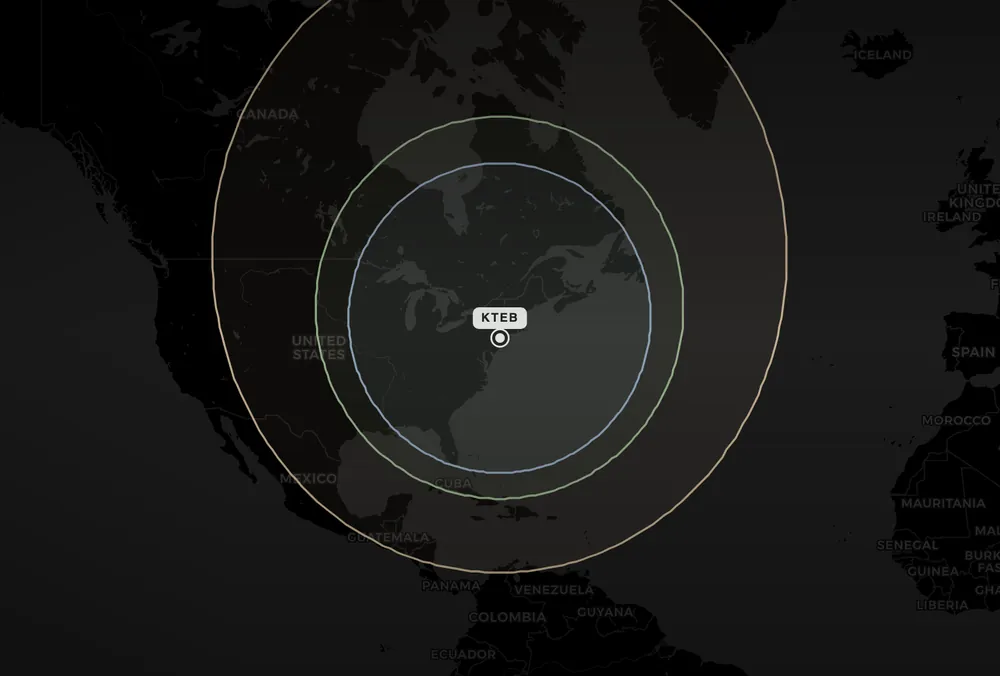
Travel between Los Angeles (VNY) and Teterboro (TEB), serving the New York area, illustrates why route and equipment must be considered together. Air-to-ground service may be an option on a suitably equipped aircraft within the relevant coverage footprint. The airport pair alone does not establish internet availability or performance.
If you intend to use the flight as a working session, explain what that means before accepting an aircraft option. Accessing documents, joining meetings, and uploading files place different demands on a connection. Ask about anticipated service along the route rather than assuming domestic travel means continuous access.
Miami (OPF) and Dallas (DAL): Match Coverage to the Full Route
The same principle applies to travel involving Miami-Opa Locka Executive (OPF) and Dallas Love Field (DAL). Some domestic itineraries may be suitable for ATG service, depending on the aircraft’s installation and network coverage. Departure from a particular airport is not evidence that onboard internet will meet your needs.
If a Miami or Dallas itinerary continues internationally or includes overwater segments, examine those portions separately. Satellite-equipped aircraft become a more relevant comparison when the journey extends beyond terrestrial coverage. Connectivity planning should follow the complete itinerary, not just the first departure city.
What to Expect, and What Not to Assume
Messaging and email are sensible starting points when discussing WiFi on a private jet because they are generally less demanding than streaming or live video. They are not universal promises, however. Coverage gaps, service interruptions, or equipment issues can affect even basic use.
Cloud applications and VPN connections deserve more specific questions. Explain which tools you use and whether your work involves downloading documents, uploading large files, or maintaining a continuous connection. Ask whether the installation and service plan support those requirements, including any application restrictions.
Streaming and video conferencing require a more capable connection, especially with several passengers online. Weather, network congestion, antenna conditions, handoffs, and maintenance can affect service. Advanced equipment can improve the available capabilities without eliminating the possibility of an interruption.
For time-sensitive work, prepare an offline alternative. Download essential documents and presentations before departure, and save permitted entertainment content locally when practical. A meeting that cannot tolerate a dropped connection is better scheduled outside the flight than built around an assumption of uninterrupted access.
Questions to Resolve Before Accepting a Quote
Start by asking whether internet service is installed and active on the specific aircraft offered. Request the aircraft identity, the installed connectivity system, and whether it uses air-to-ground service, satellites, or a combination. Where relevant, ask about the satellite network, frequency band, and orbit configuration.
Next, explain what you expect to accomplish and how many passengers will connect. Ask whether the service supports your applications and whether data caps, streaming restrictions, or fair-use policies could affect the experience. Also clarify whether internet access is included in the quote or subject to separate charges, without assuming a standard arrangement.
Discuss expected coverage along the full route and any known limitations that could affect your plans. Ask whether a backup communication option is available, rather than assuming one is installed. If the offered aircraft changes, the connectivity discussion should be revisited for the replacement.
The Amalfi Jets guide to private jet charter cost in 2026 is a complementary reference when reviewing your booking. Treat connectivity with the same attention as the specific aircraft and other requested amenities. A general Wi-Fi description is not a substitute for understanding the equipment and service being offered.
Make Connectivity Part of Your Charter Request
The right private jet WiFi experience begins with a clear description of your needs. Tell Amalfi Jets where you are traveling, how many passengers expect to be online, and which activities matter most. We can then compare available aircraft and ask operators about the relevant equipment, coverage, and service limitations.
As your charter broker, Amalfi Jets helps align aircraft selection with the way you intend to spend your time onboard. We do not operate the aircraft, and unconfirmed internet capability should not be treated as a booking commitment. Begin your charter request with our team and make connectivity part of the conversation from the start.