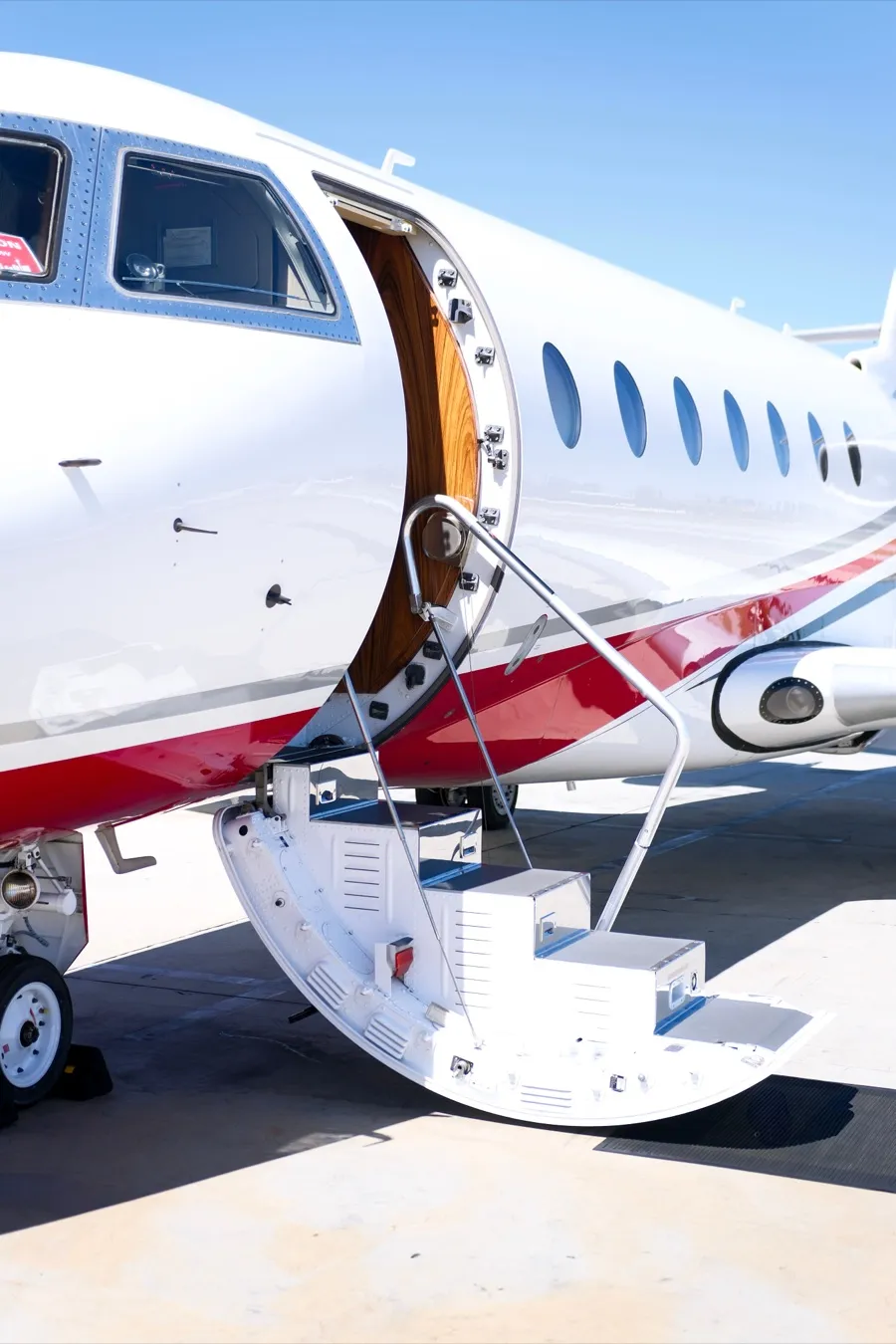




A private jet tail number identifies an aircraft, not the people aboard. On a U.S. civil aircraft, the registration begins with the letter N, which is why it is called an N-number.
The same identifier can lead to a Federal Aviation Administration (FAA) registry entry and, in some cases, a result on a public flight tracking service. Those results answer different questions. The registry tells you what is on record for the aircraft, while the tracking service reports what it can show about the aircraft’s movements. Neither tells you who took the trip.
What a private jet tail number tells you
Tail number is the familiar term for the visible registration marking. Aircraft registration number is the formal term for the identifier itself. An N-number is specifically a U.S. registration, while aircraft registered elsewhere use other national prefixes.
In the U.S. format, the N is followed by one to five characters. The suffix may contain one to five digits, one to four digits followed by one letter, or one to three digits followed by two letters. The first digit cannot be zero, and the letters I and O are not used. Knowing the pattern can help you catch a misread marking before you search.
Two other identifiers are easy to confuse with the registration. A call sign identifies a flight or aircraft in communications and may differ from the marking on the aircraft. An ICAO address is an electronic identifier used in aircraft broadcasts. A tracking service may use that address to associate a broadcast with a registration, but the two are not interchangeable.
How an N-number lookup works
If you have the full marking, search the FAA Aircraft Registry and check that the result matches the registration you entered. The registry is the authoritative starting point for U.S. registration information. It is not a live map and does not show where an aircraft is flying.
The broader aircraft record can include registered owner information, recorded security interests, and airworthiness data. A basic lookup may show registration status or aircraft details, but the first result is not necessarily a complete view of what is on file. Read each field for what it says, rather than assuming it answers questions beyond the scope of the record.
The registered owner, for example, is the party named in the record, not necessarily the operator conducting a particular flight. An airworthiness entry is not an assessment of the aircraft’s condition for a specific departure. The registry also does not confirm how the cabin is currently configured, a detail best addressed with your charter broker when planning a trip.
What an aircraft registration number cannot tell you
A public display may associate a private jet tail number with a departure, an arrival, or both. A registry may associate that same identifier with a registered owner. Together, those records still do not show who was aboard, why the aircraft moved, or whether someone associated with the aircraft was present.
That distinction matters in charter, where an aircraft is selected for the journey. A traveler might use different aircraft on successive trips, and a movement may reflect repositioning rather than a passenger journey. The useful distinction between what private jet tracking can and cannot reveal is this: an aircraft’s movement is not evidence of an individual’s itinerary.
How to track private jets without misreading the display
For a U.S.-registered aircraft, confirm the marking in the FAA registry before searching for it on a public tracking service. If you find a result, check the timestamp and whether the service is showing a current position or an archived movement. A result under the right registration is not necessarily a live view.
Understanding how to track private jets requires evaluating the service's data sources. Services that track private aircraft may draw on Automatic Dependent Surveillance Broadcast, or ADS-B, as well as receiver networks and data feeds. What appears on a display depends on factors such as the aircraft’s equipment, receiver coverage, the service’s data sources, and any filtering that applies. An airport photograph or an observation on the ground may add context, but it is not a live position report.
Two services may therefore show different results for the same registration. One may show a movement that another does not, or a display may show only part of a route. A gap tells you where the displayed information stops. It does not establish that the aircraft stayed on the ground or that it followed a particular route beyond the visible portion.
How FAA privacy programs affect public tracking
Limiting Aircraft Data Displayed, or LADD, allows an aircraft owner, operator, or authorized representative to request limits on how certain flight data is distributed or displayed through FAA data channels and participating services. That scope matters. Filtering in one channel does not erase the aircraft’s registration or prevent every independent receiver from picking up a broadcast.
Privacy ICAO Address, or PIA, addresses a different part of the process. For eligible U.S.-registered aircraft operating under applicable conditions, an alternate electronic address can make it less straightforward to match a broadcast to the registration. It does not change the N-number painted on the aircraft or guarantee anonymity.
In short, LADD can affect whether certain data appears on a display, while PIA can affect how readily a broadcast is associated with a registration. A missing search result does not, by itself, establish that either program is involved. It is possible to find a registry entry without finding the movement you expected to see.
Los Angeles and VNY: Reading the marking on the ground
At Van Nuys Airport (VNY) in Los Angeles, the marking you see on an aircraft can help you identify it in the registry. If a tracking service also associates the aircraft with VNY, read that result as a separate observation. The marking identifies the aircraft, while the display reports an airport association. Neither explains who used the aircraft or why it was there.
New York and TEB: An airport code is not a meeting point
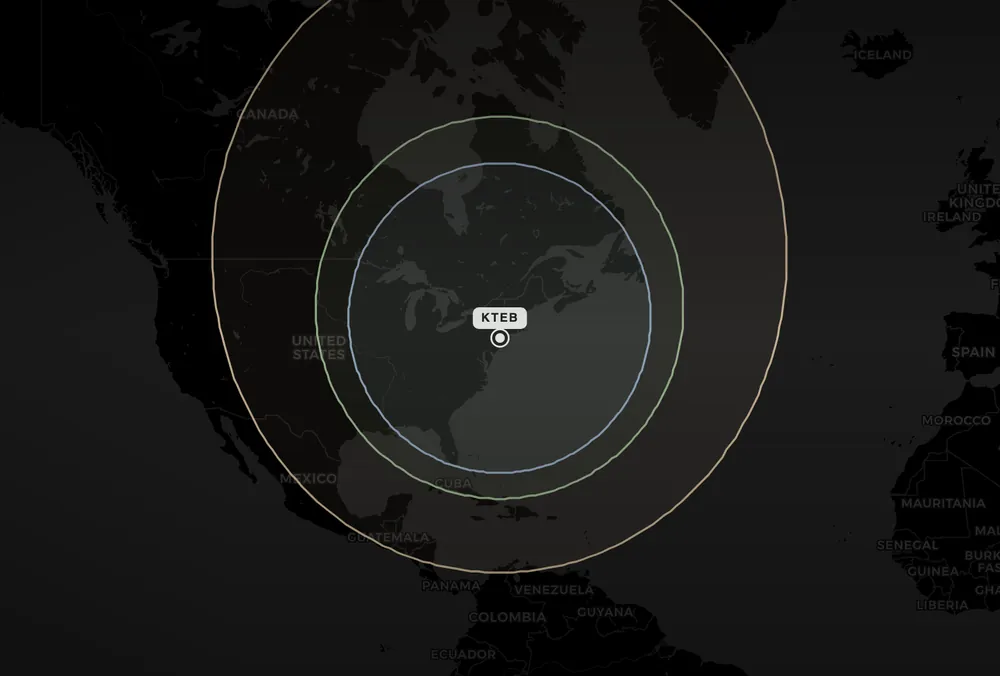
Teterboro Airport (TEB) serves the New York area from New Jersey. When TEB appears on a tracking display, the code can identify the airport associated with the reported movement, but it does not identify the private terminal handling a particular charter or tell your driver where to meet you. For your own trip, rely on the confirmed facility and pickup instructions rather than the airport code alone.
Miami and OPF: Flight history is not a passenger itinerary
A tracking history may associate an aircraft with Miami-Opa Locka Executive Airport (OPF), but an airport entry is only part of the picture. It does not show whether anyone boarded there, whether a passenger ended a journey there, or what happened after arrival. For travelers, the useful details are the confirmed facility and vehicle handoff, not what can be inferred from an archived track.
How Amalfi Jets coordinates a discreet charter
Discretion starts with practical questions regarding who needs the itinerary, where your driver should meet you, and how those details should be shared. Raise those preferences before the aircraft and facility are confirmed. It is easier to agree on how information will be handled than to change arrangements after it has already circulated.
As your charter broker, Amalfi Jets sources an aircraft suited to the journey and coordinates with the certificated operator. We can communicate your preferences, limit unnecessary circulation of itinerary details in our coordination, and confirm the facility and vehicle handoff with the operator. We do not operate the aircraft, control its registration or broadcasts, or independently enroll it in FAA privacy programs.
A carefully arranged arrival can coexist with a publicly visible aircraft movement. If you are planning a trip, start a charter request with Amalfi Jets and tell us your route and what discretion means to you. We will discuss suitable aircraft options and coordinate the departure details with the operator so you know where to go, whom to meet, and what to expect.