



Celebrity private jet tracking rarely begins with a photographer waiting beside a runway. More often, it begins with data, such as an aircraft registration associated with a public figure, a recognizable departure pattern, or a history of movements that invites speculation about where someone may be going next. That visibility can create security concerns, disrupt personal plans, and expose confidential business activity.
Effective private jet privacy is not the same as complete invisibility. It is a disciplined effort to reduce unnecessary exposure across aircraft data, booking communications, airport coordination, and ground transportation. Public figures may devote extensive resources to that effort, but the same principles apply to executives, families, investors, and anyone who values discretion. Understanding what tracking platforms can reveal, and what they cannot establish, is the first step toward making a more informed charter decision.
Celebrity private jet tracking and what public data reveals
Aircraft tracking platforms can combine several kinds of information, depending on their data sources and display policies. A public platform may show an aircraft registration or call sign, position, departure and arrival points, and previous movements, although the available details vary. This information does not automatically identify every passenger aboard.
The connection becomes easier to infer when the same aircraft is repeatedly associated with a particular person, company, home airport, or familiar route. Over time, otherwise separate data points can form a recognizable pattern even when no individual flight record names the traveler. A celebrity jet tracker may therefore appear to follow a person when it is actually following an aircraft identifier and drawing conclusions from previous associations.
Those conclusions may be accurate, incomplete, or mistaken. An aircraft can carry different passengers, serve different missions, or reposition without the individual commonly associated with it. Our companion guide to how private jet tracking works explains the aviation data environment in greater detail. The essential distinction remains that observing an aircraft is not always the same as knowing who is aboard, why it is flying, or what will happen after it arrives.
Why owned aircraft can weaken private jet anonymity
A personally owned aircraft can become closely associated with its owner through recurring use. The same registration may appear at a familiar home base, on repeated routes, or alongside public corporate and registry information. Ownership structures can sometimes make a casual search less direct, but they should not be treated as a guarantee of private jet anonymity.
Registrations, photographs, historical records, independent receiver data, and observation near an airport may still allow determined researchers to associate an aircraft with a person or organization. The greatest exposure often comes from repetition. One movement may reveal very little, while a sequence of departures and arrivals can suggest where a traveler spends time, when a residence might be occupied, or where a confidential meeting could be taking place.
A recurring aircraft can also attract attention even when its usual passenger is absent. Repositioning flights, maintenance movements, and trips for other authorized passengers may be incorrectly attributed to the person most commonly associated with the registration.
How celebrities avoid jet tracking
The most accurate answer is that public figures usually seek to reduce tracking exposure rather than eliminate it. Depending on the aircraft, its operator, and applicable requirements, the privacy plan may involve Federal Aviation Administration programs, alternate aircraft identifiers, careful control of itinerary details, and coordination among the professionals responsible for the trip. No single measure removes every possible source of information.
Restrictions affecting distributed data do not necessarily prevent independent receivers, public photographs, airport observation, archived records, or disclosures from unrelated sources. A disciplined plan instead closes avoidable gaps while recognizing what may remain observable. Travelers can also reduce unnecessary links between their identity and a specific aircraft.
Chartering an aircraft may assist with this objective because the tail number is selected for an individual mission rather than remaining continuously associated with the passenger. That separation can make routine correlation more difficult, although it does not make the itinerary inherently anonymous. Privacy planning should therefore begin before an aircraft is assigned. Passenger names, preferred airports, schedule details, ground transportation plans, and contact information should be shared according to operational need rather than distributed more broadly than necessary.
What the LADD program does
The Limiting Aircraft Data Displayed program, commonly known as LADD, allows an aircraft owner, operator, or legally authorized representative to request limits on aircraft data displayed through participating data channels. The request concerns the aircraft and must be made by a party with the appropriate authority. Participating tracking vendors are expected to apply the relevant restrictions to covered registrations, call signs, or flight numbers.
This process is sometimes described casually as N number blocking, but that shorthand can create unrealistic expectations about what the measure accomplishes. LADD concerns data distributed through specific systems, meaning it is not an eraser for every transmission, independent receiver, archived image, database entry, or observation near an airport. The practical result is reduced exposure within a particular data channel rather than universal invisibility.
Authority is an important part of the process. A charter passenger or charter broker should not be assumed to have the ability to enroll an assigned aircraft independently. Participation is centered on the aircraft owner, certificated operator, or legally authorized representative.
How the PIA program changes an aircraft identifier
The Privacy ICAO Address program, commonly called PIA, is a voluntary option through which eligible aircraft owners may request an alternate, temporary aircraft address. Because that address is not assigned to the owner in the Civil Aircraft Registry, it can make a routine search based on the usual identifier less revealing. PIA does not cause the aircraft to disappear from the aviation system.
It changes one layer of identification under defined eligibility and operating conditions. Its value lies in making routine correlation more difficult, not in promising that a determined observer can never identify the aircraft. As with LADD, authority and eligibility matter immensely.
The aircraft owner or operator must address the applicable requirements, and participation remains subject to current rules and operational limitations. A charter broker can communicate client privacy priorities to the operator, but a broker does not control the avionics, registration, or participation in an external privacy program. This distinction protects clients from unrealistic assurances. Privacy measures can reduce casual exposure, but responsible planning should never depend on a claim that an aircraft has become impossible to observe.
Charter versus owned aircraft tracking
Chartering creates a different identification pattern from repeatedly traveling on a personally owned aircraft. A certificated operator assigns an appropriate aircraft to the mission, and the identity of the passenger is not necessarily part of that public aircraft profile. This separation can reduce the simple association between a recognizable individual and one recurring tail number.
It does not prevent the aircraft from appearing on a public platform, and it does not remove the operator need for passenger information. It simply means the connection between passenger and aircraft is generally more specific to the individual mission. The aircraft may also change between trips based on availability, mission requirements, or operational considerations.
That variation can make long term pattern building less straightforward than it would be with a single personally associated aircraft. It should still be understood as a reduction in routine association rather than a guarantee of anonymity. The distinction explains why discretion begins before aircraft selection. A charter inquiry may contain passenger names, preferred airports, schedule details, ground arrangements, and other sensitive information. Each detail should be handled according to its operational purpose and shared only with the people who require it.
The charter broker role in private jet privacy
Amalfi Jets is a charter broker, not an aircraft operator or owner. We source suitable aircraft through our operator network, match the aircraft to the mission, and coordinate the trip with the certificated operator and relevant airport facilities. Within that role, our team can discuss privacy priorities at the beginning of a request.
We can communicate those priorities to the operator, help reduce unnecessary circulation of itinerary information, and coordinate details such as the selected facility and vehicle handoff. This work is practical and precise. It may include confirming who needs passenger information, selecting appropriate communication channels, avoiding unnecessary disclosure of an assigned tail number, and establishing how schedule changes will be communicated.
The operator must still receive all information required to conduct the flight safely and lawfully. A broker cannot guarantee that no observer or tracking service will detect an aircraft. We also cannot independently change an operator registration, avionics, or privacy program status.
Our role is to provide careful coordination, clear expectations, and close attention to the points where avoidable exposure can occur. Clients who want to understand that role in greater detail can review our charter brokerage approach. The central principle is straightforward: discretion depends on informed coordination among the client, broker, operator, and ground professionals.
Private jet privacy at VNY, TEB, and OPF
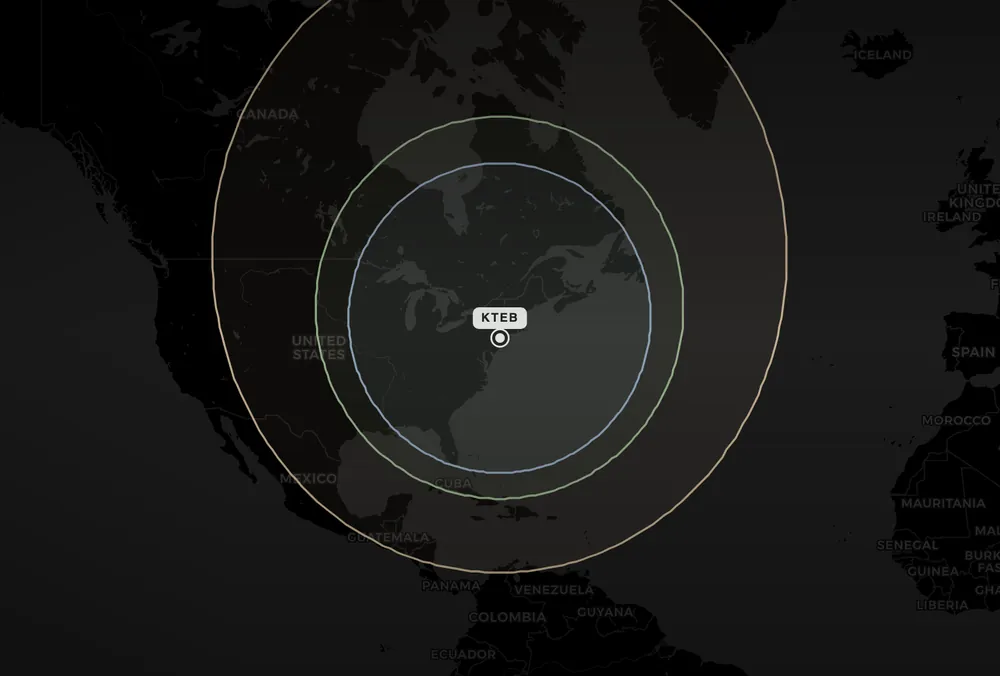
Airport coordination becomes especially important in major private aviation markets. For Los Angeles travel through Van Nuys (VNY), the correct arrival facility and passenger handoff instructions should be confirmed before the passenger and driver leave for the airport. For travel near New York through Teterboro (TEB), knowing the airport alone may not provide enough information for precise ground planning.
The broker, operator, passengers, and driver should have the same current facility details, meeting instructions, and contingency plan. Travel through Miami Opa-locka Executive (OPF) presents the same fundamental consideration. The assigned facility affects where a vehicle should arrive and how the ground portion of the itinerary is coordinated.
Access procedures and staging arrangements can depend on the facility, operator, and current security conditions. None of these airports should be treated as inherently anonymous. Discretion comes from confirming the exact handoff, restricting itinerary details to the people who need them, and preventing confusion that could leave a passenger waiting in an unnecessarily visible area.
A change to the aircraft or operating schedule may also affect the ground plan. Updated instructions should be distributed through one established communication path so that drivers, assistants, and security personnel receive accurate information without creating an uncontrolled chain of messages.
Questions to ask before confirming a charter
A useful privacy conversation begins with how passenger and itinerary information will be handled. Ask your broker which details must be shared with the operator, who will receive the final itinerary, and how revisions will be communicated. It is also reasonable to ask whether the assigned aircraft participates in any applicable privacy program, while recognizing that the answer depends on the owner or operator.
If aircraft identification is particularly sensitive, discuss when the tail number will be provided and whether anyone outside the operational chain needs to receive it. Ground arrangements deserve equal attention. Confirm the precise facility, vehicle meeting point, identity requirements, and procedure for a schedule change.
If several assistants, security professionals, or drivers are involved, establish one clear communication route so that sensitive updates do not circulate through unnecessary channels. Travelers should also ask what happens if the assigned aircraft changes. Substitutions can occur for operational reasons, and the privacy plan should follow the mission rather than depend on one tail number.
Updated operator information, facility instructions, and vehicle details should reach the appropriate people promptly. The answers should be specific without promising complete invisibility. A credible privacy discussion identifies which information is necessary, who requires access to it, and which forms of public observation remain outside the control of your aviation partners.
Privacy is part of the complete charter mission
Private aviation planning involves more than selecting an aircraft. Airport charges, taxes, repositioning, crew logistics, and other mission variables can affect the arrangement, as outlined in our overview of private charter cost considerations. Privacy requirements deserve the same clarity because they can influence communication, aircraft assignment, and airport coordination.
For some travelers, the priority is avoiding a recurring association with one aircraft. For others, it is protecting a confidential meeting, a family itinerary, an investment decision, or an unannounced destination. Defining the concern helps the broker and operator focus on the most relevant controls without making promises that the aviation data environment cannot support.
The goal is not to create the impression that an aircraft has vanished. It is to reduce needless disclosure, separate the passenger identity from public aircraft data where practical, and coordinate each stage of the mission with care. This measured approach is more useful than a broad request for secrecy. When you explain the specific concern at the beginning, the broker can account for information handling, airport coordination, and ground arrangements while sourcing an aircraft appropriate for the mission.
Discretion begins with the first conversation
Celebrity private jet tracking receives attention because the people involved are recognizable, but aviation privacy is not reserved for public figures. Executives, families, investors, and private individuals may have equally compelling reasons to keep their movements confidential. At Amalfi Jets, we approach that responsibility as a charter broker and advisor.
Our team can source an aircraft suited to the mission, communicate privacy priorities to the certificated operator, and coordinate the itinerary with close attention to information handling and ground arrangements. No responsible broker can promise that an aircraft will be entirely absent from public observation. What we can provide is a thoughtful charter process designed to limit unnecessary disclosure, establish clear communication, and reduce avoidable links between a passenger and an aircraft.
If discretion is central to your next trip, request a private charter consultation with Amalfi Jets. Share your priorities at the outset, and our team will build the charter plan around your schedule, preferences, and privacy considerations.