




The Gulfstream G700 is Gulfstream’s newest flagship, designed for intercontinental journeys that require substantial range and a cabin suited to working, dining, and resting in separate spaces. For charter travelers considering direct routes among New York, Los Angeles, London, Dubai, and Tokyo, it brings together long-distance performance, speed, and a carefully managed onboard environment.
Specifications tell only part of the story when choosing an aircraft for a private charter. The more useful question is whether the G700 fits your passenger count, baggage, itinerary, preferred cabin arrangement, and operating requirements better than established alternatives such as the Gulfstream G650ER or Bombardier Global 7500.
Gulfstream G700 Aircraft at a Glance
The G700 aircraft occupies the ultra-long-range category and sits above the G650ER in Gulfstream’s current lineup. As the manufacturer's newest flagship, it introduces enhanced space and capabilities to the private charter market.
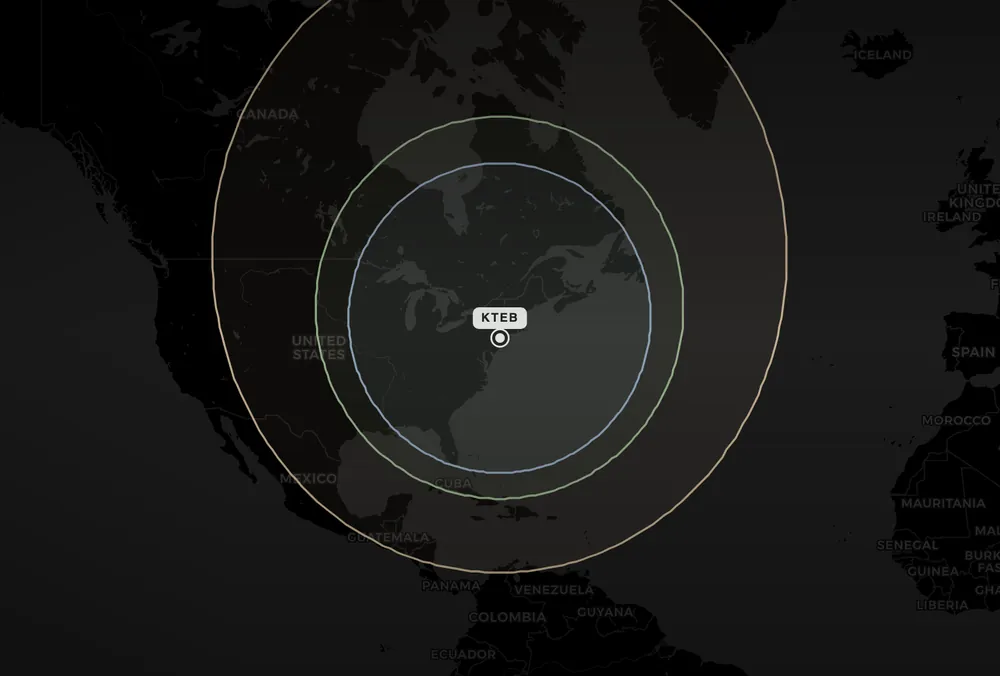
A planning range of approximately 7,500 nautical miles places the aircraft among the leading choices for journeys connecting major commercial and cultural centers across continents. Its performance profile is intended to support both extended international sectors and shorter transatlantic missions where travelers value additional cabin space.
The cabin can be arranged with as many as five living areas and accommodate up to 19 passengers. Sleeping capacity and seating arrangements vary because each available charter aircraft reflects its individual interior, certification, and operating configuration.
That distinction matters when comparing charter options. Before presenting an aircraft, our team reviews the actual seating plan, sleeping arrangement, baggage capacity, cabin photographs, and relevant amenities rather than relying solely on manufacturer maximums.
Gulfstream G700 Range and Mission Planning
The published planning figure of approximately 7,500 nautical miles helps explain the aircraft’s appeal for nonstop intercontinental travel. Actual usable range changes with passenger load, baggage, forecast winds, routing, required reserves, runway conditions, and other operational factors.
A route that appears to fall within the stated envelope still requires current performance analysis by the operating carrier. This becomes particularly important when an itinerary includes seasonal winds, constrained routing, substantial baggage, or airports with demanding operating conditions.
Under appropriate circumstances, the aircraft can be considered for journeys such as New York to Tokyo or Los Angeles to Dubai. It can also serve routes such as New York to London while giving passengers access to the space and cabin zoning associated with Gulfstream’s flagship.
Range should not be treated as a promise of nonstop service or a fixed journey time. Air traffic routing, winds, departure restrictions, payload, and the selected airports all influence the final operating plan, which is why mission expectations are assessed during quoting and carrier review.
Travelers researching this category can also explore our guide to ultra long range jet charter. It provides broader context on aircraft designed for international missions and the planning considerations that distinguish this charter category.
Gulfstream G700 Interior and Five Cabin Zones
Gulfstream positions the G700 as having the tallest cabin in its class, designed to maximize comfort during extended flights. Its generous proportions allow designers to create as many as five distinct living areas tailored to passenger needs.
An individual charter layout might include a forward seating area, a conference or dining space, a lounge, a private rest area, and dedicated galley or storage facilities. The precise sequence varies by aircraft, so the installed arrangement should be assessed against how passengers intend to use the journey.
On an extended flight, effective cabin zoning can be more valuable than maximum seating capacity. An executive group may require a conference setting while other passengers rest, while a family might prioritize separation among dining, entertainment, and sleeping areas.
The cabin also features panoramic windows and active noise cancellation intended to support a quieter setting. A low cabin altitude, natural light, and a fresh air system further shape an environment designed for sustained work and rest on long-distance journeys.
These details should still be reviewed at the individual aircraft level before booking. Cabin finishes, seating styles, entertainment systems, connectivity, sleeping arrangements, and galley provisions can differ, even when two aircraft share the same model designation.
How the G700 Advances the Flagship Cabin Experience
The G700 is a progression beyond the G650ER, combining an extended cabin with the potential for more distinct living zones. That additional separation can be especially meaningful when passengers need to conduct meetings, dine, sleep, and spend time privately during the same journey.
A larger interior does not automatically make one aircraft the right option for every itinerary. Airport access, baggage volume, aircraft positioning, passenger preferences, and the quality of the specific available cabin remain central to a well-considered recommendation.
For some travelers, the attraction lies in continuity with an established cabin experience. For others, the deciding factor may be the ability to reserve separate spaces for focused work, conversation, dining, and uninterrupted rest.
Our team evaluates those priorities before recommending a particular aircraft. This helps ensure that the selected option aligns with your complete mission rather than chosen solely for its model name or maximum published figures.
Comparing the G700, G650ER, and Global 7500
The Gulfstream G650ER remains a respected ultra-long-range aircraft with a published range of approximately 7,500 nautical miles. It offers an established cabin experience and strong intercontinental capability, while the G700 provides a longer interior and a greater number of potential living areas.
The Bombardier Global 7500 occupies the same flagship category and offers broadly comparable long-distance capability. As a result, the decision often depends less on a narrow difference in published range and more on cabin layout, baggage requirements, airport suitability, aircraft condition, positioning, and personal preference.
Travelers who already favor Gulfstream aircraft may see the G700 as a natural progression from the G650ER. A Global 7500 may be equally compelling when its particular interior arrangement, availability, and operating profile better support your requested itinerary.
There is no universal winner for every journey. As a charter broker, we compare specific aircraft available from qualified carriers and consider maintenance standing, cabin condition, crew planning, configuration, positioning, and the practical demands of the route.
G700 Charter From New York and Teterboro (TEB)
Teterboro (TEB) is a principal private aviation gateway for New York City and can support international departures by large-cabin aircraft. For G700 travelers, it may serve as the starting point for journeys to London, Dubai, or Tokyo, subject to current operating conditions, routing, and carrier approvals.
A departure from Teterboro requires careful coordination beyond selecting the aircraft. Ground timing, passenger transport, handling arrangements, baggage, airport conditions, and the carrier’s performance assessment must all align with the requested schedule.
New York to London sits well within the aircraft’s stated planning range, although every mission remains subject to operational review. New York to Dubai and New York to Tokyo make fuller use of its long-distance capability, increasing the importance of winds, payload, reserves, routing, and alternate airport requirements.
Our network can coordinate chauffeured transportation and the passenger handoff with the appropriate handling team. The operating carrier remains responsible for aircraft performance, crew decisions, regulatory compliance, and the final flight plan.
G700 Charter From Los Angeles and Van Nuys (VNY)
Van Nuys (VNY) is a prominent private aviation airport serving the Los Angeles area. Its location makes it a frequent consideration for travelers beginning long-distance journeys from Southern California.
The G700 may be considered for nonstop missions from Los Angeles to London, Dubai, or Tokyo when conditions and the carrier’s calculations support the plan. Longer sectors illustrate why a published range figure must be translated into a route-specific assessment rather than treated as a guarantee.
Passenger count, baggage, forecast winds, reserves, aircraft positioning, and the chosen arrival airport can all influence the final plan. Schedule flexibility may also broaden the selection of suitable aircraft and improve the efficiency of positioning.
Chauffeured transfers can be coordinated around your planned departure and local traffic conditions. We also confirm the cabin details and handling arrangements associated with the proposed aircraft before presenting you with an option.
Accessing London (LHR), Dubai (DXB), and Tokyo (HND)
London Heathrow (LHR), Dubai International (DXB), and Tokyo Haneda (HND) are globally significant gateways, but private charter access can change. Slots, parking, handling, customs procedures, permissions, and local operating requirements must be checked for your requested date before an itinerary is confirmed.
London Heathrow can be attractive when proximity to central London or onward airline connections shape the trip. Other London airports may also merit consideration depending on your ground destination, schedule, aircraft requirements, and current access.
Dubai International can anchor G700 journeys arriving from New York, Los Angeles, London, or Tokyo. The final operating plan depends on current airport availability, confirmed handling, permissions, weather, and the performance calculations completed by the selected carrier.
Tokyo Haneda offers convenient access to the Japanese capital when the required arrangements are available. For international charter missions, we coordinate with the carrier to confirm permissions and handling before presenting the airport as a firm option.
Airport codes are useful starting points, but the preferred gateway is not always the most practical choice on a specific date. A tailored review considers the complete ground itinerary alongside aircraft suitability, access, timing, and operating requirements.
What Determines the Cost of a G700 Charter
There is no single charter rate that applies to every G700 journey. Total cost can reflect aircraft time, fuel, taxes, airport fees, crew logistics, international handling, permits, overnight requirements, and positioning.
Availability also has a significant effect on the proposal. A suitably positioned aircraft can produce a different total than one that must travel a considerable distance before collecting passengers, even when the requested passenger itinerary is identical.
The Amalfi Jets private jet charter cost guide explains how these components shape a complete proposal. For a G700 mission, an itemized quote is more informative than an isolated hourly figure because it shows how the full itinerary has been constructed.
We act exclusively as a charter broker. Our team identifies suitable aircraft from qualified carriers, compares the available options, and assesses safety considerations, cabin configuration, positioning, mission suitability, and overall value.
Travelers who want further context on this advisory approach can review why clients choose Amalfi Jets. The objective is to present clearly differentiated options rather than direct every itinerary toward the same aircraft model.
Is the G700 Right for Your Itinerary?
The G700 is especially compelling when an itinerary combines significant distance with a need for several usable cabin zones. It can suit executive groups requiring meeting and rest areas, families seeking greater privacy, or travelers who place particular value on cabin height, quiet, and fresh air.
Passenger count should be considered alongside the way the cabin will be used. An aircraft capable of carrying up to 19 passengers may still appeal to a smaller party when dedicated space for sleeping, dining, conversation, and focused work is the priority.
The G650ER may remain the preferred option when its cabin and range meet your mission and a well-positioned aircraft is available. The Global 7500 may also warrant consideration when its particular arrangement or operating profile is better aligned with the journey.
Availability can ultimately be as influential as specifications. Comparing the actual aircraft, cabin photographs, configuration, positioning, and proposed carrier gives you a more useful basis for deciding than a model-level comparison alone.
Planning a G700 Charter With Amalfi Jets
A successful G700 charter begins with precise details, including dates, passenger count, baggage, preferred airports, cabin priorities, and schedule flexibility. We can then identify suitable aircraft, review individual configurations, and build a proposal around the complete mission.
This approach is particularly valuable for itineraries involving New York, Los Angeles, London, Dubai, or Tokyo, where current access and handling can be as important as aircraft range. Our team coordinates those planning elements with the selected carrier while keeping you informed throughout the process.
If this flagship aircraft is right for your next intercontinental itinerary, we can source a suitable option and compare it with relevant alternatives. Request a private jet charter to begin a tailored conversation about your schedule, cabin preferences, and destination.