



The Bombardier Global 7500 is designed for journeys where distance, time, and the quality of the cabin experience all matter. For charter clients, however, choosing this aircraft involves more than matching a destination with the published Global 7500 range.
A successful charter begins with the details of the mission. Passenger count, baggage, airports, forecast conditions, routing, cabin configuration, and crew requirements all shape whether a specific aircraft can complete the proposed itinerary as planned.
Amalfi Jets is a charter broker, not an aircraft operator. We source suitable aircraft through vetted operators, compare available options, and coordinate the planning details so clients can understand what is possible before committing to an itinerary.
What the Global 7500 range means for charter
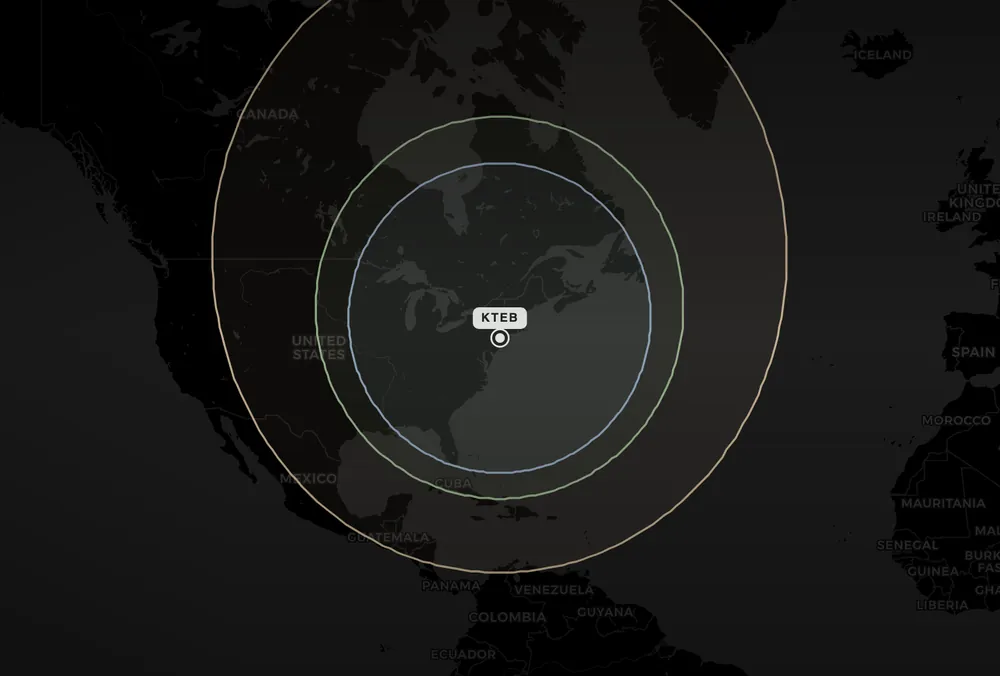
Bombardier publishes a maximum range of 7,700 nautical miles for the aircraft. This published figure relies on standard manufacturer assumptions, meaning real-world capability depends entirely on the specific details of your flight.
Those assumptions make the specification useful when comparing aircraft, but they do not guarantee that every route within that distance can be completed nonstop. Actual capability can change with speed, weather, selected options, payload, routing, and other operational factors.
For a charter itinerary, the calculation must be tailored to the requested journey. Passenger and baggage load, forecast winds, air traffic routing, required reserves, airport conditions, and the configuration of the selected aircraft can all influence nonstop feasibility.
This distinction becomes particularly important on missions approaching the aircraft’s published limit. A route that appears possible when measured geographically may require a technical stop under the expected conditions, while another date, routing, payload, or aircraft may produce a different result.
Amalfi Jets reviews the requested city pair with the operator of the proposed aircraft. The objective is not simply to repeat a range figure, but to determine whether that particular aircraft can complete the mission while satisfying the operator’s requirements and all applicable reserve standards.
The aircraft sits within the broader category of ultra long haul jet charter, where intercontinental capability is paired with cabins arranged for work, dining, privacy, and rest. Even within this category, the right model depends on the complete journey rather than distance alone.
Inside the Global 7500 interior
The Global 7500 interior is organized around four living spaces. Instead of presenting the cabin as one continuous seating area, the design allows different parts of the journey to support conversation, focused work, dining, entertainment, or sleep.
The spacious cabin provides the framework for this four living space concept. Furnishings, seating arrangements, and finishes vary among individual charter aircraft, ensuring a unique environment for every flight.
An available principal suite can include a permanent bedroom, making rest a considered part of the cabin plan rather than an improvised use of a standard seat. Selected aircraft may also feature an expansive galley and a dedicated crew suite, supporting refined meal service and crew rest on longer journeys.
That layout can be valuable for an executive who needs uninterrupted working time, a family seeking separate spaces during a long flight, or an international team balancing meetings and rest. The advantage is not merely the number of passenger seats, but the way the cabin can be used across different stages of the journey.
Not every aircraft offered for charter has the same interior. A request for a permanent sleeping area, a particular seating arrangement, or another cabin feature must be checked against the actual aircraft proposed for the requested dates.
Our Global 7500 charter guide provides a model overview and representative availability information. Because schedules and configurations change, our team confirms the registration, layout, year, and relevant cabin details during sourcing rather than promising a fixed aircraft in advance.
How a Bombardier Global 7500 charter is planned
A Bombardier 7500 request begins with a detailed planning conversation. We consider the dates, passenger count, baggage, preferred departure time, arrival requirements, cabin priorities, and whether nonstop travel is essential to the mission.
Airport selection follows, but the closest airport is not automatically the most practical option. Runway suitability, operating procedures, slots, parking, handling, local restrictions, and the proposed schedule can all affect whether a particular airport supports the itinerary.
We then source suitable aircraft through our network of vetted operators. Each available aircraft may differ in location, cabin layout, passenger capacity, operating schedule, and positioning requirements, so the selection process considers the complete trip rather than the model name alone.
Once a candidate aircraft is identified, the operator evaluates the route using the expected payload and anticipated operating conditions. This turns a broad model capability into a plan for a specific aircraft, including permits, handling arrangements, crew planning, reserves, and any potential fuel considerations.
Positioning is also part of the analysis. If the selected aircraft is not already at the departure airport, it may need to travel there before the passenger itinerary begins, which can affect both scheduling and the charter quote.
Amalfi Jets remains the charter broker throughout this process. We coordinate with the selected operator and help align aircraft selection, airport arrangements, ground logistics, and client preferences, while the operator retains responsibility for conducting the flight.
Our service approach includes operator and crew screening, a dedicated Flight Operations Associate, concierge support, and active flight monitoring. Clients can learn more about why they choose Amalfi Jets when arranging complex private travel.
Global 7500 airport planning for New York, Los Angeles, London, Singapore, Dubai, and Sydney
Airport access and aircraft range are separate planning questions. The aircraft may have the published capability to cover a long distance, but the requested airport must still be suitable and available for the date, schedule, and operating plan.
For travel involving New York, Teterboro (TEB) may provide practical access depending on the itinerary and current conditions. Our team confirms applicable operating procedures, handling availability, aircraft suitability, and any relevant restrictions before presenting TEB as the departure or arrival point.
Van Nuys (VNY) can serve travelers in the Los Angeles area, but every proposed movement requires an individual review. Operating hours, local procedures, handling, parking, schedule requirements, and aircraft suitability can influence whether VNY is the appropriate choice.
For London travel, London Heathrow (LHR) requires confirmation tailored to your specific itinerary. Slot availability, parking, handling, schedule requirements, and the suitability of the proposed charter movement can determine whether LHR is practical or whether another London airport should be considered.
Singapore Changi (SIN) may serve as the requested gateway for Singapore. Handling, parking, customs arrangements, slots, and other operating requirements must be coordinated for the travel date, even when the aircraft’s range supports the broader intercontinental journey.
Dubai International (DXB) similarly requires confirmation for the specific itinerary. Our team reviews availability, parking, handling, local requirements, aircraft position, and the operator’s proposed schedule before the airport is incorporated into a final plan.
At Sydney Kingsford Smith (SYD), planning may include operating permissions, parking, local procedures, and timing considerations. Forecast winds, payload, routing, and required reserves must also be assessed before an operator can confirm whether a particular sector is feasible nonstop.
These checks are especially important when combining TEB, VNY, LHR, SIN, DXB, and SYD within a multi-stop itinerary. Each sector must be evaluated under its own expected conditions, while the aircraft position and crew schedule must remain workable across the complete journey.
Published range should therefore be treated as the beginning of airport planning rather than its conclusion. Amalfi Jets coordinates with the proposed operator to identify practical options and explain why a particular airport, routing, or technical stop may be recommended.
What affects a Global 7500 charter quote?
A charter quote reflects more than the time passengers spend on board. Aircraft positioning, taxes, airport charges, fuel adjustments, crew logistics, handling, and the overall schedule can all contribute to the total presented for a trip.
Requested services can also shape the final proposal. Catering, ground transportation, schedule changes, and airport choices may affect the arrangements, so clients should review what is included rather than compare headline figures in isolation.
Our private jet charter cost guide for 2026 explains how charter proposals are constructed. It also outlines why an hourly figure should not be treated as the complete cost of an itinerary.
When comparing proposals, the underlying assumptions should remain consistent. Dates, airports, passenger count, cabin requirements, included charges, operational assumptions, and cancellation terms all need to align before two quotes can be evaluated fairly.
Aircraft positioning can be particularly relevant because availability is tied to the location and schedule of each individual aircraft. A proposal based on a suitably positioned option may look different from one that requires additional travel before or after the passenger sectors.
Amalfi Jets provides an itemized charter quote so clients can understand how the itinerary has been structured. If a routing change, technical stop, or alternative airport could improve the plan, our team explains the operational and quote implications before a decision is made.
Is the Bombardier Global 7500 the right fit?
The Bombardier Global 7500 is most compelling when a journey calls for substantial range and a cabin that can support several modes of travel. It may suit executives protecting productive time, families seeking distinct cabin spaces, and teams that need continuity across long international sectors.
Its available sleeping arrangements can also matter when arrival readiness is a priority. The ability to work, dine, gather, and rest in separate areas allows passengers to shape the cabin around the purpose and timing of the journey.
The aircraft is not automatically the right answer for every trip. A shorter mission, smaller passenger group, airport limitation, availability constraint, or different cabin priority may point to another model, while certain long routes may still require a technical stop.
This is where an experienced broker adds value. Amalfi Jets can compare suitable aircraft, assess available configurations, and weigh airport access, positioning, nonstop feasibility, cabin requirements, and total trip structure together.
Our goal is to source an aircraft and construct an itinerary tailored to your schedule, passengers, airports, and expectations. We ensure every element aligns with your travel needs rather than relying on a published specification alone.
Plan your Global 7500 charter with Amalfi Jets
A charter request should result in more than an aircraft name and a published range figure. It should produce a considered plan built around the specific aircraft, cabin, operator, route, airports, and services required for the journey.
Tell our team where you need to go, when you need to arrive, and what matters most on board. Request a charter with Amalfi Jets, and we will curate the aircraft and itinerary around your mission.