




Flying with pets on a private jet: can I bring my dog?
Often, yes, but acceptance should never be assumed. Flying with pets on a private jet can offer more flexibility than airline travel, including the possibility of keeping your companion in the cabin. The arrangement still depends on the selected operator, aircraft, animal, and itinerary.
Amalfi Jets is a charter broker, not an aircraft operator. Our team helps identify suitable charter options and coordinates with the selected operator to clarify whether your pet can be accommodated. Sharing the details before you accept a quote allows those requirements to inform aircraft selection from the beginning.
The question is not simply whether dogs are allowed on private jets. It is whether a particular operator and aircraft can accommodate your animal alongside your passengers, baggage, and destination requirements. That distinction is the starting point for a well-planned journey.
Why private travel can be easier with a pet
Airlines establish their own restrictions on accepted animals, carrier dimensions, and cabin arrangements. Private charter may offer more scope to choose an aircraft around your traveling party rather than adapting your plans to a scheduled service. A more private setting and fewer public terminal touchpoints can also make the journey easier to organize.
That flexibility does not mean your pet can roam freely or travel without a carrier. Containment, restraint, and cabin access remain subject to the selected operator’s procedures. Ask how your animal will be accommodated during boarding, flight, and arrival rather than assuming that a spacious cabin guarantees a particular arrangement.
For owners considering flying with pets on a private jet, advance coordination is the real advantage. Pet details, equipment, and ground transportation can be considered together before booking. The result should be a clear plan, not an expectation that every aircraft follows the same rules.
What does a private jet pet policy cover?
There is no single private jet pet policy that applies to every charter. Acceptance may differ by operator and aircraft, and approval for a previous flight should not be treated as approval for the next one. Even a familiar route can involve a different aircraft or operating team.
Ask whether the operator accepts your pet’s species, breed, size, and the number of animals traveling. Confirm whether a carrier or crate is required, where it may be placed, and which cabin arrangements are permitted. Relevant behavioral concerns and passenger allergies should be disclosed during this discussion.
Cleaning expectations and any associated terms also deserve attention before you commit. Request written confirmation of the agreed arrangements, and ask for them to be reconfirmed if the aircraft changes. Our guide to what you can and cannot bring on a private jet provides useful context for discussing pets, personal belongings, and equipment together.
What should you share when requesting a quote?
Begin with your route, preferred dates, passenger count, and the details of every animal traveling. Include each pet’s species, breed, age, approximate weight, and dimensions, together with any relevant health or behavioral considerations. If you intend to use a carrier, provide its external dimensions rather than relying on your pet’s weight alone.
Describe the complete baggage requirement, including suitcases, pet food, bedding, crates, and other equipment. These details help the selected operator assess the proposed aircraft’s cabin arrangement, baggage space, and loading requirements. The number of passenger seats alone does not establish whether the aircraft is suitable for your group.
Include intermediate stops and the return journey, not just the outbound destination. For an international itinerary, share your pet’s documentation status and relevant travel history early. Amalfi Jets can coordinate the charter arrangements, while your veterinarian and the appropriate authorities address medical and animal entry requirements.
Choosing a private jet with a dog in mind
The right aircraft is not necessarily the largest one available. Selection should reflect the route, passenger count, baggage, airport suitability, and the space required for your pet and its equipment. A cabin that works for one small animal may not suit a larger dog traveling with several passengers.
Our guide to private aircraft types and cabin categories offers a starting point for understanding the available options. For pet travel, an aircraft category is a basis for discussion rather than a promise of acceptance. A larger cabin may provide a more practical arrangement, but the operator must still approve the specific animal and equipment.
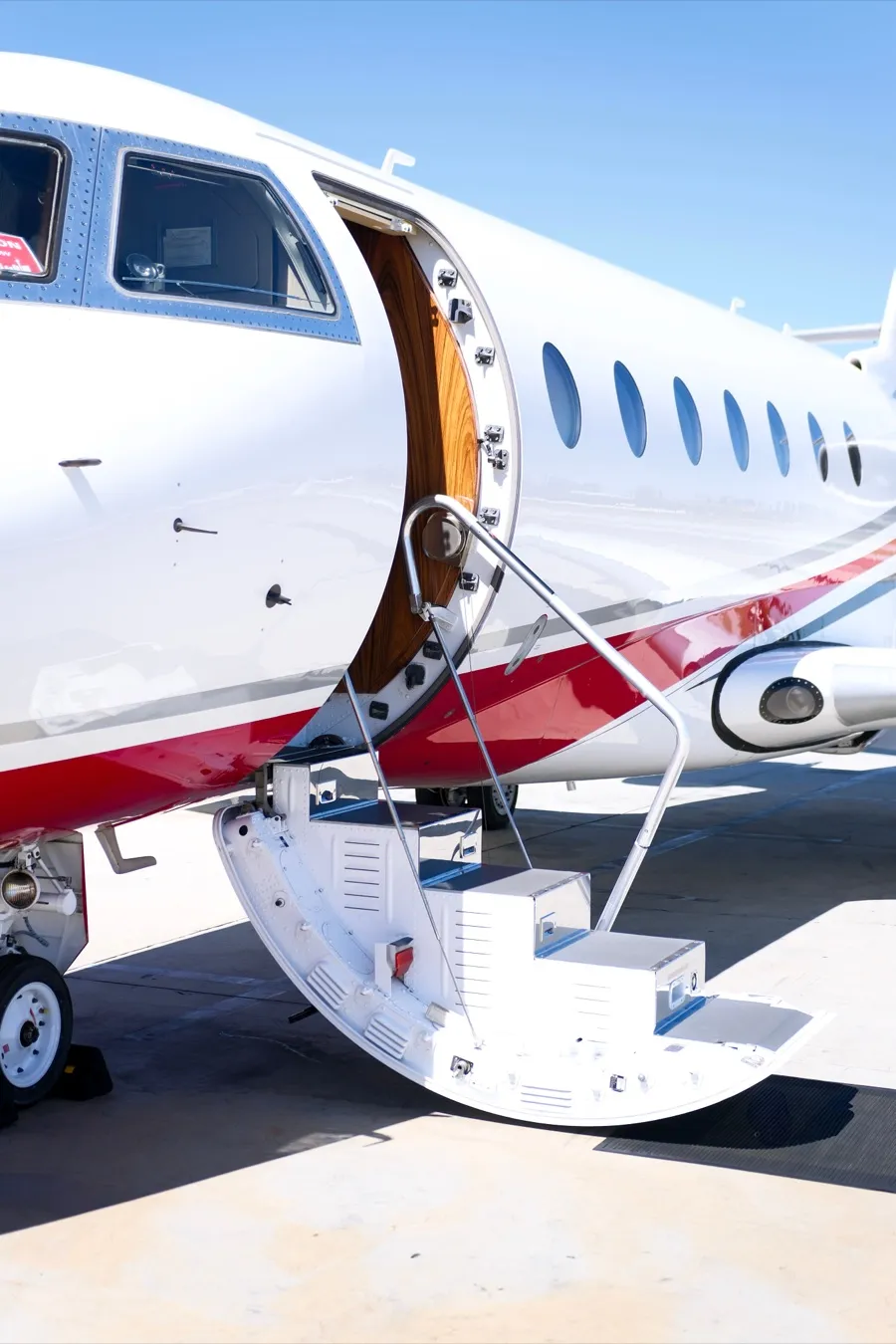
Before accepting a quote, ask how the proposed layout accommodates both people and pets. Carrier dimensions, intended placement, and access through the aircraft entrance all need consideration. Choosing a private jet with a dog in mind means assessing the actual aircraft, not relying on cabin photographs or category labels.
Does my pet need a crate on a private jet?
Possibly, but the answer must come from the selected operator for the proposed aircraft. Some arrangements may permit alternatives to a crate, while others may require a carrier or specific restraint procedures. Confirm those expectations before buying equipment or planning around an unrestricted cabin arrangement.
If your pet has difficulty remaining in a carrier, disclose that during the initial request. The operator needs to consider the animal’s behavior alongside the proposed containment method and cabin layout. A familiar blanket or travel item may also warrant discussion, particularly if it changes the equipment you intend to bring.
Questions about travel anxiety, medication, or an animal’s fitness to fly belong with your veterinarian. Do not assume that a different cabin setting removes a medical concern. Discuss the complete itinerary and any existing conditions before departure.
What paperwork might a domestic trip require?
A domestic flight does not automatically remove the need for animal documentation. Receiving states or territories may have health certificate, vaccination, testing, or treatment requirements, and the operator may request additional records. The applicable requirements depend on the animal and itinerary.
Speak with your veterinarian before booking and confirm the destination’s current rules. Ask which records need to be current, whether an examination or certificate is required, and how any timing conditions affect your dates. There is no single checklist that replaces a review of the actual journey.
For a trip with several stops, consider each destination rather than only the final one. Keep required records accessible during travel instead of packing them where they will be difficult to retrieve. Veterinary and emergency contact details should also be available throughout the journey.
What changes for international pet travel?
Flying with pets on a private jet internationally involves both cabin approval and animal entry compliance. Depending on the destination and species, requirements may include a microchip, vaccinations, tests, treatments, an international health certificate, or an import permit. Transit country requirements may also affect the itinerary.
Begin that review before committing to the charter. Ask your veterinarian whether a USDA-accredited veterinarian is needed, whether a certificate requires USDA APHIS endorsement, and what sequence or timing applies. The relevant destination authorities should clarify any applicable translation, inspection, or quarantine requirements.
Our guide to private jet customs and international arrival planning explains the broader border clearance considerations. Private travel changes the setting and coordination of arrival, but it does not remove customs, immigration, or animal entry obligations. Approval to carry your pet is not permission for the animal to enter a country.
The arrival airport must also be suitable for the specific entry process. Confirm any required customs, agricultural inspection, or animal handling arrangements for the intended arrival time. A convenient location alone does not establish that the airport can support your pet’s entry requirements.
What if my dog is entering or returning to the United States?
Dogs entering the United States need a separate review, including those returning after a trip abroad. Applicable requirements can depend on vaccination history and the countries the dog has visited during the previous six months. An outbound approval or a successful earlier journey does not establish eligibility for the return flight.
Confirm the current CDC Dog Import Form requirements and any additional conditions relevant to your dog’s history. Those conditions may affect documentation, microchip and vaccination requirements, arrival airport selection, or arrangements with a CDC-registered animal care facility. Establish the return plan before departure so it can inform the entire itinerary.
Do not apply dog entry requirements to cats or other species. Each animal’s circumstances should be reviewed separately with the relevant authorities. Amalfi Jets can help align the charter arrangements with that plan, while official entry decisions remain with those authorities.
Pet travel from Los Angeles VNY and New York TEB
For Los Angeles departures through Van Nuys Airport (VNY), discuss your pet’s needs before the aircraft and ground arrangements are finalized. Confirm the departure facility, arrival instructions, and how your animal should be contained between your vehicle and the aircraft. Do not assume that every facility at the airport follows identical procedures.
The same planning applies to Teterboro Airport (TEB), which serves the New York metropolitan area. Ask the selected operator and ground handler to confirm the arrangements for your particular flight. An airport code alone does not establish pet acceptance, terminal procedures, or suitability for an international animal entry process.
Arrange ground transportation that can accommodate your pet, its carrier, and the full baggage load. Confirm the car provider’s animal policy, restraint expectations, and pickup details before travel. This coordination matters at both ends of the journey, not only at departure.
Pet travel from Miami OPF, Dallas DAL, and Chicago MDW
For travel involving Miami-Opa-locka Executive Airport (OPF), Dallas Love Field (DAL), or Chicago Midway International Airport (MDW), request the same flight-specific confirmation. Pet procedures depend on the selected operator, aircraft, facility, and itinerary. None of these airport names should be treated as a guarantee of particular animal handling services.
The fixed-base operator, or FBO, is the ground service facility involved in your private flight. Ask where to arrive, how your pet should be handled, and where the transfer to your vehicle will take place. If you need an opportunity to attend to your pet before boarding, ask what arrangements are available rather than assuming facilities exist.
For international arrivals, coordinate ground transportation around the planned clearance process. Do not assume that you can move immediately from the aircraft to a waiting car. Any required inspection or animal entry procedure must remain part of the arrival plan.
What should be confirmed before you book?
Before accepting a quote, confirm that the selected operator has approved your specific pet and assessed the proposed aircraft against your complete traveling party. The agreement should address carrier or restraint expectations, cabin arrangements, documentation, and cleaning terms. Written confirmation helps keep the plan clear for everyone involved.
Review the ground arrangements alongside the flight details. You should know which facility to use, which documents must remain accessible, and how your pet will move between the vehicle and aircraft. If the proposed aircraft changes, request a fresh review of the pet arrangements.
For international travel, include transit requirements, destination entry, and the return journey in the final review. Allow time for veterinary appointments, operator assessment, and any necessary approvals. Preparation depends on the animal and itinerary rather than a universal booking window.
Arrange a pet-friendly private jet charter with Amalfi Jets
A pet-friendly private jet charter begins with a complete picture of your traveling party, not a blanket promise of acceptance. Amalfi Jets brings your pet’s details, aircraft requirements, and itinerary into the charter search, then coordinates with the selected operator to clarify suitable options. Cabin approval and destination requirements remain distinct parts of that process.
Share your itinerary, passenger details, and a description of the pets and equipment traveling with you. Our team can help you explore the available charter options and identify what needs to be confirmed before you book. The aim is a considered journey with the important arrangements addressed before departure.