



FBO customs for private jet arrivals involves advance coordination, not an exemption from inspection. Travelers entering the United States must still meet applicable customs and immigration requirements, even when their arrival takes place away from a commercial terminal.
For an international private jet arrival, customs planning begins before departure. Amalfi Jets coordinates with the selected aircraft operator and ground teams to align the proposed entry airport, documentation timeline, inspection arrangements, and onward transportation. As your charter broker, we help organize those details, while U.S. Customs and Border Protection, or CBP, retains authority over inspection, admission, and release.
FBO Customs for Private Jet Arrivals: Who Does What
An FBO, short for fixed base operator, is an airport-based service business that supports aircraft handling, passengers, crew, and ground coordination. It is separate from both the aircraft operator conducting your flight and the government agency responsible for processing your entry. Our guide to what an FBO does explains how these airport services fit into a private charter itinerary.
During an international arrival, the FBO may help coordinate the aircraft’s parking location, communicate handling instructions, and arrange transportation after clearance. Its involvement depends on the airport, the selected facility, and the applicable CBP procedures. An available FBO does not, by itself, establish that an airport can accept your international flight or that inspection will happen inside its building.
The aircraft operator addresses the flight’s operational requirements and required government coordination. Passengers provide accurate traveler information, carry the necessary documents, and remain responsible for their declarations. Keeping those responsibilities distinct makes the arrival plan easier to understand.
International Private Jet Arrival Customs: Before Departure
Preparation starts with the travelers and the proposed route. Each passenger should have a valid passport and any visa or travel authorization required for their circumstances, with document details supplied accurately for the flight’s required submissions.
The operator also needs to establish whether the intended airport is appropriate for entry and what permission or advance arrangements apply. A preferred destination airport may not be the airport where the flight can complete its initial U.S. inspection. If another entry point is necessary, that stop belongs in the itinerary before departure rather than being treated as an arrival-day adjustment.
For flights subject to private-aircraft arrival procedures, the pilot must obtain permission to land from the responsible CBP port before departing the foreign location. An accepted APIS submission does not, by itself, authorize landing. The operator must establish the requirements applicable to the particular flight rather than rely on a general description of private travel.
APIS Timing Depends on the Flight Category
The Advance Passenger Information System, known as APIS, gives authorities advance traveler and flight information. The operator or an authorized party submits the required information using eAPIS or another approved system, as applicable to the operation.
For flights governed by CBP’s private-aircraft APIS rules, the general transmission deadline is no later than 60 minutes before departure, subject to applicable exceptions. That rule should not be treated as a universal deadline for every charter flight. Commercial charter operations can fall under different reporting requirements, so the selected operator must confirm the applicable filing process and timing.
APIS timing is also separate from the lead time needed to arrange customs service or obtain permission to land. A port may require earlier contact, a reservation, or specific arrangements for the proposed arrival. Meeting a manifest deadline does not establish that every other entry requirement has been satisfied.
Passenger changes deserve prompt attention for the same reason. If someone joins or leaves the trip, or a passport detail needs correction, notify our team so the operator can address any required updates. The operator determines whether revised submissions or additional coordination are necessary before the flight proceeds.
Private Jet Customs at an FBO Versus a Commercial Terminal
The main difference from a commercial airline arrival is often the setting and the path through the airport. Depending on the location and CBP instructions, inspection may take place near the aircraft, on a designated customs ramp, in a general aviation inspection facility, or within an approved FBO-associated area.
An FBO lounge is not automatically an authorized inspection location. Even when an FBO participates in the arrival process, passengers must follow the procedure established for that flight. The location should be confirmed in advance rather than inferred from photographs, amenities, or a previous visit.
Customs and immigration in private aviation still involve presenting documents, answering questions, and declaring applicable goods. A more private setting does not remove those obligations or guarantee a shorter processing time. Our private jet customs guide for international passengers offers additional context on preparing documents and declarations.
What Happens After the Aircraft Arrives
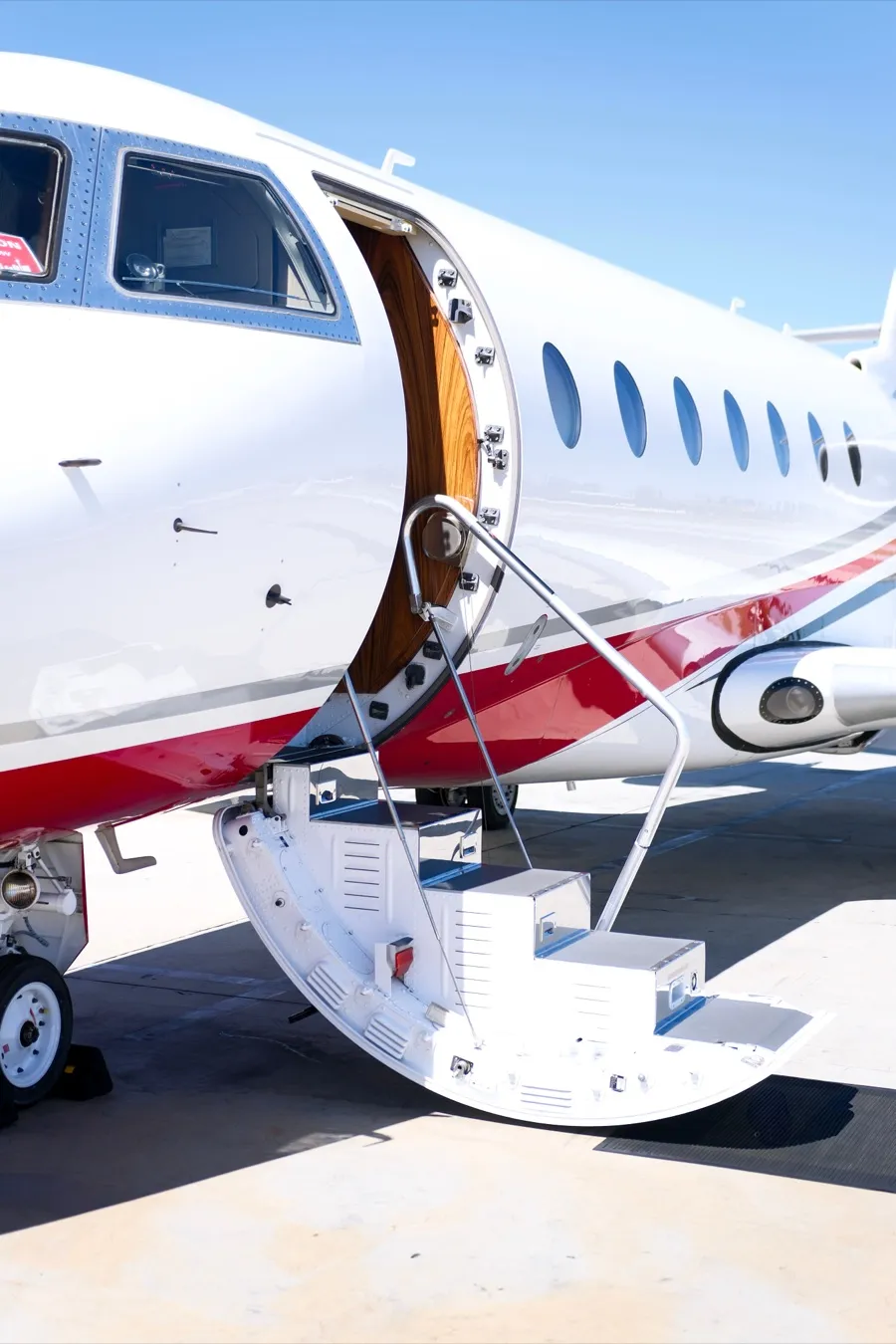
The aircraft parks where instructed, and passengers follow the crew’s directions for inspection. Depending on local procedures, you may be told to remain aboard until directed otherwise or proceed to a designated inspection area. Keep passports and other required documents accessible throughout this stage.
CBP may ask about your travel and require baggage or goods to be presented for examination. Passengers remain responsible for truthful declarations regardless of the inspection setting. If you are uncertain about an item, raise the question with officials rather than assume that a private arrival changes the declaration requirement.
Passengers must receive CBP release before leaving the inspection process. Ground transportation can be arranged in advance, but the final handoff must follow the approved arrival procedure. Neither Amalfi Jets nor the FBO can promise when officials will complete an individual inspection.
New York: Teterboro (TEB) Arrival Planning
For New York travel involving Teterboro (TEB), customs coordination should be tied to the specific flight and intended arrival arrangements. The operator needs to confirm entry eligibility, any required permission or reservation, the assigned parking location, and the inspection procedure.
A reservation with an FBO at TEB is not a substitute for that confirmation. We coordinate the selected operator’s requirements with the ground plan so the itinerary reflects where inspection is expected to occur and how passengers will reach their transportation after release. The experience should not be assumed to be identical across facilities or flights.
Miami: Miami-Opa Locka Executive (OPF)
For Miami itineraries involving Miami-Opa Locka Executive (OPF), the intended FBO and the flight’s customs arrangements need to be considered together. The operator must confirm that the proposed international arrival can be accepted under the applicable requirements and at the intended time.
An FBO booking alone does not establish inspection availability or location. Our coordination follows the arrangements confirmed for your itinerary, including any instructions that affect passenger movement and the transition to ground transportation. This keeps the destination plan grounded in the flight’s actual entry requirements.
Los Angeles: Van Nuys (VNY) Entry Planning
For Los Angeles travel involving Van Nuys (VNY), on-site customs clearance should not be assumed. Before the route is finalized, the operator must establish an approved entry plan for the intended international flight.
If clearance cannot be arranged at the intended destination, the itinerary may require an appropriate airport of entry before continuing domestically. That possibility affects the route and the onward ground plan, so it should be addressed during trip planning. A preferred FBO or convenient final destination does not override entry requirements.
Dallas (DAL) and Houston (HOU): Confirm the Arrival Procedure
For Dallas travel through Dallas Love Field (DAL), customs arrangements and FBO handling should be confirmed as separate parts of the itinerary. The operator should establish the appropriate inspection location, service availability, and any advance arrangements or applicable facility charges.
For Houston travel involving William P. Hobby (HOU), the same distinction matters. Commercial passenger-processing facilities do not, by themselves, establish the procedure or availability for a private aircraft. The selected operator must confirm the requirements that apply to the flight rather than infer them from other airport services.
At either airport, the ground plan should follow the confirmed inspection process. We coordinate with the operator and relevant ground teams so that transportation is organized around release, not an assumed time at which passengers can leave the aircraft.
What Can Disrupt an FBO International Arrival
Incorrect passport information, missing visas or authorizations, and late traveler changes can complicate departure and entry. An arrival plan can also be affected by missing landing permission or a schedule that falls outside the service arrangements accepted for the flight. Addressing these issues early gives the operator time to resolve requirements before departure.
Declarations deserve the same attention as travel documents. Passengers must provide truthful information about the goods they are bringing into the country and present items when requested. Neither a broker nor an FBO can make an individual’s declaration obligations disappear.
International handling and any specially arranged services may also affect the itinerary’s charges. Customs-facility charges and FBO charges should not be treated as interchangeable, and applicable items should be clarified in the trip details. Our explanation of how airport and handling fees can affect a charter quote provides broader context for that discussion.
How Amalfi Jets Coordinates the Arrival
Amalfi Jets is a charter broker that sources suitable aircraft options and coordinates with the selected operator, which conducts the flight. For international travel, that coordination includes the proposed entry airport, the operator’s documentation timeline, FBO handling, and onward transportation.
The operator remains responsible for the flight’s operational requirements, including applicable filings and government coordination. The FBO supports the relevant ground-handling process, while CBP determines inspection and release. You provide accurate traveler information, carry the required documents, and remain responsible for your declarations.
Our role is to connect these responsibilities into a clearly organized itinerary. We help surface the questions that need to be resolved before departure without promising a particular government decision or processing time. That clarity supports a more composed arrival experience.
FBO International Arrival Questions
Does Customs Always Happen Inside the FBO?
The inspection location depends on the airport and the responsible CBP port’s procedures. Your flight may use a designated ramp, a separate inspection facility, or an approved FBO-associated area. The exact location must be confirmed for the itinerary rather than assumed.
Does APIS Acceptance Mean the Aircraft Can Land?
Acceptance of this passenger information does not replace required permission to land or other arrival requirements. The operator must establish which permissions and submissions apply to the flight. These requirements must be completed before proceeding into the country.
When Must APIS Information Be Submitted?
Flights covered by private-aircraft APIS rules generally require transmission no later than 60 minutes before departure, subject to applicable exceptions. Charter operations may be subject to different reporting requirements. Furthermore, local customs arrangements may require additional lead time beyond this minimum.
Can Passengers Go Directly to Their Car?
Passengers cannot leave the customs area before completing the required inspection and receiving release from CBP. Transportation can be coordinated ahead of time, ensuring a seamless transition. However, all passenger movement must follow the approved arrival procedure without exception.
Can an International Arrival Occur Outside Regular Customs Hours?
Availability depends on the responsible port and the specific arrangements it accepts for the flight. An open FBO does not establish that CBP inspection is available. Any requested service outside the applicable window must be confirmed well in advance.
Build Customs Clearance Into Your Itinerary
A well-planned international arrival starts with the right questions about where the flight can enter, which documents are required, and what deadlines apply. Resolving those details before departure creates clearer expectations without making promises about government processing. Request your international charter with Amalfi Jets to discuss aircraft options and arrival planning around your itinerary. As your charter broker, we coordinate with the selected operator and ground teams to bring the airport, FBO, and transportation arrangements into a considered travel plan.