



Falcon 900EX: Three Engines for Intercontinental Travel
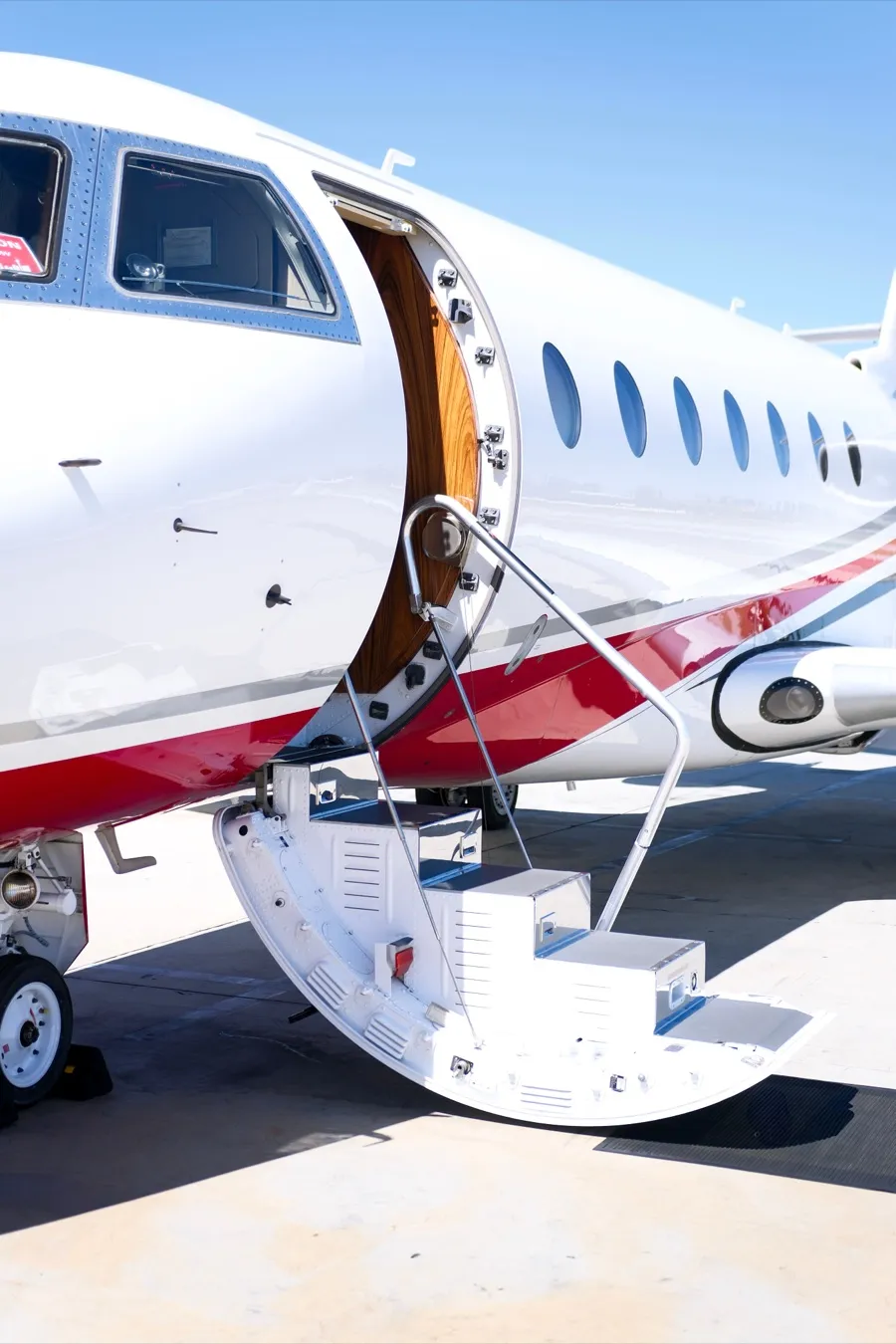
The Falcon 900EX brings a three-engine design and a spacious cabin to intercontinental charter planning. Dassault has published a range of up to 4,500 nautical miles for the aircraft, making it worth considering for trips that need more reach than a short regional flight. That figure is a starting point, not a promise that every aircraft can fly every route nonstop with your preferred group, baggage, and schedule.
Amalfi Jets approaches the Dassault Falcon 900EX as one possible match for a journey, rather than the automatic choice whenever a destination lies across an ocean. As a charter broker, we compare aircraft offered by operating partners against your itinerary and cabin priorities. The most useful question is whether the specific aircraft available for your trip can meet them with appropriate operational margin.
What the Three-Engine Design Means
The aircraft’s trijet configuration is one of its defining characteristics. It also calls for care when discussing overwater travel, as twin-engine ETOPS certification is not a shorthand for approving a trijet crossing. An operating carrier still needs to assess the proposed aircraft, crew, route, diversion options, weather, and applicable requirements before confirming a flight plan.
Three engines do not turn an ocean crossing into a simple matter of reading a range chart. Nor does a route that appears feasible on a map establish what can be offered on a particular day. For a charter traveler, the benefit of a thoughtful assessment is clarity about the proposed itinerary and any conditions that might call for a different aircraft or a planned stop.
The 900EX remains an appealing option when its cabin and practical reach suit the mission. Choosing more published range than a trip requires is not necessarily an advantage. The better choice is the aircraft whose actual configuration and operating plan fit the people traveling. That judgment becomes especially important when nonstop arrival, a preferred airport, and a full cabin are all priorities.
Falcon 900EX Range: Reading the Published Figure
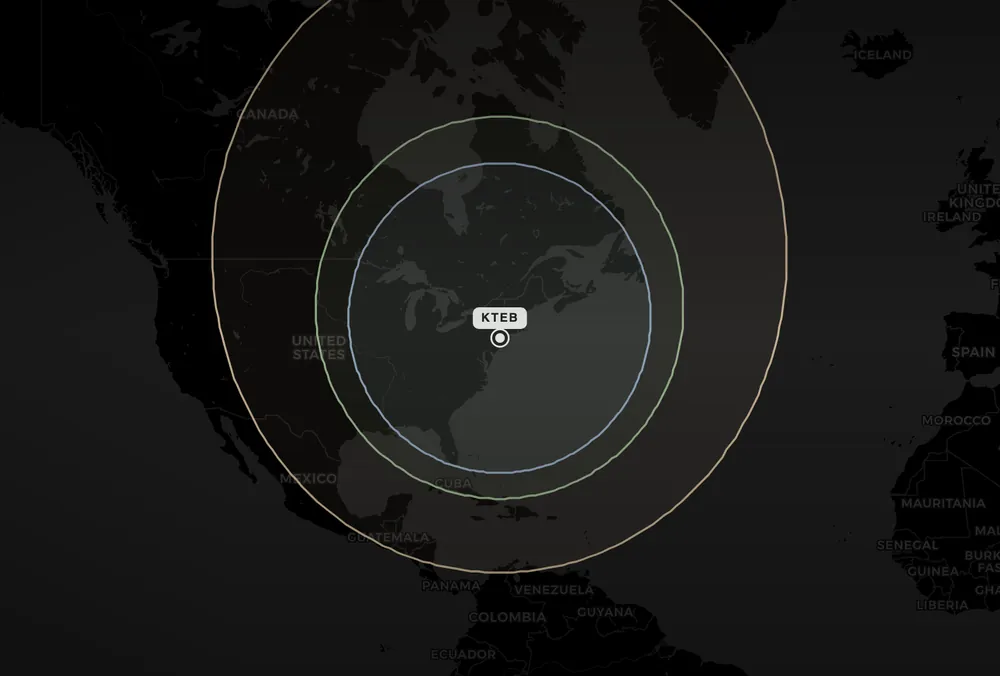
The published Falcon 900EX range of up to 4,500 nautical miles helps frame an initial conversation about intercontinental routes. It does not specify what a particular charter aircraft can accomplish with your passengers and baggage on a given day. Payload, winds, routing, reserves, alternate airports, and operating requirements can all affect the result.
A city pair is not the same as a flight plan. Conditions can differ by direction, and two journeys with similar map distances may call for different fuel and routing decisions. Before treating any sector as nonstop, the operating carrier must assess the specific aircraft and proposed flight.
Tell us what matters most, whether that is arriving without a stop, reaching a particular airport, keeping your group together in one cabin, or finding space to work and rest. Those priorities shape which available aircraft deserve a closer look. If the 900EX fits with suitable margin, its published range can be put to good use. If not, a longer-range option or a planned stop may be the more sensible recommendation.
Falcon 900EX Interior and Seating
A Falcon 900EX interior is often arranged in three zones, creating separate places for conversation, work, dining, or quiet time. Charter descriptions may include club seating, a conference or dining area, and an aft divan or lounge. These are examples of possible layouts, not a promise about any aircraft offered for your trip.
That distinction matters over a long journey. Colleagues may want a table for part of the flight while another traveler prefers a quieter seat, and a family may value room to spread out more than a particular seating style. We would ask the operator for the current cabin layout so you can evaluate the space you would actually use.
Descriptions of Falcon 900EX seating can span approximately 12 to 19 passengers, depending on configuration. The upper end of a model-level range should never be assumed for an individual charter aircraft, particularly when cabin arrangement and baggage needs matter as much as seat count. We would confirm the proposed aircraft’s approved seating and available space before recommending it for your group.
Cabin photographs and general model descriptions can help you identify preferences, but they cannot settle the choice on their own. The placement of tables, divans, and seats affects how comfortably a group can work or relax together. Specific amenities should likewise be confirmed for the aircraft offered, rather than inferred from another 900EX.
Falcon 900EX or Falcon 7X for a Shorter Intercontinental Route?
The Falcon 7X becomes especially relevant when an itinerary calls for greater published reach. Dassault lists a range of 5,950 nautical miles for the 7X under stated conditions, compared with the commonly cited 4,500-nautical-mile figure for the 900EX. Because published figures may reflect different assumptions, the difference is a guide to further planning, not a direct prediction for your flight.
For a shorter intercontinental sector within the 900EX’s practical capability, its available cabin may make it a compelling choice. On a longer sector, or one with a demanding payload or a strong preference for added route margin, we would examine the 7X and other suitable aircraft. The decision depends on the aircraft actually available and the operator’s assessment, not simply which model has the larger number on a specification sheet.
Cabin fit matters in this comparison, too. Rather than assume either Dassault model provides a particular layout, ask how the seating, gathering spaces, and baggage provisions work for your group. If the journey calls for substantially greater reach, our ultra-long-haul jet options offer a starting point for exploring another category.
New York (TEB) to Paris (LBG): Start With the Airports
New York to Paris illustrates why a promising range figure still needs an itinerary-specific review. If you prefer Teterboro (TEB) for departure and Paris Le Bourget (LBG) for arrival, those airports become part of the question we put to the operator. Passenger load, baggage, winds, routing, reserves, and airport requirements all belong in the assessment before a nonstop plan is confirmed.
The same approach applies to New York and London. London Biggin Hill (BQH) may be your preferred arrival airport, but a general estimate for travel to the London area is not an assessment of that destination. We would confirm the proposed airport and aircraft together, including the operational and handling arrangements relevant to your trip.
Airport choice also affects the journey beyond the cabin. The flight must be planned for the airports you intend to use, while the assigned handling facilities, customs arrangements, and ground transportation should support your schedule. The operating carrier confirms flight requirements and facilities, and Amalfi Jets keeps those decisions connected to your broader itinerary.
Los Angeles, Miami, and Dubai: When the Route Changes the Choice
Travel from Los Angeles raises a different range question. A proposed departure from Van Nuys (VNY) to the London area should not be assumed to be a nonstop 900EX mission merely because the aircraft has intercontinental reach. We would ask the operator to assess the exact destination and conditions, while comparing longer-range aircraft if a nonstop arrival is a priority.
Miami to Paris deserves the same attention to detail. For a departure from Miami-Opa Locka Executive (OPF) to Paris Le Bourget, the recommendation should follow the proposed aircraft’s load and route assessment rather than a model-level range claim. The aircraft that best serves a smaller group with flexible timing may not be the right choice for a fuller cabin and a fixed arrival window.
Dubai introduces another reason to begin with the itinerary rather than the model name. Travel involving Dubai International (DXB) can take many forms, and the origin, destination, payload, and available aircraft determine which options are worth considering. We would not imply that a flight to or from Dubai is nonstop on the 900EX without an operator’s assessment of the particular trip.
Across these routes, flexibility can widen the field of suitable aircraft. If your airport, arrival time, or willingness to make a planned stop can change, it helps to say so at the outset. If those details are firm, we can focus the comparison on aircraft that can be evaluated against them.
How Amalfi Jets Matches an Aircraft to Your Trip
Amalfi Jets is a charter broker, not the operator of the aircraft offered for your flight. We source and compare options through operating partners, bringing your passenger count, schedule, airport preferences, and cabin expectations into the same conversation. The operator evaluates the aircraft and flight plan, while our role is to help you understand the options and coordinate a charter that suits your plans.
We begin with the people on board. A group seeking a conference setting may assess a cabin differently from a family that wants separate areas to rest, even when both aircraft have sufficient seats. Baggage needs, schedule flexibility, and a preference for nonstop travel can all change which option deserves consideration.
A proposal should be read with equal attention. Aircraft selection, positioning, flight time, airport charges, taxes, crew logistics, and availability can affect the total for a trip. Our private jet charter cost guide explains the factors behind a quote, while a current proposal establishes the terms for your particular itinerary.
The final checks concern the specific aircraft being offered, not only its model. We would seek current details about seating, cabin arrangement, baggage provisions, route feasibility, and handling plans before asking you to rely on a feature. You can also learn more about our approach at Amalfi Jets before beginning that conversation.
Questions About the Falcon 900EX
How far can the aircraft fly?
Dassault has published a range of up to 4,500 nautical miles for this model. Actual nonstop capability depends on the proposed aircraft, payload, conditions, routing, reserves, and the operating carrier’s flight plan. We always recommend evaluating the range against your specific itinerary rather than relying solely on the published maximum.
How many passengers can travel together?
Model-level charter descriptions may cite approximately 12 to 19 passengers across different configurations. We would confirm the approved seating and baggage provisions of the individual aircraft before presenting it as a match for your group. This ensures the cabin comfortably accommodates everyone throughout the duration of your flight.
Are all cabins alike?
Three-zone descriptions and features such as a conference area or aft divan do not establish the layout of a particular aircraft. If you encounter the name written as Falcon 900 EX, the same principle applies, meaning you must request the details of the specific aircraft proposed for your flight. Each owner customizes their interior, so configurations will vary widely.
Does the third engine settle an overwater decision?
Engine configuration is simply one consideration, not an automatic approval for a specific route. The operator must review the aircraft, crew, weather conditions, diversion planning, and applicable operational requirements. ETOPS certification principles still guide safe overwater travel planning regardless of the trijet design.
When is the Falcon 7X worth considering instead?
This larger aircraft merits a closer look when greater published range or a different available cabin could better serve your itinerary. We would compare actual aircraft and route assessments rather than assume either model is the right answer for every journey. Ultimately, the decision depends on the specific operational capabilities required for your trip.
Plan Around the Journey You Want
The 900EX is most persuasive when its cabin, seating, and practical reach come together for your route. Its three-engine design makes it distinctive, but a charter choice should rest on the aircraft offered and what the operator can confirm. Knowing how the cabin is arranged and how the itinerary has been assessed makes the decision more meaningful than relying on a headline specification.
Tell us where you want to depart, where you need to arrive, and what matters most along the way. You can initiate the process and request a charter with Amalfi Jets directly through our website. Our team will then compare the 900EX with other exceptional aircraft suited perfectly to your plans.