

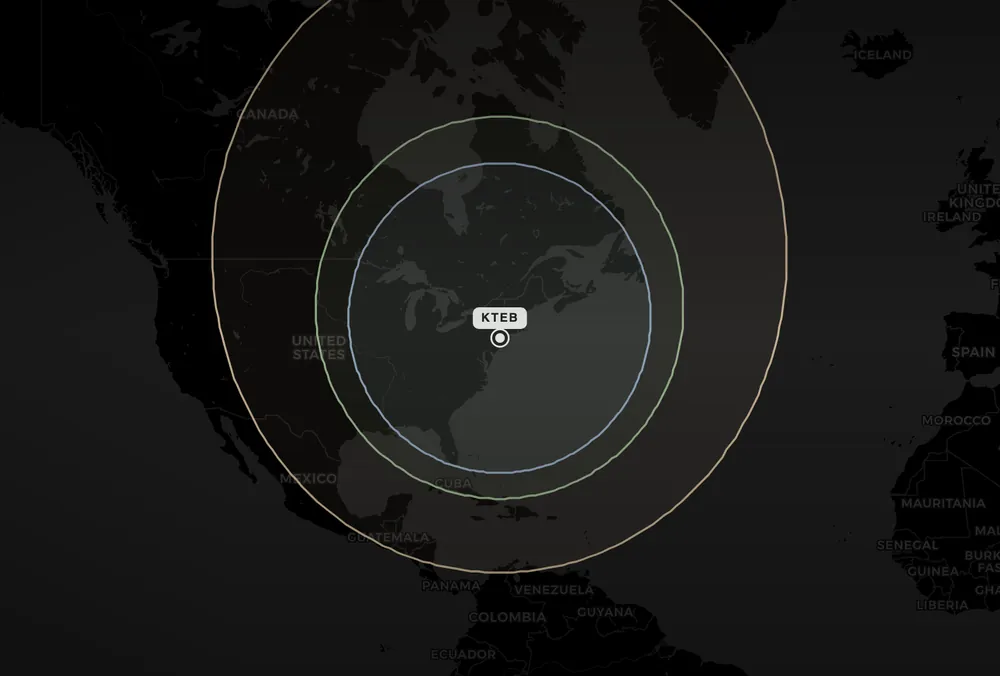


The Dassault Falcon 7X brings a three-engine design, a spacious cabin, and a published range of 5,950 nautical miles to the intercontinental charter conversation. Those qualities make it worth considering for a journey between New York and Paris or for a longer itinerary with several stops. They do not, on their own, tell you whether a particular aircraft can accommodate your passengers, baggage, schedule, and preferred route.
That distinction guides how Amalfi Jets approaches an aircraft request. As a charter broker, we source aircraft through vetted operators and consider the proposed mission before recommending an option. The Falcon 7X is most compelling when its performance and the layout of the aircraft available both suit the way you intend to travel.
Dassault Falcon 7X design: Why three engines matter
The Falcon 7X uses three Pratt & Whitney Canada PW307A engines, rather than the two-engine arrangement found on many business jets. A third engine adds propulsion redundancy, and Dassault has cited engine-out climb performance and extended overwater missions among the considerations behind its trijet design. It is an important engineering characteristic, but engine count alone cannot establish that one aircraft is safer than another for a particular flight.
Runway conditions, weather, aircraft weight, crew procedures, and applicable operating rules all affect a departure. Overwater travel brings additional planning considerations. For a charter traveler, the useful approach is to weigh the trijet design alongside the operator’s assessment of the route, rather than treating it as a shortcut to an aircraft decision.
Dassault Falcon 7X range: What 5,950 nautical miles means
Dassault publishes a 5,950-nautical-mile range for the Falcon 7X at Mach 0.80, based on eight passengers, three crew members, and NBAA IFR reserves. That is a reference figure under stated assumptions, not a guarantee that every offered aircraft can complete any route of that length nonstop. Passenger count, baggage, winds, routing, and required reserves can change the practical result.
The difference matters when an itinerary approaches the published limit. The operator must assess the specific aircraft and flight conditions before determining whether a nonstop journey is appropriate. If it is not, a technical stop or another aircraft may serve the schedule better. A well-matched charter is not necessarily the one that stretches a specification to its limit.
The Falcon 7X sits within a wider set of aircraft available for long-distance travel. Travelers comparing cabin needs or destinations beyond its published range can explore our guide to ultra-long-haul jet charter and aircraft selection. That broader category is useful context, not a substitute for reviewing the aircraft offered for your trip.
Falcon 7X specs that matter to a charter traveler
Range is only one entry on a specification sheet. Dassault lists a maximum operating speed of Mach 0.90 and a certified ceiling of 51,000 feet for the Falcon 7X. These figures describe aircraft capabilities, but they do not predict the speed or altitude of an individual flight. The operator plans those details around the route and conditions on the day.
Published cabin dimensions are approximately 39.1 feet long, 7 feet 8 inches wide, and 6 feet 2 inches high, with 1,552 cubic feet of cabin volume. Dassault also lists 140 cubic feet of baggage volume. Together, those measurements help explain the scope for separate areas to converse, work, dine, or rest, although the usable space depends on the furnishings and layout of the aircraft offered.
Seating deserves more attention than a single capacity figure. Published configurations range from eight to 19 passengers, while a charter request might involve a group of 12 to 16. The aircraft’s approved seating and the comfort of its arrangement are separate questions. For a longer journey, we would also confirm where passengers can sleep and how the cabin functions when everyone is on board.
Falcon 7X interior: A layout for the journey
A Falcon 7X interior is not identical across every aircraft available for charter. Representative layouts may include forward club seating, a conference grouping in the middle of the cabin, and a more private area toward the rear. That separation can help travelers use a long flight in different ways without asking everyone to share the same setting throughout the journey.
The right configuration depends on the people traveling. A team may value a table suited to conversation and work, while a family may place greater importance on places to relax separately. Galley arrangements and any dedicated crew rest space may also influence how well an available aircraft fits the itinerary. We would confirm those features, along with the seating and sleeping setup, before describing what a specific charter offers.
Connectivity calls for the same care. Satellite communications may be available on an offered aircraft, but equipment and service can vary. If working in flight is important, it is worth asking about the connection as part of the cabin review rather than assuming it comes with the model name. Baggage requirements should be checked at the same time, especially when the group is traveling for an extended stay.
FalconEye and aircraft-specific cockpit equipment
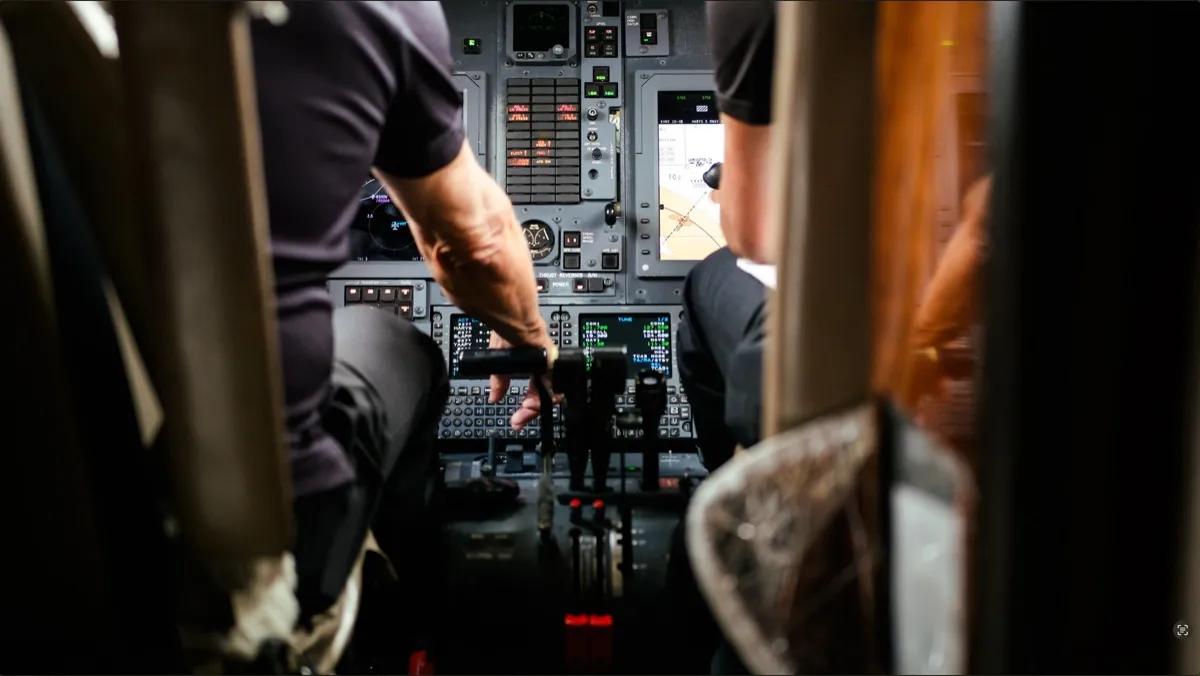
FalconEye is an enhanced vision technology associated with Dassault aircraft, and relevant capability may be available on an equipped or modified Falcon 7X. It should not be assumed to be installed on every example offered for charter. If it matters to your inquiry, the question is whether the proposed aircraft has the equipment and applicable approvals.
Enhanced vision equipment can provide pilots with additional visual information under certain conditions. It does not remove visibility limits, airport requirements, or the need to follow approved procedures. As with the cabin, a model-level feature is most useful when it can be confirmed on the aircraft proposed for the flight.
New York (TEB) to Paris (LBG) and London (BQH)
For a New York departure, Teterboro (TEB) may be the requested airport. Paris-Le Bourget (LBG) and London Biggin Hill (BQH) provide arrival options for the Paris and London itineraries discussed here. These city pairs are natural starting points for a Falcon 7X inquiry, but airport selection and a published range figure are not a complete flight plan.
The operator would assess the aircraft, passenger and baggage load, weather, routing, and reserves for the proposed trip. The selected airport’s handling arrangements and any applicable permissions would also need confirmation. Considering these details early leaves more room to coordinate arrival plans and ground transportation around the flight that can actually be offered.
A traveler comparing Paris and London may also have different priorities for each journey. A meeting schedule may make arrival timing especially important, while an overnight itinerary may place more emphasis on the sleeping configuration. In either case, the cabin and the route should be evaluated together rather than treated as independent choices.
Los Angeles (VNY) to Dubai (DXB): When range changes the plan
Van Nuys (VNY) is a requested departure airport for the Los Angeles area, while Dubai International (DXB) is the destination in this example. This is a route where the Falcon 7X’s published range should prompt a careful conversation, not a promise of nonstop service. The Los Angeles to Dubai journey extends beyond the aircraft’s stated 5,950-nautical-mile range reference.
A technical stop or a different aircraft category would therefore need to be considered. The operator would determine a workable routing for the aircraft and conditions proposed, while airport permissions and handling arrangements would be addressed as part of the itinerary. If avoiding a stop is a priority, it is better to say so at the outset than to select an aircraft by cabin alone and revisit the route later.
The same principle applies in less obvious cases. A route need not exceed a published range figure for a nonstop flight to require scrutiny. Payload, winds, routing, and reserves can all affect what is practical, so the final plan should follow a mission-specific assessment.
Miami (OPF) and the wider itinerary
Miami-Opa-locka Executive (OPF) offers an airport option when a journey begins or ends in the Miami area. From there, a traveler might be considering Paris, London, Dubai, or a trip with multiple destinations. Each request calls for its own routing and aircraft review rather than a flight time estimate carried over from another city pair.
Airport planning continues beyond choosing a code. The handling location for the selected flight, access arrangements, baggage, and any applicable immigration requirements can shape the transition between aircraft and ground transportation. Those details may be less visible than the cabin design, but addressing them before departure is part of a considered travel experience.
How Amalfi Jets evaluates a Falcon 7X charter
The Falcon 7X may fit particularly well when its available cabin configuration supports the group and the operator’s flight plan supports the itinerary. It may be a less suitable choice if an unwanted stop is likely or the offered aircraft lacks the seating, sleeping arrangement, or connectivity you need. Starting with your schedule and priorities helps distinguish between an appealing model and the right aircraft for the journey.
As a charter broker, Amalfi Jets compares suitable aircraft sourced through vetted operators and coordinates the elements of the proposed trip. We can review an available aircraft’s layout alongside the operator’s flight planning, airport arrangements, and ground transportation needs. If you are also considering what shapes a quote, our guide to private jet charter cost factors addresses that separate question.
Common questions about the Falcon 7X
How far can a Falcon 7X fly?
Dassault’s published range is 5,950 nautical miles under stated assumptions that include eight passengers, three crew members, Mach 0.80 cruise, and NBAA IFR reserves. The route possible for your charter requires an assessment of the aircraft, payload, weather, and operating plan.
How many passengers can a Falcon 7X carry?
Published configurations range from eight to 19 passengers, but approved seating depends on the individual aircraft. For a group of 12 to 16, we would also look at how comfortably the layout supports the length and purpose of the trip.
Is FalconEye installed on every aircraft?
Its installation should not be assumed when planning a charter. If enhanced vision capability is important to you, the equipment and applicable approvals should be confirmed for the aircraft proposed. Our team can help verify whether a specific jet includes this technology before you book.
Can the Falcon 7X fly from Los Angeles to Dubai nonstop?
The route extends beyond the Falcon 7X’s published 5,950-nautical-mile range reference. A technical stop or another aircraft should be explored instead of presenting a nonstop flight as a routine option. We recommend discussing your preference for direct flights early in the planning process so we can source the appropriate aircraft category.
The Falcon 7X makes its strongest case when the aircraft and the journey are considered together. Share your route, schedule, and cabin priorities, and our team will help identify an aircraft suited to the mission. You can request a charter with Amalfi Jets to begin.