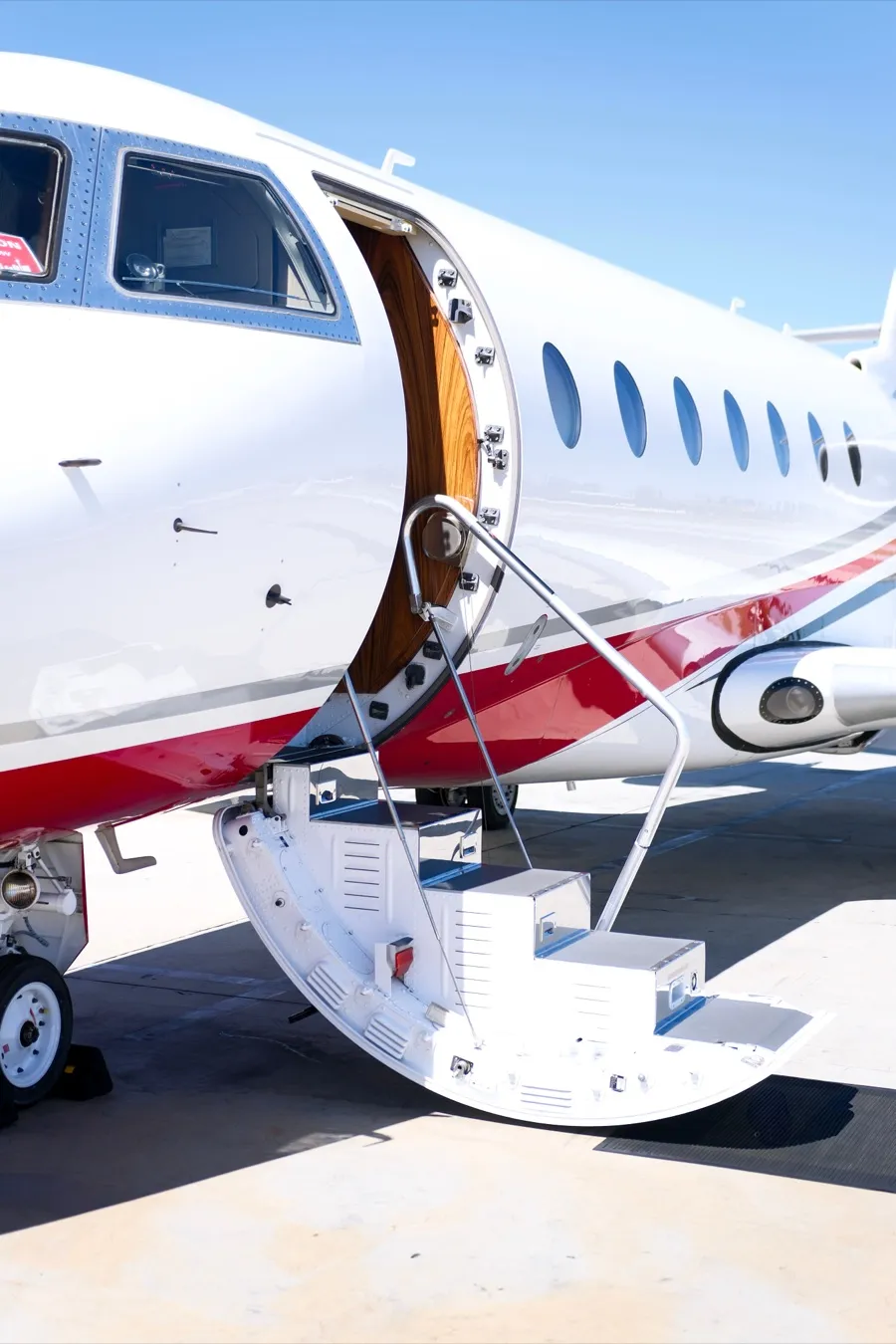





Charter plane travel starts with your itinerary rather than an airline timetable. When you charter a private plane, you generally arrange an aircraft for your party instead of purchasing individual seats, with aircraft and airport options considered around your plans.
The process moves from a trip request to aircraft proposals, booking confirmation, and departure instructions. The essential decisions are straightforward once you understand what affects the quote and which details need to be confirmed before travel.
Amalfi Jets acts as your charter broker, sourcing suitable aircraft through third-party operators and coordinating the arrangements around your itinerary. We do not own or operate aircraft, as flights are operated by Part 135 air carriers or applicable foreign equivalents.
What Does It Mean to Charter a Plane?
A charter is an aircraft arrangement for a particular journey, whether that is a one-way flight, a round trip, or an itinerary with several stops. Your passenger count, baggage, route, and preferred schedule help determine which aircraft may be suitable.
That flexibility does not remove operational requirements. Aircraft availability, airport restrictions, crew requirements, weather, and other operating considerations can influence the final arrangements, meaning a requested schedule should not be confused with a confirmed itinerary.
You do not need to know an aircraft model before making an inquiry. Explaining where you need to be, who is traveling, and what matters most gives your broker a useful starting point for recommending options.
How to Charter a Plane: From Request to Boarding
The process begins with your route, travel dates, passenger count, and preferences. Our team reviews those requirements, sources suitable options, and helps you compare the proposed aircraft, operating arrangements, and complete quoted cost.
After choosing an option, you review the booking terms, complete the required payment arrangements, and provide passenger information. Before departure, you receive the confirmed itinerary and facility details, and then you follow the operating carrier’s instructions for arrival, check-in, and boarding.
Each stage should make the next decision clearer. Ask questions before approving a proposal, particularly if a service, charge, aircraft detail, or booking condition is not explicit.
What to Have Ready Before Requesting a Quote
Start with your departure point, destination, travel dates, and whether the trip is one way, round trip, or includes several stops. Share your preferred departure windows and identify any commitments that make a particular arrival or return time important.
Include the passenger count and an accurate description of your baggage. Large suitcases, equipment, or other unusual items may affect aircraft suitability even when the proposed cabin has enough seats.
Your actual ground destinations are also useful for planning. A meeting address, hotel location, or final destination helps put airport choices into context rather than treating every airport serving a city as interchangeable.
Mention accessibility needs, pets, catering preferences, and any ground transportation requests at the outset. These requirements should be reviewed for the proposed aircraft and itinerary rather than assumed to be available on every flight.
Review Aircraft Options Around Your Itinerary
Aircraft selection involves more than matching the number of seats to the number of travelers. Cabin layout, baggage accommodation, route requirements, and operating considerations all contribute to whether an option suits the journey.
A larger aircraft is not automatically the best answer for every request. Your broker should explain what each option offers and where a different category or airport might better support your priorities.
The Amalfi Jets private charter aircraft guide provides an introduction to aircraft categories and selection considerations. For a specific booking, review the proposed aircraft details and confirm any feature that is essential to your trip.
Compare the Aircraft, Operator and Complete Quote
Read each proposal as an arrangement for the complete trip, not simply an aircraft description with a headline amount. Confirm the proposed aircraft, operating carrier, airports, schedule, included services, and total quoted cost.
Comparisons are most useful when the underlying assumptions match. A proposal using a different airport, departure window, or service package may represent a different journey as well as a different price.
Ask which charges are included and which, if any, remain variable. You should also understand the proposal’s validity period, availability conditions, and any aircraft substitution provisions before deciding to proceed.
Amalfi Jets helps explain these differences as your charter broker. The operating carrier remains responsible for conducting the flight and making operational decisions.
How Much Does It Cost to Charter a Plane?
There is no dependable single figure without a defined itinerary. A charter plane quote reflects the aircraft, route, travel dates, availability, and operating arrangements rather than one standard rate that applies to every journey.
Aircraft positioning is one important consideration. An aircraft may need to move to your departure airport or continue elsewhere after your flight, and those movements can affect the total even though you are not aboard.
The schedule can also influence crew logistics and minimum daily use requirements. Airport and handling charges, applicable taxes, fuel adjustments, and requested services may contribute to the proposal, depending on the trip and its terms.
An advertised hourly rate does not necessarily describe the complete amount payable. Ask for the total trip quote and a clear explanation of included charges, exclusions, and items that could change.
The Amalfi Jets private jet charter cost guide explains the components behind a charter budget. The private jet pricing guide offers further context on how aircraft selection and operating requirements shape a proposal, helping you compare options beyond the headline figure.
Charter Plane Airports: Los Angeles, New York, Miami, Dallas and Chicago
Airport selection should begin with where you need to be on the ground. The nearest airport on a map is not necessarily the most practical choice once aircraft suitability, availability, operating restrictions, and ground transportation are considered.
For Los Angeles, Van Nuys Airport (VNY) may be an option depending on your starting point or final destination. Share your ground address and schedule so the airport can be considered as part of the complete journey.
For New York travel, Teterboro Airport (TEB) is in New Jersey and can be considered for access to the metropolitan area. A Los Angeles to New York request might involve VNY and TEB, but the final airport pairing should reflect your itinerary and operating requirements.
For Miami, Miami-Opa-locka Executive Airport (OPF) is another airport to discuss when planning private aviation access. A New York to Miami trip might pair TEB with OPF, with ground transportation considered at both ends.
In Dallas, Dallas Love Field (DAL) can be evaluated against your destination and available aircraft options. The airport decision should account for the whole trip rather than rest on a city name alone.
For Chicago, Chicago Executive Airport (PWK), north of the city, may be relevant to your plans. As with the other airports, suitability and departure arrangements should be confirmed for the proposed flight.
Confirm the Booking and Passenger Information
Once you select an option, review the agreement and complete the required booking steps. Check that the dates, airports, schedule, aircraft details, and services reflect what you intend to approve.
Pay particular attention to cancellation and change terms, payment requirements, and conditions affecting availability. If your plans might shift, ask how a change would be handled rather than assuming the original arrangement can be adjusted without consequence.
Provide the passenger information requested for the manifest and confirm identification or travel document requirements. International itineraries may involve additional entry and customs requirements, so discuss the relevant arrangements before travel.
An option presented during the search is not the same as a confirmed booking. Ask your broker to clarify the status of the arrangement and any steps that remain outstanding.
Arrive at the Confirmed Departure Facility
Many private charter departures are handled through an FBO, a facility that supports passenger reception and aircraft ground services. Your itinerary should identify the specific departure location, because an airport may have more than one facility.
Use the confirmed facility name and address rather than navigating only to the main airport entrance. Follow the arrival timing and check-in instructions provided for your flight instead of assuming a universal arrival window.
At the facility, follow the crew’s or representative’s instructions for passenger check-in, baggage handling, and boarding. If anything about the arrangements is unclear, ask for clarification before leaving for the airport.
Coordinate the Journey Beyond the Aircraft
Ground transportation deserves the same attention as the flight itinerary. If you would like a car arranged, confirm the pickup location, passenger contact, baggage requirements, and how the transfer connects with your departure or arrival.
Keep your itinerary and relevant contact details accessible on the day of travel. Let your broker know promptly if the passenger count, luggage, or schedule changes so any implications can be reviewed with the operating carrier.
Common Questions About Private Plane Charter
Do I need to choose an aircraft before requesting a quote?
No, you can begin with your itinerary and priorities. A preferred model or category is helpful if you have one, but suitable options depend on the requirements of the trip and availability.
How early should I request a proposal?
Begin once you have a useful outline of your plans, especially when dates or airport preferences are firm. There is no universal booking window because aircraft availability and operating arrangements vary by itinerary.
What should I compare between quotes?
Compare the complete cost alongside the aircraft, operator, airports, schedule, included services, and booking terms. A lower headline amount may reflect different assumptions rather than an equivalent arrangement.
Can I request a particular airport?
Yes, include your preference along with your actual ground destination. The proposed airport still needs to be assessed against aircraft suitability, availability, and operational considerations.
What happens if my plans change?
Contact your broker as soon as you know about the change. Any effect on availability, cost, or the itinerary depends on the booking terms and the operating arrangements.
Plan Your Charter With Amalfi Jets
You do not need to arrive with an aircraft selected or every detail resolved. Bring your itinerary, passenger needs, and priorities, and our team will help you review suitable options and understand the arrangements as your charter broker.
When you are ready to charter a private plane, request a charter proposal from Amalfi Jets. Our team will help turn your travel requirements into a clear proposal, with the aircraft, operating arrangements, and next steps explained before you book.