



Challenger 650: Large-Cabin Comfort and Charter Value
The Bombardier Challenger 650 brings a spacious cabin and substantial range to the private charter conversation. With a published range of 4,000 nautical miles and capacity for up to 12 passengers, it is worth considering when your itinerary calls for room to work, dine, and settle in during a longer journey. Its appeal lies in the balance between cabin comfort and the capabilities your trip actually requires.
For travelers comparing heavy jet space with super midsize alternatives, that balance can be especially useful. A larger cabin may offer meaningful benefits without making the largest available aircraft the right choice. Whether the Challenger delivers better value depends on the available aircraft and the complete quote for your itinerary.
Amalfi Jets is a charter broker rather than an aircraft operator. Our team sources aircraft from vetted operators and compares the available options against your passenger count, baggage, schedule, and cabin preferences. The operator conducts the flight while we help you select a suitable aircraft and coordinate the charter arrangements.
What the Bombardier Challenger 650 Cabin Offers
The cabin is the starting point for understanding this aircraft’s appeal. Its stand-up cabin design can make moving between seating areas more comfortable, although individual comfort depends on your height and the particular interior. The arrangement of seats and furnishings matters just as much as the space described by a model overview.
Depending on the aircraft offered, an interior may include club seating, a conference arrangement, a divan, a galley, and a lavatory. Those features can support a working conversation, a meal, or time to rest during the same journey. They should be treated as configuration possibilities rather than amenities promised on every charter.
For a business group, the most useful cabin may be one that allows colleagues to speak comfortably without everyone remaining in the same seating position throughout the flight. For a family or a mixed group, the priority may instead be a layout that accommodates different ways of spending the journey. Sharing those preferences at the outset helps make the search more precise.
Baggage belongs in the same discussion as passenger seating. The number, size, and type of bags can affect which available aircraft is suitable, particularly for an extended stay or a trip with larger items. We ask the operator to confirm the relevant accommodation rather than assuming that a spacious cabin guarantees room for every bag.
How Many Passengers Can a Challenger 650 Carry?
The model’s published capacity is up to 12 passengers. That figure is a useful starting point, but it is not a promise that every aircraft offered for charter will have 12 available passenger seats. The actual interior and the operator’s limitations determine the seating available for your trip.
As your group approaches the model’s maximum capacity, the cabin plan deserves closer attention. A seat count alone does not explain how passengers will be arranged or whether a particular layout suits the way you intend to travel. We establish the available seating before presenting an aircraft as a match for your group.
Passenger count also needs to be considered alongside baggage and route requirements. An aircraft that accommodates everyone comfortably may still need a separate operational assessment for the requested itinerary. The strongest recommendation addresses the whole trip rather than solving seating in isolation.
Challenger 650 Range: What Does 4,000 Nautical Miles Mean?
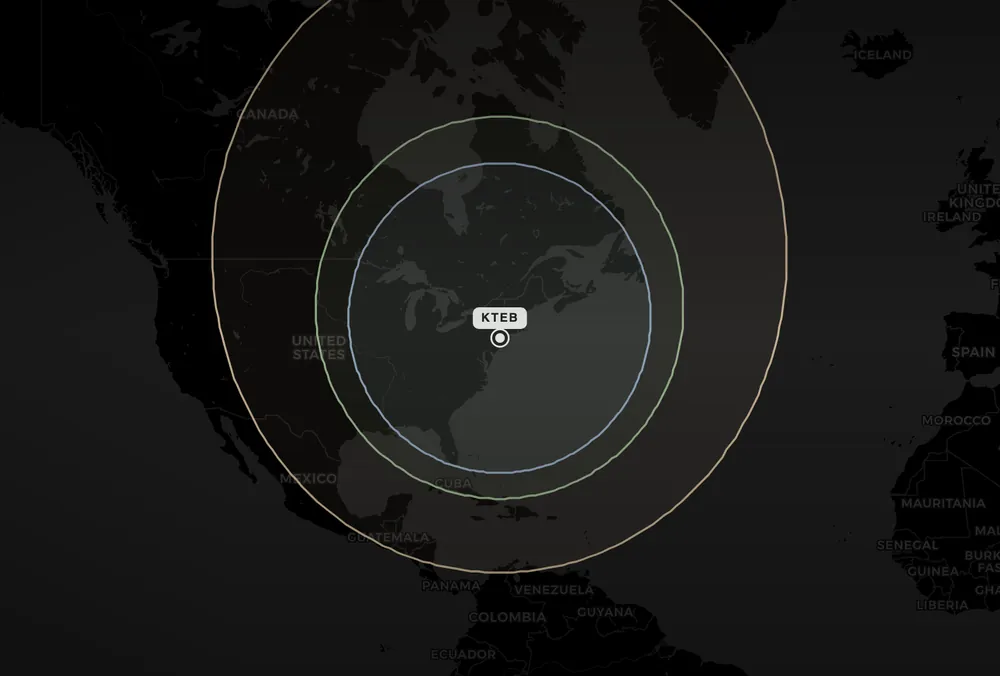
The published Challenger 650 range is 4,000 nautical miles, but that figure is a planning reference rather than a guaranteed distance for every departure. Passenger load, baggage, weather, routing, fuel reserves, and airport conditions can affect the route the selected aircraft can support. A model-level range figure cannot establish a nonstop outcome on its own.
For a New York to Los Angeles itinerary, this aircraft can be part of the selection discussion alongside other available options. The operator must assess the actual aircraft, passenger load, baggage, and operating conditions before confirming the flight plan. That assessment is more useful than treating a published range as an unconditional promise.
If avoiding a fuel stop is essential, make that requirement clear at the beginning of your request. It can then guide the aircraft comparison from the outset rather than becoming a question after a cabin has already been selected. The same approach applies when an arrival schedule leaves little room for flexibility.
Longer routes require the same discipline. Distance is only one part of determining whether an aircraft is appropriate, and the preferred routing may differ from a simple point-to-point measurement. Our role is to keep the cabin recommendation aligned with the operator’s assessment of the journey.
Heavy-Cabin Space and Super Midsize Value
The Challenger sits naturally within a discussion of large-cabin charter options, but category labels are not a substitute for a trip-specific comparison. Travelers considering super midsize aircraft may find its cabin worth evaluating when space is a priority. The relevant question is whether the available aircraft offers benefits your group will use at a total cost that makes sense for the itinerary.
Amalfi Jets’ heavy jet charter options provide a broader context for that decision. Comparing cabin arrangements, passenger accommodation, baggage, and route suitability is more informative than choosing solely by category. A larger aircraft is not automatically the better answer, just as a smaller one is not automatically the better value.
You may also encounter the shorthand Bombardier 650 when researching this model. The full name is Bombardier Challenger 650, and using that name helps keep the aircraft search focused. Even then, the individual aircraft remains important because interiors and availability can differ between examples of the same model.
A claim of super midsize value should ultimately be supported by comparable quotes. Positioning, scheduling, and the availability of suitable alternatives can change the financial picture. We therefore assess the cabin benefits and the complete charter proposal together.
Challenger 650 vs. G450 and Legacy 600
The Gulfstream G450 and Embraer Legacy 600 are useful alternatives to consider when evaluating a large-cabin charter. There is no universal winner among these aircraft for every passenger group and itinerary. The comparison should begin with how you want to use the cabin and what the route requires.
For the G450, ask whether the available interior provides seating arrangements or cabin separation that would improve your journey. For the Legacy 600, examine the same priorities rather than relying on a representative passenger count or a general model description. The actual configurations offered are the most relevant basis for a cabin comparison.
Baggage can also change the recommendation. An interior may suit your group well while another available aircraft better accommodates the luggage and larger items you intend to bring. Considering both requirements early helps avoid choosing a cabin that does not suit the complete passenger load.
Operational suitability is equally important. The operator’s route assessment should address your nonstop preference and the conditions relevant to the trip. A difference in published range does not, by itself, determine which aircraft is the strongest choice for a particular route.
Finally, compare complete quotes built around the same requirements. Without that consistency, a headline rate can suggest a saving that disappears once positioning or other charges are included. We help you understand whether any additional cost delivers a cabin or capability benefit that matters to your journey.
New York TEB and Los Angeles VNY Charter Planning
For New York travel, Teterboro Airport (TEB) can be considered as a departure or arrival point. For Los Angeles, Van Nuys Airport (VNY) can serve as a starting point for the airport discussion. Together, these airports provide a useful framework for a coast-to-coast charter request, subject to the selected aircraft’s operating assessment and airport arrangements.
Your preferred airport should be considered alongside your destination within each city. Ground travel, departure preferences, and aircraft positioning all contribute to the overall plan. Choosing a familiar airport code is only the beginning of selecting the most practical itinerary.
Handling and parking arrangements also need confirmation for the actual trip. A preferred airport does not mean that a particular facility or parking arrangement is already secured. We coordinate these details with the relevant parties as part of the charter planning process.
Miami OPF, Dallas DAL, and Chicago MDW Charter Planning
For Miami, Miami-Opa-locka Executive Airport (OPF) is an airport to include in the planning discussion. Dallas Love Field (DAL) and Chicago Midway International Airport (MDW) provide corresponding points of reference for Dallas and Chicago requests. Their suitability for your journey depends on the itinerary and the arrangements available for the selected aircraft.
Travel involving these cities should be assessed with the same attention to passenger needs as a coast-to-coast trip. A short stay, a multistop schedule, or an extended visit can each change the baggage, timing, and coordination requirements. Clear trip details allow the aircraft search to reflect those differences.
If your plans involve specific handling preferences, international travel, or an arrival outside your usual schedule, raise those details early. Relevant airport and operator requirements must be confirmed rather than assumed. Ground coordination can also be included in the discussion without promising a fixed transfer time.
What Shapes a Challenger 650 Charter Quote?
A useful Challenger 650 charter quote explains the full itinerary, not just an hourly figure. Aircraft positioning, taxes, airport charges, crew logistics, fuel adjustments, and availability can all affect the total. The importance of each component depends on the particular trip and the aircraft offered.
Positioning is especially relevant when comparing suitable options. An aircraft that appears attractive on its own may require a different positioning plan from another available model. Reviewing the complete quote helps reveal whether an apparent price advantage remains meaningful once the journey is fully accounted for.
Schedule details matter as well. Departure preferences, return plans, passenger count, baggage, and essential cabin features give our team the basis for a focused request. Defining them early helps reduce the likelihood that an initial proposal needs to change as the requirements become clearer.
Amalfi Jets’ private jet charter cost guide for 2026 explains why aircraft time is only one part of the total. For this model, the principle is straightforward. Large-cabin value should be demonstrated by the quote and the capabilities it provides, rather than being inferred from an aircraft category or an unqualified pricing comparison.
Plan Your Charter With Amalfi Jets
The right aircraft is the one that brings your cabin preferences, passenger needs, and operating requirements into alignment. The Challenger may be a strong candidate when you want substantial space for a group, but a G450, Legacy 600, or another available aircraft may better suit a particular requirement. Our role as a charter broker is to make those distinctions clear.
Begin your charter request with Amalfi Jets by sharing your route, dates, passenger count, and baggage requirements. Tell us whether your priority is a nonstop itinerary, a specific seating arrangement, or additional room to work and rest. We will help you compare suitable options and determine whether this aircraft offers the right balance of comfort, capability, and value for your next journey.