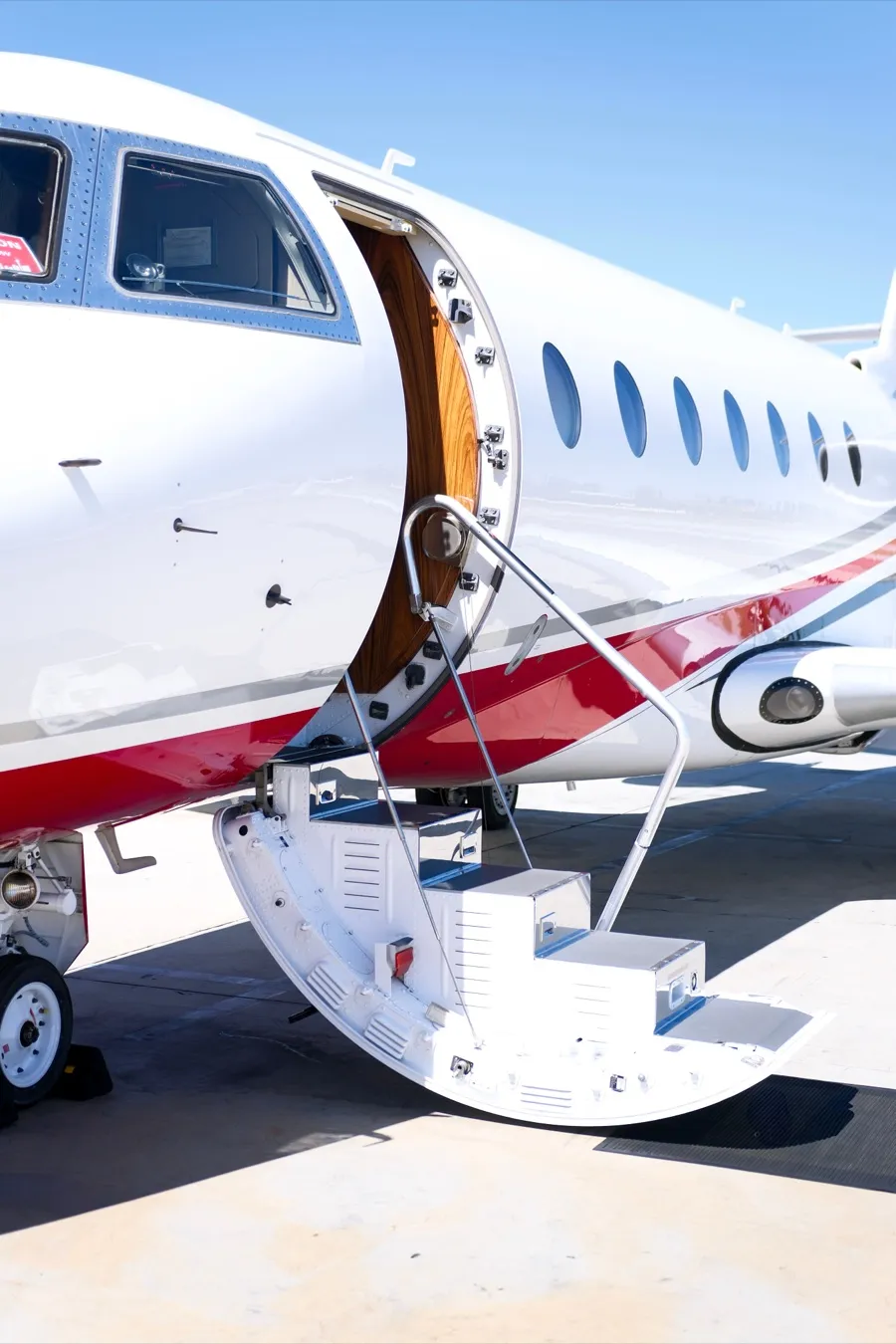




The Challenger 300 helped establish a distinct identity for the super midsize aircraft category. Introduced in 2003, it brought together a cabin with room to stand and move more naturally, seating for up to nine passengers, and the capability to support substantial nonstop journeys.
That formula remains relevant for private charter. For travelers moving among New York, Los Angeles, Miami, Dallas, Chicago, and other important destinations, the aircraft can offer meaningful cabin space without automatically moving into a larger category.
Amalfi Jets approaches every Challenger 300 charter as an individual mission. As a charter broker rather than an aircraft operator, we assess the route, passenger count, baggage, schedule, and cabin preferences before presenting suitable aircraft from our network.
Why the Bombardier Challenger 300 Still Matters
The Bombardier Challenger 300 is closely associated with the emergence of the modern super midsize segment. Rather than feeling like an enlarged midsize aircraft or a reduced large cabin jet, it introduced a balanced proposition centered on cabin comfort, passenger capacity, and practical range.
That balance helps explain its continued relevance in private charter. A principal can use the cabin for focused work, a family can settle into a longer journey, and a small team can travel together on a schedule shaped around the purpose of the trip.
The aircraft also illustrates why a category should serve as a starting point rather than a final recommendation. Although the Challenger 300 belongs among super midsize private jets, the correct aircraft for a particular itinerary depends on its individual configuration and the operational demands of the route.
Passenger needs, baggage, weather, routing, runway conditions, and required reserves can all affect suitability. A thoughtful charter process considers those factors before an aircraft is proposed, allowing the model name to inform the decision without controlling it.
Challenger 300 Range and Passenger Capacity
A typical Challenger 300 charter configuration can accommodate up to nine passengers. Seating arrangements vary among individual aircraft, however, so the proposed cabin should be reviewed before confirmation rather than assuming every example provides the same layout or passenger experience.
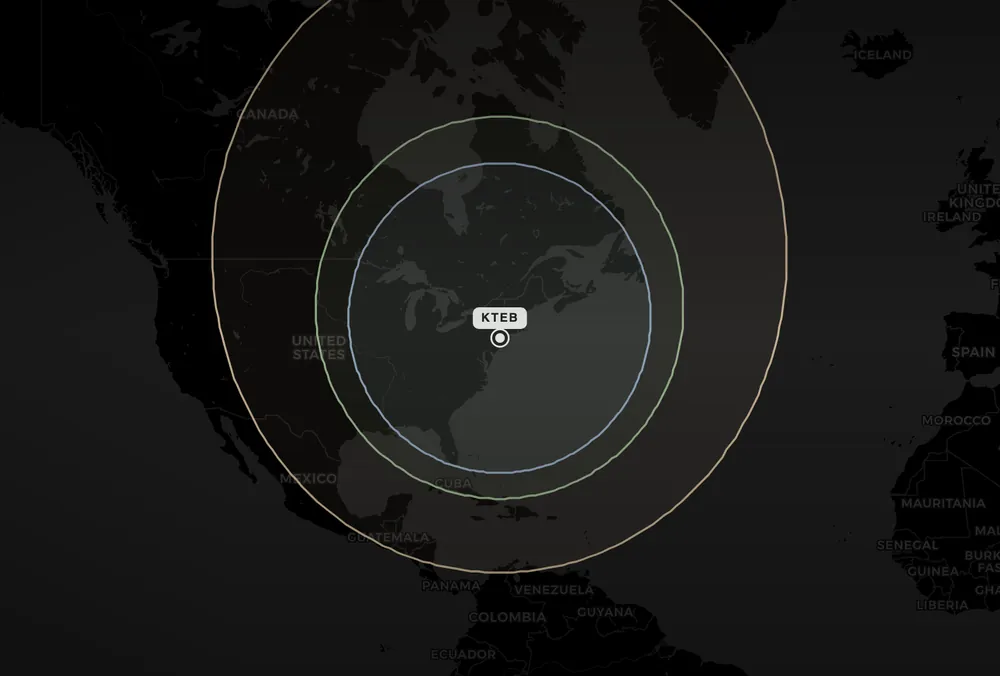
The Challenger 300 range is commonly discussed within an approximate 3,100 nautical mile class. That figure provides useful context for understanding the model, but it should not be treated as a guaranteed nonstop distance for every route, aircraft, passenger load, or operating day.
Weather, winds, routing, baggage, passenger count, reserves, and airport conditions can influence what is practical. The condition and configuration of the individual aircraft also matter, which is why a charter broker evaluates the proposed mission rather than relying on a single published figure.
For travelers, the more useful question is not simply how far the Challenger 300 can fly. It is whether a specific aircraft can complete the requested journey while meeting the operational requirements and preserving the cabin qualities that led the traveler to consider the model.
This distinction becomes particularly important on longer routes. A journey that appears comfortably within an aircraft’s general range class may require a different plan once the complete passenger, baggage, weather, and airport picture is understood.
Inside the Challenger 300 Interior
The Challenger 300 interior is defined in part by cabin height that allows passengers to stand and move more naturally. On a longer journey, that sense of space can make a meaningful difference, especially when several passengers are sharing the cabin for an extended period.
Executive configurations often create distinct places to converse, dine, work, or rest within one cabin. The precise arrangement varies by aircraft, but facing seats may support conversation while other positions provide a more private setting for focused work or quiet time.
For business travelers, the cabin can turn travel time into protected time. Discussions can continue away from public spaces, while documents and conversations remain within the traveling party.
Families may value the same space for different reasons. Traveling together in one cabin can make it easier to accommodate personal routines, keep essential items nearby, and shape the journey around the needs of the group.
Cabin condition matters as much as the model designation. Two Challenger 300 aircraft may differ in seating materials, refurbishment history, entertainment options, connectivity, power access, and baggage arrangements.
Those differences can influence the experience more than a specification sheet suggests. When particular cabin details are important, Amalfi Jets can include them in the aircraft review and selection process.
The Bombardier Challenger 300 aircraft overview provides a closer introduction to the model and its place in private charter. It is a useful point of reference, while the final aircraft recommendation should always reflect the requirements of the individual journey.
Challenger 300 Charter From New York (TEB) to Los Angeles (VNY)
New York to Los Angeles is a representative mission for understanding the appeal of a Challenger 300 charter. Teterboro (TEB) and Van Nuys (VNY) can form a natural private aviation pairing for travelers moving between the two metropolitan areas.
The route brings range, cabin comfort, passenger load, and operating conditions into the same planning conversation. A Challenger 300 may be considered for this transcontinental journey, but suitability remains subject to the proposed aircraft, weather, routing, reserves, passengers, and baggage.
This city pair also demonstrates why travel duration should be presented as an estimate rather than a promise. Winds, traffic, routing, and airport conditions can affect the journey even when the departure and arrival airports remain unchanged.
Aircraft selection and itinerary planning should therefore happen together. The discussion of private jet charter cost and planning considerations explains how route, timing, aircraft category, and operational requirements collectively shape a charter proposal.
The Challenger 300 may also be considered for shorter journeys from New York or Los Angeles when travelers prioritize additional cabin room. In those cases, its value may come less from maximum reach and more from keeping a group together in a spacious, adaptable environment.
Challenger 300 Routes From Miami (OPF), Dallas (DAL), and Chicago (MDW)
Miami is another important departure market for a Challenger 300 charter. Miami-Opa Locka Executive (OPF) can be evaluated for private journeys from South Florida, with the best aircraft determined by destination, passenger count, baggage, weather, and operating requirements.
A representative journey from OPF to a mountain destination shows why route analysis matters. Elevation, temperature, runway conditions, weather, and payload can influence aircraft suitability, so the itinerary requires specific aircraft review before nonstop capability is assumed.
From Dallas, Dallas Love Field (DAL) offers a starting point for domestic and selected international itineraries. A journey from DAL to a destination such as Los Cabos may place the emphasis on cabin space and group comfort rather than requiring the full reach of a larger aircraft.
Chicago travelers may consider Chicago Midway International (MDW) when planning private travel. The most appropriate Chicago area airport will depend on the traveler’s location, destination, schedule, aircraft, and conditions on the day of travel.
These route examples are not limits on where the aircraft can be considered. Instead, they show how the Challenger 300 can address different mission profiles, from longer business travel to personal journeys where cabin space and schedule control are central priorities.
Challenger 300 Versus Challenger 350
The Challenger 350 is the natural comparison because it represents a later development within the same aircraft family. Both models sit within the super midsize category and may appear during a search for an aircraft suited to a longer domestic journey.
For charter clients, the comparison should not become a contest between model names. The age and condition of the proposed aircraft, cabin layout, passenger needs, baggage, availability, and route requirements may matter more than choosing the later designation by default.
A meticulously maintained Challenger 300 with the preferred seating arrangement and cabin features may be an excellent match for one itinerary. On another journey, a Challenger 350 or a different super midsize aircraft may provide a more suitable combination of availability, cabin details, and mission capability.
This is where working with a broker can simplify the choice. Instead of asking the traveler to select an aircraft from a specification sheet alone, Amalfi Jets can compare relevant options and explain the practical tradeoffs within the context of the requested schedule.
The comparison should ultimately answer a personal question. Which available aircraft is best suited to this journey? Model lineage is useful context, but the individual aircraft and complete itinerary determine the quality of the match.
Choosing the Right Super Midsize Aircraft
The Challenger 300 occupies an appealing position in private charter, but it is not a universal answer. A shorter journey with fewer passengers may be served appropriately by another category, while an itinerary involving more travelers, additional baggage, or greater distance may call for a larger aircraft.
Even within the Challenger 300 charter market, individual aircraft can vary considerably. Cabin presentation, seating, connectivity, baggage access, refurbishment history, and availability can all shape the experience.
Amalfi Jets begins with the journey itself. Our team considers where the passengers need to depart, where they need to arrive, who is traveling, what needs to come aboard, and which cabin qualities matter most.
We can then evaluate whether a Challenger 300 is the right fit or whether another aircraft deserves consideration. This dedicated approach preserves choice while keeping the recommendation grounded in the practical and personal requirements of the itinerary.
Travelers can also learn more about why clients choose Amalfi Jets when planning a private journey. The brokerage model provides access to a range of suitable aircraft while allowing each request to begin with the client’s priorities rather than a predetermined aircraft.
Planning a Challenger 300 Charter With Amalfi Jets
Amalfi Jets does not operate aircraft or ask clients to fit their travel into a fixed inventory. As a private charter broker, we identify suitable aircraft through our network and coordinate the details around each requested journey.
For a Challenger 300 charter, that process includes reviewing the proposed aircraft, cabin configuration, route, passenger count, baggage, schedule, and relevant operational requirements. It also provides one point of contact for an itinerary that may involve exacting timing or several destinations.
The Challenger 300 remains compelling because its original proposition continues to resonate. It offers room for up to nine passengers, a cabin designed for more natural movement, and the capability to support significant nonstop missions when conditions and load allow.
Its influence on the super midsize category began in 2003, but its present value is best understood one trip at a time. The right aircraft is not simply the one with a familiar name, but the one whose configuration, availability, and capabilities align with the journey.
If the Challenger 300 appears suited to your next trip, Amalfi Jets can review the route and present carefully selected options. Request a private charter consultation, and our team will curate an aircraft around the way you prefer to travel.