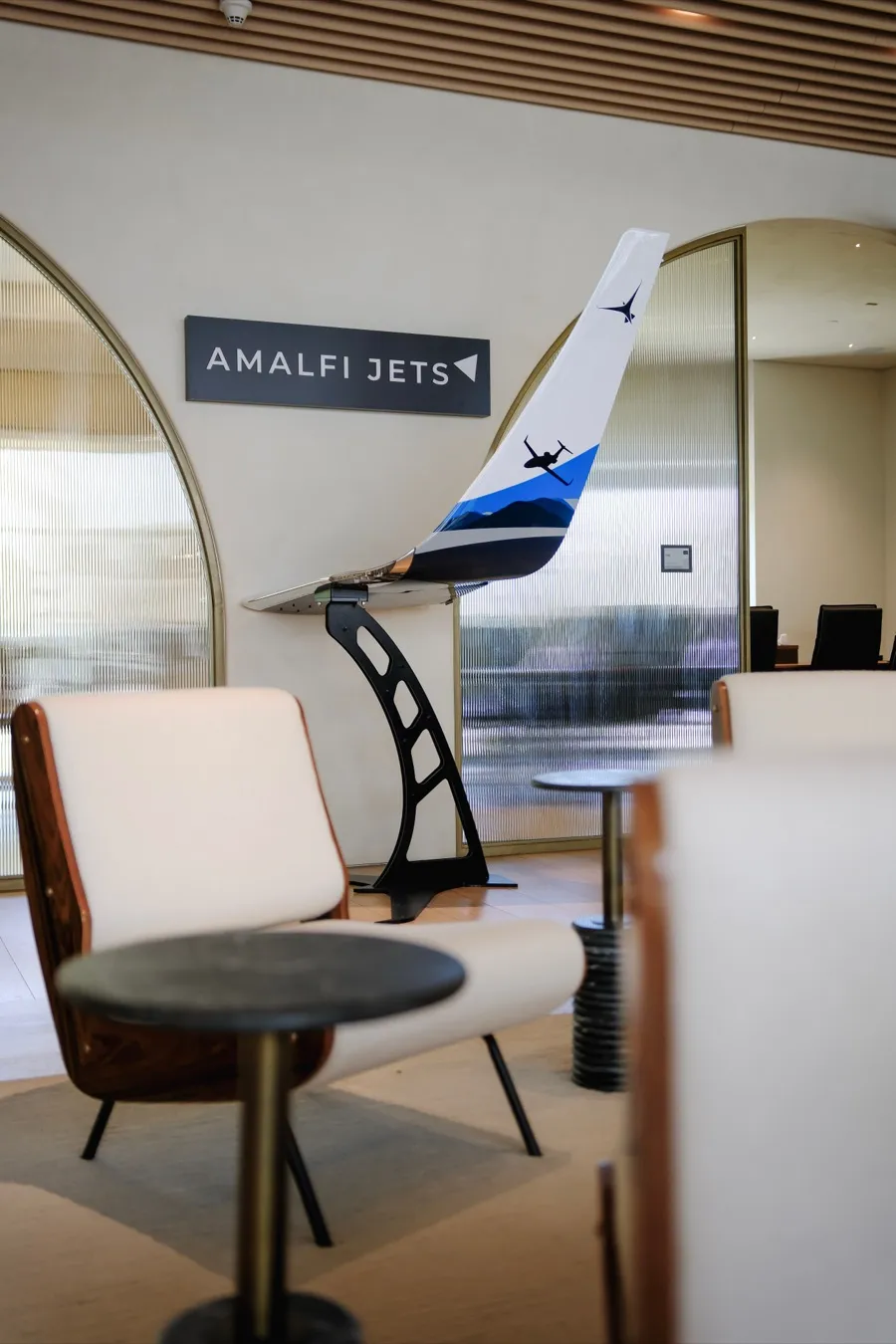





Inside the Billionaire Private Jet World
A billionaire private jet is rarely chosen for speed or status alone. At this level, the aircraft becomes a private environment for working, dining, resting, and holding sensitive conversations while crossing continents with minimal interruption.
The aircraft most closely associated with this type of travel include the Gulfstream G700, Bombardier Global 7500, Gulfstream G650ER, Boeing Business Jet, and Airbus Corporate Jet. Beyond them is an even more exclusive category of custom aircraft based on commercial platforms, where a wide cabin can be configured as a residence, office, meeting space, and private retreat.
Ownership is only one route to the experience. Through carefully arranged charter, travelers can access comparable aircraft categories for individual missions without acquiring, staffing, maintaining, storing, and managing a single asset throughout the year.
What Do Billionaires Fly on Global Journeys?
What do billionaires fly when an itinerary extends from New York to Dubai or Los Angeles to London? The concise answer is that many choose ultra-long-range business jets, while larger parties and travelers seeking more distinct living areas may consider BBJ, ACJ, or other airliner-based platforms.
The Gulfstream G700 represents a contemporary interpretation of the large-cabin business jet. Its appeal comes from a cabin concept that can support work, meals, conversation, and rest without requiring every passenger to use one continuous shared space.
The Bombardier Global 7500 follows a similarly mission-focused philosophy. Rather than treating range as the only consideration, it offers a cabin environment intended to support changing needs throughout an extended journey, from a meeting after departure to private rest before arrival.
The Gulfstream G650ER remains closely associated with ultra-wealthy private jet travel. It helped shape the expectation that an intercontinental business aircraft should provide distinct settings for productivity, dining, conversation, and sleep.
The Falcon 8X also belongs in the discussion, particularly when itinerary requirements, passenger preferences, and airport considerations make it a suitable match. There is no universal aircraft for every traveler because route conditions, baggage, cabin configuration, availability, and operating requirements can all change the recommendation.
Why the G700 and Global 7500 Define the Billionaire Jet Category
The G700 and Global 7500 are often treated as benchmarks because they are designed around extended missions and varied uses of the cabin. Their significance is not simply the ability to connect distant cities, but the opportunity to make the hours on board more productive and restorative.
A traveler might begin with a confidential meeting, move to dinner, work in a quieter part of the cabin, and then rest before arrival. For founders, family offices, principals, and executives managing international schedules, that continuity can matter more than small differences between published performance figures.
Aircraft in this category may be considered for transatlantic and other intercontinental missions, subject to weather, payload, routing, airport requirements, and operating conditions. Representative requests can include Teterboro (TEB) to London Heathrow (LHR), as well as Van Nuys (VNY) to London or Dubai International (DXB).
These examples are mission profiles rather than performance guarantees. Each itinerary requires individual review because winds, passenger count, baggage, routing, airport limitations, and the configuration of the specific aircraft can affect whether a nonstop plan is appropriate.
Travelers comparing these models with other large-cabin options can consult our ultra-long-haul private jets guide. It provides a useful view of how cabin scale, layout, and intended mission can differ across this category.
When a Business Jet Is Not Enough
Some aircraft owners move beyond purpose-built business jets and select airliner-based platforms. Boeing Business Jet models and Airbus Corporate Jet variants can provide the cabin volume required for several living areas, formal conference spaces, guest accommodations, staff seating, and larger service areas.
At the highest end, customized versions of widebody aircraft have appeared in conversations about the richest private jets. That phrase should be approached carefully because there is no single dependable ranking that accounts for acquisition terms, aircraft age, interior completion, maintenance status, configuration, and changing market conditions.
The practical distinction is one of scale and mission. A G700 or Global 7500 can provide a highly refined business jet environment, while a BBJ, ACJ, or custom widebody may support more passengers and a cabin plan that feels closer to a private property than a conventional aircraft interior.
Charter access becomes more selective in this category because many custom aircraft are retained exclusively for their owners. When a suitable airliner-based aircraft is available for charter, a broker can assess its configuration, operator requirements, airport suitability, and alignment with the passenger brief before presenting it for consideration.
Ownership and Charter Solve Different Problems
Whole aircraft ownership gives an individual or company control over one specific asset. The owner determines its interior, management structure, staffing approach, and operating schedule while accepting continuing responsibilities involving crews, maintenance, storage, insurance, administration, and regulatory compliance.
An aircraft may be held through a corporate entity or another dedicated structure for administrative, tax, privacy, or liability considerations. These decisions depend on individual circumstances and should involve qualified legal, financial, tax, and aviation advisers.
Charter addresses a different need by providing access for a particular trip. Instead of committing every itinerary to one aircraft, a traveler can consider a long-range business jet for an executive journey, a larger cabin for a family trip, or an airliner-based aircraft when the group size and onboard requirements justify it.
Amalfi Jets is a charter broker, not an aircraft operator, fractional ownership provider, or jet card program. We source aircraft from qualified operators and curate options around the itinerary, allowing clients to consider the aircraft category and configuration best suited to each mission rather than relying on a fixed fleet.
This distinction becomes particularly valuable on complex international journeys. The aircraft suited to TEB and LHR may differ from the right choice for VNY and DXB when passenger count, baggage requirements, preferred cabin layout, departure timing, and onward plans are considered together.
For travelers deciding whether to own or charter a billionaire private jet, frequency is only one part of the analysis. Control, consistency, scheduling requirements, preferred configurations, geographic patterns, and the responsibilities associated with ownership can be equally important.
The Real Cost of Billionaire Private Jet Access
Ownership involves considerably more than an aircraft’s acquisition value. The condition, age, configuration, maintenance history, interior, and market environment can make apparently similar aircraft very different assets, so generalized claims about the value of a particular billionaire jet should be treated cautiously.
Charter shifts the analysis from asset value to the details of a specific journey. A final quote can reflect the aircraft category, itinerary, positioning requirements, fuel, taxes, airport charges, crew logistics, and other factors associated with the requested mission.
Our private jet charter cost 2026 overview explains how the principal elements of an itemized charter quote fit together. It provides context without suggesting that every aircraft or route will follow the same structure.
A lower initial quote is not necessarily the stronger choice if it leaves essential charges unclear or proposes an aircraft that does not support the requested cabin experience. A broker can help the traveler compare complete options, understand material differences, and make a decision with greater clarity.
Billionaire Jet Routes Through New York, Los Angeles, London, and Dubai
Travel patterns associated with globally prominent wealth often connect major centers of finance, technology, entertainment, and investment. New York, Los Angeles, London, and Dubai illustrate why aircraft selection must consider the complete itinerary rather than the city pair alone.
For the New York area, Teterboro (TEB) is frequently considered for private aviation itineraries. Its suitability still depends on the selected aircraft, operating conditions, ground arrangements, passenger priorities, and the requirements in effect for the planned date.
Van Nuys (VNY) is often considered for private departures and arrivals in the Los Angeles area. Long-range requests from Southern California may continue toward London, Dubai, or other international destinations, but the proposed aircraft and route require mission-specific review.
London Heathrow (LHR) may be relevant when proximity, onward travel, or a connection with scheduled commercial service is important. Private movements require advance coordination, so airport suitability and current arrangements should be examined alongside the traveler’s schedule after arrival.
Dubai International (DXB) can be considered when access to central Dubai or the wider commercial network aligns with the itinerary. Current arrangements should always be confirmed for the date, aircraft, passengers, and operating plan rather than assumed from the airport code alone.
For every city pair, airport selection is part of a broader planning decision. Ground transfers, operating requirements, privacy preferences, handling arrangements, aircraft compatibility, and onward connections can determine whether the most familiar airport is also the most appropriate choice.
Inside an Ultra-Wealthy Private Jet Cabin
The defining quality of an ultra-wealthy private jet is often the way its cabin helps passengers manage time. Separate spaces may allow one traveler to rest while another works, or give a family room to dine together without turning the entire cabin into one continuous social setting.
Depending on the aircraft, a layout may include conference seating, dining space, a lounge, a private suite, an expanded galley, or a more private bathroom arrangement. Exact features vary between individual aircraft, even within the same model, so current cabin photographs and configuration details should be reviewed before confirmation.
Connectivity is another important consideration for travelers who intend to work during the journey. The relevant question is not simply whether a connection is advertised, but which system is installed on the proposed aircraft and whether its expected coverage is appropriate for the route.
Sleep arrangements deserve similar scrutiny. Seating that converts for rest can provide a different experience from a dedicated bed, and that distinction becomes especially meaningful during an overnight or extended journey.
Dining and service should also be planned around the mission rather than a generic menu. Dietary preferences, service timing, presentation, and the needs of children, assistants, or guests can be coordinated in advance, subject to the galley and the operator’s procedures.
Choosing the Right Aircraft Rather Than the Famous One
The most recognizable aircraft name is not automatically the right answer. A successful charter begins with passenger count, route, baggage, ground schedule, rest requirements, connectivity expectations, and the preferred degree of separation between areas of the cabin.
For one traveler, a Gulfstream G650 class aircraft may provide an appropriate balance of cabin space and mission capability. Another itinerary may call for a G700, Global 7500, Falcon 8X, BBJ, or ACJ, depending on availability and the operating demands of the route.
This is where the charter model can be particularly effective. The traveler does not need to adapt every journey to one owned aircraft because a broker can search for a category and configuration suited to the trip being planned now.
That flexibility also helps when travel requirements evolve. A solo executive itinerary can call for a different solution from a family journey, while a larger delegation may need separate work areas, additional baggage capacity, and greater privacy between passengers.
Aircraft model alone is not sufficient because two examples of the same type may have different interiors and onboard features. Amalfi Jets reviews operator information, cabin imagery, configuration, and mission suitability so clients can understand what is being proposed before making a commitment.
Planning a Billionaire Private Jet Charter
Planning should begin with the experience required on board, not only the departure and arrival cities. The brief should explain whether the journey must support meetings, overnight rest, formal dining, confidential calls, significant baggage, guest privacy, or carefully timed connections after arrival.
Availability can become more limited around global conferences, art fairs, awards periods, and major international gatherings. Starting early gives the brokerage team more room to compare suitable aircraft and coordinate itinerary details rather than focusing only on basic route compatibility.
Ultimately, flying like a billionaire is less about owning one of the world’s most discussed aircraft and more about controlling how time is spent. The right charter should provide privacy for thought, an appropriate environment for rest, and an itinerary shaped around the traveler’s priorities.
Amalfi Jets brings these elements together through a considered brokerage process, from aircraft selection and operator review to airport planning and transparent quoting. We invite you to discover why clients choose Amalfi Jets for their most demanding itineraries.
When you are ready to arrange an ultra-long-range journey, contact our team to request a private charter and let us curate the right aircraft for your mission. You can depend on our dedication to precision and privacy at every stage of your trip.