



Destination Hub
Private Jet Charter to Worcester

Arriving by private aircraft puts Worcester on your schedule, with Worcester Regional Airport (ORH) serving as the principal gateway for the city. From ORH, the day stays composed: one arrival plan, coordinated ground movement, and a departure time shaped around your calendar rather than an airline timetable.
Quick facts
Why charter a private jet to Worcester?
Private air travel into Worcester is best suited to travelers who value schedule control, direct access, and a quieter arrival into Central Massachusetts.
Worcester Regional Airport (ORH) gives a charter itinerary a clear focal point: the aircraft, crew, passenger arrival, and ground transportation can be organized around one primary airport. For executives, families, trustees, alumni, and visiting guests, that simplicity can matter as much as the flight itself.
Why private travelers choose ORH
- Flexible timing: Depart when the meeting ends, the campus visit wraps, or the dinner schedule changes.
- Fewer handoffs: A direct charter avoids airline connections and the added time of commercial-terminal processing.
- Regional access: ORH places travelers close to the city while keeping alternate airport planning available when the wider New England itinerary calls for it.
- Discreet coordination: Passenger names, ground transport, luggage needs, and onward timing can be handled in one plan rather than through separate commercial arrangements.
The result is not simply a shorter travel day. It is a more controlled one, with fewer fixed points and more room for the itinerary to move as plans evolve.
“We secure ORH handling and the ground plan first, then compare alternates if the drive pattern favors BED, FIT, CEF, or OWD. For May, September, and October dates, early firm timing widens aircraft choice.”

When is the best time to fly to Worcester?
The best time to visit Worcester by private aircraft depends on whether the trip is tied to campus calendars, fall travel, or quieter winter dates.
May often carries graduation demand, with families and guests arriving for campus celebrations across Central Massachusetts. September and October bring a different kind of pressure: parents weekends, foliage travel, and New England events that make firm arrival and departure times especially valuable.
January, February, and March are generally value-oriented months for travelers with flexible dates. Cold weather and post-holiday quiet tend to soften leisure and campus movement, though snow, deicing considerations, and revised departure windows can still make proactive planning important.
For peak-month travel, the best strategy is to firm passenger count, luggage needs, and preferred departure windows early. For winter travel, flexibility around timing can help the charter desk preserve comfort and reliability when weather affects the day.
Where our clients stay and go
Worcester rewards private travelers who want the substance of a New England city without the scale and friction of a major coastal gateway.
Set in the hills of Central Massachusetts, the city has a grounded, academic rhythm: brick campuses, medical and research activity, restored downtown blocks, and neighborhood restaurants that feel local rather than staged. The light changes quickly across the season, from soft spring greens to the burnished color of October, and the surrounding region makes a natural base for campus visits, board meetings, family weekends, and private celebrations.
A city with an institutional pulse
Colleges and universities give Worcester much of its calendar. Graduation weeks, move-in periods, parents weekends, lectures, performances, and alumni gatherings bring travelers whose plans are often tied to fixed moments rather than flexible vacations.
The private-flight advantage is most visible on those days. A family can arrive for a ceremony without building the itinerary around airline schedules, while an executive can pair a campus commitment with meetings elsewhere in Massachusetts before returning the same evening.
Neighborhood texture and Central Massachusetts character
Downtown has civic weight, with Union Station and older commercial buildings giving the center a sense of history. The Canal District adds a more contemporary layer, while Shrewsbury Street remains closely associated with dining and evening plans.
Water and hills are part of the visual character, too. Lake Quinsigamond and the city’s elevated neighborhoods remind visitors that this is not a flat business stop, but a place shaped by ridgelines, changing weather, and the practical confidence of inland New England.
For charter guests, that combination makes the destination useful and personal at once. It can be a direct point of arrival for a single appointment, or the anchor for a wider itinerary reaching toward Boston’s western suburbs, the colleges of Central Massachusetts, or the foliage routes beyond the city.
What determines the cost of a flight to Worcester?
The cost of chartering into Worcester is determined by the aircraft selected, itinerary structure, airport logistics, seasonal demand, and aircraft availability at the time of request.
Aircraft class and cabin profile
Aircraft selection is usually the largest driver. A light cabin, midsize cabin, super-midsize cabin, or larger aircraft may each suit a different passenger count, luggage profile, onboard service expectation, and routing plan. The best fit depends on the trip rather than the city alone.
One-way versus round trip
A same-day or short-stay round trip may allow the aircraft and crew to remain with the passengers, while a one-way itinerary can require separate positioning before or after the passenger flight. That positioning affects availability, crew planning, and the total charter structure.
ORH positioning and airport fees
For flights using ORH, the quote may reflect where the aircraft is based before departure, where it must reposition afterward, and the handling, landing, parking, and related airport charges associated with the trip. These items are reviewed before confirmation so the itinerary is priced around the actual operating plan.
Seasonal demand
May, September, and October can bring tighter availability as college graduations, fall foliage, parents weekends, and broader New England event travel place more pressure on aircraft supply. January, February, and March are often calmer for leisure and campus-driven travel, though winter weather planning can still shape timing.
Empty-leg availability
Empty legs can create value when an aircraft already needs to move in the same direction as the passenger’s itinerary. They are highly date-, route-, and timing-specific, so they work best for travelers who can be flexible and confirm quickly when a suitable movement appears.
Which airports serve Worcester?
Worcester is primarily served by ORH, with BED, FIT, CEF, and OWD available as alternates when the wider ground itinerary or aircraft plan calls for a different arrival point.
ORH — the primary gateway
Worcester Regional Airport (ORH) is the natural first choice for travelers whose meetings, campuses, homes, or hotels are centered in the city. Using ORH keeps the aviation plan straightforward, with one local arrival point and a ground movement designed around the passenger’s actual schedule.
This airport is especially useful when the destination is Central Massachusetts itself rather than Boston, the North Shore, or western parts of the state. It keeps the charter focused on proximity and simplicity.
BED — for eastern Massachusetts access
Laurence G. Hanscom Field Airport (BED) can make sense when the day includes Boston’s western suburbs, Route 128 business communities, or an itinerary that splits time between the city and eastern Massachusetts. It is a strong alternate when ground access east of ORH is more important than landing closest to the destination.
Private travelers may also consider BED when aircraft availability, handling, or timing makes an eastern arrival more practical. The choice is less about replacing ORH and more about matching the airport to the full day.
FIT — for North Central Massachusetts
Fitchburg Municipal Airport (FIT) is relevant when the ground plan points north of the city, especially toward North Central Massachusetts. For travelers visiting multiple regional communities, it can reduce unnecessary backtracking.
FIT may also be reviewed as an alternate when the aircraft, schedule, and passenger routing support a more northerly arrival. As with any secondary airport, suitability depends on the operating plan confirmed for the specific trip.
CEF — for western Massachusetts routing
Westover Metro Airport (CEF) is best considered when the itinerary leans toward western Massachusetts, the Springfield area, or a broader New England movement that does not naturally center on ORH. It can be useful when the arrival point needs to support a different regional drive pattern.
For some charter days, CEF gives the planning team another way to keep the passenger schedule efficient. The decision is made around ground destination, aircraft availability, and any airport-specific operating considerations for that date.
OWD — for south suburban Boston access
Norwood Memorial Airport (OWD) may be appropriate when the trip combines Central Massachusetts with Boston’s southern suburbs, the Route 1 corridor, or destinations south of the city. It gives planners another eastern Massachusetts option without defaulting to a larger commercial gateway.
OWD can also help when the preferred ground route, passenger pickup, or aircraft positioning points southeast of ORH. The charter desk evaluates it as part of the regional airport set, not as a one-size-fits-all substitute.
Common questions about Worcester charter
What is the best airport for a charter flight into the city?
Worcester is primarily served by ORH, which is usually the first airport reviewed when the destination is in the city or nearby Central Massachusetts.
Can I use an alternate airport instead of ORH?
Worcester trips can also be planned through BED, FIT, CEF, or OWD when aircraft availability, handling, or the passenger’s ground route makes an alternate more efficient.
What determines the cost of chartering into Worcester?
Worcester charter pricing depends on aircraft class, itinerary type, aircraft positioning, airport fees, seasonal demand, and whether a suitable empty leg is available.
When should I book for graduation or parents weekend travel?
Worcester demand is strongest around May graduations and September or October campus weekends, so firming dates early helps preserve aircraft choice and preferred departure times.
Are winter trips practical by private aircraft?
Worcester winter travel is often quieter in January, February, and March, but the charter plan should allow for weather monitoring, possible deicing, and schedule flexibility.
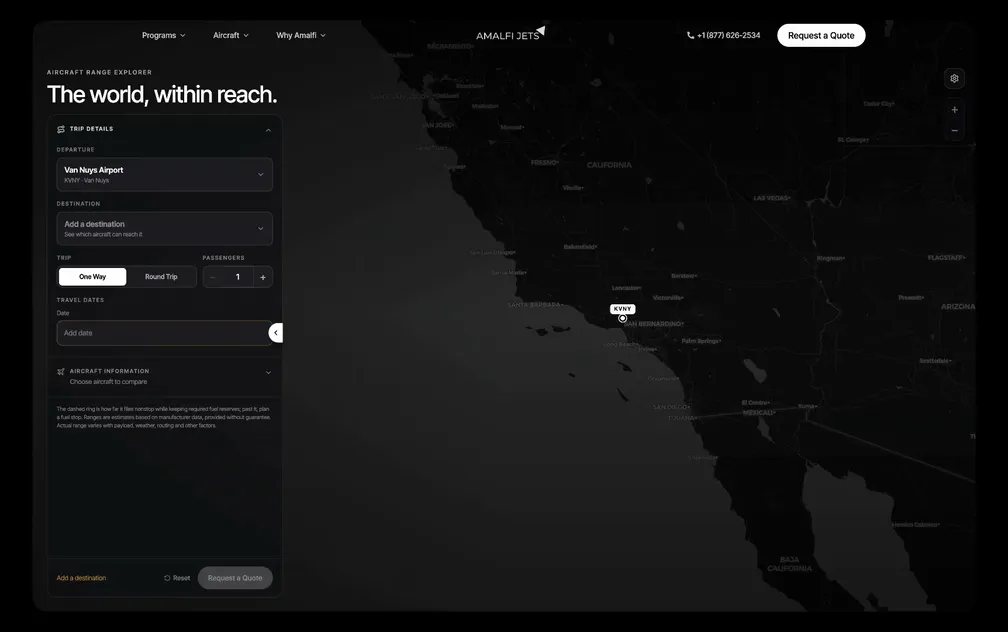
Try Range Explorer
See how far you can fly nonstop
Explore aircraft range, compare options, check flight times, and better understand which aircraft fits your trip.

Ready to fly to Worcester?
Request a charter and our team will tailor an itinerary for your next journey.
*Takes only about 40 seconds to request your quote.
