



Destination Hub
Private Jet Charter to Washington
Private flights into Washington turn the capital into a precise arrival, not a connection or a compromise. Your charter team can shape the airport plan around the day’s meetings, hotel location, and onward drive, keeping the experience discreet from wheels down to departure.
Quick facts
Why charter a private jet to Washington?
Private aviation gives Washington travelers control over timing, arrival airport, and the shape of the day in a region where schedules often matter more than ceremony.
A capital schedule rewards precision
Meetings in the District can move quickly between government offices, embassies, law firms, universities, residences, and cultural venues. Chartering privately allows the flight plan to follow the calendar rather than the other way around, with departure times built around the final appointment, not an airline timetable.
Airport choice can be part of the strategy
The region is not defined by a single airport experience. Depending on the address that matters most, a traveler may prefer a close-in commercial airport, a Virginia-side executive field, or a Maryland-area gateway that better suits the next leg of the itinerary.
That flexibility is especially useful when:
- The day includes sensitive meetings or private arrivals.
- The traveler is continuing to another city the same day.
- The final destination is outside the District core.
- Weather, traffic, or airport congestion makes an alternate more practical.
Time saved is measured beyond the flight
A well-planned charter day reduces the friction around the aircraft: fewer public terminal touchpoints, a coordinated ground handoff, and a departure window that can adapt as the meeting day evolves. For principals, families, delegations, and executive teams, that time is often the reason to fly privately in the first place.
The experience stays quiet
There is a particular value in arriving without unnecessary exposure. The right airport, handling plan, and ground coordination can keep movement through the capital region composed, direct, and properly paced.
“For peak spring and fall dates, our charter desk secures the preferred airport and handling plan first; firm itineraries opened early usually widen aircraft choice and reduce repositioning pressure.”

When is the best time to fly to Washington?
March, April, September, and October are the strongest planning months for Washington, while January, February, and August can offer more flexible availability for travelers with movable dates.
Spring demand
Cherry blossom season gives the city a visible surge of visitors, especially around the Tidal Basin, the National Mall, and central hotels. March and April can combine leisure demand with official calendars, so preferred aircraft and airport plans are best addressed early when dates are firm.
Fall meetings
September and October bring a different kind of pressure. Congress, diplomacy, institutional gatherings, and fall business travel can create concentrated demand, particularly for weekday arrivals and same-day returns.
For those traveling with principals, staff, or family members, confirming the aircraft, airport, and ground plan in advance helps preserve options when the calendar tightens.
Value-minded timing
January and February tend to be colder, which can soften leisure traffic. August often brings heat and a recess rhythm that changes the pace of the city, making it a useful month for travelers who can choose dates around availability rather than around a fixed public calendar.
Flexible departures, alternate airport consideration, and an openness to different cabin options can all improve the planning picture in these quieter periods.
Where our clients stay and go
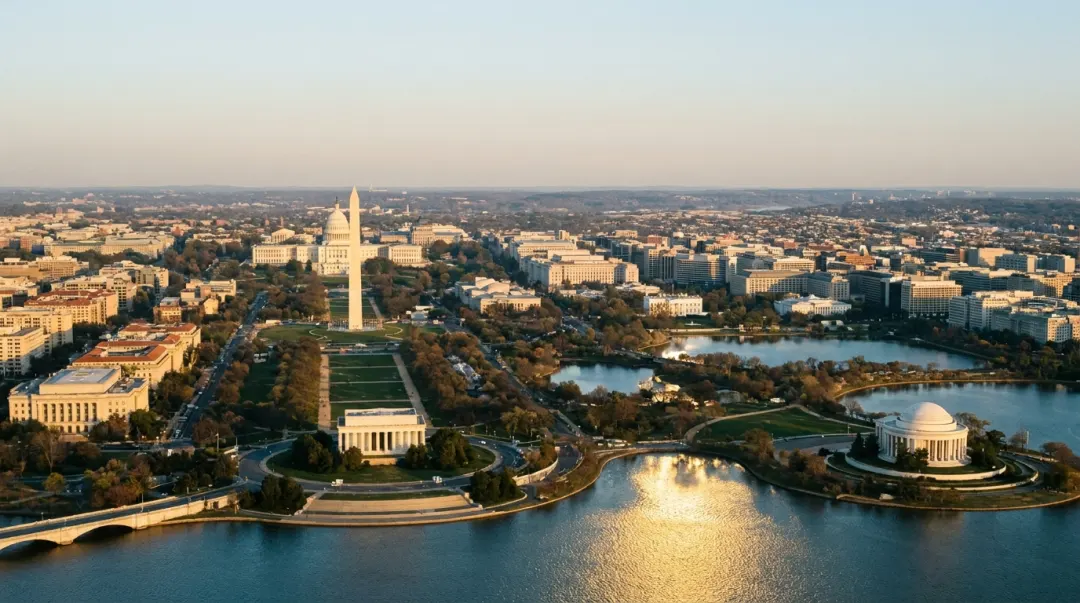
Washington is a city of ceremonial geometry and private purpose, where broad avenues, river light, and institutional gravity shape the traveler’s sense of arrival.
A capital built on perspective
The city reveals itself in long sightlines: the white stone of the monuments, the open sweep of the National Mall, the Potomac River catching late-afternoon light, and the ordered silhouettes of federal buildings set against a low skyline. It is formal without being static, a place where power is often expressed through restraint.
For private travelers, the appeal is rarely one-dimensional. A single itinerary may include government meetings in the morning, a museum visit in the afternoon, dinner in Georgetown, and a discreet departure the next day.
Neighborhoods with different tempos
The District’s character changes quickly from one address to another. Around the Mall, the mood is civic and monumental. In Georgetown, brick sidewalks, historic houses, and the waterfront soften the city’s edge. Embassy Row and Dupont Circle carry a more international cadence, with residences, diplomatic missions, galleries, and restaurants tucked into an older urban fabric.
Capitol Hill has its own rhythm, tied to committee schedules, staff movement, and the working life of government. Northwest neighborhoods feel leafier and more residential, while the waterfront areas bring a newer, more contemporary face to the city.
Why private travelers come
The capital draws those with reasons to be precise: executives, policy leaders, family offices, philanthropists, university guests, counsel, delegations, and collectors moving between appointments. It also suits leisure travelers who want museums, architecture, restaurants, and history without building the trip around airline timing.
What distinguishes the city is the way public symbolism and private agenda sit side by side. A traveler can pass memorials known around the world, then step into a quiet dining room, boardroom, residence, or gallery where the real purpose of the trip takes place.
A measured kind of luxury
Luxury here is rarely loud. It is the clean transfer, the correct entrance, the hotel suite ready on arrival, the car waiting in the right place, and the ability to leave when the final conversation ends. In that sense, the capital rewards travelers who value orchestration over display.
What determines the cost of a flight to Washington?
The cost of chartering into Washington is shaped by aircraft selection, routing, airport handling, seasonal demand, and the availability of repositioning or empty-leg opportunities.
Aircraft selection
Aircraft category is one of the main drivers of a charter quote. Cabin size, range requirements, passenger count, baggage needs, and onboard service expectations all influence which aircraft are appropriate for the mission.
A short executive movement, a family arrival with luggage, and a multi-city diplomatic or corporate itinerary can each call for a different aircraft profile. The best quote begins with matching the aircraft to the actual trip rather than oversizing or undersizing the mission.
One-way versus round trip
A one-way itinerary may require the aircraft to reposition before or after the passenger flight. A round trip can sometimes create a more efficient aircraft schedule, especially when the aircraft and crew can remain available for the return.
The practical question is not simply where the passenger is flying, but where the aircraft starts, where it ends, and how long it must wait between legs.
Positioning and airport fees
Positioning is the movement of the aircraft when it is not carrying the charter passengers. It can affect the total because the operator still has to account for aircraft time, crew planning, and logistics.
Airport-related fees can also vary by airport and handling arrangement. Your charter team reviews the most suitable airport options before confirming the quote so the itinerary reflects both convenience and operational sense.
Seasonal demand
Spring and fall can bring firmer demand around cherry blossoms, tourism, government calendars, diplomacy, and meetings. During those windows, earlier planning generally widens aircraft choice and improves the chance of securing the preferred schedule.
Softer periods can create better availability, particularly when travel dates are flexible. Even then, short-notice requests are still influenced by aircraft location, crew timing, airport availability, and the complexity of the itinerary.
Empty-leg availability
Empty legs can offer value when an aircraft is already scheduled to move in the right direction at the right time. They are opportunistic by nature: the route, timing, aircraft type, and flexibility must align.
For travelers with fixed meeting times, an empty leg is best treated as a possibility rather than the foundation of the trip. For flexible departures, it can be worth evaluating alongside a standard charter quote.
Which airports serve Washington?
Washington is served by a regional mix of airports, giving private travelers the ability to choose the arrival that best fits the address, schedule, and onward movement.
MNZ — Manassas Regional Airport/Harry P. Davis Field
MNZ can make sense for travelers whose plans point toward the Virginia side of the region rather than the District core. Its regional profile gives a charter itinerary an alternate to the larger commercial-airport environment, and it may be useful when the day’s meetings or residence are west or southwest of the city.
This is the kind of airport choice that can reduce unnecessary ground movement when the traveler is not actually bound for central downtown. For private aviation planning, the value is in matching the landing point to the true final address.
JYO — Leesburg Executive Airport
JYO is a natural consideration for travelers headed toward Leesburg and the western suburbs. The executive-airport setting can be attractive for private itineraries where the priority is a streamlined arrival, a quieter handoff, and proximity to that side of Northern Virginia.
It may also be useful when a traveler wants to avoid bringing the aircraft and ground movement into the most congested parts of the region. The airport selection should be coordinated with the full drive plan, not chosen from a map alone.
DCA — Ronald Reagan Washington National Airport
DCA is the close-in option many travelers recognize for central-city schedules. When meetings, hotels, or residences are concentrated in the District, its location can be a meaningful advantage.
Because it is a major airport environment, the best use of DCA depends on availability, handling arrangements, and the traveler’s tolerance for a busier operating setting. In some cases it is the most convenient answer; in others, a Virginia or Maryland alternate may make the total day run more smoothly.
BWI — Washington International Airport
BWI can be useful when the itinerary points toward Maryland, the Baltimore corridor, or a broader mid-Atlantic movement. It may also be considered when airport availability, airline-field congestion, or onward routing makes a northern option more practical.
For private travelers, the decision is less about the airport name and more about the whole itinerary: where the aircraft is coming from, where the traveler is going on the ground, and how the return or next leg is timed.
Choosing the right field
The strongest airport plan usually starts with the ground destination, then works backward to the aircraft. A close-in arrival can be ideal for a downtown meeting, while an alternate can be the wiser choice for a residence, estate, campus, or business address outside the core.
Your charter advisor can compare the practical tradeoffs before the quote is finalized: airport fit, handling expectations, aircraft positioning, and the schedule risk created by ground traffic or peak demand.
Routes to & from Washington
Common questions about Washington charter
Which airports can I use for a private flight into the capital region?
For Washington, options include MNZ, JYO, DCA, and BWI, with the best choice depending on the final address, ground traffic, handling needs, and aircraft availability.
What determines the cost of chartering into Washington?
Cost for Washington is influenced by aircraft category, routing, one-way versus round-trip structure, aircraft positioning, airport fees, seasonal demand, and any suitable empty-leg availability.
When should I book a spring charter flight?
Spring demand in Washington is strongest around March and April because cherry blossoms, tourism, official calendars, and meetings can tighten aircraft choice for firm dates.
Is DCA always the best airport for a private arrival?
DCA can be convenient for Washington when the schedule is centered near the District core, but MNZ, JYO, or BWI may be better when the final destination sits elsewhere in the region.
Can an empty leg work for this route?
An empty leg into or out of Washington can work when the aircraft movement, timing, and cabin fit align with your plans, but fixed meetings usually require a standard charter plan first.

Try Range Explorer
See how far you can fly nonstop
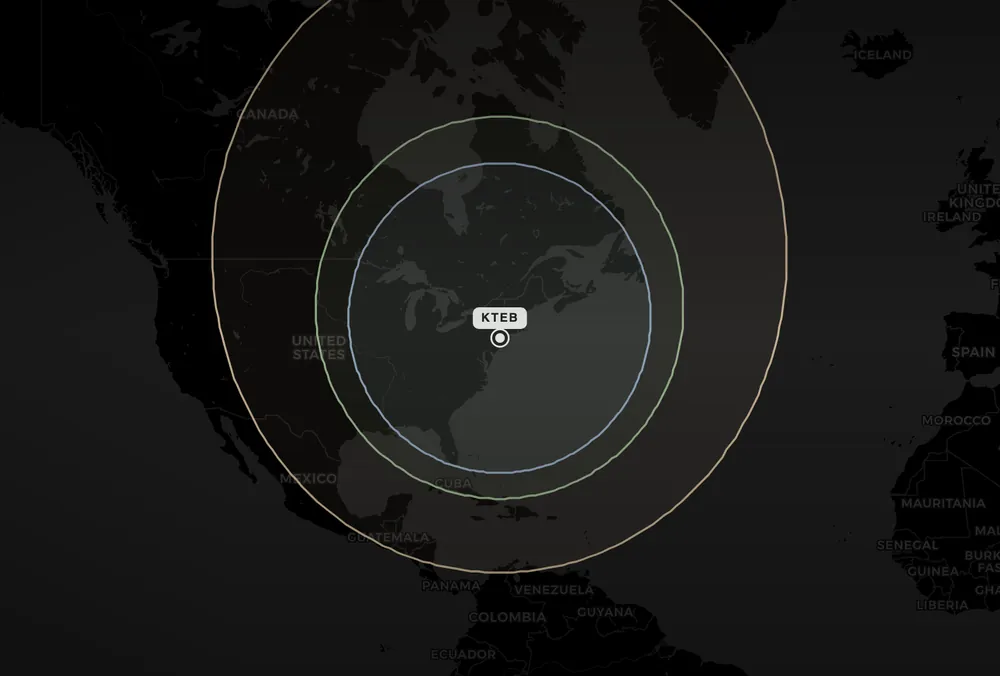
Explore aircraft range, compare options, check flight times, and better understand which aircraft fits your trip.

Ready to fly to Washington?
Request a charter and our team will tailor an itinerary for your next journey.
*Takes only about 40 seconds to request your quote.
