



Destination Hub
Private Jet Charter to Vienna
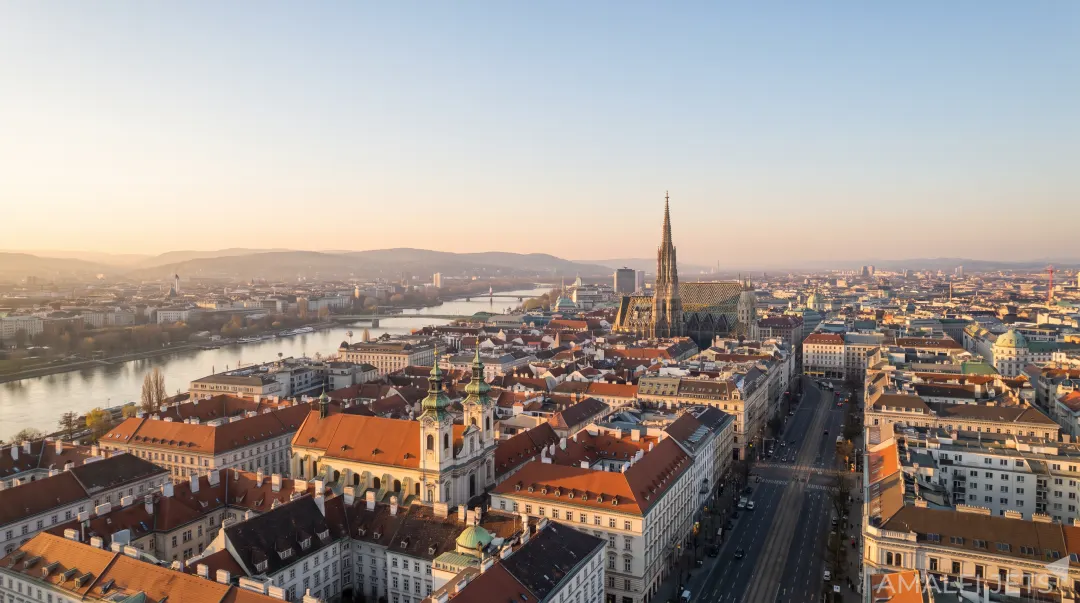
Most private arrivals for the Austrian capital are organized through Vienna International Airport (VIE), giving the day a single, controlled point of entry. From there, your party can continue toward the city’s hotels, embassies, concert halls, and boardrooms without building the itinerary around an airline timetable.
Quick facts
Why charter a private jet to Vienna?
Chartering privately into Vienna is about controlling the calendar as much as the cabin experience.
A private arrival through VIE keeps the itinerary direct: departure time, passenger list, catering, ground transport, and onward plans can be organized around the traveler rather than a published schedule. For principals moving between cultural commitments, diplomatic meetings, investment visits, or family travel, that control is often the difference between a rushed day and a composed one.
Why private flyers choose this route
- Schedule authority: Flights can be arranged around firm appointments, late changes, and multi-city European itineraries.
- Privacy from end to end: Passenger movements, luggage coordination, and ground transfers can be handled with discretion.
- Fewer wasted hours: Avoiding airline connections helps preserve time on short stays.
- Flexible regional planning: If the trip extends beyond the capital, alternate airports can be evaluated before the aircraft is confirmed.
For clients comparing a private jet charter to Vienna, the most valuable decision is usually not simply the aircraft; it is the overall plan for arrival timing, airport handling, and the ground journey that follows.
“For May, September, and December dates, our desk secures preferred arrival timing and handling first; firm schedules early in the process usually widen aircraft choice.”

When is the best time to fly to Vienna?
The best time to visit Vienna by private flight depends on whether the trip is built around culture, commerce, festive travel, or value.
May is a strong month for spring itineraries, with longer days, outdoor terraces, and a full cultural calendar drawing leisure and business travelers at the same time. September brings a polished return to the city after summer, with congress activity and fall arts programming adding pressure to preferred aircraft and hotel inventory.
Peak-demand periods
December requires the most careful planning for travelers combining Christmas markets, private shopping, family gatherings, and New Year stays. Demand can build quickly around the festive period, so aircraft selection and preferred arrival timing should be secured before final social plans become fixed.
Value-minded timing
January, February, and March can offer a quieter rhythm after the holidays, especially outside major ball dates. The weather is cold, but museums, coffee houses, concert halls, and private dining rooms give the city a composed winter appeal, and softer demand may create more flexibility for aircraft choice.
Where our clients stay and go
Vienna rewards travelers who appreciate ceremony without excess: a capital of river light, imperial avenues, coffee houses, and music rooms that still feels precise in its daily rhythm.
Set in eastern Austria on the Danube, the city carries its history in layers rather than slogans. The Ringstrasse frames grand public buildings and parks; the old center gathers stone courtyards, church towers, and quiet side streets; beyond the formal boulevards, neighborhoods open into galleries, restaurants, markets, and residential calm.
The character of the city
Morning can begin with dark coffee under a vaulted ceiling and move into a museum appointment, a boardroom lunch, or a private viewing before the evening performance. That ease of movement is part of the appeal: culture is not staged as a single attraction, but built into the way the city is used.
Water gives the capital another register. The Danube and its adjoining green spaces soften the urban edge, while the city’s skyline remains more horizontal than showy, punctuated by domes, spires, and palace roofs rather than towers competing for attention.
Why private travelers come
Many arrivals are purposeful: diplomatic schedules, finance meetings, congress weeks, art travel, medical or family visits, and winter social calendars. Others come for a few days of deliberate slowness — a suite near the old center, a table reserved at the right hour, a concert ticket already waiting, and a flight home timed after lunch rather than before dawn.
What determines the cost of a flight to Vienna?
The cost of chartering into Vienna is determined by the aircraft, routing, airport plan, timing, and aircraft availability.
Aircraft class has a major influence because cabin size, range requirements, baggage needs, crew planning, and onboard service expectations all shape the quote. A short European sector, a transatlantic itinerary, and a multi-stop business trip may each require a different approach even when the destination is the same.
What shapes the quote
- Aircraft category: Cabin size, passenger count, luggage volume, routing, and service profile guide the aircraft recommendation.
- One-way versus round trip: A round trip may keep the same aircraft and crew with the itinerary, while a one-way can require repositioning before or after the passenger flight.
- VIE positioning and fees: Handling, parking, landing-related charges, and aircraft repositioning are evaluated as part of the airport plan.
- Seasonal demand: May, September, and December can tighten availability because of congress weeks, cultural travel, Christmas markets, and New Year demand.
- Empty-leg availability: An empty-leg sector can be efficient when the timing, routing, passenger count, and flexibility align, but it is never the foundation for a firm itinerary.
How to plan intelligently
Firm dates, accurate passenger numbers, and a clear luggage profile help the charter team compare suitable aircraft without overbuilding the trip. If the schedule is fixed during a high-demand period, confirming earlier usually improves aircraft choice and reduces the need to accept less convenient positioning.
Which airports serve Vienna?
Vienna is served by VIE for most private arrivals, with LOAV, BTS, GRZ, and LNZ considered when the itinerary points toward a different part of the region.
Vienna International Airport (VIE)
VIE is the primary airport for the capital and the natural starting point for most private-flight planning. It suits travelers whose schedule is centered on city hotels, diplomatic districts, cultural venues, or business meetings, because the arrival plan can be kept straightforward: aircraft handling, passenger transfer, and ground transport are coordinated around one main gateway.
Voslau Airport (LOAV)
LOAV can be considered when the traveler’s plans sit south of the capital or when a smaller regional airfield better matches the ground itinerary. Its value is not in replacing the primary airport by default, but in giving the charter desk another option to review when congestion, event timing, or a specific destination outside the center makes an alternate worth evaluating.
M.R. Stefanik Airport (BTS)
BTS is relevant when the itinerary crosses toward Bratislava or the eastern side of the region. For some trips, especially those involving meetings or estates beyond Austria’s border, using this airport may reduce unnecessary backtracking on the ground; the charter team would confirm handling suitability before recommending it over VIE.
Graz Airport (GRZ)
GRZ makes sense when the trip continues into Styria or southern Austria rather than the capital itself. It can be a practical alternate for travelers combining the city with regional appointments, private residences, or a multi-stop itinerary where landing closer to the next commitment matters more than arriving through the primary gateway.
Linz Airport (LNZ)
LNZ is best viewed as a regional option for Upper Austria and westward planning. If the journey includes industrial visits, private stays, or onward travel away from the capital, this airport may shorten the ground portion of the trip; Amalfi Jets would assess the routing, handling environment, and passenger requirements before presenting it as the preferred plan.
Common questions about Vienna charter
Which airport should I use for a private flight to Vienna?
For Vienna, VIE is the primary choice for most private arrivals because it keeps the arrival plan centered on the capital and allows the charter desk to coordinate handling and ground transport around one main gateway.
Can I use an alternate airport instead of VIE?
Alternate airports can make sense for Vienna when the final destination is outside the city center, when regional meetings change the ground plan, or when availability at LOAV, BTS, GRZ, or LNZ better fits the itinerary.
What determines the cost of chartering into the city?
Costs for Vienna are shaped by aircraft category, routing, one-way or round-trip structure, repositioning, airport fees, seasonal demand, and any empty-leg availability that genuinely matches the schedule.
When should I book for Christmas markets or New Year travel?
December travel to Vienna should be planned early because festive stays, Christmas markets, and New Year demand can tighten aircraft availability and preferred arrival times.
Is January through March a good period for private travel?
January, February, and March can work well for Vienna travelers who want a quieter post-holiday pace, especially when the itinerary is not tied to major ball dates or fixed congress weeks.
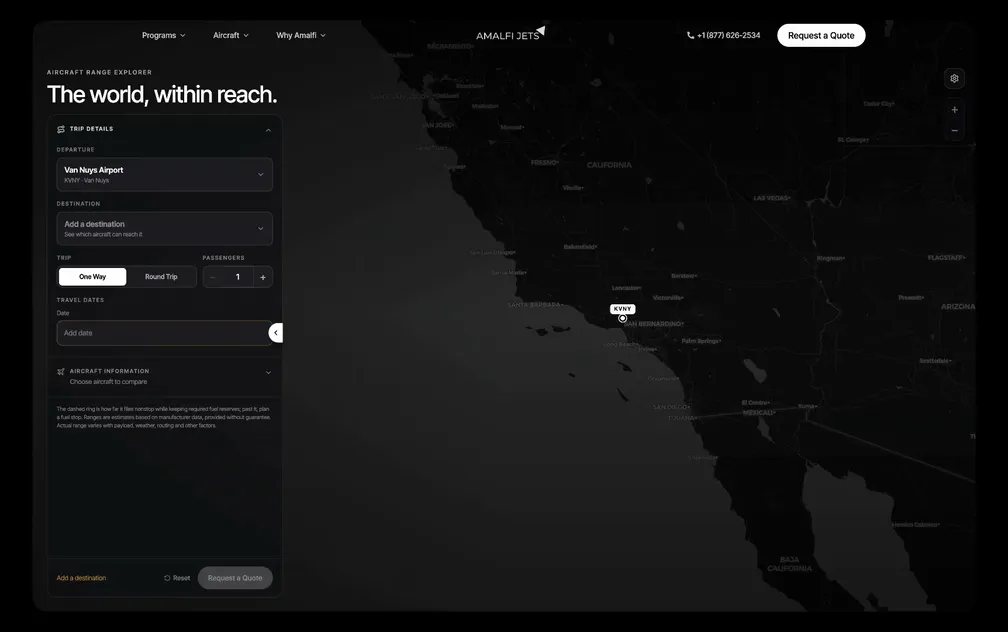
Try Range Explorer
See how far you can fly nonstop
Explore aircraft range, compare options, check flight times, and better understand which aircraft fits your trip.

Ready to fly to Vienna?
Request a charter and our team will tailor an itinerary for your next journey.
*Takes only about 40 seconds to request your quote.
