



Destination Hub
Private Jet Charter to Venice
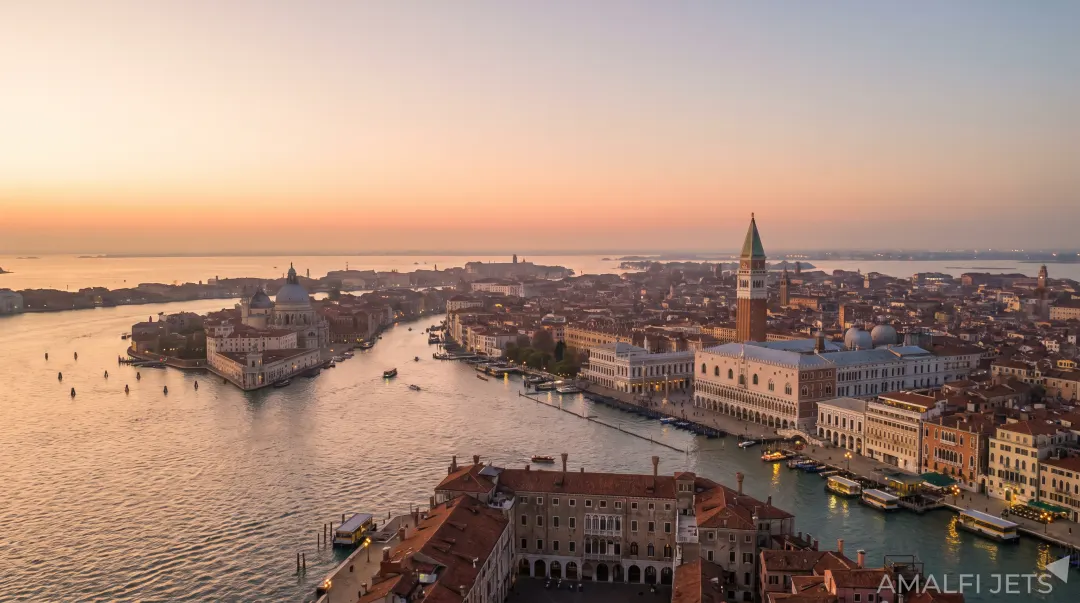
Most private flights into the city arrive through Venice Tessera Marco Polo Airport Information (VCE), giving the day one clear aviation plan before the transfer onto the lagoon. From there, Amalfi Jets coordinates around your schedule, so the arrival feels composed rather than dictated by an airline timetable.
Quick facts
Why charter a private jet to Venice?
Chartering privately into Venice lets travelers align flight timing, ground transfer planning, and luggage handling around the cadence of the trip rather than a published airline schedule.
A simpler arrival day
For many itineraries, Venice Tessera Marco Polo Airport Information (VCE) provides the most direct primary arrival plan: one aircraft movement, one handling sequence, and a schedule built around the traveler. Instead of adapting to fixed airline departures, clients can choose timing that supports hotel check-in, yacht embarkation, meetings, or a same-day onward plan.
Time saved where it matters
The advantage is not only in the flight itself. Private travel can reduce the friction around connections, baggage, and waiting time, especially when the trip is tied to a narrow arrival window or a multi-stop European itinerary.
Flexibility beyond the primary airport
When the final destination sits outside the historic center, Amalfi Jets can evaluate secondary airports such as LIPV, TSF, QPA, and TRS. The right choice depends on the operating requirements, transfer plan, and aircraft availability for the requested dates.
“For firm May, August, and September dates, our charter desk secures VCE handling and aircraft availability first, then evaluates alternates if the schedule or regional transfer plan points away from the primary airport.”

When is the best time to fly to Venice?
The best time to visit Venice depends on whether the priority is cultural energy, summer atmosphere, or a quieter low-season stay.
Peak months
May, August, and September tend to require earlier planning. Biennale openings bring a cultural audience in May, summer leisure travel increases demand in August, and the Film Festival adds pressure in September, especially for travelers who need firm arrival windows and preferred aircraft choices.
Value-oriented months
January, November, and December can offer a calmer version of Venice outside the holiday peaks. Colder, wetter conditions and the possibility of acqua alta make flexibility useful, but travelers who prefer quieter streets, softer light, and less crowded dining calendars may find the tradeoff worthwhile.
Booking guidance
For fixed dates during the busiest periods, secure the aircraft and VCE handling early. During lower-demand weeks, remain open on departure time and aircraft category when possible, as that flexibility can widen the range of suitable charter options.
Where our clients stay and go
Venice rewards private travelers with a setting where arrival is part of the experience: runway, water, stone, and skyline unfold in sequence.
Built across a lagoon rather than around a conventional urban grid, the city changes the tempo of a trip almost immediately. Transfers move toward canals and quays, façades catch the light differently by the hour, and even a short stay can feel shaped by tides, bells, and the slow reveal of narrow streets opening onto broad squares.
For private travelers, Venice is often chosen for more than a single monument or event. It suits itineraries built around art, architecture, collecting, film, family celebrations, yacht connections, and quiet weekends where the pleasure lies in moving carefully through a place that resists haste.
A stay can move from the Grand Canal to Dorsoduro, from a private palazzo dinner to an early walk before the day’s visitors arrive. The city’s luxury is not loud; it is found in timing, access, discretion, and the ability to let the journey match the atmosphere of the lagoon.
What determines the cost of a flight to Venice?
The cost of chartering into Venice is shaped by aircraft selection, itinerary structure, VCE-related positioning and fees, seasonal demand, and available aircraft supply.
Aircraft category and cabin preferences
Aircraft choice is a primary driver. Cabin size, luggage needs, passenger count, onboard service expectations, and routing complexity all influence which aircraft are appropriate for the trip. Amalfi Jets presents options based on the mission rather than treating aircraft categories as interchangeable.
One-way or round-trip structure
A one-way itinerary may require aircraft positioning before or after the passenger flight, while a round trip may allow the aircraft and crew plan to be structured differently. Holding an aircraft for a return can be practical in some cases and inefficient in others, depending on timing, crew duty considerations, and aircraft availability.
VCE positioning, handling, and airport fees
Operating into VCE involves airport-specific planning, including confirmed handling, parking considerations, and any applicable fees tied to the aircraft movement. These items vary by trip, so they are reviewed alongside the aircraft quote rather than treated as a generic add-on.
Seasonal pressure and empty-leg opportunities
Demand rises around peak travel periods, especially when cultural openings, summer leisure, and the Film Festival concentrate private aviation requests. Empty-leg availability can help when a suitable aircraft is already moving in the right direction, but those opportunities are date-sensitive and cannot be relied on for firm plans.
Which airports serve Venice?
Private flights serving Venice typically center on VCE, with LIPV, TSF, QPA, and TRS considered when the wider itinerary points elsewhere in the region.
VCE — Venice Tessera Marco Polo Airport Information
As the primary airport for the city, VCE is the natural first planning point for most private arrivals. It keeps the aviation plan straightforward when the final destination is the lagoon, a central hotel, a yacht connection, or a schedule that benefits from using the main gateway.
LIPV — Venice-Lido Airport
LIPV can be considered when the itinerary is oriented toward the Lido or a lagoon-side plan where the transfer logic may favor that side of the city. Because secondary-field suitability depends on the aircraft, handling needs, and operating permissions for the specific trip, Amalfi Jets evaluates it as a tailored option rather than a default substitute.
TSF — Treviso Airport
TSF may make sense for travelers whose plans extend into the mainland Veneto area or when an alternate to VCE supports a cleaner regional transfer. It can also be part of a contingency discussion during compressed peak periods, provided aircraft handling and schedule requirements align.
QPA — Padova Airport
QPA is relevant when the trip is tied to Padova or the western Veneto corridor rather than the lagoon itself. For private travelers combining business, villa stays, or regional touring with a stop in Venice, the airport can be reviewed if it creates a more logical ground plan.
TRS — Trieste Ronchi Dei Legionari Airport
TRS is the broader northeastern option for itineraries connected to Trieste, Friuli Venezia Giulia, or the upper Adriatic. It is best viewed as a regional alternate when the traveler’s destination lies east of the lagoon or when the routing benefits from a different arrival point.
How Amalfi Jets selects the right airport
The recommendation starts with the final address, party size, luggage profile, aircraft category, and time sensitivity. From there, the charter desk confirms whether the preferred airport and any alternate can support the requested operation before presenting a plan.
Common questions about Venice charter
Which airport is usually used for a private arrival?
For Venice, VCE is typically the primary airport, with secondary fields considered when the wider itinerary or operating conditions make an alternate more practical.
Can Amalfi Jets arrange alternate airport options?
When suitable, Venice can also be served through LIPV, TSF, QPA, or TRS; the charter desk confirms handling, routing, and transfer logic before recommending one.
What determines the cost of a private flight into the city?
For Venice, charter pricing depends on aircraft category, itinerary structure, VCE positioning and fees, seasonal demand, and empty-leg availability, with no single factor setting the final quote.
When should I book for the busiest periods?
Demand in Venice is stronger in May, August, and September because of Biennale openings, summer leisure, and Film Festival traffic, so firm dates benefit from earlier planning.
How should I plan the arrival after landing?
After landing for Venice, arrivals often continue by road and water transfer, so the best plan aligns flight timing, luggage needs, and the final address before the aircraft is confirmed.
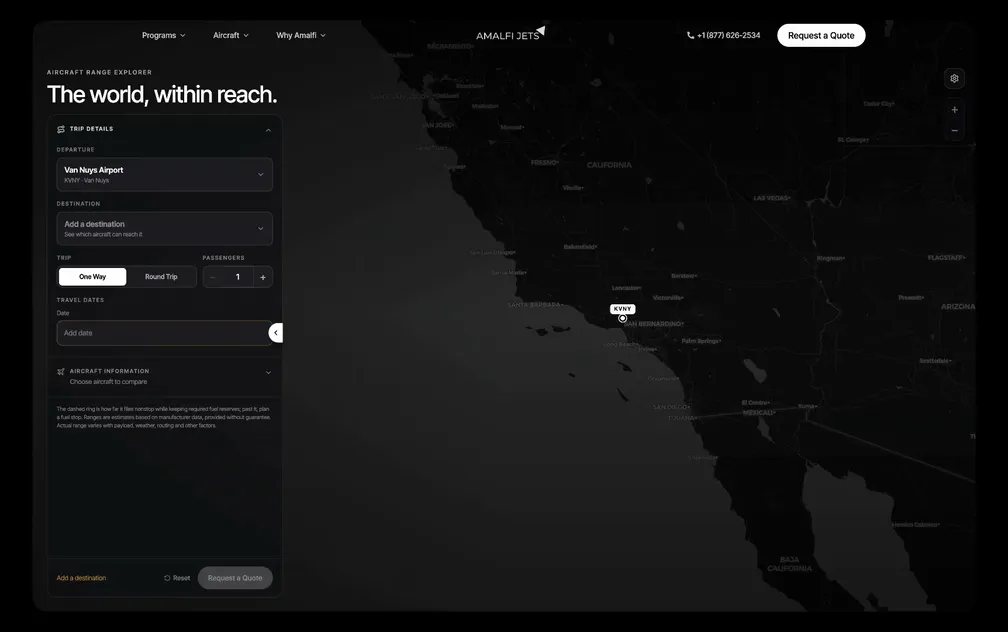
Try Range Explorer
See how far you can fly nonstop
Explore aircraft range, compare options, check flight times, and better understand which aircraft fits your trip.

Ready to fly to Venice?
Request a charter and our team will tailor an itinerary for your next journey.
*Takes only about 40 seconds to request your quote.
