



Destination Hub
Private Jet Charter to Vancouver
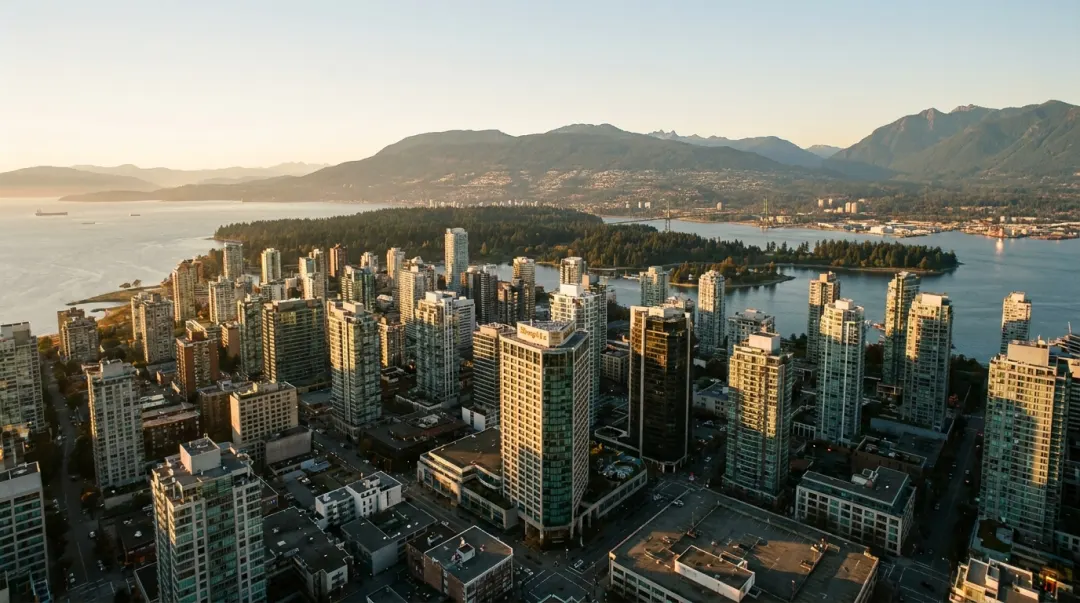
Arriving by private aircraft through Vancouver International Airport (YVR) keeps the charter day centered on a single primary gateway and a schedule built around your calendar. From touchdown, the city comes into focus quickly: water, glass towers, and the North Shore mountains setting the tone for a discreet arrival.
Quick facts
Why charter a private jet to Vancouver?
Private charter into Vancouver gives travelers control over arrival timing, airport choice, and the pace of the onward day.
For executives, owners, families, and cruise-bound guests, the value is not only privacy; it is the ability to shape the day without connecting through airline schedules. A meeting can begin shortly after arrival, a yacht or hotel transfer can be timed with precision, and the departure can wait for the traveler rather than the reverse.
A simpler gateway plan
YVR is the primary airport for the city, making it the first planning point for most charter itineraries. The appeal is straightforward: one coordinated arrival plan, one aircraft schedule, and a clear handoff to ground transportation.
Secondary airports can also matter when the itinerary points toward a different part of the region. Boundary Bay Airport, Pitt Meadows Airport, and Abbotsford International Airport give the charter desk additional options to review when routing, ground plans, or congestion make an alternate worth considering.
Time saved where it counts
Private aviation compresses the parts of travel that often create friction: fixed departure times, connection risk, and the need to build a trip around commercial flight availability. The aircraft can be scheduled around a board meeting, a cruise embarkation, a private residence arrival, or a same-day return.
Built for discretion
A charter itinerary also keeps the travel party together. Family members, advisors, assistants, security, and luggage can move on the same schedule, with the details organized in advance rather than improvised on the day of travel.
“For peak summer dates, our charter desk secures YVR handling and aircraft options first; firm departure windows early in the process widen choice and reduce last-minute repositioning pressure.”

When is the best time to fly to Vancouver?
The best time to visit Vancouver depends on whether the priority is summer atmosphere, aircraft choice, or value-oriented flexibility.
June, July, and August are the peak months, driven by summer cruise season, drier weather, festivals, and strong leisure demand. Travelers with fixed dates during this period should plan early, particularly when arrival times, larger cabins, or coordinated ground transfers are important.
January, February, and November tend to offer more value outside holiday peaks. Rainier off-season conditions can soften demand, which may improve availability for travelers whose plans are flexible and whose trip is built around meetings, private residences, dining, or a quieter coastal stay.
Because weather, cruise schedules, and leisure travel patterns can concentrate demand quickly, the best approach is to secure firm dates first and let the aircraft sourcing follow.
Where our clients stay and go
Vancouver draws private travelers with a polished waterfront city, mountain views, and a pace that moves easily between business, dining, and the outdoors.
The arrival feels cinematic without being loud. Light comes off Burrard Inlet, glass towers catch the weather, and the North Shore mountains sit close enough to frame the skyline. It is a city where the day can move from a boardroom to the seawall, from a private dinner in a downtown room to a quiet walk beside the water.
The city by water
Much of the destination’s character comes from its edges. Coal Harbour, English Bay, False Creek, and the harbor views near downtown give the city a maritime rhythm, while Stanley Park adds forest, shoreline, and open air within the urban fabric.
Granville Island brings a more textured side: market stalls, galleries, small theaters, and working waterfront details. Gastown offers older brick and evening atmosphere, while Yaletown and the downtown core feel sleek, social, and efficient for travelers on a compressed schedule.
Why it works for private travel
The region rewards travelers who want range without losing time. A single itinerary can include corporate meetings, waterfront hotels, private dining, gallery visits, spa time, and North Shore scenery without feeling overproduced.
For many guests, the appeal is not one attraction but the way the place edits itself. Water, forest, towers, and mountains stay in view, giving even a short stay a strong sense of arrival.
What determines the cost of a flight to Vancouver?
The cost of chartering into Vancouver is determined by the aircraft selected, the trip structure, airport handling requirements, seasonal demand, and available aircraft supply.
Aircraft selection
Aircraft class is one of the main cost drivers. The right choice depends on passenger count, luggage, cabin preference, routing, and the level of onboard comfort expected for the trip. A larger cabin, longer itinerary, or more complex schedule generally requires a different aircraft plan than a short regional movement.
One-way or round trip
A one-way charter may require aircraft positioning before pickup or after drop-off, while a round trip can be more efficient when the aircraft and crew remain aligned with the traveler’s schedule. The charter desk evaluates both structures before recommending the cleaner plan.
YVR positioning and fees
Because YVR is the primary airport, demand, aircraft positioning, handling, parking, and applicable airport charges all influence the final quote. These elements vary by aircraft, schedule, and availability, so the most accurate pricing comes from a live itinerary rather than a generic estimate.
Seasonality and demand
June, July, and August bring peak leisure movement, cruise-season travel, drier weather, and festival demand. During those months, aircraft choice and preferred departure times can tighten, especially for firm weekend or holiday-adjacent plans.
Empty-leg availability
Empty legs can reduce cost when an aircraft already needs to move along a compatible route. They are opportunistic by nature: timing, airports, cabin size, and flexibility all need to align, and availability can change quickly.
Which airports serve Vancouver?
Airports serving Vancouver include YVR as the primary gateway, with Boundary Bay, Pitt Meadows, and Abbotsford available as secondary options when the itinerary calls for a different regional fit.
Vancouver International Airport (YVR)
As the primary airport, YVR is the natural first choice for most private arrivals. It works especially well when the traveler is staying downtown, connecting to a cruise, meeting in the central business district, or needs the most straightforward gateway plan for a high-touch itinerary.
For many charter clients, the advantage is simplicity. The airport keeps the arrival plan concentrated around the city’s main air gateway, while the charter desk coordinates timing, handling, and onward ground movement around the traveler’s schedule.
Boundary Bay Airport (YDT)
Boundary Bay Airport can be useful when the day points toward the southern side of the region or when an alternate to the primary gateway may create a cleaner ground plan. It is best considered as a practical option rather than an automatic substitute.
A private traveler might review YDT when timing, handling availability, or destination within the metro area makes a secondary airport more efficient. The decision depends on the live itinerary: aircraft, passengers, baggage, ground transport, and the final address all matter.
Pitt Meadows Airport (YPK)
Pitt Meadows Airport serves as another regional alternative, particularly for itineraries oriented away from the downtown core. Its value is in giving the charter desk another planning point when the traveler’s meetings, residence, or onward movement are better aligned with that side of the area.
YPK is not selected simply because it appears on a map. It makes sense when the ground segment, handling plan, and aircraft logistics come together more cleanly than they would through the primary airport.
Abbotsford International Airport (YXX)
Abbotsford International Airport is the secondary option to consider when the trip is tied to Abbotsford, the Fraser Valley, or an eastern regional plan. For travelers whose final destination is not central, YXX may reduce unnecessary backtracking.
The airport can also be part of a congestion-avoidance strategy when availability and ground plans support it. As with any alternate, the charter desk weighs handling suitability, timing, passenger preferences, and the full door-to-door itinerary before recommending it.
Routes to & from Vancouver
Common questions about Vancouver charter
Which airport do private jets usually use for the city?
Most Vancouver private flights use YVR, the primary airport; Boundary Bay, Pitt Meadows, and Abbotsford may be reviewed when the itinerary points to another part of the region.
Can I use a secondary airport instead of YVR?
For Vancouver, secondary airports can make sense when the final address, handling plan, or traffic pattern makes Boundary Bay, Pitt Meadows, or Abbotsford a better fit.
What determines the cost of chartering in?
The cost to charter into Vancouver is shaped by aircraft class, routing, one-way or round-trip structure, positioning, airport fees, seasonal demand, and empty-leg availability.
When should I book for summer travel?
For Vancouver travel in June, July, and August, book as early as dates are firm because cruise season, drier weather, festivals, and leisure demand can tighten aircraft choice.
Are there better-value months for private flights?
Vancouver can see softer demand in January, February, and November outside holiday peaks, which may improve availability when rain-season timing fits your plans.
Does Amalfi Jets coordinate the arrival beyond the flight?
For Vancouver arrivals, Amalfi Jets can align airport selection with your schedule and onward ground plan so the aircraft, handling, and transfer timing work together.
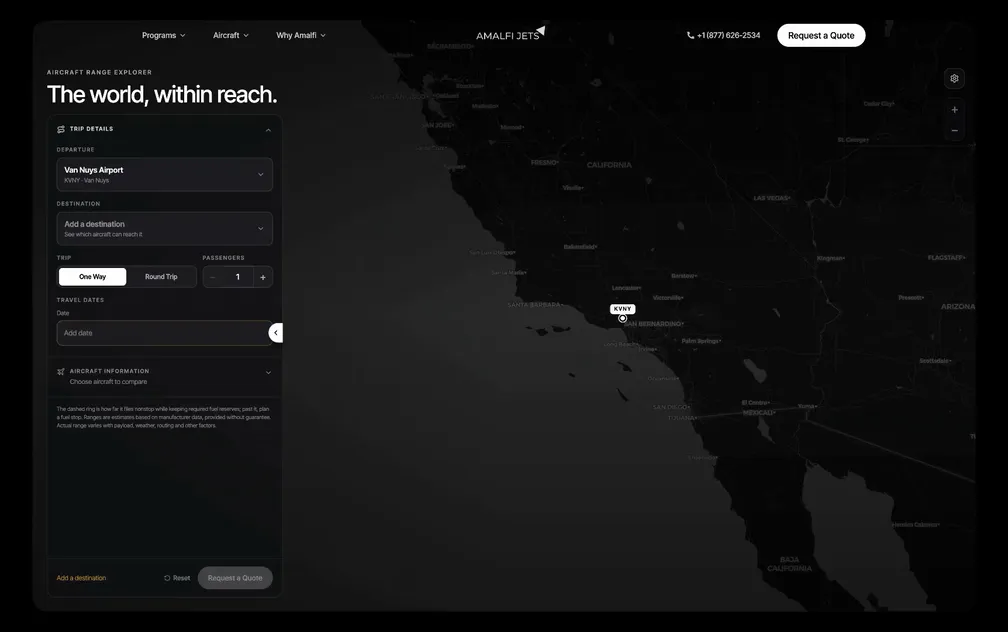
Try Range Explorer
See how far you can fly nonstop
Explore aircraft range, compare options, check flight times, and better understand which aircraft fits your trip.

Ready to fly to Vancouver?
Request a charter and our team will tailor an itinerary for your next journey.
*Takes only about 40 seconds to request your quote.
