



Destination Hub
Private Jet Charter to Tulsa
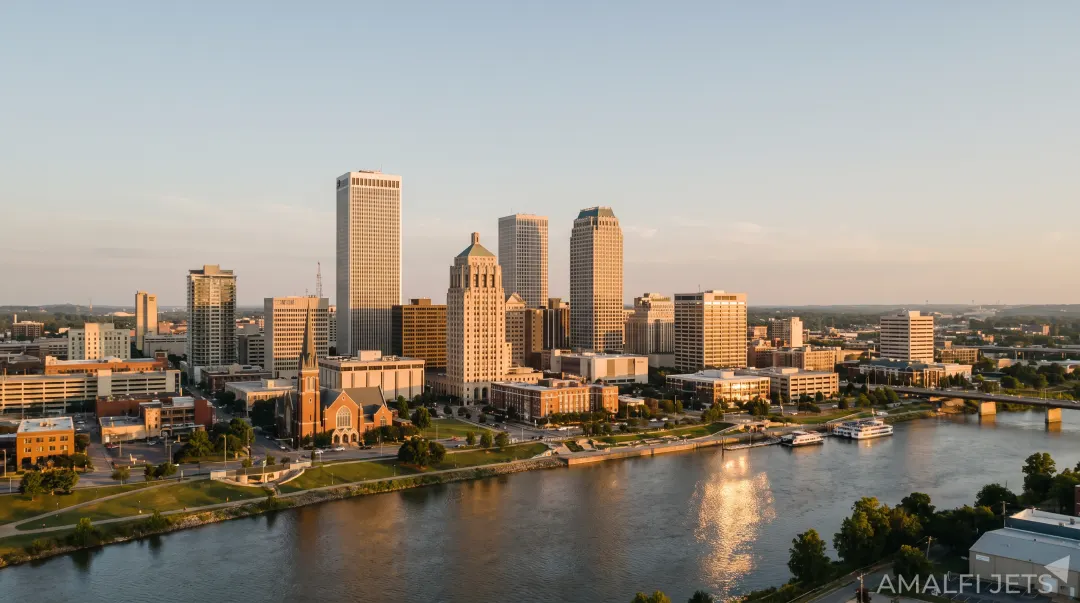
Most private arrivals for Tulsa are planned through Tulsa Riverside Airport, giving the day a focused entry point and a schedule built around the passenger. From RVS, the experience is intentionally simple: coordinated ground arrival, a ready aircraft, and no dependence on airline connections.
Quick facts
Why charter a private jet to Tulsa?
Chartering privately into Tulsa is the most direct way to keep a business or leisure itinerary on your own clock. Instead of building the day around airline schedules, travelers can set departure times, adjust meetings, and arrive with ground transportation aligned to the aircraft.
Built around RVS
RVS serves as the primary airport for private arrivals, which keeps the plan clear from the start. A single preferred gateway helps the charter desk coordinate aircraft sourcing, arrival handling, crew timing, and onward transportation without unnecessary complexity.
Time saved where it matters
Private flying is most valuable when the schedule is compressed. Direct routing, private-terminal handling where available, and a tailored departure window reduce the friction that often defines commercial travel.
Flexibility for changing plans
Executive trips, family weekends, and event-driven travel often move by the hour rather than the day. A charter itinerary can be revised around real-world priorities, with the aircraft plan, airport choice, and ground schedule managed together.
“For peak May, September, and October dates, our charter desk secures the preferred airport plan first, then works backward through aircraft availability and crew timing. Early firm dates usually widen the aircraft selection.”

When is the best time to fly to Tulsa?
The best time to visit Tulsa depends on whether the priority is atmosphere, weather, availability, or value. Spring and fall tend to feel especially attractive for private travelers because the city’s calendar and outdoor conditions align well.
May is a peak month as Mayfest brings additional demand alongside comfortable spring weather. Travelers with firm dates during this period should plan early so aircraft choice and preferred departure times remain broad.
September and October also draw stronger demand, supported by the State Fair, Oktoberfest, and mild fall conditions. Weekends, event arrivals, and late-day departures can become more competitive as plans concentrate around the same windows.
January, February, and August are often better value periods. The post-holiday winter lull and hot late-summer weather can soften demand, improving availability for travelers with flexible timing.
Where our clients stay and go
Tulsa has a grounded, quietly polished character shaped by the Arkansas River, Art Deco architecture, Route 66 history, and a strong sense of local identity. It is a city where oil-era towers, brick districts, music rooms, and open parkland sit close enough to make a short stay feel complete.
A city of architecture, river light, and districts
Downtown’s historic façades give the skyline texture, especially when late light catches the vertical lines and decorative stonework. Along the river, Gathering Place and nearby green space shift the pace from business to open air, while Route 66 adds neon, diners, and roadside Americana to the city’s visual language.
Culture with substance
The city is known for Art Deco, live music, museums, Native culture, and the history of Greenwood. That mix gives private travelers more than a single-center itinerary: a morning meeting can sit comfortably beside an afternoon collection visit, a chef-led dinner, or a quiet drive through historic corridors.
Why private travelers come
For private travelers, Tulsa works well because it combines regional business relevance with a distinctive weekend rhythm. The appeal is not spectacle; it is access, ease, and a place with enough cultural depth to reward a carefully planned stay.
What determines the cost of a flight to Tulsa?
The cost of chartering into Tulsa is determined by the aircraft selected, the trip structure, airport-related expenses, seasonal demand, and live aircraft availability. Each quote reflects the specific itinerary rather than a fixed fare.
Aircraft selection
Cabin size, range needs, baggage requirements, passenger count, and preferred onboard experience all influence aircraft sourcing. A larger cabin, added crew requirements, or a more specialized aircraft profile can change the final charter estimate.
One-way versus round trip
A same-day return, overnight stay, or open-jaw itinerary affects how the aircraft and crew are scheduled. Round trips may allow more efficient use of the aircraft, while one-way plans can involve repositioning before or after the passenger leg.
RVS positioning and airport expenses
RVS planning may include aircraft positioning, handling, landing, parking, crew, and related operating fees. These items vary by aircraft, timing, service requirements, and how long the aircraft remains on the ground.
Seasonal demand
May, September, and October can tighten availability as Mayfest, the State Fair, Oktoberfest, and mild spring or fall weather draw more travel. During those periods, earlier confirmation generally widens the aircraft options available.
Empty-leg opportunities
Empty legs can reduce the effective cost when an aircraft is already moving in the right direction. Availability is never guaranteed, and timing is less flexible, but the charter desk can monitor suitable options when the traveler’s schedule allows.
Which airports serve Tulsa?
The airports that serve Tulsa include RVS as the primary private-arrival airport, with OWP, TUL, GCM, and BVO available as secondary options when the wider itinerary calls for them.
RVS: the primary choice
Tulsa Riverside Airport is the first option the charter desk evaluates for most private arrivals. Choosing RVS keeps the plan centered on the city while allowing the aviation schedule, passenger preferences, and ground transfer to be organized around one clear point of arrival.
OWP: William R. Pogue Municipal Airport
OWP can be considered when the traveler’s final destination sits closer to the side of the region it serves, or when a smaller municipal airport better matches the day’s ground plan. It is useful to evaluate when convenience depends less on the central city and more on where the passenger needs to be after landing.
TUL: Tulsa International Airport
TUL is the area’s major commercial airport and may make sense when airline connectivity, a meeting point near the commercial airport, or a specific handling preference makes it the better fit. For some itineraries, using the larger airport environment can simplify coordination with other travelers arriving by scheduled service.
GCM: Claremore Regional Airport
GCM is a practical alternate when plans point toward Claremore or the northeastern side of the region. The value of considering it is ground-time efficiency: if the destination lies away from the central metro, the closer airport may create a smoother overall day.
BVO: Bartlesville Municipal Airport
BVO serves travelers whose plans extend toward Bartlesville or the northern part of the region. It is worth reviewing when a regional meeting, residence, plant visit, or onward drive would be better supported by an airport outside the main city.
How the charter desk decides
Airport selection is not simply a matter of naming the nearest code. The team weighs passenger location, aircraft availability, handling suitability, crew planning, ground transport, and any congestion considerations before confirming the recommended airport.
Common questions about Tulsa charter
Which airport should I use for a private flight into Tulsa?
Tulsa private arrivals are usually planned through RVS, the primary airport, though OWP, TUL, GCM, or BVO may make better sense when the final ground destination points to another part of the region.
What determines the cost of chartering into Tulsa?
For Tulsa, charter cost depends on aircraft selection, one-way or round-trip structure, aircraft positioning, airport and handling expenses, seasonal demand, crew planning, and whether a suitable empty leg is available.
When should I book a private flight for peak travel periods?
May, September, and October bring higher Tulsa demand because of Mayfest, the State Fair, Oktoberfest, and mild weather, so firm dates should be confirmed as early as practical.
Can I choose an alternate airport instead of RVS?
Yes, Tulsa itineraries can use OWP, TUL, GCM, or BVO when an alternate better matches the destination, aircraft plan, handling needs, or desired ground route.
Are empty legs available for flights to or from the area?
Empty legs may be available for Tulsa when an aircraft is already repositioning in a compatible direction, but timing is less flexible and availability can change quickly.
Try Range Explorer
See how far you can fly nonstop
Explore aircraft range, compare options, check flight times, and better understand which aircraft fits your trip.

Ready to fly to Tulsa?
Request a charter and our team will tailor an itinerary for your next journey.
*Takes only about 40 seconds to request your quote.
