



Destination Hub
Private Jet Charter to Punta Cana

A private arrival into Punta Cana is at its best when the flight, handling, and resort transfer are organized as one quiet movement through the primary airport. Your schedule stays private, the beach is the focus, and the day is shaped around the traveler rather than the airline timetable.
Quick facts
Why charter a private jet to Punta Cana?
Chartering privately gives travelers bound for Punta Cana more control over timing, privacy, and the full arrival experience.
Time saved from the first decision
Commercial travel often turns a Caribbean escape into a sequence of fixed departures, airport lines, connections, and baggage waits. A private itinerary lets the day begin closer to your own calendar, with departure times, passenger list, catering, and ground transfer aligned before the aircraft moves.
That matters in a resort destination. Families, villa guests, honeymoon travelers, and executive groups often arrive with luggage, golf bags, staff coordination, or multiple arrival points to manage. Private charter keeps those details inside one plan rather than spread across separate airline reservations.
A more discreet way to reach the coast
The primary airport is the natural focus for many resort stays in the area, especially when the final destination is along the main beach corridor. The value is not only where the aircraft lands; it is the ability to coordinate the ramp, transfer, and arrival rhythm with fewer public touchpoints.
Private travel also helps when plans change. If a villa check-in moves, a meeting runs long, or weather requires a more measured operating decision, the charter desk can review schedule options and suitable alternates rather than forcing the traveler back into a commercial timetable.
Flexibility beyond the obvious gateway
Secondary airports such as LRM, SDQ, JBQ, and AZS can make sense when the itinerary extends beyond the resort coast. A traveler combining beach time with La Romana, Santo Domingo, Samaná, or another part of the Dominican Republic may benefit from reviewing alternates before the flight is confirmed.
The best airport choice is therefore a planning decision, not just a map decision. Amalfi Jets looks at the party’s address on the ground, aircraft availability, arrival procedures, and the onward transfer before recommending the most efficient route.
“For firm winter or holiday dates, our charter desk secures aircraft availability and handling first, then reviews alternates such as LRM or SDQ. Earlier confirmation widens cabin choice and protects preferred departure windows.”

When is the best time to fly to Punta Cana?
The best time to visit Punta Cana depends on whether the priority is peak beach weather, holiday atmosphere, or stronger value.
December through March
December, January, February, and March are the prime winter-sun months. Travelers come for dry-season beach weather, holiday escapes, and the resort energy that builds when North American and European winter is at its coldest.
Private aviation demand usually follows that resort calendar. Preferred aircraft, peak-week departure times, and return-day availability can tighten quickly around holidays, school breaks, and long winter weekends. Early planning gives the charter desk more room to compare aircraft, routing, and airport options.
May and the autumn value window
May can be appealing after the winter peak eases, especially for travelers who want a quieter resort rhythm. September, October, and November can also bring softer demand and better aircraft availability, though those months sit within the Atlantic hurricane season.
The trade-off is not simply price or privacy; it is flexibility. Travelers who can build a little margin into the schedule, monitor weather, and keep alternates under review can often make the most of the value period without giving up the polish of a private arrival.
How to plan around the calendar
For fixed holiday dates, secure the aircraft and handling plan first, then refine the details around resort check-in, luggage, and ground transfer. For flexible dates, ask the charter desk to compare nearby departure windows and suitable alternates, since small timing shifts can improve aircraft choice.
A well-built itinerary treats seasonality as part of the operating plan. The goal is to protect the ease of the trip before the destination gets busy.
Where our clients stay and go
On the eastern tip of the Dominican Republic, Punta Cana is a resort coast defined by pale sand, warm light, and water that shifts from blue to green as the day changes.
The feel of the place
This is a destination built around the sea. Mornings tend to begin quietly: palms moving in the wind, early beach walks, breakfast terraces opening toward the water. By afternoon, the pace spreads across pools, golf courses, marinas, beach clubs, and shaded villas.
The landscape is low and open rather than urban. Instead of a dense skyline, travelers find long resort frontages, gated communities, and stretches of coastline where the horizon does most of the work. Bávaro is known for its broad resort beach setting, while Cap Cana draws visitors seeking a more private enclave with marina and villa energy.
Why private travelers come
The appeal is ease. A traveler can arrive with family, staff, friends, or colleagues and move directly into a controlled resort environment. Days can be active or almost still: golf in the morning, a boat plan after lunch, dinner by the water, or nothing more scheduled than the next swim.
Uvero Alto, Bávaro, Cap Cana, and the surrounding resort areas each have a slightly different rhythm. Some stays are centered on all-inclusive convenience; others revolve around private villas, wellness, golf, dining, or a yacht day. Private charter suits that style because the flight becomes part of the same discreet arrangement.
A destination that rewards planning
The most successful trips are not over-programmed. They are carefully set up and then allowed to breathe. Airport choice, arrival time, luggage handling, and the ground transfer should be confirmed before departure so the first impression is the coast itself, not the logistics behind it.
For travelers who value privacy, timing, and a polished handoff from aircraft to resort, this part of the Dominican Republic is especially well matched to private aviation.
What determines the cost of a flight to Punta Cana?
The cost of chartering into Punta Cana is shaped by the aircraft selected, the routing, the schedule, airport charges, seasonal demand, and aircraft availability.
Aircraft selection
Aircraft category is one of the clearest cost drivers. Cabin size, range, baggage needs, passenger count, and onboard service expectations all influence which aircraft are appropriate for the trip. A larger cabin may provide more comfort for a family or group, while a more compact option may be more efficient for a shorter party size.
The right aircraft is not chosen by destination alone. Amalfi Jets considers where passengers are departing, how much luggage is moving, the desired cabin experience, and any schedule constraints before presenting options.
One-way versus round trip
A one-way charter can require the aircraft to reposition before or after the passenger flight. That positioning may affect overall cost, especially if the aircraft is not naturally based near the departure or arrival city.
Round-trip planning can sometimes improve efficiency when the same aircraft and crew can remain sensibly aligned with the traveler’s return. The practical answer depends on timing, aircraft availability, crew duty considerations, and how long the party will stay.
Positioning, handling, and airport fees
Private flights include more than airborne time. Airport handling, landing-related fees, parking, crew logistics, catering, and ground coordination all contribute to the final quote. These items vary by airport, aircraft, schedule, and operating requirements.
Alternate airports can also change the economics of a trip. LRM, SDQ, JBQ, or AZS may be useful for a specific ground plan, but each option must be reviewed for handling, permissions, transfer logic, and total itinerary efficiency.
Seasonal demand
Demand is strongest during the winter-sun and holiday period, especially from December through March. Resort demand, aircraft availability, and preferred departure windows can tighten at the same time, so firm dates are best planned early.
Value months such as May, September, October, and November may offer softer resort demand and broader aircraft availability. Those months can be attractive for travelers with flexible dates, while still requiring sensible planning around tropical-weather considerations.
Empty-leg availability
Empty legs can reduce the effective cost of a charter when an aircraft already needs to reposition along a compatible route. They are opportunistic rather than guaranteed, and the timing must match the traveler’s schedule closely.
Flexibility is the key. Travelers who can adjust departure times, airport choices, or travel dates are more likely to find useful empty-leg opportunities than those tied to a fixed itinerary.
Which airports serve Punta Cana?
The airports serving Punta Cana include the primary local gateway and several Dominican Republic alternates that may suit a broader resort, city, or coast-to-coast itinerary.
The primary airport
For stays centered on the main resort coast, the primary airport is usually the first option the charter desk reviews. It keeps the arrival plan focused on the beach districts and helps simplify the handoff from aircraft to ground transfer.
This gateway is most useful when the traveler’s final address is in the core resort area and the goal is a direct, uncomplicated arrival. The desk still reviews handling, schedule, aircraft availability, and any peak-period constraints before confirming the plan.
LRM — La Romana International Airport
LRM is the natural alternate when the trip leans west toward La Romana, Casa de Campo, or the southeastern coast. For travelers combining a resort stay with golf, marina time, or a villa program in that area, it may reduce unnecessary ground movement compared with forcing every arrival through the beach corridor.
It can also be useful as a strategic alternate during busy periods. If aircraft availability, handling windows, or onward transfers point away from the primary gateway, LRM deserves a serious look.
SDQ — De Las Americas International Airport
SDQ is the broader Santo Domingo option and can make sense when the itinerary includes the capital, a business appointment, or a city-and-beach combination. It is not chosen simply because it is another airport; it is chosen when the ground plan points toward Santo Domingo first.
For private travelers, SDQ may also be useful when the aircraft schedule or passenger movements are tied to separate arrivals in the capital area. The right call depends on the balance between airport logistics and the transfer that follows.
JBQ — La Isabela International Airport
JBQ may be considered for Santo Domingo-side planning when a traveler’s schedule, aircraft type, and handling review point toward a different capital-area airport. It is best treated as a situational option rather than a default beach gateway.
The charter desk would evaluate JBQ when the party’s ground movements, permissions, and timing make it more practical than a larger international arrival point. Suitability should be confirmed for the specific aircraft and itinerary.
AZS — El Catey Presidente Juan Bosch Airport
AZS is relevant when the trip extends toward Samaná or the northern side of the country. For travelers building a multi-stop Dominican itinerary, it may place the aircraft closer to that part of the island than a resort-coast arrival would.
As with any alternate, the decision should start with the address on the ground. If the traveler is staying entirely on the east coast, another airport may add complexity; if the journey is split between regions, AZS can be part of a smarter routing conversation.
Common questions about Punta Cana charter
Which airport is best for a private arrival?
For most Punta Cana itineraries, the primary airport is reviewed first because it keeps the arrival plan focused on the main resort coast. The charter desk may still compare alternates if the final address, aircraft schedule, or handling plan suggests a better fit.
What determines the cost of chartering there?
Aircraft selection, routing, crew time, airport handling, positioning, seasonal demand, and empty-leg availability determine the cost of chartering into Punta Cana. Round-trip planning and flexible timing can sometimes improve overall efficiency.
When should I book for peak season?
Demand for Punta Cana is strongest from December through March, especially around holidays and winter school breaks. Firm dates should be secured early so the desk can compare aircraft and protect preferred departure windows.
Can I use an alternate airport?
Yes. Punta Cana travelers may use LRM, SDQ, JBQ, or AZS when the ground itinerary points toward La Romana, Santo Domingo, Samaná, or another part of the country. Each option is reviewed for handling, permissions, timing, and transfer logic.
How does the charter desk choose the right gateway?
We review your resort address, passenger count, luggage profile, schedule, customs needs, and aircraft availability before recommending the best airport for Punta Cana. The goal is to reduce friction from landing through final transfer.
Are there better-value months to fly privately?
May, September, October, and November can be good value months for Punta Cana because resort demand may soften and aircraft availability can improve. Weather planning remains important during the hurricane-season portion of that window.
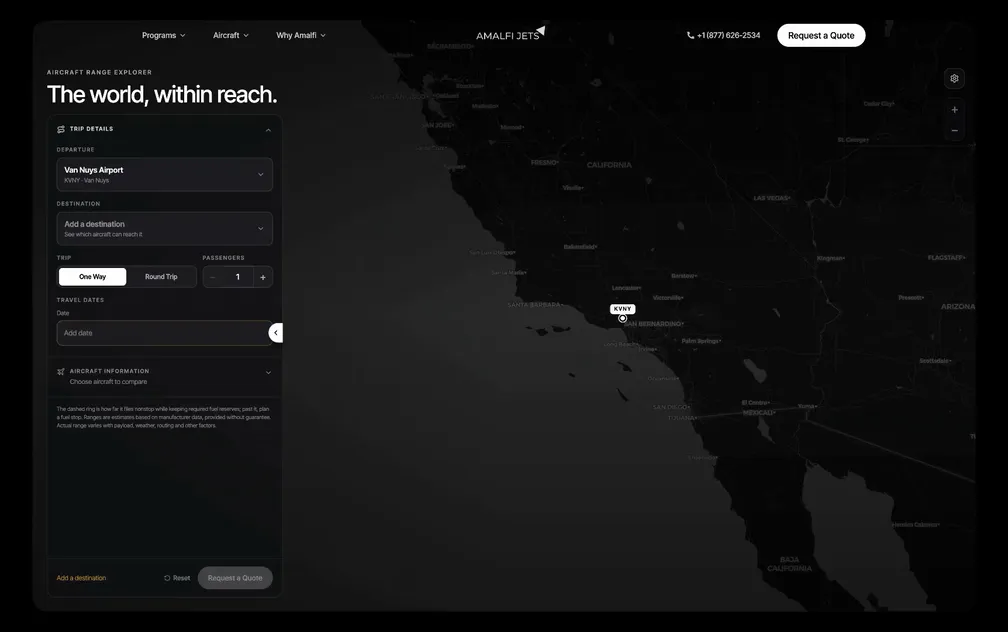
Try Range Explorer
See how far you can fly nonstop
Explore aircraft range, compare options, check flight times, and better understand which aircraft fits your trip.

Ready to fly to Punta Cana?
Request a charter and our team will tailor an itinerary for your next journey.
*Takes only about 40 seconds to request your quote.
