



Destination Hub
Private Jet Charter to Paso Robles
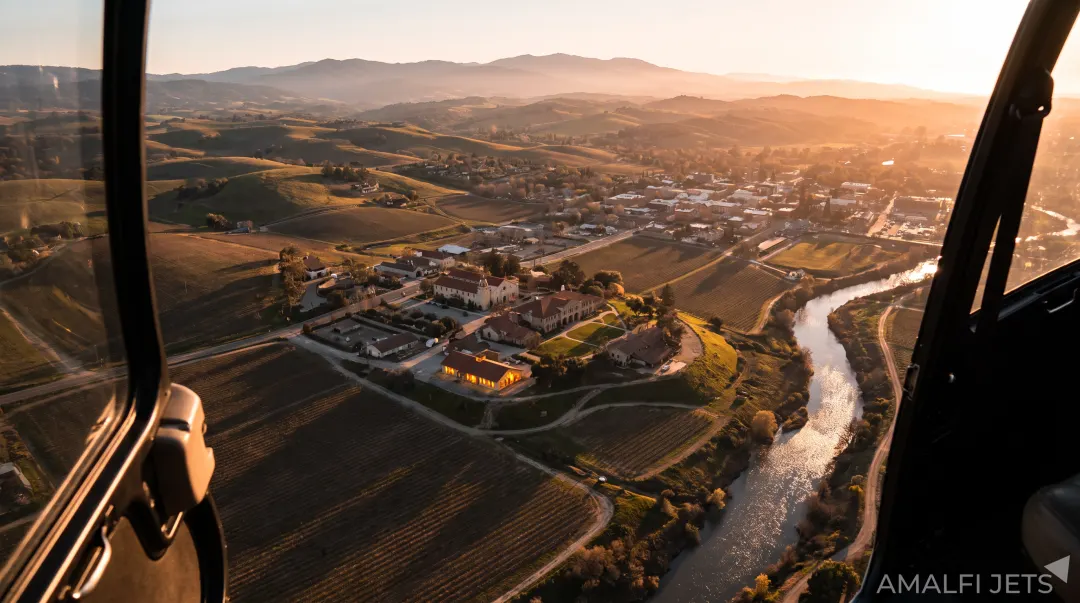
Arriving by private aircraft at Paso Robles Municipal Airport puts California wine country within a clean, unhurried charter day. PRB keeps the experience simple: one arrival plan, a waiting ground transfer, and a schedule shaped around vineyard appointments, estates, and long dinners.
Quick facts
Why charter a private jet to Paso Robles?
Chartering privately into Paso Robles is about controlling the day: arrive at PRB, meet your ground plan, and move directly into wine country. Airline connections, fixed departure banks, and long terminal routines give way to a schedule built around tastings, property tours, board meetings, or a weekend house arrival.
Direct access with fewer interruptions
Private aviation is especially useful here because the trip often revolves around precise timing rather than a single hotel check-in. A morning departure can place travelers on the ground in time for an afternoon cellar visit, while a late return can preserve the final dinner without forcing an overnight stay.
A better fit for wine-country itineraries
Time savings matter most when the day has multiple moving parts. Instead of building the itinerary around commercial schedules, the charter plan can be organized around winery appointments, chef-led dinners, estate transfers, and guest arrivals from different cities.
Flexibility when plans change
Flexibility is the quiet advantage of charter. If a tasting runs long, a meeting moves, or weather calls for a revised routing, the charter desk can evaluate the practical options and keep the trip moving with less friction than a commercial itinerary would allow.
“For firm May, July, or October dates, our charter desk secures PRB handling and aircraft options first; early confirmation widens availability before wine-weekend demand tightens.”

When is the best time to fly to Paso Robles?
The best time to visit Paso Robles depends on whether your priority is festival energy, harvest weekends, or quieter cellar-door time. Private travelers with firm dates should plan earlier for the months when wine-country calendars and regional events compress demand.
May is a natural peak period because Paso Wine Fest brings focused interest to the region’s wineries and tasting rooms. July adds California Mid-State Fair demand, which can tighten aircraft and ground-service availability around popular arrival and departure windows.
October is the other high-demand moment, with harvest-season winery weekends drawing travelers who want the full vineyard atmosphere. For these trips, earlier confirmation gives the charter desk more room to compare aircraft, secure handling, and coordinate ground transfers cleanly.
January, February, and March offer a quieter version of wine country. Cooler and rainier days can soften the pace, while better aircraft availability may give flexible travelers more choice in departure times and aircraft options.
Travelers who care most about atmosphere often choose peak months; those who value privacy, ease, and shorter lead times may prefer the winter value window. Firm winery appointments, estate stays, and group arrivals should be treated as anchor points before the flight schedule is finalized.
Where our clients stay and go
Paso Robles draws private travelers with a wine-country rhythm that feels relaxed, agricultural, and quietly polished. The appeal is not only the tasting rooms; it is the sense of space, warm inland light, and the easy movement between downtown, vineyards, and country roads.
The landscape is unmistakably Central Coast: rolling hills, oak-dotted ridges, ranchland edges, and rows of vines that change character from morning haze to late-afternoon gold. Hot springs are part of the area’s history, and that slower, restorative quality still shapes the way many visitors plan their time.
Downtown gives the trip a walkable center of gravity. Around the square, travelers find restaurants, boutiques, tasting rooms, and the kind of small-city pace that pairs well with a private arrival: polished enough for a celebratory weekend, casual enough to keep the focus on the company at the table.
Beyond the center, the itinerary opens into distinct wine-country pockets. Westside roads feel more rural and shaded, eastern valley routes read wider and sunlit, and Tin City adds a more contemporary tasting-room and maker-driven counterpoint to the vineyard estates.
Private travelers come for collector tastings, milestone weekends, corporate retreats, and unhurried escapes between Los Angeles, San Francisco, the coast, and the inland valleys. The best trips leave room between appointments, because this is a destination where the drive, the light, and the pause before dinner are part of the experience.
What determines the cost of a flight to Paso Robles?
The cost of chartering into Paso Robles depends on aircraft selection, trip structure, aircraft positioning at PRB, seasonal demand, and empty-leg availability. The quote is built around the actual itinerary, not a fixed fare, so details such as departure city, schedule, passenger count, and timing all matter.
Aircraft class and cabin requirements
Aircraft class shapes the overall charter plan because each category carries different cabin space, range profile, crew planning, and operating considerations. Cabin size, luggage needs, onboard service expectations, and the number of travelers all influence which aircraft options are appropriate for the trip.
One-way versus round trip structure
Round trips can be more efficient when the aircraft and crew remain aligned with the traveler’s schedule. A one-way itinerary may require repositioning before or after the flight, which can affect the quote even when the passenger time in the air is brief.
PRB positioning, handling, and airport-related planning
PRB is the primary airport for the destination, so aircraft availability nearby can influence the best options presented. Handling arrangements, crew logistics, parking considerations, and airport-related fees are reviewed as part of the operating plan before a final itinerary is confirmed.
Seasonal demand patterns
Seasonal demand can affect both aircraft choice and lead time. May brings Paso Wine Fest, July centers on the California Mid-State Fair, and October harvest weekends can concentrate private-travel demand around winery calendars.
Empty-leg availability
Empty legs can create value when an aircraft is already moving in the right direction at the right time. Because these opportunities depend on another aircraft’s schedule, they are usually less flexible than a standard charter and are best treated as opportunistic rather than guaranteed.
Which airports serve Paso Robles?
The primary gateway for the area is Paso Robles Municipal Airport (PRB), with SBP, SMX, MRY, and FAT available when an alternate better matches the day’s routing or ground itinerary. The best choice depends on where the aircraft is coming from, where the passengers are going after landing, and how the overall schedule is built.
PRB
Use PRB when the priority is a direct local arrival with the simplest ground plan into the city, wineries, and surrounding estates. For most private itineraries, it is the natural first airport to evaluate before considering alternates.
San Luis Obispo County Airport (SBP)
SBP can make sense when the trip combines wine country with San Luis Obispo, coastal stays, or meetings south of the region. It is also a practical alternate to evaluate when aircraft positioning, handling availability, or the first ground stop points travelers away from Paso Robles at the start of the itinerary.
Santa Maria Public Airport (SMX)
SMX is useful when the broader trip leans toward Santa Maria or the southern Central Coast before turning north into wine country. For travelers moving through multiple communities, it may help reduce unnecessary backtracking if the ground itinerary begins south of Paso Robles.
Monterey Regional Airport (MRY)
MRY belongs in the conversation when the trip includes Monterey, Carmel, or the coastal side of the Central Coast before an inland transfer. It can be the better geographic fit for travelers who want to pair a coast-first arrival with a later wine-country drive.
Fresno Yosemite International Airport (FAT)
FAT can be considered when the itinerary reaches toward Fresno, the San Joaquin Valley, or the Yosemite side of California before or after wine country. It is less about replacing PRB for a straightforward visit and more about supporting a wider regional routing.
How the charter desk chooses
Airport selection is not just a map decision. The charter team reviews aircraft positioning, passenger convenience, private-terminal arrangements, ground-transfer logic, and the likelihood of a smooth departure plan before recommending the most efficient routing.
Common questions about Paso Robles charter
Which airport is best for a private flight into wine country?
For Paso Robles, PRB is the primary choice because it keeps the arrival plan closest to the city, vineyards, and downtown appointments.
When would an alternate airport make sense?
Alternate airports can suit Paso Robles when your itinerary starts near San Luis Obispo, Santa Maria, Monterey, or Fresno, or when aircraft positioning and handling availability favor another airport.
What determines the cost of chartering into the area?
Cost for Paso Robles is shaped by aircraft category, trip structure, PRB positioning, handling considerations, seasonal demand, and whether a suitable empty leg is available.
Are May, July, and October harder months to book?
May, July, and October can be busier for Paso Robles because Paso Wine Fest, the California Mid-State Fair, and harvest-season winery weekends concentrate demand.
Can Amalfi Jets arrange ground details after landing?
The charter desk can support Paso Robles trips by coordinating arrival timing with ground transfers, winery appointments, and alternate-airport planning as part of the trip brief.
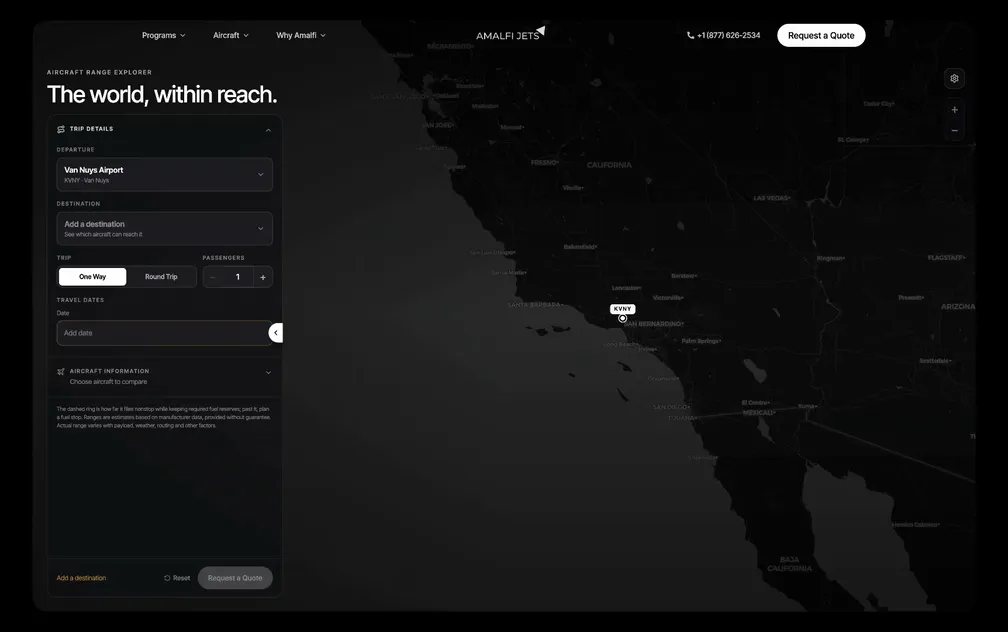
Try Range Explorer
See how far you can fly nonstop
Explore aircraft range, compare options, check flight times, and better understand which aircraft fits your trip.

Ready to fly to Paso Robles?
Request a charter and our team will tailor an itinerary for your next journey.
*Takes only about 40 seconds to request your quote.
