



Destination Hub
Private Jet Charter to Norfolk

Norfolk International Airport gives private arrivals a direct, organized gateway to the city, with the flight plan built around your timing rather than an airline schedule. From ORF, the day can move cleanly toward the waterfront, downtown meetings, marina plans, or a wider Hampton Roads itinerary.
Quick facts
Why charter a private jet to Norfolk?
For Norfolk, private flying is about keeping the day intact: fewer public-airport bottlenecks, a tailored departure time, and a ground plan that starts at ORF instead of an airline connection.
Why travelers choose a private arrival
Discerning travelers often come for a compact but varied itinerary: waterfront meetings, Navy and defense-related business, university visits, marina time, or a longer coastal stay that touches Virginia Beach, Chesapeake, Williamsburg, or the Peninsula. A private aircraft lets the schedule bend around those commitments, particularly when a same-day return or multi-city routing would be inefficient on scheduled service.
Time saved on the ground
The value is not only in the flight. A charter plan can coordinate passenger arrival, luggage handling, crew timing, and onward transportation as one itinerary, reducing the friction that builds when commercial flights, rental counters, and rigid timetables have to line up.
Regional flexibility
ORF is the primary gateway, but Hampton Roads is a spread-out region shaped by water, bridges, tunnels, and different business districts. When the final destination sits away from the city center, the charter desk can review secondary airport options and match the arrival point to the drive that matters most.
“For summer waterfront dates, our charter desk secures aircraft availability and ORF handling first, then compares regional alternates against the final address. Early firm dates usually widen aircraft choice.”

When is the best time to fly to Norfolk?
The best time to visit Norfolk depends on whether you want summer energy on the water or a quieter off-season trip with more scheduling flexibility.
Peak months
June, July, August, and September bring the strongest leisure pull, driven by beach and boating trips, Harborfest, waterfront concerts, and event traffic connected to the broader Virginia Beach area. For fixed summer weekends, early planning helps protect aircraft choice and gives the operations team more time to coordinate arrival slots, handling, and ground transportation.
Value months
January, February, and March tend to be cooler and calmer, with lighter leisure demand and fewer major waterfront festivals. Travelers with flexible dates may find more room to compare aircraft options and build a less compressed itinerary.
Planning guidance
Business travel can still concentrate around specific weekdays, while coastal leisure demand often builds around long weekends and school breaks. If the trip depends on a particular aircraft type, cabin layout, or same-day return, confirm the itinerary before the seasonal rush narrows the field.
Where our clients stay and go
Norfolk is a waterfront city with a working maritime character, where downtown streets meet the Elizabeth River and the broader Hampton Roads region opens toward the Chesapeake Bay.
The first impression is often water and movement: ship silhouettes, marina light, bridges, and a skyline that feels close to the harbor rather than removed from it. This is not a resort town dressed up for visitors; it is a real port city with culture, naval heritage, universities, restaurants, and neighborhoods that each carry a different rhythm.
Downtown has the most direct urban energy, especially near the waterfront, where an arrival can turn quickly into a meeting, dinner, concert, or walk along the river. The NEON District adds a creative edge with public art and galleries, while Ghent offers a more residential pace with historic streets, cafes, and local dining.
For private travelers, the appeal is the way a trip can shift from business to coastal leisure without feeling over-planned. A morning meeting can lead to an afternoon on the water, a dinner near the harbor, or a next-day drive toward Virginia Beach, Chesapeake, Williamsburg, or the Peninsula.
The city rewards travelers who like substance over spectacle: salt air, brick streets, a serious maritime past, and enough cultural texture to make a short stay feel grounded. Arriving privately simply gives that experience more room to breathe.
What determines the cost of a flight to Norfolk?
A charter into Norfolk is priced by the aircraft, the itinerary structure, aircraft positioning, airport-related charges, seasonal demand, and any empty-leg opportunity that may align with your timing.
Aircraft selection
Aircraft class is one of the clearest cost drivers. Cabin size, luggage needs, passenger count, onboard service expectations, and route length all influence which aircraft are suitable for a requested trip. A larger cabin may add comfort for a longer mission or group movement, while a smaller aircraft may be appropriate for a streamlined regional itinerary.
One-way versus round trip
A one-way charter can require repositioning before or after your flight if the aircraft is not naturally based where you need it. A round trip may be more efficient when the aircraft and crew can remain available for the return, though that depends on timing, crew duty considerations, and the aircraft’s next assignment.
ORF positioning and fees
ORF is the primary airport for the city, so availability, handling arrangements, parking, and airport-related fees are reviewed as part of the quote. The charter desk also considers where the aircraft is coming from, where it goes next, and how ground timing affects the overall plan.
Seasonal demand
Summer waterfront travel, boating plans, beach traffic, and major local programming can tighten aircraft availability. During high-demand weeks, earlier confirmation gives the desk more room to compare aircraft, crew schedules, and airport handling options.
Empty-leg availability
Empty legs can be attractive when an aircraft already needs to reposition along a compatible route. They are highly schedule-dependent, usually less flexible than a standard charter, and best considered when your timing can adapt to the aircraft’s movement.
Which airports serve Norfolk?
Norfolk is served for charter planning by ORF as the primary gateway, with Hampton Roads Executive Airport, Chesapeake Regional, Newport News-Williamsburg International Airport, and Suffolk Executive Airport available as regional alternates.
Norfolk International Airport (ORF)
Choose ORF when the itinerary is centered on the city, the waterfront, downtown meetings, or a straightforward arrival plan. As the primary airport, it is the natural first option for most charter requests because it keeps planning focused and gives the operations team a clear baseline before comparing alternates.
Hampton Roads Executive Airport (KPVG)
KPVG is best evaluated when the trip is regional rather than strictly downtown. If the final stop is closer to this part of Hampton Roads, an executive airport can be worth reviewing for passenger convenience, ramp timing, and ground routing before confirming ORF.
Chesapeake Regional (CPK)
CPK makes sense to consider when the day points toward Chesapeake or the southern side of the region. It can be useful for travelers whose ground plans would otherwise cross back through a busy urban corridor after landing.
Newport News-Williamsburg International Airport (PHF)
PHF is the alternate to review when the itinerary leans toward Newport News, Williamsburg, or the Peninsula. For guests combining meetings, family visits, historic-area stays, or resort-style plans outside the immediate city core, it may create a more logical ground sequence.
Suffolk Executive Airport (SFQ)
SFQ can be considered when the traveler’s final address sits closer to Suffolk or the western side of Hampton Roads. It gives the charter team another way to match the arrival point to the real destination rather than forcing every trip through the same airport.
How the final airport is chosen
The best airport is the one that fits the passenger’s address, aircraft plan, handling needs, schedule, and ground transportation. For each request, the charter desk can compare the primary airport with suitable alternates, then recommend the field that makes the day feel simplest from touchdown to arrival.
Common questions about Norfolk charter
Which airport should I use for a private flight into Norfolk?
Norfolk is typically planned through ORF first because it is the primary airport for the city, then secondary airports are reviewed if they better match the final ground destination.
What determines the cost of chartering into Norfolk?
The cost of a flight to Norfolk depends on aircraft class, itinerary structure, aircraft positioning, airport-related fees, seasonal demand, and whether a compatible empty leg is available.
Can I use an alternate airport instead of ORF?
Yes, Norfolk travelers may consider KPVG, CPK, PHF, or SFQ when an alternate better supports the drive, timing, or broader Hampton Roads itinerary.
When should I book summer travel to the area?
For Norfolk trips in June through September, booking earlier is wise because beach, boating, Harborfest, waterfront concert, and Virginia Beach event traffic can tighten availability.
Are January, February, and March good months for flexible travelers?
For Norfolk, those cooler off-season months can bring lighter leisure demand and fewer major waterfront festivals, which may make planning less compressed.
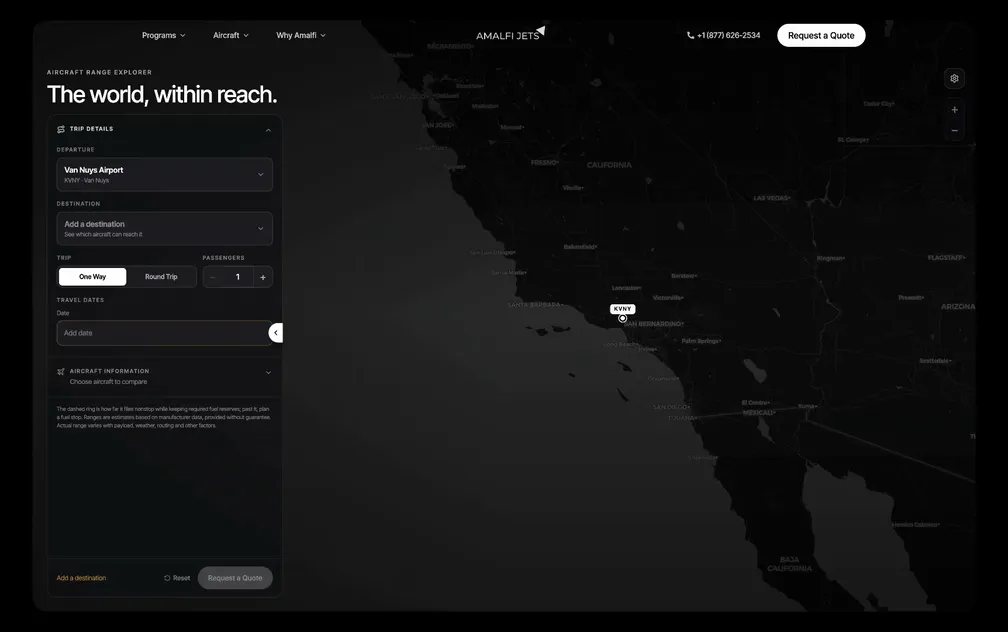
Try Range Explorer
See how far you can fly nonstop
Explore aircraft range, compare options, check flight times, and better understand which aircraft fits your trip.

Ready to fly to Norfolk?
Request a charter and our team will tailor an itinerary for your next journey.
*Takes only about 40 seconds to request your quote.
