



Destination Hub
Private Jet Charter to Mesa
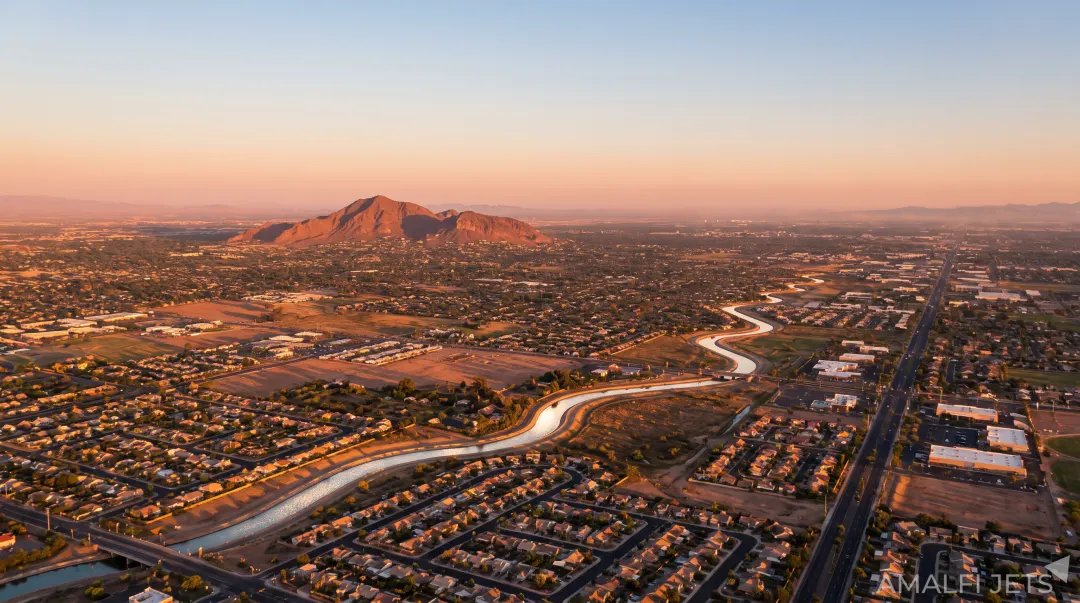
Private arrivals into the East Valley are most straightforward through Phoenix-Mesa Gateway Airport (AZA), giving the charter day a clear point of entry and a ground plan built around your schedule. From the ramp, the experience is simple: arrive close to the desert, step directly into arranged transportation, and let the itinerary unfold without airline connections.
Quick facts
Why charter a private jet to Mesa?
Chartering privately into Mesa gives travelers control over arrival time, airport choice, and the ground plan on the East Valley side of Greater Phoenix. Instead of building the trip around published airline schedules, your flight can be organized around meetings, resort check-ins, tee times, family commitments, or a late return after dinner.
Access without unnecessary friction
The primary plan centers on AZA, which keeps the arrival focused and easy to coordinate. For many travelers, that means fewer moving parts on the day of travel: aircraft, crew, ground transportation, and host schedule are aligned before departure.
Flexibility for a region with several useful gateways
A private itinerary can also consider Falcon Field Airport, Chandler Municipal Airport, Scottsdale Airport, or Sky Harbor International Airport when the broader Phoenix-area schedule calls for a different arrival point. The best choice often depends on where the traveler is staying, how many stops are planned on the ground, and whether the day is oriented toward the East Valley, Scottsdale, downtown Phoenix, or a regional connection.
Time saved where it matters
Private flying is not only about the air segment. The real value often comes from reducing the time spent waiting, connecting, checking bags, and reworking plans when the day changes. A direct aircraft schedule lets the traveler arrive closer to the intended agenda and depart when the visit is complete.
A more composed travel day
- The aircraft schedule can be matched to the traveler’s calendar.
- Ground transportation can be staged before arrival.
- Alternate airports can be evaluated before the trip begins.
- Return timing can remain flexible when meetings, golf, or hospitality runs long.
“We secure the preferred AZA arrival window and handling plan first, then compare alternates if the ground schedule points elsewhere. For January through March, firm dates earlier in the process usually widen aircraft choice.”

When is the best time to fly to Mesa?
The best time to visit Mesa depends on whether the priority is peak winter energy or quieter summer value. The city’s busiest private-travel window typically aligns with the cool, sunny months that draw golfers, baseball fans, event guests, and winter visitors across Greater Phoenix.
January, February, and March are the peak planning months. Winter sun, golf calendars, Cactus League spring training, and Phoenix-area events can tighten aircraft availability, so travelers with fixed dates should confirm early and keep alternate airports in the plan.
June, July, and August are generally the value months. Extreme summer heat softens leisure travel, outdoor-event traffic, and golf demand, which can create a calmer booking environment for travelers whose schedules are flexible.
Shoulder periods can be especially practical for visitors who want desert scenery, resort time, dining, and day trips without the strongest winter compression. Even then, firm arrival times, larger groups, and preferred aircraft types are best handled ahead of time.
Where our clients stay and go
Mesa is a Sonoran Desert city with an East Valley rhythm: wide sky, low desert light, mountain silhouettes, and easy movement between urban comforts and open landscape. It feels less like a single postcard view than a series of transitions, from downtown arts blocks to golf corridors, from citrus and palm-lined streets to the rugged edge of the Superstition Mountains.
Morning light is one of the area’s quiet luxuries. The desert warms quickly, shadows pull across the foothills, and the Salt River and nearby lakes add unexpected flashes of water to a landscape many first-time visitors imagine only in sand and stone.
For private travelers, the appeal is rhythm. A day can move from an early tee time to a spring training game, a business lunch in the Phoenix area, a gallery walk, or a drive toward the Apache Trail without making the itinerary feel overbuilt.
The city also works well for travelers who prefer space. Resorts, private residences, golf communities, and family gatherings across the East Valley can be reached with a plan that keeps the aircraft arrival, ground transportation, and schedule in the same conversation from the start.
What determines the cost of a flight to Mesa?
The cost of flying privately into Mesa is shaped by the aircraft selected, the itinerary structure, airport-related charges at AZA, seasonal demand, and any available empty-leg opportunity. A clear quote starts with the mission: who is traveling, when they need to arrive, how much luggage is moving, and whether the aircraft waits or returns later.
Aircraft selection
Aircraft class is one of the primary cost drivers because it influences cabin size, range planning, crew requirements, and operating profile. The right aircraft is matched to the route, passenger count, luggage needs, cabin expectations, and schedule rather than chosen from a generic category.
One-way versus round trip
A one-way itinerary may require aircraft positioning before or after the passenger flight, while a round trip may involve waiting time, crew scheduling, and overnight planning. The most efficient structure depends on how long the traveler stays and whether the aircraft can be used productively between legs.
AZA positioning and airport-related fees
Positioning, parking, handling, and other airport-related charges can influence the final quote. The charter desk reviews the operating plan at AZA alongside alternate airport options when a different gateway may better fit the ground schedule.
Seasonal demand
January, February, and March tend to bring stronger demand because winter sun, golf, Cactus League spring training, and Phoenix-area events draw more travelers to the region. During those months, early confirmation can preserve more aircraft choice and better scheduling options.
Empty-leg availability
Empty legs can occasionally create value when an aircraft already needs to move in the right direction at the right time. They are schedule-dependent, less flexible than a dedicated charter, and best treated as an opportunity rather than the foundation of a firm itinerary.
Which airports serve Mesa?
The primary airport for the city is Phoenix-Mesa Gateway Airport (AZA), with Falcon Field Airport (MSC), Chandler Municipal Airport (CHD), Scottsdale Airport (SCF), and Sky Harbor International Airport (PHX) serving as useful alternates when the itinerary points elsewhere in the region. The right airport is the one that best aligns aircraft handling, ground transportation, traveler preference, and the final destination on the ground.
AZA
AZA is the natural first plan for travelers whose stay is centered in the East Valley. It keeps the arrival focused near the destination hub, which can simplify ground coordination for resort stays, private residences, golf itineraries, and meetings on this side of Greater Phoenix.
MSC
MSC can suit travelers bound for the northeast side of the city or for plans that favor a more localized arrival. It is worth considering when the ground itinerary points toward eastern neighborhoods, desert recreation, or a host location that makes this alternate more convenient than the primary airport.
CHD
CHD may be useful when the traveler’s schedule is oriented toward Chandler, the southern East Valley, or business stops along that side of the metro area. For some trips, choosing this airport can reduce unnecessary backtracking on the ground.
SCF
SCF is often considered when the visit includes Scottsdale resorts, dining, golf, or private residences before or after time in the East Valley. It can make sense for split itineraries where the first or final stop is closer to Scottsdale than to the primary arrival point.
PHX
PHX is the major international airport option for travelers coordinating with airline passengers, downtown Phoenix commitments, or broader regional logistics. It is not always the simplest private-flight choice for an East Valley stay, but it can be the right solution when the total itinerary reaches beyond one part of the metro area.
Common questions about Mesa charter
Which airport is best for a private flight into Mesa?
Most trips to Mesa start with AZA because it is the primary airport for the destination, but the best choice depends on the traveler’s exact ground schedule and where the visit is centered.
Can I use Scottsdale or Phoenix instead of AZA?
Yes, Mesa travelers may consider SCF or PHX when the itinerary includes Scottsdale, downtown Phoenix, airline connections, or regional commitments that make another gateway more practical.
What determines the cost of flying privately into Mesa?
Cost for Mesa flights is shaped by aircraft selection, routing, one-way or round-trip structure, positioning, airport-related charges, seasonal demand, and empty-leg availability.
When should I book for winter or spring training travel?
During January, February, and March, Mesa demand is stronger because of winter sun, golf, Cactus League spring training, and Phoenix-area events, so firm dates should be confirmed early.
Are summer flights usually easier to arrange?
June, July, and August can be more flexible for Mesa because extreme heat softens leisure, golf, and outdoor-event demand, though aircraft availability still depends on route and timing.
Try Range Explorer
See how far you can fly nonstop
Explore aircraft range, compare options, check flight times, and better understand which aircraft fits your trip.

Ready to fly to Mesa?
Request a charter and our team will tailor an itinerary for your next journey.
*Takes only about 40 seconds to request your quote.
