



Destination Hub
Private Jet Charter to Lakeland
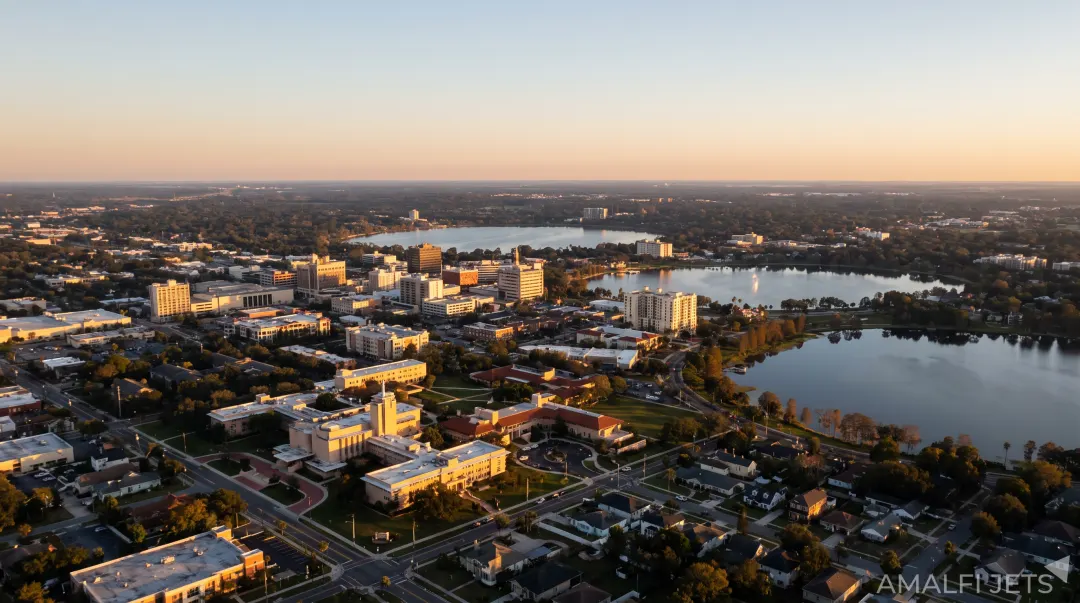
Private arrivals into Lakeland are simplest through Lakeland Linder Regional Airport (LAL), where the day can be organized around one clear gateway and a schedule built around you. From touchdown to departure, the experience is designed to remove connections, reduce waiting, and keep the itinerary close to the people and places that matter.
Quick facts
Why charter a private jet to Lakeland?
Chartering privately into Lakeland gives travelers direct control over timing, routing, and the ground plan around LAL.
Commercial travel often asks visitors to shape the day around airline schedules and regional connections. A private flight reverses that logic: departure time, passenger list, catering preferences, and arrival rhythm are organized around the traveler’s calendar.
Why private travelers choose this arrival
- A simpler gateway: LAL keeps the arrival plan focused on the city rather than on a larger commercial airport farther from the itinerary.
- Flexible scheduling: Meetings, family weekends, spring training plans, and short leisure stays can be built around the aircraft rather than the other way around.
- Less time in transit: Private terminals and coordinated ground transport help reduce the friction that typically surrounds airport days.
- Privacy and continuity: Families, executives, and small groups can remain together from departure lounge to aircraft to vehicle.
The appeal is especially clear for travelers with firm arrival windows. Instead of building margin around airline check-in times, connections, and public-terminal congestion, the charter plan can be matched to the reason for the trip: a game, a property visit, a board meeting, a campus appointment, or a quiet long weekend among Central Florida’s lakes.
“For peak spring weeks, our charter desk secures aircraft availability and preferred LAL handling first, then confirms ground transportation. Firm dates provided early widen aircraft choice and improve schedule control.”

When is the best time to fly to Lakeland?
The best time to visit Lakeland depends on whether the trip is built around spring events, mild weather, or quieter summer availability.
February, March, and April are the highest-demand months. Tigers spring training brings baseball travelers into the area, SUN ’n FUN draws aviation interest, and the winter-to-spring climate is generally more comfortable for outdoor plans, lakefront walks, and midday arrivals.
Travelers with fixed dates during that period should begin planning earlier than they would for an ordinary weekend. Aircraft selection, preferred departure times, and coordinated ground arrangements are all easier to secure before the peak weeks compress availability.
June, July, and August tend to offer better value for flexible travelers. Heat, humidity, and daily storm patterns can soften demand, which may widen aircraft choice and make alternate timing easier to discuss.
A polished itinerary in any season starts with the immovable details first: arrival time, passenger count, luggage, ground transfers, and the exact purpose of the trip. Once those are clear, the charter plan can be adjusted for weather, event traffic, and aircraft availability without losing the shape of the journey.
Where our clients stay and go
Lakeland sits in Central Florida’s interior lake country, close enough to Tampa and Orlando to feel connected, yet defined by its own slower light, water, and civic rhythm.
The name is literal. Lakes shape the map, soften the views, and give the city a sense of pause that many private travelers find useful between larger Florida engagements. Downtown gathers around Lake Mirror, where promenades, gardens, and historic facades create a more composed arrival than the sprawl suggested by the interstate corridor.
A city of water, baseball, and aviation
The spring calendar gives the destination much of its seasonal pull. Tigers spring training draws repeat visitors who know the ritual of warm afternoons, ballpark plans, and dinner afterward. SUN ’n FUN brings an aviation-minded audience and adds another reason to plan private arrivals well ahead of peak weeks.
Outside those moments, the city works well for quieter itineraries: family visits, property scouting, regional business, college and campus appointments, or a stop between Gulf Coast and inland Florida plans. Lake Morton, Lake Hollingsworth, and the downtown waterfront offer the kind of grounded sense of place that makes a short stay feel less transactional.
The private-travel fit
Discerning travelers are often coming for a specific reason rather than a generic vacation circuit. That is where the destination suits private aviation: the schedule can be precise, the arrival calm, and the ground plan direct.
Even at its most active, the city’s character remains understated. Mornings carry reflections off the water, afternoons build toward Central Florida heat, and evenings settle into a smaller-scale version of Florida life — polished enough for a planned visit, relaxed enough to make the trip feel personal.
What determines the cost of a flight to Lakeland?
The cost of chartering into Lakeland is determined by aircraft selection, itinerary structure, airport planning at LAL, seasonal demand, and available repositioning opportunities.
Aircraft category and trip profile
Aircraft choice is usually the largest driver. Cabin size, range needs, passenger count, luggage, onboard service expectations, and departure point all shape which aircraft are appropriate for a trip. A short regional itinerary may price very differently from a longer nonstop mission, even when the destination is the same.
One-way versus round trip
A one-way itinerary can require the aircraft to reposition before or after passenger travel. A round trip may be more efficient when the aircraft and crew can remain matched to the schedule, but that depends on timing, crew duty considerations, and how long the aircraft would need to wait.
LAL positioning and airport-related planning
Landing, handling, parking, crew logistics, fuel planning, and ground-service arrangements all factor into the final charter quote. The charter desk evaluates those details before presenting options, so the proposed aircraft and routing are aligned with the practical needs of the day.
Seasonal demand
February, March, and April typically bring stronger interest tied to Tigers spring training, SUN ’n FUN, and comfortable winter-spring weather. During those months, preferred aircraft and prime departure times can become more competitive.
June, July, and August often bring softer demand because hot, humid conditions and daily storms make schedules more weather-sensitive. Travelers with flexible timing may see a broader set of aircraft options during that summer window.
Empty-leg availability
Empty legs can reduce the overall charter cost when an aircraft already needs to move in a compatible direction. These opportunities are highly schedule-dependent, less flexible than a dedicated charter, and best suited to travelers who can adapt departure times, airports, or both.
Which airports serve Lakeland?
Lakeland is primarily served by Lakeland Linder Regional Airport (LAL), with Bartow Municipal Airport (BOW), Winter Haven Regional Airport (GIF), Plant City Municipal Airport (PCM), and Tampa Executive Airport (VDF) available as regional alternates when the itinerary points in a different direction.
LAL: the primary gateway
For most private arrivals, LAL is the natural first plan because it keeps the flight anchored to the city itself. It is the clearest choice when the schedule centers on downtown, spring training plans, local residences, business appointments, or a stay that begins and ends in the immediate area.
Choosing the primary airport also helps simplify coordination. The aircraft plan, passenger arrival, luggage handling, and ground transportation can be organized around one expected gateway before alternates are considered.
BOW: useful for Bartow-facing plans
Bartow Municipal Airport can make sense when the ground itinerary continues toward Bartow or the southeastern side of the regional plan. Rather than treating every trip as a downtown arrival, the charter desk may review BOW when the final destination, pickup point, or return departure makes that alignment more efficient.
This alternate can also be considered when operational planning calls for another option in the region. Availability, handling arrangements, and suitability are confirmed before it is presented as part of a live itinerary.
GIF: practical for Winter Haven connections
Winter Haven Regional Airport may be relevant for travelers whose plans pull toward Winter Haven, the Chain of Lakes area, or residential and leisure stops east of the primary city. Its value is not that it replaces the main gateway, but that it can shorten or simplify the ground portion when the trip’s center of gravity sits farther in that direction.
For private travelers, the decision is usually practical: where are passengers actually going after landing, and which airport supports that movement most cleanly?
PCM: a Plant City-side alternate
Plant City Municipal Airport is worth reviewing when the trip leans west, especially for passengers with appointments or homes nearer Plant City than the central arrival point. It may also help when a traveler wants a regional option that avoids a more congested flow elsewhere.
The charter team will confirm current handling, parking, and schedule fit before recommending PCM. In private aviation, a shorter ground plan is valuable only when the airport can support the full passenger experience.
VDF: access toward the Tampa side
Tampa Executive Airport gives travelers another option when the journey is split between the destination and the Tampa side of the region. For itineraries involving eastern Tampa, regional business, or a multi-stop Florida trip, VDF may be reviewed alongside LAL rather than after the fact.
An alternate airport is most useful when it serves the real itinerary better: less surface travel, smoother timing, or a more practical recovery plan if peak demand or weather affects the original schedule.
Common questions about Lakeland charter
Which airport should I use for a private flight into Lakeland?
For most Lakeland trips, LAL is the primary choice because it keeps the arrival plan centered on the city and simplifies ground coordination.
What determines the cost of chartering into Lakeland?
The cost to charter into Lakeland is shaped by aircraft category, routing, one-way versus round-trip structure, airport positioning and fees, seasonal demand, and any empty-leg availability.
When should I book for spring travel?
Travelers visiting Lakeland in February, March, or April should plan earlier because Tigers spring training, SUN ’n FUN, and mild weather increase demand for aircraft and preferred departure times.
Can I use an airport other than LAL?
Yes, Lakeland itineraries may also consider BOW, GIF, PCM, or VDF when an alternate better matches the final ground destination, regional routing, or operating conditions.
Is summer a good time to find availability?
For flexible travelers, Lakeland can offer broader summer availability in June, July, and August, though heat, humidity, and daily storms should be built into the schedule.
Try Range Explorer
See how far you can fly nonstop
Explore aircraft range, compare options, check flight times, and better understand which aircraft fits your trip.

Ready to fly to Lakeland?
Request a charter and our team will tailor an itinerary for your next journey.
*Takes only about 40 seconds to request your quote.
